
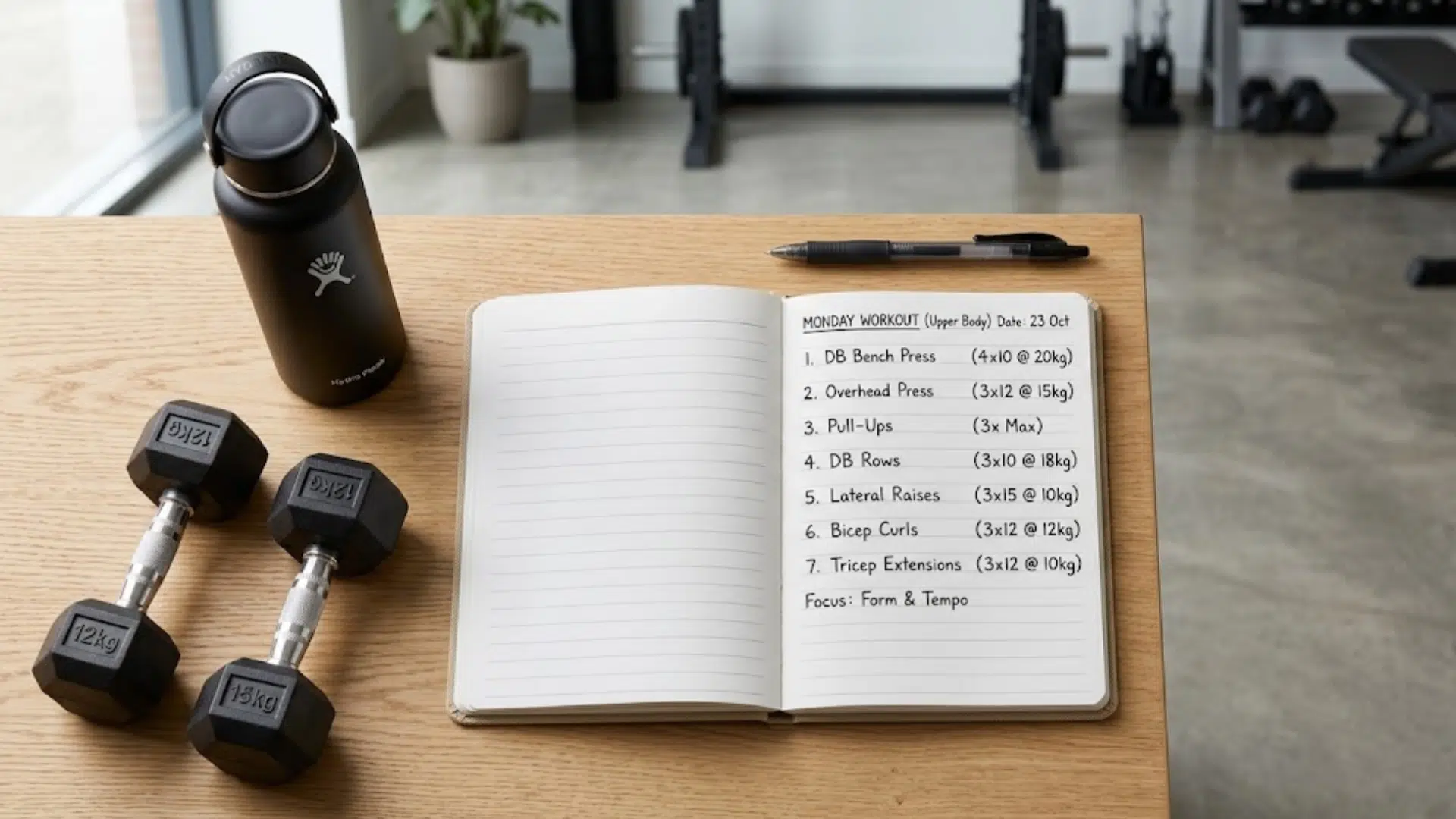



I used to wonder how many exercises you should do per workout, and you might be thinking the same.
Some workouts look long and packed, while others keep things short and simple. It can be hard to know what actually works.
In this guide, you’ll learn how many exercises you really need based on your goal, even if it’s muscle gain, weight loss, or just staying active.
I’ll also cover how your workout time and experience level can change that number.
You don’t need to follow complicated plans or copy what others are doing. The right number is often simpler than it seems.
By the end, you’ll know how to build a workout that feels right, saves time, and helps you see steady progress without overdoing it.
You’ll also learn how to adjust your routine as your strength and fitness improve over time.
How Many Exercises to Do in a Workout?
Most workouts work well with 4 to 8 exercises. This range gives enough variety without making the session too long or tiring.
It also helps keep focus on proper form and steady effort. Fewer exercises, around 3 to 5, are often enough for beginners. This keeps things simple and easier to manage.
More exercises, around 6 to 8, can suit people with more experience or specific goals.
The right number also depends on time and energy. Short workouts need fewer exercises, while longer sessions can include a bit more variety.
What matters most is not doing as many exercises as possible. Quality and consistency matter more than quantity.
A well-planned workout with the right number of exercises often leads to better results than a long, crowded routine.
When I was working with clients, the ones who made the most consistent progress were rarely doing 10 or 12 exercises a session.
They focused on 4 to 6 key movements and improved each week. That consistency drove results.
Why Does the Number of Exercises Matter?
A balanced number helps train muscles well while keeping energy levels steady. Quality Over Quantity Is Key. Each exercise should be done with control and proper form.
Rushing through many exercises often reduces effectiveness and increases the risk of strain. Fewer well-performed exercises often give better strength and muscle results than a long list done quickly.
- For Beginners: 3 to 5 Exercises.This keeps workouts simple and allows focus on learning correct movement patterns.
- For Muscle Gain: 5 to 8 Exercises.This range helps target different muscle groups and supports steady growth.
- For Weight Loss: 4 to 6 Exercises.A mix of strength and light cardio helps improve calorie burn and keeps workouts balanced.
There is also the concept of progressive overload to consider. You cannot effectively track and progressively increase the load on 10 different exercises per session.
Keeping your exercise count manageable makes it far easier to add weight or reps consistently.
Full Body Vs Split Workouts: What Changes
Choosing between these two styles affects how exercises are spread across a week. Each approach changes how many exercises are used per session and how muscles are trained.
| Aspect | Full Body Workouts | Split Workouts |
|---|---|---|
| Exercise Focus | Fewer exercises per muscle group in one session | More exercises focused on one or two muscle groups |
| Muscle Coverage | Covers most major muscle groups in each workout | Targets specific muscles on different days |
| Workout Frequency | Muscles are trained more often during the week | Each muscle group gets its own dedicated day |
| Session Length | Usually shorter and more time-efficient | Can be longer due to higher exercise count |
| Best For | Beginners, general fitness, and limited schedules | Muscle gain and focused strength training |
| Exercise Variety | Less variety per muscle in a single session | More variety for each muscle group |
A point worth making here: neither approach is universally better. I have trained clients who made excellent muscle gains on 3-day full-body programs, and others who needed a 4-day split to stop feeling rushed.
The best split is the one you can stick to consistently.
Movement Pattern Approach
Rather than picking exercises randomly, I find it more useful to think in terms of fundamental movement patterns. Every exercise falls into one of these categories:
- Squat: Vertical leg movements (squats, goblet squats, leg press)
- Hinge: Hip-dominant movements (deadlifts, Romanian deadlifts, kettlebell swings)
- Push: Pressing away from the body (bench press, push-ups, shoulder press)
- Pull: Pulling toward the body (rows, pull-ups, lat pulldowns)
- Carry or Core: Stabilization and loaded movement (farmer’s carries, planks, ab wheel)
A balanced workout hits most of these patterns. If your session has three push exercises and no pull, you have an imbalance that will eventually show up as a shoulder issue or postural problem.
This framework matters more than hitting a specific exercise count.
How Does Workout Time Affect Exercise Count?
Workout time plays a key role in deciding how many exercises fit into a session. Short workouts, around 20 to 30 minutes, work best with fewer exercises.
Longer sessions allow more variety, but too many exercises can lower effort and quality.
More time does not always mean better results. A well-structured workout often performs better than a long, unplanned one.
Stretching workouts to add exercises can lead to rushed sets and poor form.
This can reduce results and slow progress. Focused workouts help maintain effort and improve results over time.
A properly structured workout with 5 to 6 exercises, including warm-up and cool-down, should take roughly 45 to 60 minutes.
If your sessions are regularly running past 75 minutes, that is usually a sign of too many exercises or too much rest between sets, not a sign that you are working harder.
How to Build a Balanced Workout Routine?

A balanced workout routine supports steady strength and muscle development. It should include both compound and isolation exercises.
Compound movements train multiple muscle groups, while isolation exercises help focus on specific areas.
All major muscle groups should be covered to avoid imbalances and support overall strength. This includes legs, back, chest, shoulders, and arms.
Start with larger muscle groups and finish with smaller ones to keep energy for heavier lifts.
A simple and well-planned routine works better than a crowded one. Consistency and proper structure help maintain steady progress without unnecessary strain.
One thing I always remind my clients: dedicate at least 6 to 8 weeks to a set group of core exercises before changing them up.
Rotating exercises too frequently makes it nearly impossible to track progressive overload, and without that, muscle and strength gains stall. The exercises are not magic; the progression is.
Sample Workout Structures by Goal
These examples show how to structure workouts based on different fitness goals. Each plan keeps exercises simple, balanced, and easy to follow.
1. Beginner Full-Body Workout: 3–4 Exercises and 3x Per Week
Simple, covers the major movement patterns, and takes under 35 minutes. This is the kind of routine I start most new clients on.
| Exercise | Sets | Reps / Duration |
|---|---|---|
| Goblet Squat | 3 | 10 reps |
| Dumbbell Row | 3 | 10 reps per side |
| Push-Up | 3 | 8 to 12 reps |
| Plank | 3 | 30 seconds |
2. Muscle Gain Split: 5–7 Exercises and 4 Days Per Week
This covers push, pull, and isolation work for the upper body, which is the right structure for hypertrophy-focused training.
| Exercise | Sets | Reps |
|---|---|---|
| Barbell Bench Press | 4 | 6 to 8 reps |
| Dumbbell Incline Press | 3 | 10 reps |
| Barbell Row | 4 | 6 to 8 reps |
| Lat Pulldown | 3 | 10 reps |
| Lateral Raise | 3 | 12 reps |
| Tricep Pushdown | 3 | 12 reps |
3. Weight Loss Circuit: 4–5 Exercises and 3–4 Days Per Week
Rest 30 to 45 seconds between exercises and 90 seconds between rounds. This structure keeps heart rate elevated and maximizes calorie burn per session.
| Exercise | Rounds | Reps / Duration |
|---|---|---|
| Dumbbell Squat | 4 | 15 reps |
| Push-Up | 4 | 12 reps |
| Dumbbell Deadlift | 4 | 12 reps |
| Dumbbell Row | 4 | 12 reps per side |
| Mountain Climbers | 4 | 30 seconds |
Simple Tips to Pick the Right Number of Exercises
Small adjustments can make workouts more effective and easier to follow. Keeping things simple helps maintain consistency and steady progress.
- Match Exercises to Your Goal: Choose exercises based on what needs improvement. Strength goals may need more focused movements, while general fitness can stay simple and balanced.
- Adjust Based on Energy and Progress: Exercise count should change based on daily energy levels and long-term progress. Lower energy days may need fewer exercises, while stronger days can handle slightly more.
- Keep Workouts Consistent, Not Crowded: A clear and simple routine often works better than a packed session. Consistent workouts with the right number of exercises help maintain better form and steady results over time.
- Prioritize Compound Movements First: Start with big, demanding exercises while energy is high. Save isolation work for the end of the session.
- Track Your Exercises Over Time: Tracking workouts helps you see progress. If weights and reps stay the same for weeks, it’s time to adjust your program.
Common Mistakes to Avoid when Choosing Exercises
Small mistakes in exercise selection can affect progress and recovery. A few simple changes can make workouts more effective and easier to maintain.
| Mistake | What Happens | Better Approach |
|---|---|---|
| Doing too many exercises in one session | Leads to fatigue, rushed sets, and lower workout quality | Stick to a focused range like 4–8 exercises for better results |
| Repeating similar movements | Works the same muscles again and again without balance | Choose different exercises that target muscles from different angles |
| Ignoring rest and recovery | Muscles do not recover well, which can slow progress | Allow proper rest between workouts and include recovery days |
Conclusion
Finding the right number of exercises is simple. A balanced plan works better than long, crowded routines. Progress comes from consistency and not from doing too much in one session.
The best routine is one that can be followed regularly without feeling overwhelming.
Whether you are training at home with dumbbells or working through a full gym split, the principles are the same: pick a focused number of exercises, execute them well, and give your body time to recover and grow.
That is what I have seen work across various sessions with clients at every level. Stick with a plan you can repeat each week.
That steady progress is what really counts. What has worked best for you in your workouts? Share your experience in the comments below.