
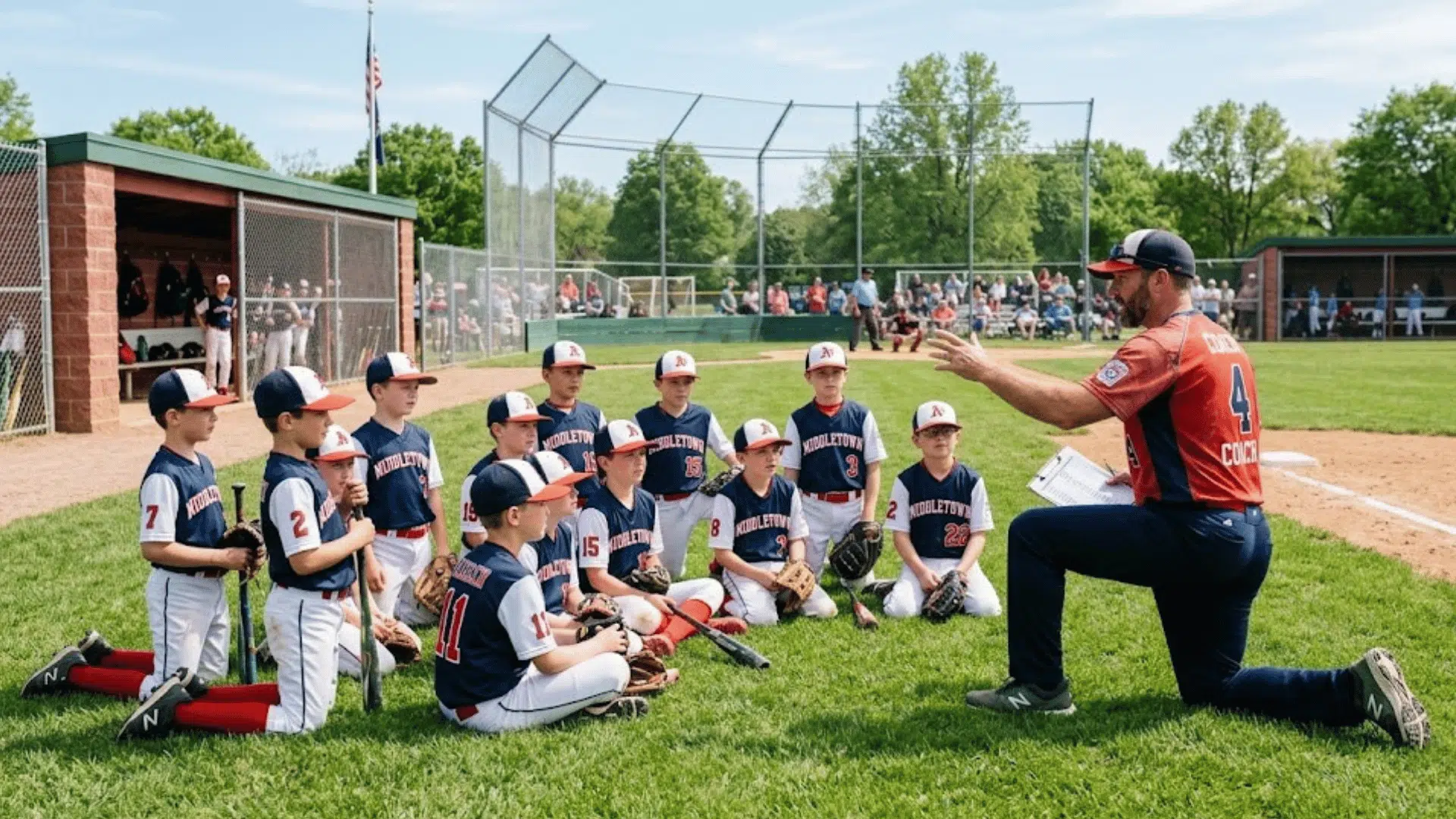



I still remember sitting at a kids’ baseball game and feeling totally confused by what the coach was yelling. Words were flying around, and I had no clue what they meant. If you have felt that way too, you are not alone.
Baseball has its own set of words, and it can feel overwhelming at first, especially for kids who are just starting out. I have seen how much easier the game becomes once those words start to make sense.
In this guide, I will walk you through the most common baseball words in a simple way. You will learn basic terms kids hear on the field, the words coaches use during games, and the ones parents hear from the stands.
I will also share a few easy tips to help kids learn these words faster and feel more confident while playing.
Why Learning Sports Words Matters
Words are how coaches communicate during a game. When a player knows what is “inside baseball,” “force out,” or “double play” means, they can react faster and make smarter decisions on the field.
A kid who understands the language feels more prepared and less anxious when the pressure is on. Learning some solid common baseball terms before the season starts can give young players a real head start.
For parents, knowing these words means you can actually follow what is happening during the game. You can support your child better when you understand why the coach made a certain call or what the umpire just announced.
It also makes conversations after the game a lot more meaningful when you can talk about specific plays rather than just saying “you did great.”
For coaches, using clear and consistent language builds trust with young players.
When everyone on the team understands the same words, communication becomes faster and more effective during practice and in real game situations.
Basic Baseball Words for Kids

These are the words young players hear most often and should feel comfortable with before their first game.
- Strike: A pitch the batter swings at and misses, or one that passes through the strike zone without a swing.
- Ball: A pitch that misses the strike zone, and the batter does not swing at it.
- Out: When a batter or runner is called out, ending their turn or removing them from base.
- Safe: When a runner reaches a base without being tagged or forced out.
- Inning: One full round of play where both teams get a turn to bat.
- Run: A point scored when a player crosses home plate successfully.
Words Coaches Use During Practice and Games
Coaches use a specific set of words to keep practices moving and communicate quickly mid-game. These are the ones players should know cold.
| Word | What It Means |
|---|---|
| Cutoff | A player who stands between an outfielder and home plate to relay the throw more accurately |
| Relay | Throwing the ball from one player to another to get it to the right place faster |
| Back up | Moving behind a teammate to stop the ball if they miss it |
| Hold the runner | A signal telling a base runner to stay put rather than advance |
| Rotate | Moving fielders to different positions during practice drills |
| Take | A signal telling the batter not to swing at the next pitch |
Sports Words Parents Hear Most at Games
Parents spend a lot of time in the stands trying to follow along, and these are the words that come up most during a typical youth baseball game.
- Count: The current number of balls and strikes on the batter. A full count means three balls and two strikes.
- Error: A mistake by a fielder that allows a batter or runner to advance when they should not have.
- RBI: Stands for runs batted in. It counts how many runs a batter has helped score.
- ERA: Stands for earned run average. It measures how many runs a pitcher gives up per nine innings.
- Walk: When a batter reaches first base because the pitcher threw four balls outside the strike zone.
- Strikeout: When a batter gets three strikes and is called out without putting the ball in play.
How to Help Kids Learn Sports Words Faster
Learning baseball vocabulary does not have to feel like studying. The fastest way for kids to pick up these words is through repeated exposure in a low-pressure setting.
Watching games together at home is one of the simplest ways to do it. When an announcer uses a term, pause and explain it. Over time, the words stop feeling foreign and start feeling familiar.
Playing catch or doing light drills while using the correct terms also helps. If a child hears“back up” or “tag up” during practice and then hears it again in a real game, the connection forms quickly.
Keeping it fun matters too. Turning vocabulary into a quick game before practice, like asking players to define three terms before they pick up a glove, makes learning feel like part of the sport rather than extra work.
It shows just how far the sport’s words have traveled beyond the game itself.
Final Thoughts
I have seen how much easier and more fun baseball becomes once these words start to click. It is not just about knowing terms, it is about feeling confident on the field and understanding what is happening in the moment.
Even if you are a parent in the stands, a coach guiding your team, or a kid learning the game, these words help everyone stay connected.
You do not need to learn everything at once. Take it step by step, use the words often, and let them grow naturally over time. That is what really helps.
If this guide helped you, share it with someone who is new to baseball or save it for your next game day.