



Running a sports team gets expensive fast. Uniforms, travel, tournament fees, and new gear can add up in one season. That’s why a smart fundraising plan matters.
This blog shares the most profitable fundraising ideas for sports teams, picked for strong results with manageable effort.
It starts with five high-return fundraisers like hosting a tournament, building sponsorship packages, and running a matching gift challenge.
We will also cover easy game-day and community events that bring quick wins, like round-up donations, car washes, and trivia night.
It also includes online fundraising options, product sales, restaurant partnerships, and player-focused ideas that build team spirit. A simple step-by-step plan at the end helps everything run smoothly.
How to Fundraise for a Sports Team: Simple Plan
A clear plan helps fundraising for sports teams run smoothly, avoid burnout, and raise more money faster by keeping players, parents, and supporters focused on one shared goal.
- Set a Real Fundraising Goal: Decide precisely how much money you need, set a clear deadline, and list costs like uniforms, equipment, travel, and fees so supporters understand where their donations go.
- Pick One Big and One Easy Fundraiser: Combine a high-impact event like a tournament with a simple option like online donations or sponsorships to balance effort, reach more people, and raise money consistently.
- Assign Clear Roles to Everyone Involved: Choose a leader, money handler, sponsor contact, marketing helper, and event coordinator so nothing gets missed and everyone knows their responsibilities from the start.
- Promote Your Fundraiser Like a Pro: Announce early, share reminders through email and social media, build urgency near the end, and make it easy for people to donate or participate quickly.
- Thank Supporters and Share Progress Updates: Post photos, send thank-you messages, share how much was raised, and recognize donors when allowed to build trust and encourage future support.
When sports teams follow this step-by-step approach, fundraising feels organized, less stressful, and far more effective.
Clear goals, smart promotion, and appreciation turn one-time donors into long-term supporters who are excited to help your team succeed again.
Most Money-Making Fundraising Ideas for Sports Teams
These five fundraisers deliver the highest return on investment when planned well, perfect for teams chasing ambitious season goals or major expenses.
1. Host a Sports Tournament
Organize a single-day tournament in your sport where local teams pay entry fees to compete. Charge spectators for admission, sell concessions, and secure sponsor banners around the venue.
This fundraiser works because it combines multiple revenue streams, registration, gate fees, food sales, and sponsorships, into one high-energy event that attracts your entire community.
- Entry fee structure: Charge per team (4-8 teams ideal) with early-bird and day-of pricing tiers.
- Vendor booths: Rent space to local businesses for product demos or promotional tables during games.
- Championship prizes: Secure donated trophies or gift cards to attract competitive teams without cutting profits.
2. Sponsorship Packages (Gold/Silver/Bronze)
Create tiered sponsorship levels offering local businesses visibility in exchange for financial support.
Gold sponsors get logo placement on uniforms and banners, Silver sponsors receive social media shoutouts and program ads, and Bronze sponsors get website recognition.
This approach works because businesses value community connection and repeated brand exposure throughout your season.
- Package pricing guide: Gold ($1,000+), Silver ($500-$999), Bronze ($100-$499) based on market size.
- Benefits matrix: Create a clear chart showing exactly what each sponsorship level receives.
- Season-long value: Emphasize repeated exposure across games, not just one-time event visibility.
3. Matching Gift Challenge
Partner with a major donor, local business, or supportive parent who agrees to match all donations dollar-for-dollar up to a set amount during a specific timeframe (typically 24-72 hours).
This creates urgency and doubles every contribution’s impact, motivating fence-sitters to give because their donation goes twice as far.
- Challenge timeline: Keep it short (24-48 hours) to create genuine urgency and focused promotion.
- Public thermometer: Display real-time progress toward the match goal on social media and your website.
- Stretch goals: Add bonus incentives if you exceed the match target to maintain momentum.
4. 5K / Fun Run / Obstacle Course Event
Host a community race where participants pay registration fees, collect pledges, or both. Offer different distances or challenge levels to include all fitness levels, from walkers to serious runners.
Generate additional revenue through race-day merchandise, food vendors, photo opportunities, and corporate team entries. The wide appeal and scalability make this consistently profitable.
- Registration tiers: Early bird ($25), standard ($35), race day ($45), to encourage advance sign-ups.
- Corporate teams: Offer discounted group rates for local businesses entering 5+ employee teams.
- Add-on revenue: Sell race photos, commemorative shirts, post-race breakfast tickets, or parking passes.
5. Auction Night
Collect donated items, experiences, and services from local businesses and supporters, then auction them off to the highest bidders.
Include unique offerings like “coach for a day,” autographed memorabilia, vacation packages, restaurant gift certificates, or professional services.
Hybrid events combining silent auction tables with live-auctioned premium items typically raise the most money.
- Procurement strategy: Assign each player’s family to secure 2-3 donated auction items or services.
- Experience packages: Bundle related items (dinner + movie tickets + dessert) to increase perceived value.
- Online extensions: Run digital bidding for 5-7 days before the live event to maximize participation.
Game Day & Community Events
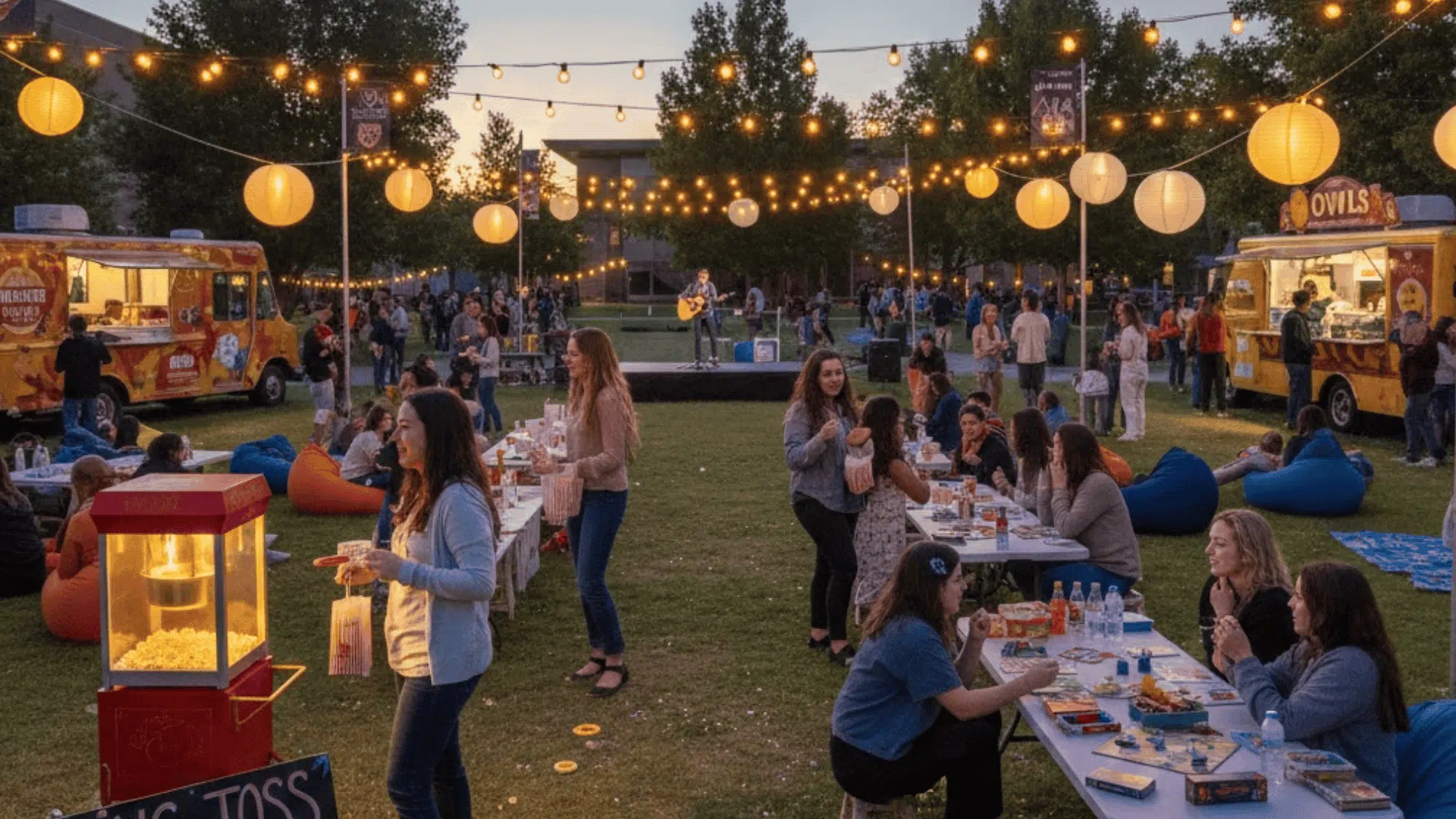
These fundraisers require minimal upfront investment and tap into existing foot traffic or community gatherings—ideal for quick wins and team bonding.
6. Concession Stand “Round-Up” Donations
Add a simple “round up to the nearest dollar” option at your concession stand checkout during games. When someone’s total is $8.50, they can round up to $9 and donate the $0.50 difference.
This passive fundraising method requires only signage and cashier training, yet consistently generates extra revenue without pressuring fans or requiring additional inventory.
- Suggested donation tiers: Offer preset buttons ($1, $2, $5) alongside a round-up for larger contributions.
- Visual impact board: Display a running total on a poster showing accumulated donations throughout the season.
- QR code option: Place scannable codes at registers for digital payment donors to contribute easily.
7. Concession Combos + Sponsor-a-Snack Table
Create discounted meal bundles (hot dog + chips + drink) that offer value while increasing average purchase size. Add a “Sponsor-a-Snack” table where businesses donate individually-wrapped items you sell at 100% profit.
The combo deals move inventory faster, and the sponsored items are pure profit since you didn’t purchase them.
- Naming rights: Let sponsors put their business name on combo boards (“Smith Realty Meal Deal”).
- Premium bundles: Offer $10-15 family packs serving 3-4 people to boost per-transaction revenue significantly.
- Pre-order system: Allow fans to order combos online and skip the line during halftime rush.
8. Car Wash Fundraiser
Set up shop in a high-visibility parking lot on a weekend morning where team members wash vehicles for donations or set prices.
Promote the event a week in advance through social media, local businesses, and school announcements.
Car washes work because they provide immediate value, require minimal supplies, and let the whole team participate together.
- Tiered services: Basic wash ($10), deluxe with interior vacuum ($20), premium detail ($35) options available.
- Ticket presales: Sell discounted wash vouchers in advance to guarantee minimum revenue and attendance.
- Weather backup plan: Schedule a rain date immediately or offer “IOU” tickets redeemable at next event.
9. Bake Sale (Game Day or Weekend Pop-Up)
Coordinate parent and player volunteers to donate homemade cookies, brownies, cupcakes, and treats to sell before, during, or after games.
Set up near high-traffic areas like building entrances, parking lots, or gym lobbies. Bake sales succeed because overhead is virtually zero, and people happily support teams while satisfying their sweet tooth.
- Allergy-friendly options: Include clearly labeled nut-free, gluten-free, and vegan items to expand the customer base.
- Pre-packaged goods: Sell by the dozen in labeled bags for families buying treats at home.
- Pairing strategy: Position your bake sale table directly next to the main concession stand entrance.
10. Yard Sale (In-Person or Online)
Collect gently-used items from team families, clothing, toys, sports equipment, household goods, books, and sell them at a community yard sale or through Facebook Marketplace.
This decluttering fundraiser costs nothing to organize and appeals to bargain hunters. Online sales through local buy-sell groups can run continuously, generating steady income with minimal effort.
- Drop-off weekends: Schedule two collection days where families bring donations to a central garage location.
- Big-ticket focus: Prioritize furniture, electronics, and equipment that sell quickly at higher price points online.
- End-of-day donations: Partner with local charities to pick up unsold items for tax deductions.
11. Pancake Breakfast
Host a weekend morning breakfast where team members serve all-you-can-eat pancakes, sausage, eggs, and beverages for a flat ticket price (typically $8-12 per person, $25-30 per family).
Secure donated ingredients from local grocery stores or restaurants when possible. The relaxed atmosphere and comfort food create community connection while filling your fundraising account.
- Sponsor the meal: Ask grocery stores to donate mix, syrup, and eggs in exchange for event signage.
- Photo booth corner: Set up a team-branded backdrop where families take pictures during their meal.
- Takeout containers: Offer to-go boxes for people who can’t stay but want to support financially.
12. Kids’ Sports Clinic / Mini Camp
Your players coach younger kids (ages 5-10) through skill drills, games, and fundamentals during a 2-3 hour Saturday clinic. Charge per child ($20-40) and cap enrollment at a manageable number.
Parents appreciate affordable skill development for their children while your team demonstrates leadership, and the event positions your program as a community resource.
- Age divisions: Separate groups by skill level or age to ensure appropriate instruction quality.
- Certificate of completion: Print simple awards that kids receive at the end for participation.
- Sibling discounts: Offer reduced rates for families registering multiple children to increase overall attendance.
13. Goal-Shot / Free-Throw Challenge
During halftime or pre-game, let fans pay $1-5 per attempt to make a goal, basket, or target from a challenging distance. Offer tiered prizes for success, make the shot, and win a gift card, jersey, or bragging rights.
The entertainment value attracts participants even if success rates are low, and spectators enjoy watching neighbors attempt the challenge.
- Progressive difficulty levels: Offer easier shots ($1) and nearly impossible attempts ($5) with bigger prize incentives.
- Local business prizes: Secure donated gift cards so successful shots don’t cut into fundraising profits.
- Coach challenge round: Let fans pay to watch coaches attempt ridiculous shots for entertainment.
14. Trivia Night
Host an evening trivia competition where teams of 4-8 pay an entry fee ($20-40 per team) to compete for prizes. Include general knowledge, pop culture, and sport-specific rounds.
Sell food, drinks, and mulligans (extra answers) throughout the night. Trivia nights build community while generating revenue from entry fees, concessions, and add-ons in a fun, low-pressure environment.
- Theme rounds: Include a sport-specific category about your team’s history or famous players/moments.
- Basket raffle: Sell tickets for prize baskets that winners choose from after final scores.
- Livestream option: Charge remote teams to compete virtually via video call for expanded participation.
15. Talent Show (Coaches + Players)
Organize an evening showcase where players, coaches, and community members perform talents, singing, dancing, comedy, magic, and instruments, with ticket sales supporting the team.
The entertainment variety appeals to all ages, and the novelty of seeing coaches outside their usual roles draws crowds. This builds team culture while raising funds through tickets and intermission concessions.
- Act auditions: Pre-screen performances to ensure appropriate content and reasonable time limits per act.
- People’s Choice Award: Let the audience vote with dollar bills for their favorite act, adding competitive revenue.
- Intermission sales: Offer concessions, team merchandise, and raffle tickets during the planned 15-minute break.
Online Fundraising for Sports Teams
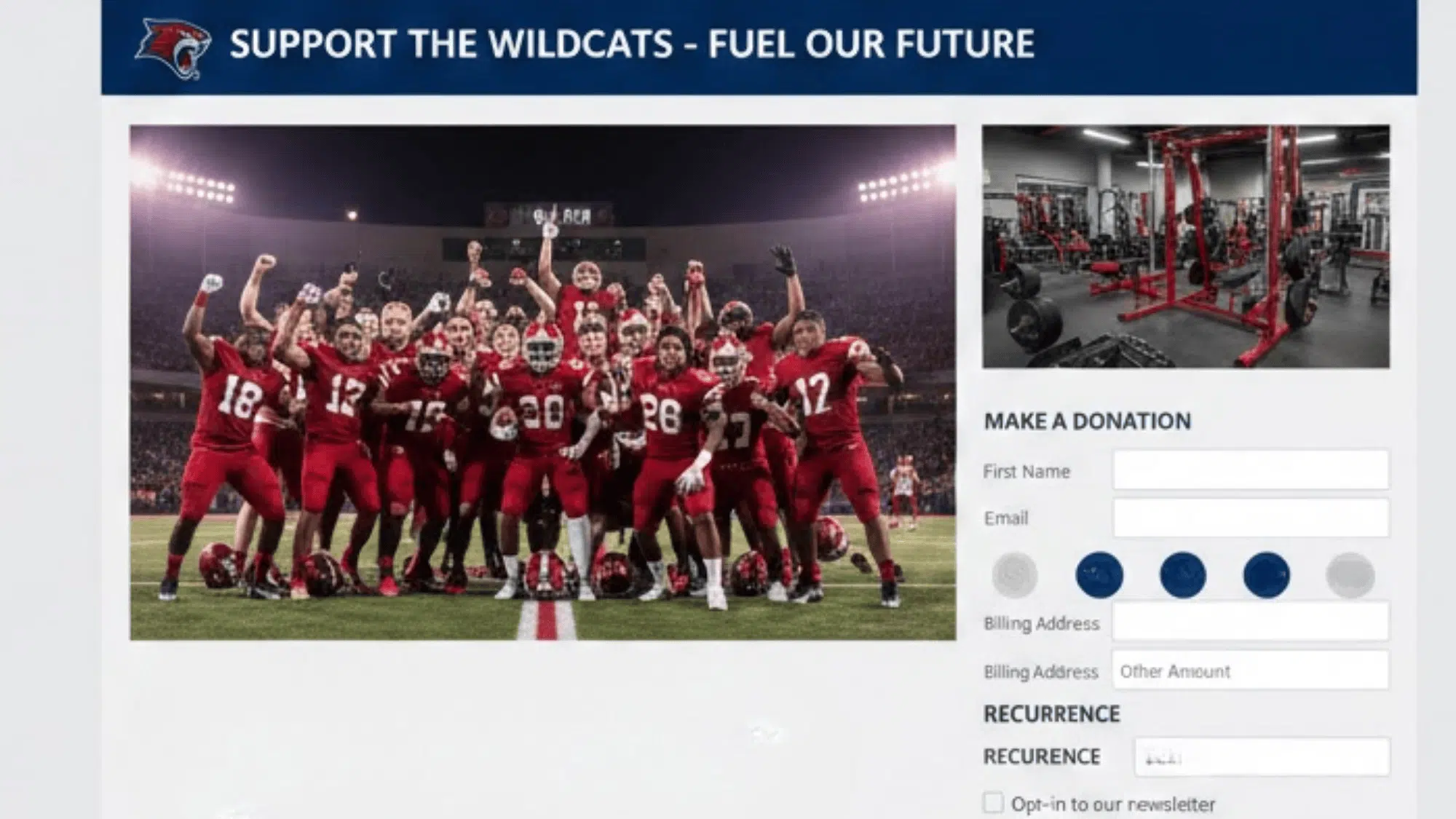
Digital fundraisers reach supporters beyond your immediate community, run 24/7 without physical presence, and scale effortlessly as your network grows and shares.
16. Crowdfunding Campaign Page
Create a dedicated campaign on platforms like GoFundMe, Givebutter, or Bonfire where you tell your team’s story, set a funding goal, and accept donations from anyone with the link.
Share updates, photos, and progress milestones to keep donors engaged. Crowdfunding works because it’s shareable, requires no inventory, and lets distant relatives and alumni contribute easily.
- Video storytelling: Record a 60-90 second team message explaining your goals and thanking supporters personally.
- Milestone rewards: Announce special team activities or celebrations unlocked when reaching 25%, 50%, 75% funding marks.
- Share templates: Provide players with pre-written social media captions to simplify their promotion efforts.
17. Peer-to-Peer Fundraising Pages (Per Player)
Give each team member their own personalized fundraising page where they ask their individual networks, friends, family, and neighbors to donate directly to the team goal.
Players share their unique links via text, email, and social media. This multiplies your reach exponentially because each athlete becomes a mini-fundraiser, reaching completely different circles.
- Individual goals: Assign each player a realistic target ($200-500) that contributes to the overall team total.
- Friendly competition: Display a leaderboard showing top fundraisers to motivate players through healthy rivalry.
- Sample outreach messages: Provide scripts and templates players can personalize when contacting their networks.
18. Step Challenge
Launch a month-long challenge where participants track daily steps via smartphone apps or fitness trackers, competing on a virtual leaderboard.
Charge an entry fee ($15-25), and participants fundraise by collecting pledges per thousand steps or flat donations.
The accountability and competition keep people engaged, while the extended timeline allows donations to accumulate gradually.
- Team divisions: Create brackets by age or fitness level so everyone feels competitive regardless.
- Corporate wellness tie-in: Pitch local businesses to sponsor employee teams for health initiative alignment.
- Weekly prizes: Award small incentives each week to maintain momentum throughout the entire month.
19. Fitness Challenge (Virtual + In-Person Finale)
Run a virtual fitness challenge over 2-4 weeks where participants complete workouts at home and log results online, then gather for a final in-person competition day.
Charge registration fees and accept pledges based on performance metrics. The hybrid format accommodates different schedules and locations while building anticipation for the live finale event.
- Workout variety: Include options like pushups, planks, burpees, or sport-specific drills to attract diverse participants.
- Progress photos: Encourage participants to share workout selfies on social media with your branded hashtag.
- Grand finale party: Host a celebration with awards, food, and team recognition at the live event.
20. Stream-a-thon / Skills-a-thon Live Event
Broadcast a live event where players attempt a repetitive skill challenge, free throws, volleys, and batting practice for an extended period (2-4 hours) while viewers donate online in real-time.
Stream on YouTube, Facebook Live, or Instagram and respond to donors by name during the broadcast. The interactive entertainment and live engagement create urgency and excitement.
- Donation milestones: Announce special challenges or stunts triggered when reaching specific donation amounts during the stream.
- Guest appearances: Invite coaches, alumni, or local celebrities to join for segments and boost viewership.
- Multi-platform streaming: Broadcast simultaneously across platforms to maximize reach and convenience for different audiences.
21 “Sponsor a Post” Social Media Donation Push
Dedicate one week where every team’s social media post includes a call-to-action with your donation link.
Create themed daily content, Monday motivation, throwback Thursday, game highlights, that naturally incorporate fundraising appeals.
Ask players to share every post to their personal accounts. This saturation approach keeps your campaign visible without requiring event coordination.
- Content calendar: Plan all seven days of posts with varied themes to avoid repetitive messaging.
- Story takeovers: Let different players manage the team’s Instagram story each day, sharing personal perspectives.
- Matching hour: Announce a single hour when a sponsor will match all donations received to spike urgency.
22. Player Spotlight Series (Donate-to-Support)
Feature one player each week through photos, interviews, and personal stories shared across social media and email, highlighting their journey, dedication, and goals.
Include a donation link in every spotlight post, asking supporters to contribute in honor of that athlete. This personalizes fundraising, gives every player recognition, and helps donors connect emotionally with individuals.
- Parent interviews: Include quotes from parents about their child’s growth and commitment to the sport.
- Future goals: Have players share what reaching the fundraising target means for their development opportunities.
- Gratitude videos: Record short clips of featured players thanking donors by name after their spotlight week.
23. Online Donation Page (Always-On Giving)
Create a permanent donation page on your team website or platform like PayPal, Venmo, or a fundraising site that accepts contributions year-round. Include it in your email signature, social media bios, and all communications.
Unlike campaign-based fundraising with deadlines, this provides a consistent channel for spontaneous giving whenever someone feels inspired to support your team.
- Monthly giving option: Allow supporters to set up recurring $10-50 monthly donations for predictable revenue.
- Mobile payment links: Include Venmo, Cash App, or Zelle handles for quick one-tap donations from phones.
- Impact statements: Show exactly what different donation amounts provide ($50=uniform, $100=equipment, $250=travel).
Sales & Product-Based Fundraisers
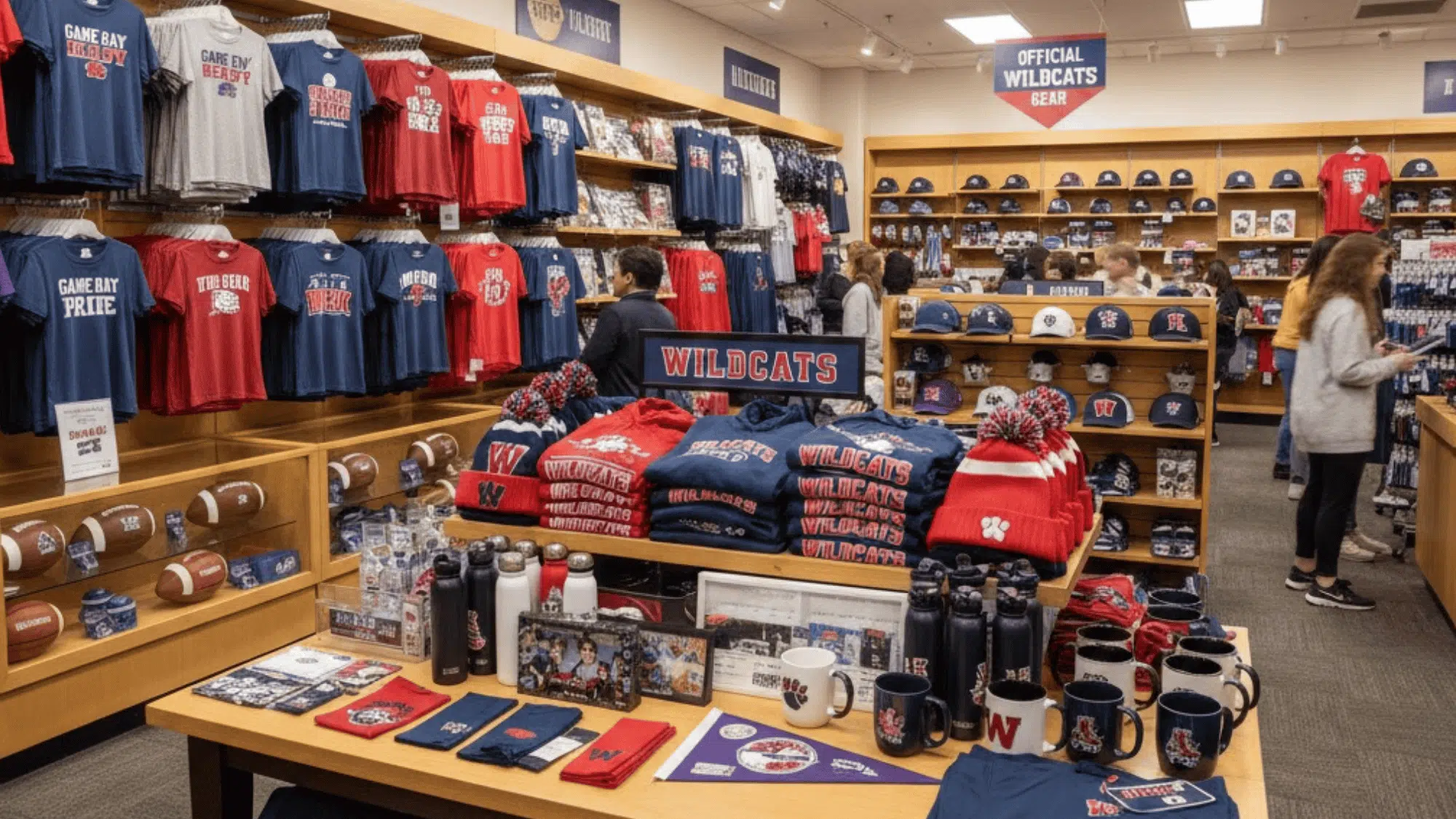
Product sales offer predictable profit margins, tangible value for customers, and work for teams of any size, plus they’re easy to repeat annually.
24. Team T-Shirts / Hoodies (Limited Drop)
Design custom apparel featuring your team name, logo, mascot, or motivational slogans and sell them during a 2-3 week pre-order window.
Use print-on-demand services to avoid upfront inventory costs and offer multiple styles, colors, and sizes.
Limited-time availability creates urgency while team pride drives purchases from players, families, and supporters who want to show their allegiance.
- Design contest: Let players submit logo concepts and vote on favorites to increase investment.
- Bundle pricing: Offer discounted packages like shirt + hoodie combo to increase average order value.
- Senior tribute option: Include graduating players’ names or numbers on special limited-edition items annually.
25. Fan Jerseys or Custom Name Merch
Sell replica jerseys or allow fans to order personalized items with their own name and favorite number in team colors.
Offer options for adults and kids at different price points ($30-60). Fans love wearing real-looking gear that connects them to the team, and the personalization premium significantly increases your profit margin per sale.
- Player number collection: Offer current roster numbers so fans can rep their favorite athlete specifically.
- Family matching sets: Market-coordinated parent-child jersey combinations for photos and game day wear.
- Alumni edition: Create throwback designs honoring former players to tap into nostalgia and expand reach.
26. Discount Cards (Local Deals)
Partner with 10-20 local businesses who agree to offer cardholders exclusive discounts (10-20% off) for an entire year. Print physical cards or create digital versions that customers can access via phone.
Sell cards for $10-20 each; they pay for themselves after 2-3 uses. Businesses benefit from new customers while buyers enjoy ongoing savings.
- Strategic business mix: Include restaurants, retail, services, and entertainment for broad appeal and frequent use.
- Digital + physical combo: Provide both formats so customers can use whichever is most convenient per merchant.
- Renewal program: Track expiration dates and offer auto-renewal discounts to create recurring annual revenue.
27. Gourmet Popcorn Sale
Sell premium flavored popcorn in decorative tins or bags through catalog orders or direct sales. Popular flavors include caramel, cheese, kettle corn, and mixed varieties.
Companies typically offer 40-50% profit margins and handle shipping. Popcorn appeals to all ages, stores well, and makes great gifts, resulting in consistent sales with minimal effort required.
- Sampler bags: Offer small multi-flavor packs perfect for office gifts or stocking stuffers at holidays.
- Online ordering portals: Use company websites where customers order directly and ship to their address.
- Reorder campaigns: Target previous buyers with reminder emails during peak gift-giving seasons for repeat sales.
28. Cookie Dough / Treat Kits
Partner with fundraising companies offering pre-portioned frozen cookie dough, brownie batter, or baking kits in various flavors.
Each player receives an order form to distribute among family and friends, with profits typically ranging from 40-60%.
The product’s long freezer life, universal appeal, and nostalgia factor make it one of the most reliable fundraising products available.
- Delivery day event: Coordinate a team pickup party where families collect orders together and socialize.
- Gluten-free options: Include specialty dietary products to capture customers with restrictions or preferences.
- Baking party add-on: Host an optional team baking session using the dough for bonding.
29. Candy Bar Sale
Purchase bulk candy bars at wholesale prices ($0.50-0.75 each) and sell them for $1-2, generating 50-100% profit margins instantly.
Distribute boxes to players who sell to neighbors, family, coworkers, and through door-to-door efforts.
The low price point, immediate gratification, and impulse-buy nature make candy bars move quickly with minimal sales resistance.
- Variety packs: Offer assorted boxes so buyers can choose favorites rather than buying single types.
- Peak timing strategy: Launch sales during Halloween, holidays, or exam seasons when candy demand spikes naturally.
- Workplace blitz days: Designate specific days for parents to bring boxes to their offices for coworker sales.
30. Team Calendar Sale (With Season Dates)
Create custom calendars featuring team photos, player spotouts, season schedules, and important dates pre-filled. Sell them at the start of the school or calendar year for $10-15 each.
Families use them year-round for planning, while businesses often buy multiples to support local teams. The functional value, combined with sentimental team photos, ensures strong sales.
- Sponsor space: Sell monthly sponsor slots to local businesses for their ads alongside calendar dates.
- Photo submission process: Invite families to submit action shots from games for inclusion consideration throughout the calendar.
- Early bird discounts: Offer reduced pricing for advance orders to help cover printing costs upfront.
Restaurant & Local Business Partnerships

Local businesses gain community goodwill and customer traffic while your team raises funds with zero inventory risk, a win-win built on mutual support.
31. Restaurant Percentage Night
Partner with a local restaurant that agrees to donate 10-20% of sales during a specific evening (typically 5-9 pm) when customers mention your team or show a flyer.
The restaurant benefits from increased traffic on potentially slow nights while your team earns money without selling anything. Promote heavily through social media, email, and flyers distributed the week before the event.
- Multi-location chains: Approach regional franchises like Chipotle, Panera, or MOD Pizza with established programs.
- Dine-in and takeout: Confirm both service types count toward your total to maximize participation options.
- Team presence: Have players greet customers at the entrance or bus tables to create a connection.
32. “Sponsor a Game” Night (Business Covers a Cost)
Invite local businesses to fully sponsor a specific home game by covering operational costs like referee fees, facility rental, equipment, or post-game meals in exchange for prominent recognition.
Display the sponsor’s banner courtside, announce them over the PA system, feature their logo on programs, and thank them publicly on social media. This provides concentrated visibility.
- Sponsorship tiers: Offer single-game ($250-500) or full-season ($2,000-5,000) options based on business size and budget.
- VIP experience: Includes premium seating, halftime recognition, and photo opportunities with the team for sponsors.
- Impact report: Send post-game photos, attendance numbers, and social media reach metrics to demonstrate value.
33. Business Donation Jars + QR Code Giving
Place branded collection jars or QR code displays at local business counters, coffee shops, salons, retail stores, where customers can drop spare change or scan to donate digitally.
The passive placement requires no staff effort while generating small, consistent contributions. Rotate jars monthly to keep them visible and prevent them from becoming invisible counter fixtures.
- Competition element: Display a leaderboard showing which business location collected the most donations monthly.
- Jar design: Use clear containers with team photos and specific funding goals to encourage contributions.
- Digital prominence: Create eye-catching QR code signs with “Tap to Support” messaging for modern donors.
34. Local Business Matching Week (Mini Match Drive)
Identify 3-5 local businesses willing to collectively match all donations during a one-week period up to a combined total. Each business commits $200-500, creating a $1,000-2,500 match pool that doubles supporter contributions.
The time-limited nature creates urgency while business sponsors receive recognition across all your marketing channels throughout the campaign week and beyond.
- Staggered announcements: Reveal one new matching business each day to maintain momentum and excitement throughout.
- In-store promotions: Display campaign posters at each participating business to drive donations from their customers.
- Milestone celebrations: Host a live or virtual reveal event when you hit the full match amount.
35. Coupon/Offer Partnerships (Business Gives % Back)
Negotiate arrangements where businesses create special promotional codes or coupons for your supporters, then donate a percentage of purchases made using those codes back to your team.
For example, a sporting goods store offers 10% off with code “TEAM2025” and contributes 5% of those sales to your program. Customers save money while supporting you through their regular purchases.
- Exclusive codes: Ensure offers are team-specific and trackable so businesses can calculate contributions accurately quarterly.
- Email campaigns: Send monthly reminders featuring different partner businesses and their current offers to supporters.
- Year-round program: Maintain ongoing partnerships rather than one-time events for sustained passive revenue streams.
Player-Focused Fundraisers
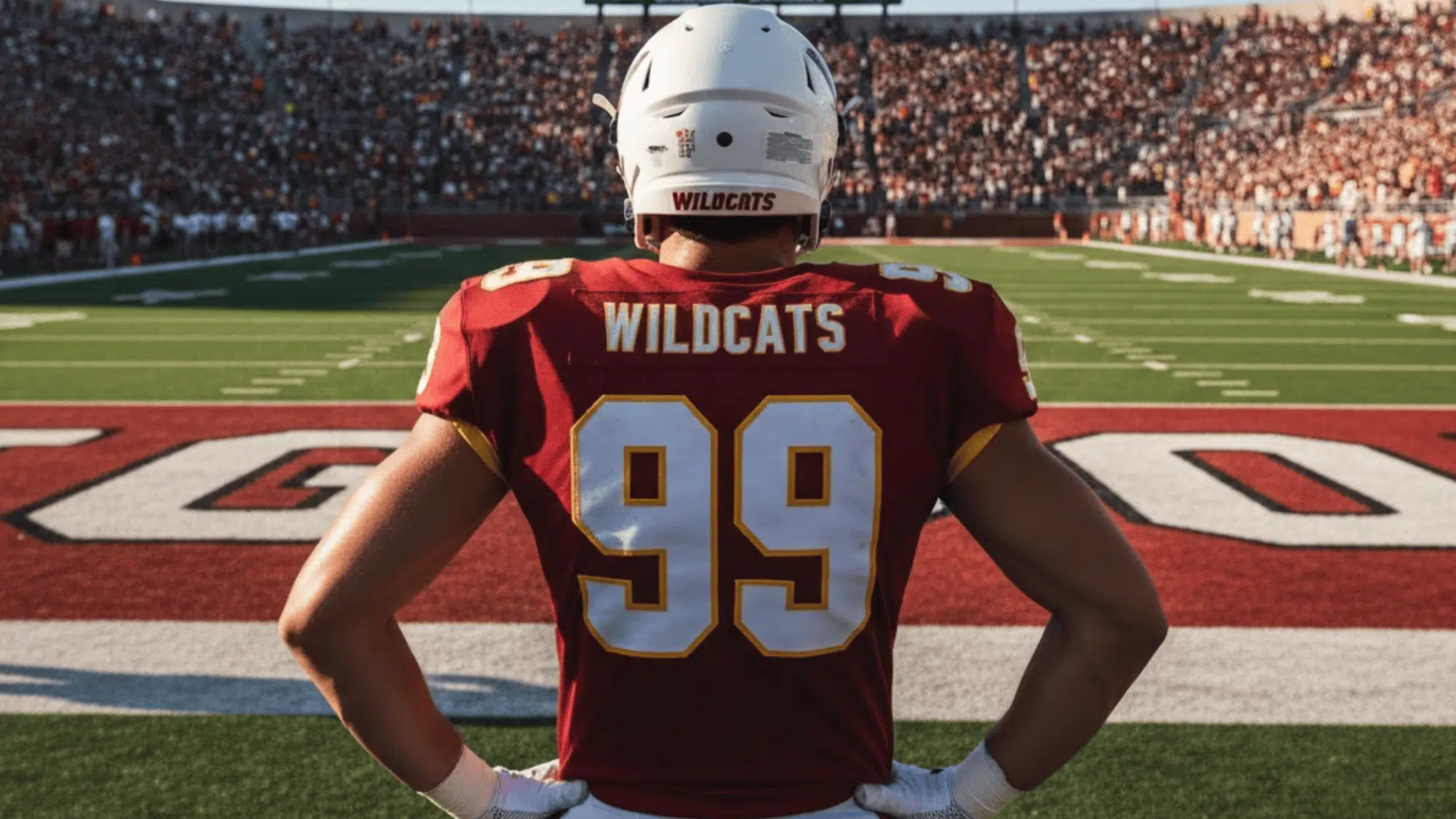
Athletes work directly for donations through service or performance, teaching valuable lessons about effort, accountability, and community contribution while raising meaningful funds.
36. Rent-a-Player Auction (Yard Work, Errands, etc.)
Auction off individual players’ time and labor to community members who need help with yard work, house cleaning, moving, pet-sitting, snow shoveling, or other tasks.
Winning bidders get the player for 2-4 hours of work, and players complete the jobs on a designated Saturday. This fundraiser teaches work ethic while providing genuine value to supporters who need assistance.
- Service menu: Create a list of approved tasks players can perform safely and competently.
- Skills matching: Pair players with jobs suited to their abilities, age, and any special talents.
- Parent supervision: Require adult chaperones for younger players or when working at unfamiliar locations for safety.
37. Rent-a-Team Service Day (Group Projects)
Offer the entire team for large-scale community projects like park cleanups, church yard maintenance, painting community buildings, or organizing charity warehouses.
Organizations or individuals pay $300-800 for the whole team’s labor for 3-4 hours. The group approach tackles bigger jobs faster while building team camaraderie and demonstrating collective community service impact.
- Nonprofit partnerships: Offer discounted rates to schools, churches, or charities for mutually beneficial community projects.
- Before/after documentation: Take photos showing the project transformation to showcase the team’s work on social media afterward.
- Equipment planning: Confirm who provides tools and supplies upfront to avoid confusion on service day.
38. Hit-a-thon / Shoot-a-thon / Serve-a-thon (Pledges)
Athletes collect pledges from sponsors who donate based on performance—cents or dollars per hit, basket made, serve completed, or lap run during a designated event day.
Players seek pledges from family, neighbors, and friends beforehand, then compete to maximize their count.
This combines athletic skill demonstration with fundraising, motivating players to perform while supporters pay per achievement.
- Flat pledge option: Allow sponsors to give fixed amounts if they prefer simplicity over per-performance donations.
- Performance videos: Record each player’s attempts and share highlights on social media, tagging their sponsors.
- Leaderboard prizes: Award top performers and top pledge-collectors to recognize both athletic and fundraising excellence.
39. Fundraising Letters + Email Donation Drive
Each player writes personalized letters or emails to their network, relatives, friends, coaches, and neighbors, explaining team goals, sharing their athletic journey, and requesting financial support.
Provide templates but encourage authentic personalization. Direct outreach from young athletes creates emotional connection and typically yields higher response rates than generic team appeals sent by coaches.
- Three-tier ask: Suggest specific donation amounts ($25, $50, $100) to make giving decisions easier for recipients.
- Handwritten notes: Younger players send physical letters for an added personal touch that stands out digitally.
- Follow-up gratitude: Require players to send thank-you messages to every donor, regardless of contribution amount
Sport-Event Fundraising Ideas
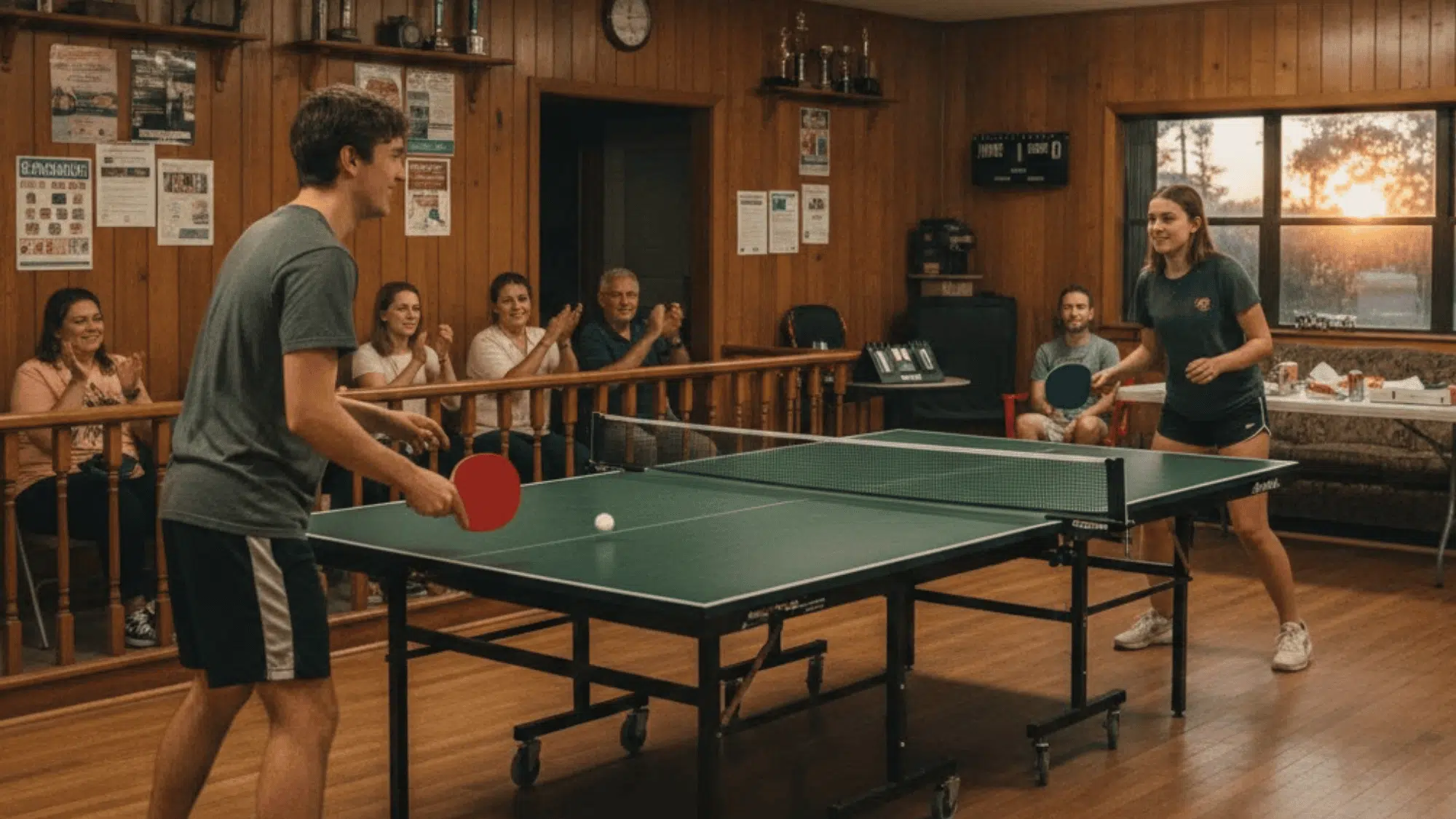
These sport-centered fundraisers turn competition and movement into donations, using simple events people already enjoy to raise money while boosting team spirit and community involvement.
40. Wiffle Ball Tournament Night
Host a recreational wiffle ball tournament where community teams of 6-8 players compete in a bracket-style competition on a scaled-down diamond.
Charge entry fees per team ($40-80) and sell concessions, with minimal equipment needed, just wiffle balls, plastic bats, and bases.
The casual, family-friendly format attracts all skill levels while celebrating baseball culture in an accessible way.
- Home run derby side event: Run a separate longest-hit competition with individual entry fees and prizes.
- Costume categories: Encourage themed team uniforms and award prizes for most creative, funniest, or spirited outfits.
- Night game atmosphere: Use portable lights and music to create an authentic ballpark vibe after sunset.
41. March Madness Bracket Pool
Run a tournament bracket pool during March Madness where participants pay $10-25 to submit their predictions for the NCAA basketball tournament.
The winner takes 60-70% of the pot while your team keeps the remainder as fundraising profit.
The month-long engagement and national excitement around college basketball drives participation beyond just your immediate community supporters.
- Multiple bracket entries: Allow people to submit 2-3 brackets for additional fees to increase the total pot.
- Weekly prizes: Award smaller bonuses for best performance each tournament round to maintain interest throughout.
- Online platform: Use bracket management sites like ESPN or Yahoo to automate tracking and scoring.
42. Tailgate Party Fundraiser
Throw a pre-game tailgate party in your stadium parking lot before a big home game, charging admission ($10-15 per person or $30-40 per family).
Provide grilled food, lawn games, music, and team spirit activities.
Tailgating taps into football culture and creates a festive community atmosphere while generating revenue through ticket sales, food markups, and merchandise sold during the event.
- Grill station sponsors: Partner with local restaurants or butchers to donate food in exchange for promotional signage.
- Cornhole tournament: Host a competitive game with entry fees and prizes during the tailgate hour.
- Alumni meet-up zone: Designate a special area where former players can reconnect and celebrate together.
43. Ping Pong Tournament
Organize a ping pong tournament at your school gym or community center, where individuals or doubles teams compete in brackets.
Charge $10-20 per person entry and set up multiple tables for simultaneous matches.
- Volleyball twist rules: Incorporate modified scoring or rally formats familiar to volleyball players for a unique flavor.
- Skills challenge stations: Add side competitions like target serving or consecutive volley counting for additional fees.
- Round-robin format: Use pool play before brackets so everyone plays multiple matches regardless of skill level.
44. Community Hike Fundraiser
Lead a group hike on local trails where participants pay registration fees ($15-30) and optionally collect pledges per mile completed.
Choose a scenic 3-7 mile route appropriate for various fitness levels, with your runners serving as pace leaders and trail guides.
The outdoor setting celebrates endurance sports while building community connections through shared physical activity and natural beauty appreciation.
- Distance options: Offer short, medium, and long route choices so families and serious hikers both participate.
- Summit celebration: Provide snacks, team photos, and recognition at the trail endpoint or scenic viewpoint.
- Nature education: Partner with local parks departments to include brief environmental education stops along the route.
Choose the Best Fundraiser for Your Team
Before you pick an idea, get clear on what “best” means for your season. A fundraiser can be high-profit, but still flop if it needs more volunteers, time, or planning than your team has.
Use this simple filter to choose the right two or three options fast:
- If You Need the Most Money in One Shot: Pick a Sports Tournament, an Auction Night, or a 5K/Fun Run. These have a big upside because you can stack income (fees + food + sponsors).
- If You Need Reliable Money with Low Stress: Focus on Sponsorship Packages, Round-Up Donations, and a Restaurant Percentage Night.
- If You Need Something Quick and Easy This Month: Run a Car Wash, Bake Sale, or Trivia Night.
- If You Want Online Reach (alumni + Relatives + Supporters out Of Town): Use Crowdfunding + Peer-to-Peer pages and keep the donation link active all season.
Pro Tip: Don’t run five fundraisers at once. Pick one “big” fundraiser + one “easy” fundraiser, then add small upgrades (round-up, sponsor-a-snack, QR codes) during games to grow the total without extra effort.
At the End
Fundraising works best when it feels transparent, fair, and doable for everyone.
The best results come from selecting ideas suited to the team’s time, community size, and season, then promoting them well, with a straightforward system for collecting money and thanking supporters.
Even small add-ons, like round-up donations or sponsor snack tables, can grow into a big total over time.
Most importantly, every fundraiser is a chance to build pride, teamwork, and local support that lasts beyond one season. Pick the best two or three ideas, set a goal, and start sharing the plan today.
Ready to raise more this season? Choose one fundraiser and set a date now.