
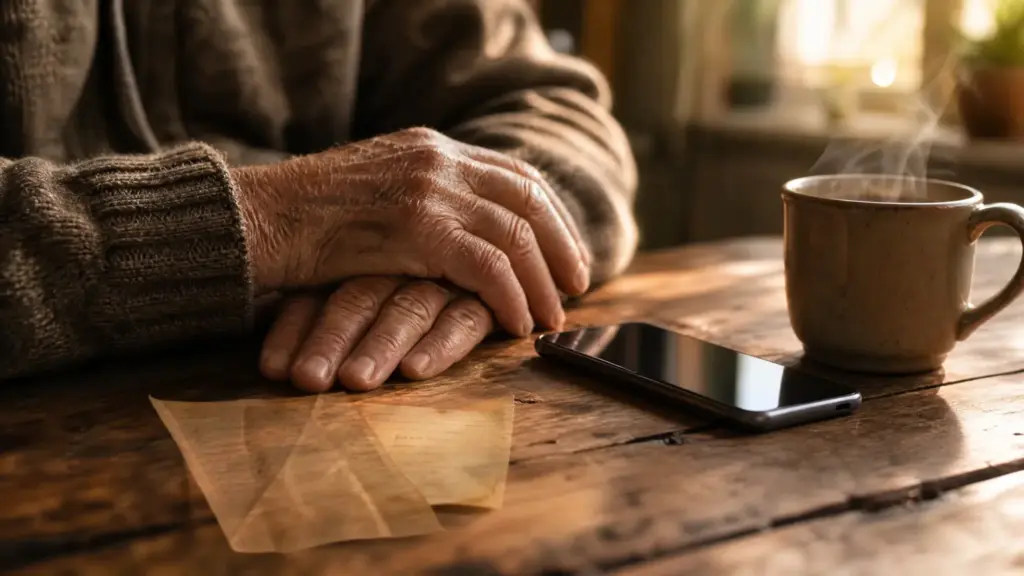



My father has played the same eight numbers for thirty years.
Two birthdays, an anniversary, the day his own father passed, and one number he has never explained to anyone, and I have learned to stop asking about. He could not tell you the odds. To be honest, he has never once cared about the odds. The numbers are a small private liturgy he performs a few times a week, and he has performed it through three house moves, one divorce, and the slow arrival of grandchildren who now know which numbers are theirs.
For most of those years it meant a trip where he walked down to the club, filled in the slip with his pencil, handed it over and kept the ticket folded in his shirt pocket where it would later go through the wash about twice a year. The walk and pencil were part of it. He was never in a hurry, because the whole point was that none of it was urgent.
Then his knees got bad and the walk stopped being free.
With ageing parents, it is rarely one dramatic loss. It is the quiet subtraction of small rituals, the ones that were never important enough to mention until suddenly they are gone and you realise they were holding up more than they looked like they were.
My sister was the one who put it on his phone. She sat next to him at the kitchen table, downloaded a keno app for Australians, and walked him through it with the specific patience you only have for a parent. He was suspicious of the whole thing, the way he is suspicious of any machine that does a thing he used to do with his hands. He kept asking where the ticket was.
There is no ticket, Dad!
The phone is the ticket and of course, he did not like that answer for about a month.
What changed his mind was that the numbers were still his.
That sounds like a small thing but not for him and many other folks like him. The fear with anything moving onto a screen is that it flattens the thing it replaces and turns a ritual into a transaction, strips out whatever made it yours.
Plenty of apps do exactly that, but the good ones are different. They understand they are not selling a new habit, they are carrying an old one across a gap, and the job is to get out of the way. He opens it, the eight numbers are already sitting there waiting for him, and the act is the same act it always was. Tap, done, phone back in the pocket where the paper ticket used to live.
He still checks the results the next morning with his coffee. He just looks at a screen now instead of a folded square of paper, and he reads out the numbers to my mother in the same flat voice he always has, and she still says “nothing” before he has finished, the same way she always has.
I used to think I would be sad when the club walk ended. Honestly, I was a little but I had the relationship backwards The walk was just the delivery mechanism for the ritual, and when his knees took the walk away, the eight numbers stayed exactly where they had always been, which is somewhere far more durable than his legs or his pockets or any particular way of placing the bet.
He is seventy-one. He has played 7, 11, 19, 23, 34, 48, 52, and the one I am not allowed to ask about, for longer than I have been alive. He has won small amounts a handful of times and lost track of the rest, because the winning was never really the point either.
The point was that some things are yours, and you get to keep doing them, even when your body starts quietly negotiating which ones you are allowed to keep.