





Soccer can change a life in a single moment. One bad tackle, one wrong landing, and a player’s whole future looks different.
This blog walks through some of the most shocking injuries in soccer history, the kind that fans and players never forget.
It also breaks down the worst types of injuries, like ACL tears, broken bones, and concussions, in simple terms.
You’ll see why these injuries happen, the warning signs your body gives, and what really helps protect players on the field.
Finally, it looks at the road back: surgery, rehab, and the mental battles players face when they try to return to the game they love.
When Soccer Injuries Changed Everything
Some injuries in soccer history are so shocking that fans still remember exactly where they were when they happened. These aren’t just statistics; they’re real stories about real players whose lives changed in an instant.
1. Eduardo da Silva’s Nightmare (2008)
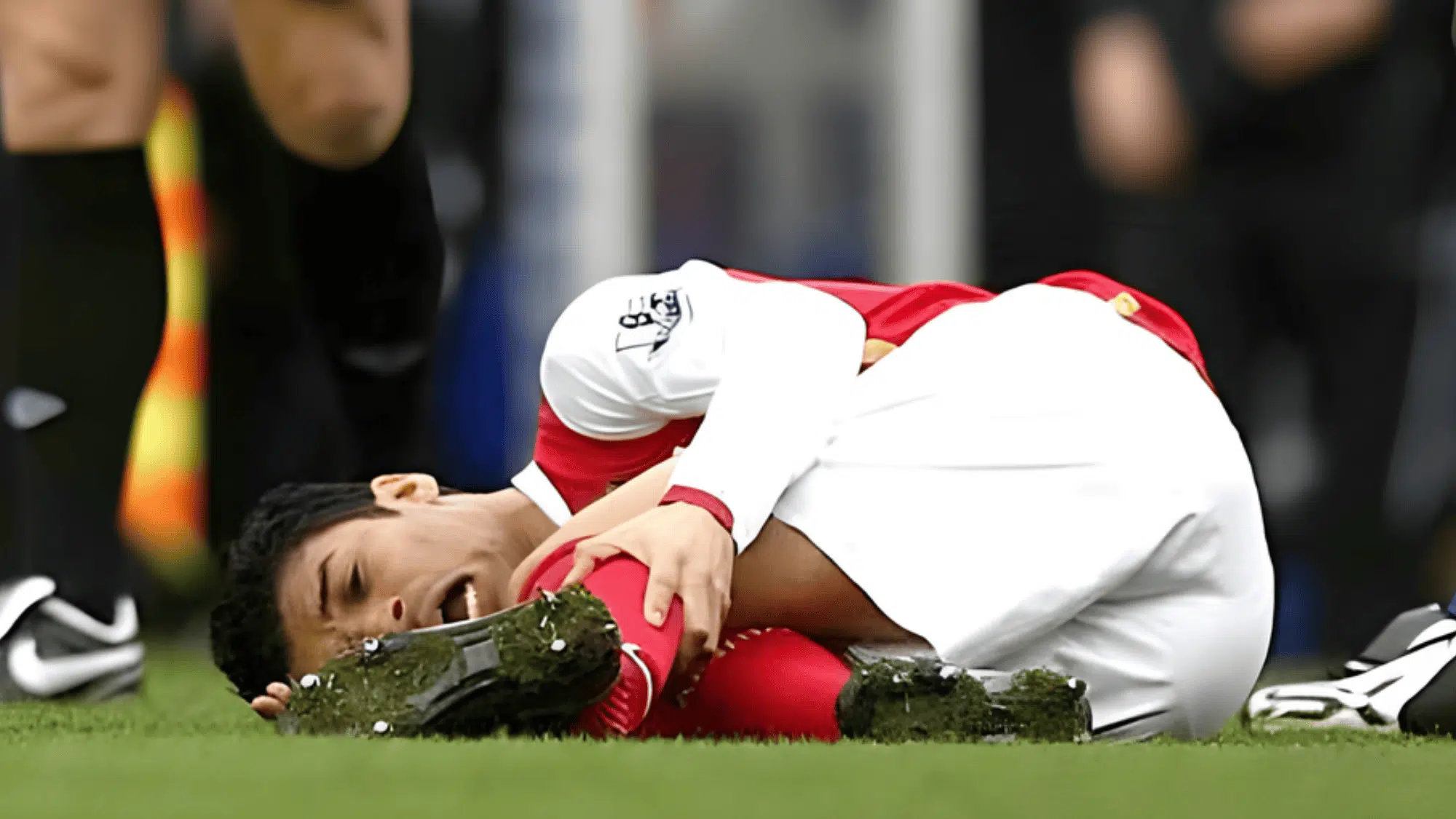
Arsenal’s Brazilian-Croatian striker was in brilliant form when Martin Taylor’s challenge shattered his left leg against Birmingham City.
The gruesome compound fracture exposed bone and dislocated his ankle, creating images so disturbing that broadcasters banned replays.
Eduardo spent a year recovering and returned to professional football, but the fearless, dynamic forward who terrorized defenses was gone forever.
- The tackle sparked massive debate about player protection, leading to Taylor receiving a three-match ban and widespread calls for stricter punishment of dangerous challenges
- Eduardo later revealed he suffered psychological trauma and needed therapy to overcome his fear of similar tackles when returning to competitive action
2. David Busst’s Career-Ending Horror (1996)
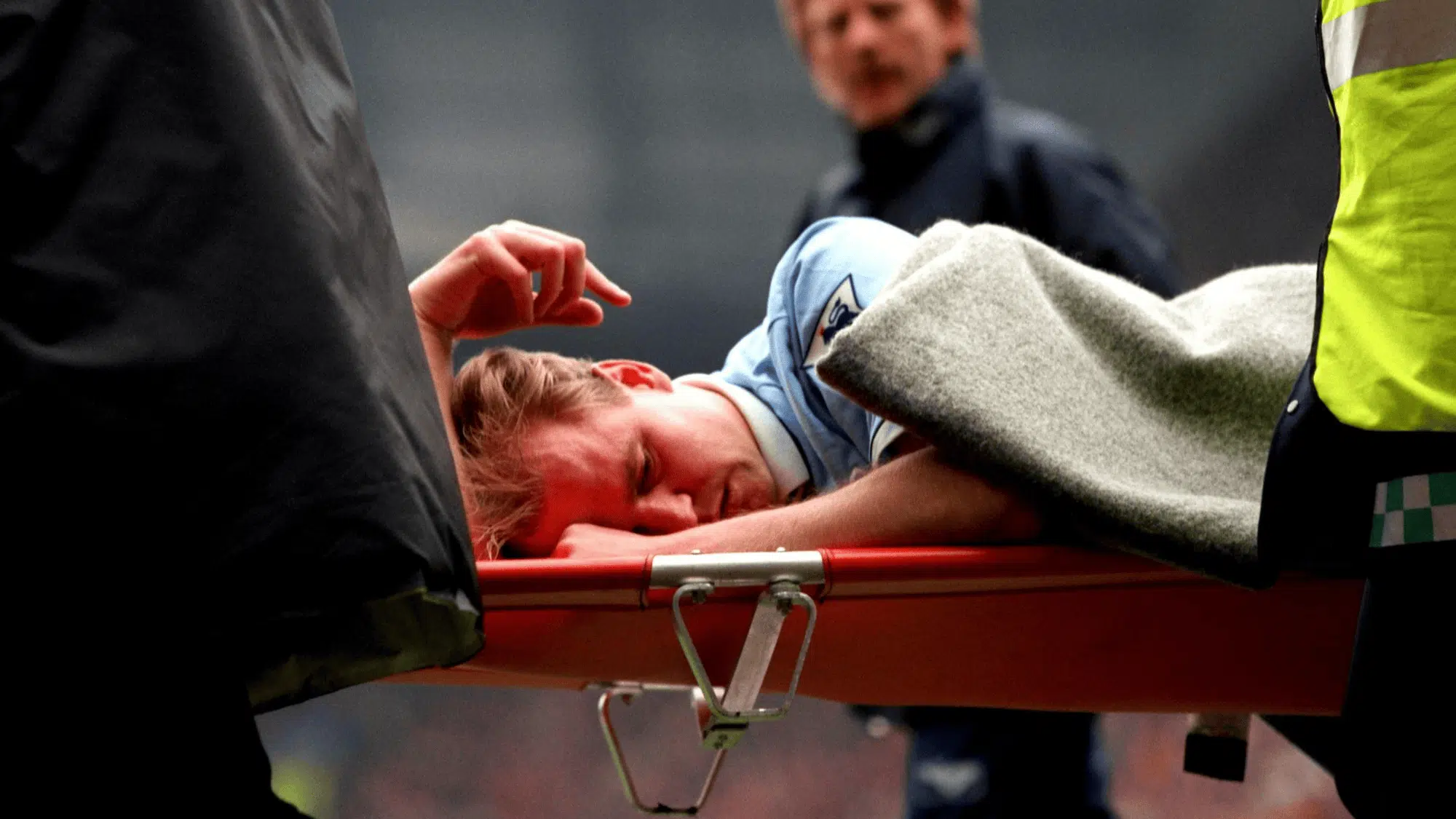
Coventry City’s defender suffered football’s most notorious injury during a collision with Manchester United players.
Both lower leg bones snapped completely, with fragments piercing through his skin in full view of 40,000 horrified spectators at Old Trafford.
Peter Schmeichel, the United goalkeeper, immediately waved for medical help while visibly distressed. Twenty-six surgeries and multiple infections later, Busst retired at just 29.
- The injury was so traumatic that several players, including Schmeichel, required counseling afterward, and some fans in the stadium fainted or left immediately
- Busst eventually turned his experience into something positive, becoming a physiotherapist and helping other injured players through their rehabilitation journeys
3. Luke Shaw’s Double Fracture (2015)
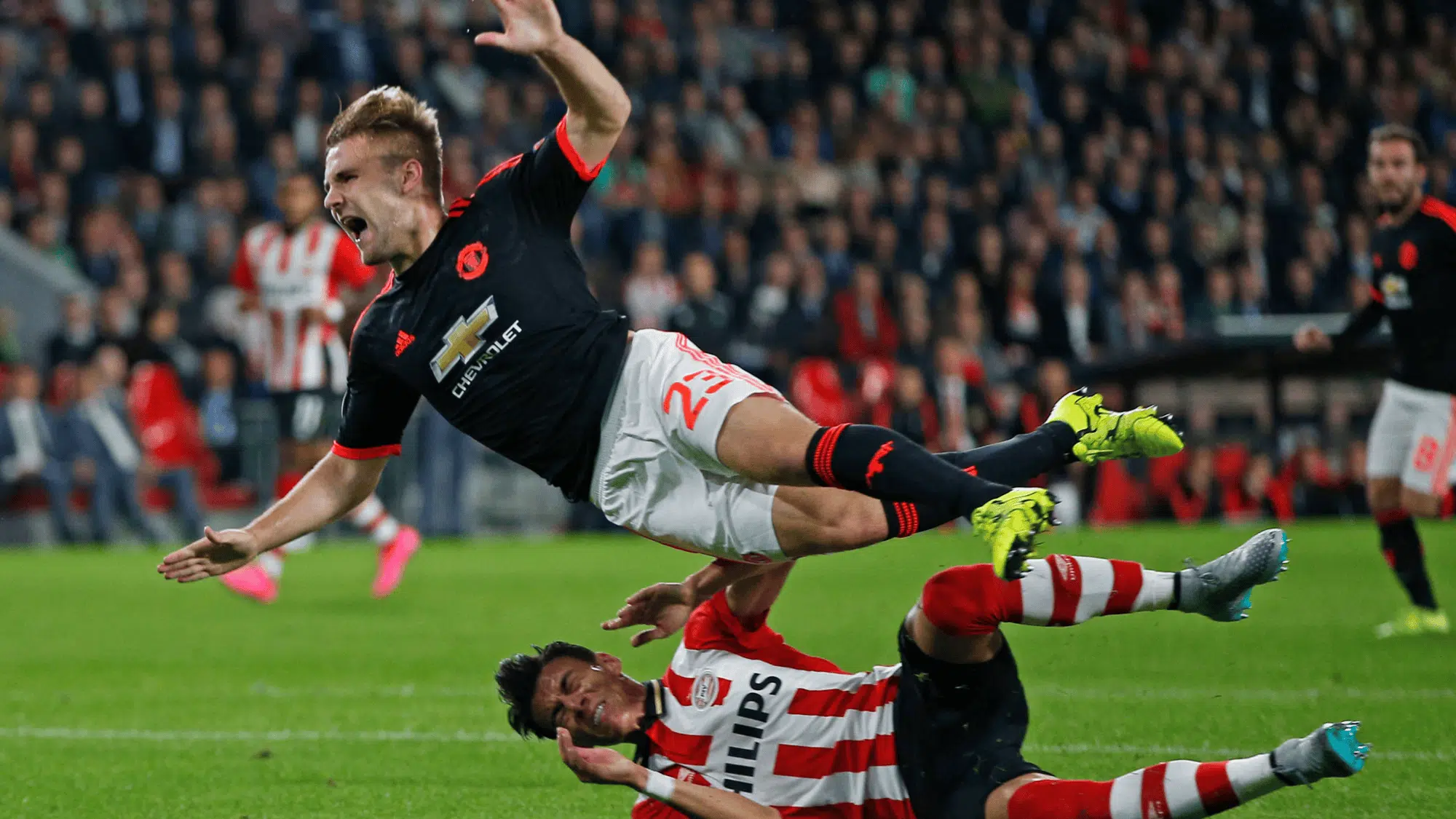
Manchester United’s left-back suffered a horrific double leg break during a Champions League clash with PSV Eindhoven.
Hector Moreno’s challenge caused Shaw’s tibia and fibula to snap, with his leg bending grotesquely backward. The 20-year-old required oxygen on the pitch and immediate surgery in the Netherlands.
His nine-month absence raised serious doubts about whether he’d ever reach his massive potential.
- Shaw admitted he fell into depression during recovery, gaining weight and questioning whether he wanted to continue his career at the highest level
- His remarkable comeback earned him England’s Player of the Year in 2019 and a key role in their Euro 2020 final appearance
4. Aaron Ramsey’s Breaking Point (2010)
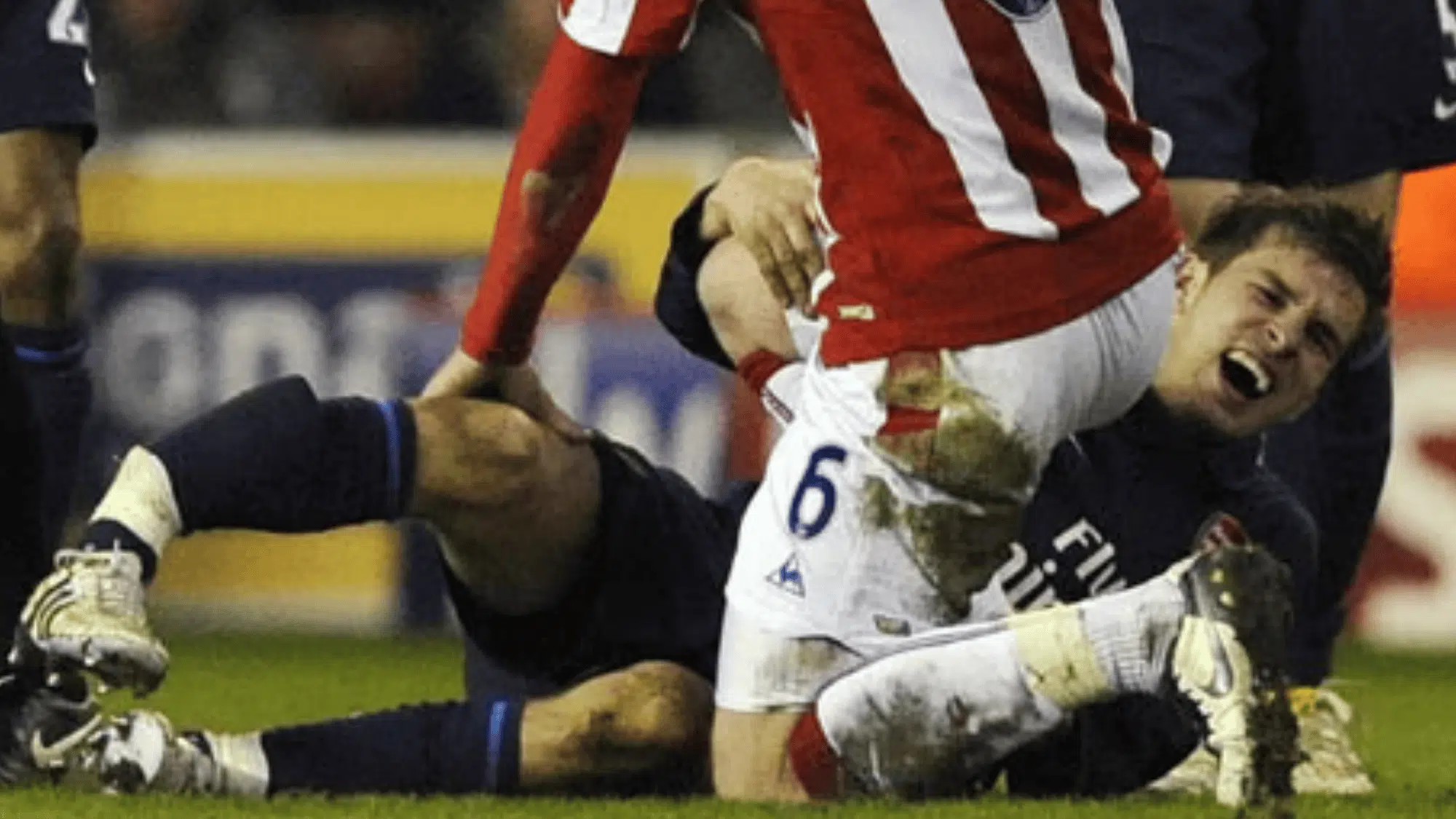
Arsenal’s promising 19-year-old midfielder had his leg broken in two places by Stoke City’s Ryan Shawcross in a challenge that divided opinion.
The tackle wasn’t malicious, but the consequence was devastating; Ramsey’s right tibia and fibula were shattered.
Nine months of rehabilitation followed, with Ramsey admitting he struggled with confidence and feared another injury. His patience and determination ultimately paid off spectacularly.
- The injury created a strange superstition among fans who noticed that every time Ramsey scored, a celebrity seemed to die shortly after, becoming an internet phenomenon
- Ramsey transformed from an injury-plagued youngster into a Champions League-winning midfielder, scoring the winning goal in two FA Cup finals
5. Djibril Cissé’s Repeated Nightmare (2004 & 2006)
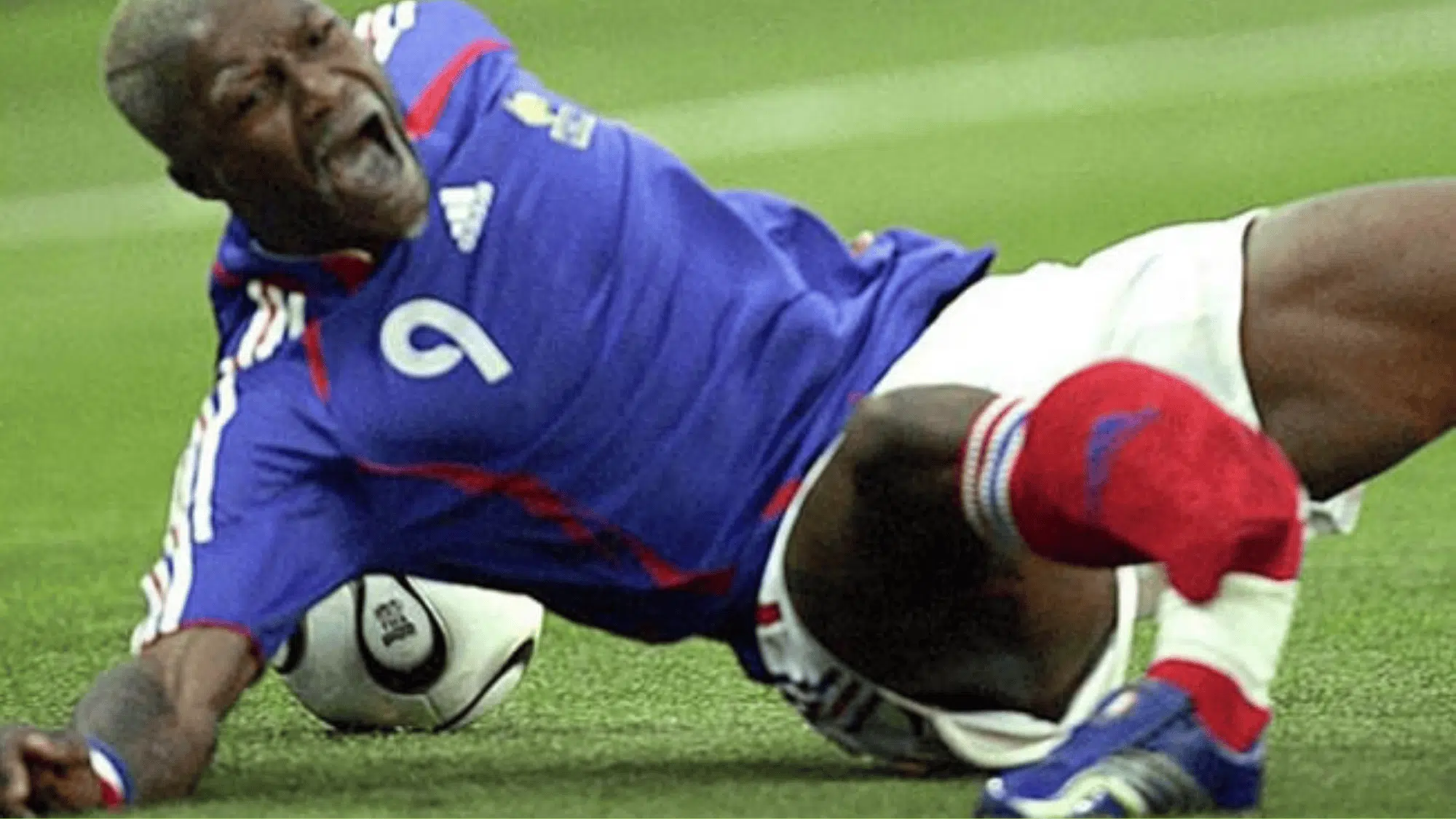
Liverpool’s French striker experienced every footballer’s worst fear, not one, but two horrific leg breaks in his career.
The first came against Blackburn Rovers when his tibia and fibula snapped during a routine challenge.
Just as he recovered and regained form, lightning struck twice during a France training session ahead of the 2006 World Cup. Remarkably, Cissé not only recovered but actually played in that World Cup final.
- His first injury was so severe that doctors initially feared he might never walk properly again, let alone return to professional football at the elite level.
- Cissé’s mental fortitude became legendary; he refused to watch replays of either injury and credited his positive mindset as the key to both comebacks.
6. Alf-Inge Håland’s Career Destruction (2001)
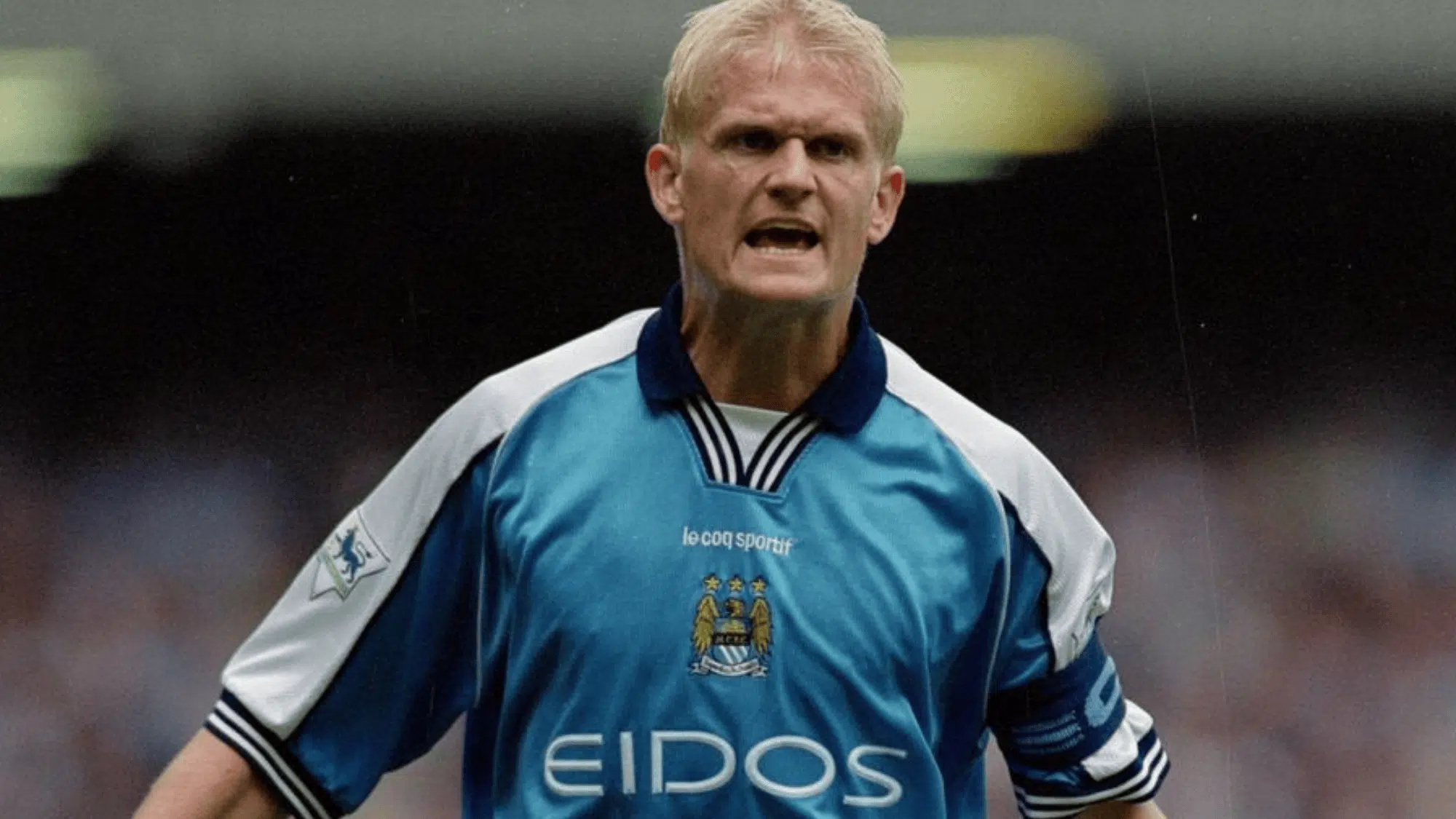
Manchester City’s Norwegian midfielder became the victim of one of football’s most infamous revenge tackles when Roy Keane deliberately targeted his right knee.
The challenge ended Håland’s career, though Keane only admitted the intent in his autobiography years later.
What made this tragedy worse was that Håland had previously suffered a serious left knee injury, and compensating for that weakness made his right knee vulnerable to the devastating impact.
- Keane received just a three-match ban initially, but after admitting premeditation in his book, the FA extended his suspension to five matches and fined him £150,000
- Håland’s son, Erling Haaland, has become one of the world’s best strikers, achieving the success his father’s career was cruelly denied
7. Francesco Totti’s World Cup Heartbreak (2006)
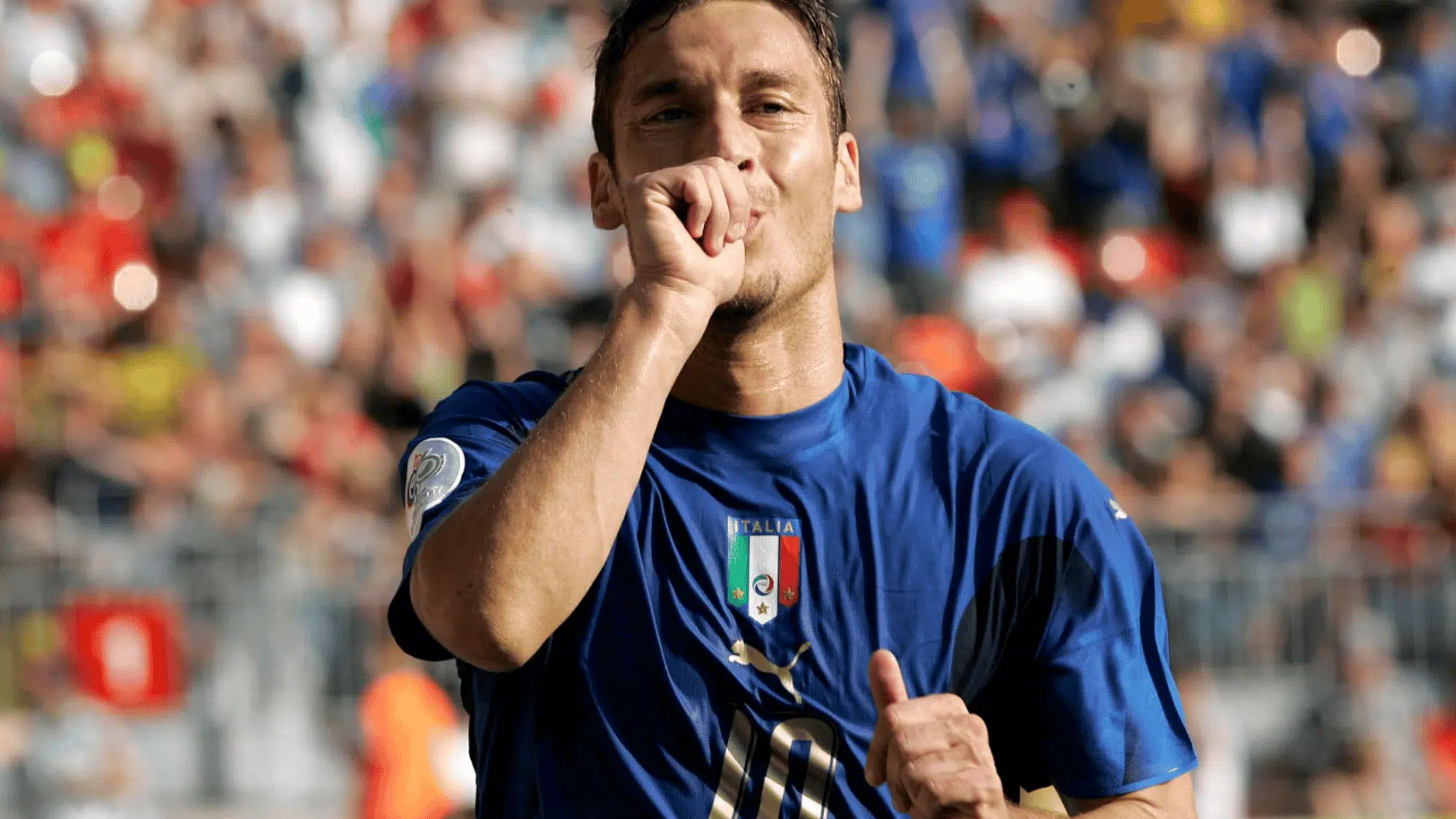
Roma’s legendary captain suffered a devastating ankle fracture just weeks before Italy hosted the 2006 World Cup.
The injury occurred in a collision during a Serie A match, and doctors gave him virtually no chance of recovering in time for the tournament.
Totti defied medical opinion through intense rehabilitation, but played the entire World Cup wearing a protective cast and clearly not at full fitness, limiting his impact on Italy’s eventual triumph.
- Despite being nowhere near match fit, Totti still managed to provide crucial assists, and his famous penalty against Australia in the knockout rounds
- The injury accelerated his physical decline, and Totti later admitted he never regained the explosive acceleration that made him unstoppable in his prime years
8. Radamel Falcao’s Torn ACL (2014)
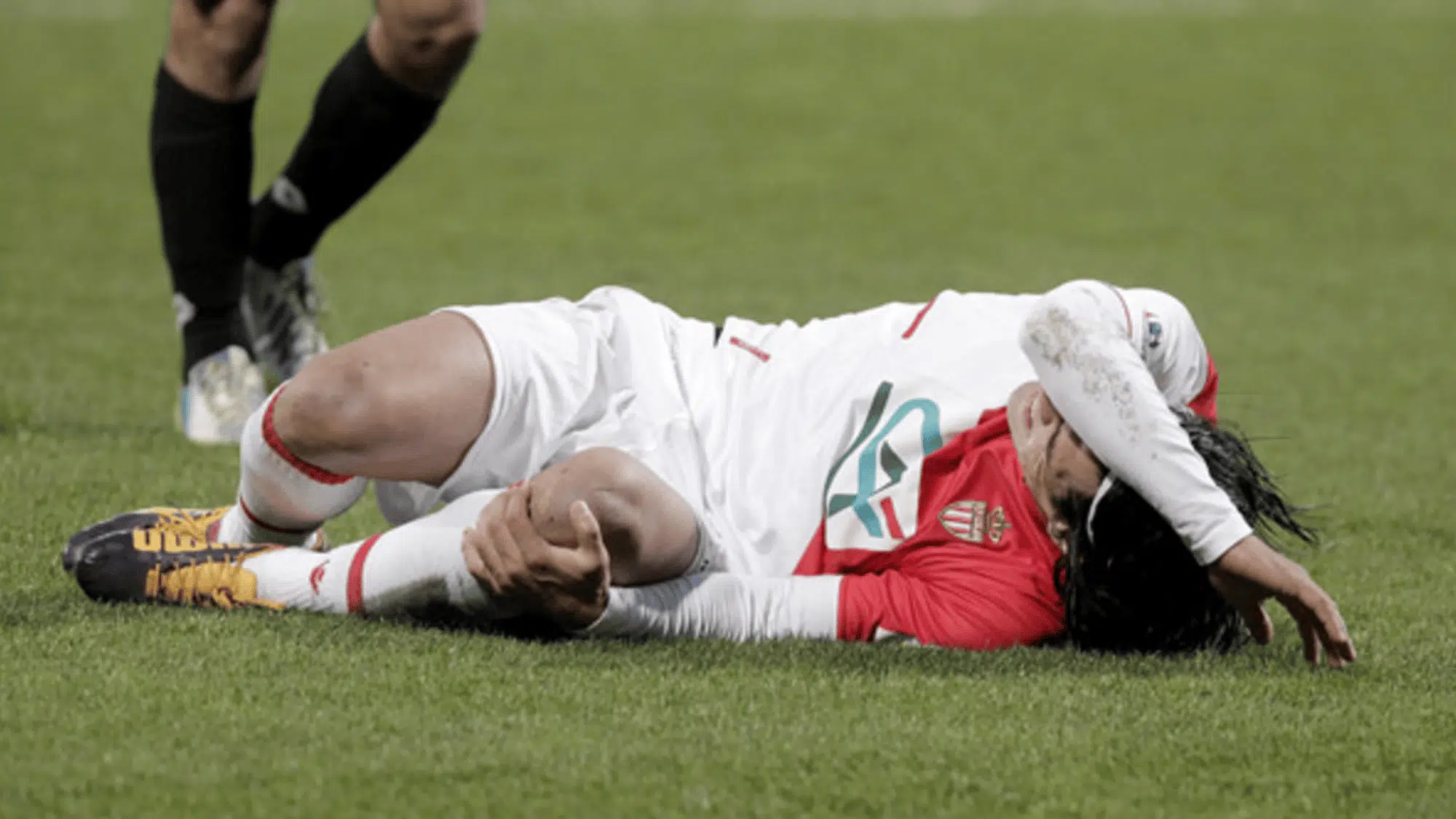
Monaco’s Colombian superstar was arguably the world’s deadliest striker when he ruptured his anterior cruciate ligament in a French Cup match.
The timing couldn’t have been worse – just months before Colombia’s promising World Cup campaign, where he was expected to shine.
Falcao underwent surgery and missed the tournament entirely, watching helplessly as his teammates exceeded expectations. His explosive pace and predatory instincts never fully returned to pre-injury levels.
- Colombia’s president personally called Falcao and flew him to Brazil anyway, hoping his presence would inspire the team that reached the quarterfinals without him
- The injury derailed what should have been his career peak years, turning loan moves to Manchester United and Chelsea into disappointing chapters filled with struggle
9. Michael Owen’s World Cup Disaster (2006)
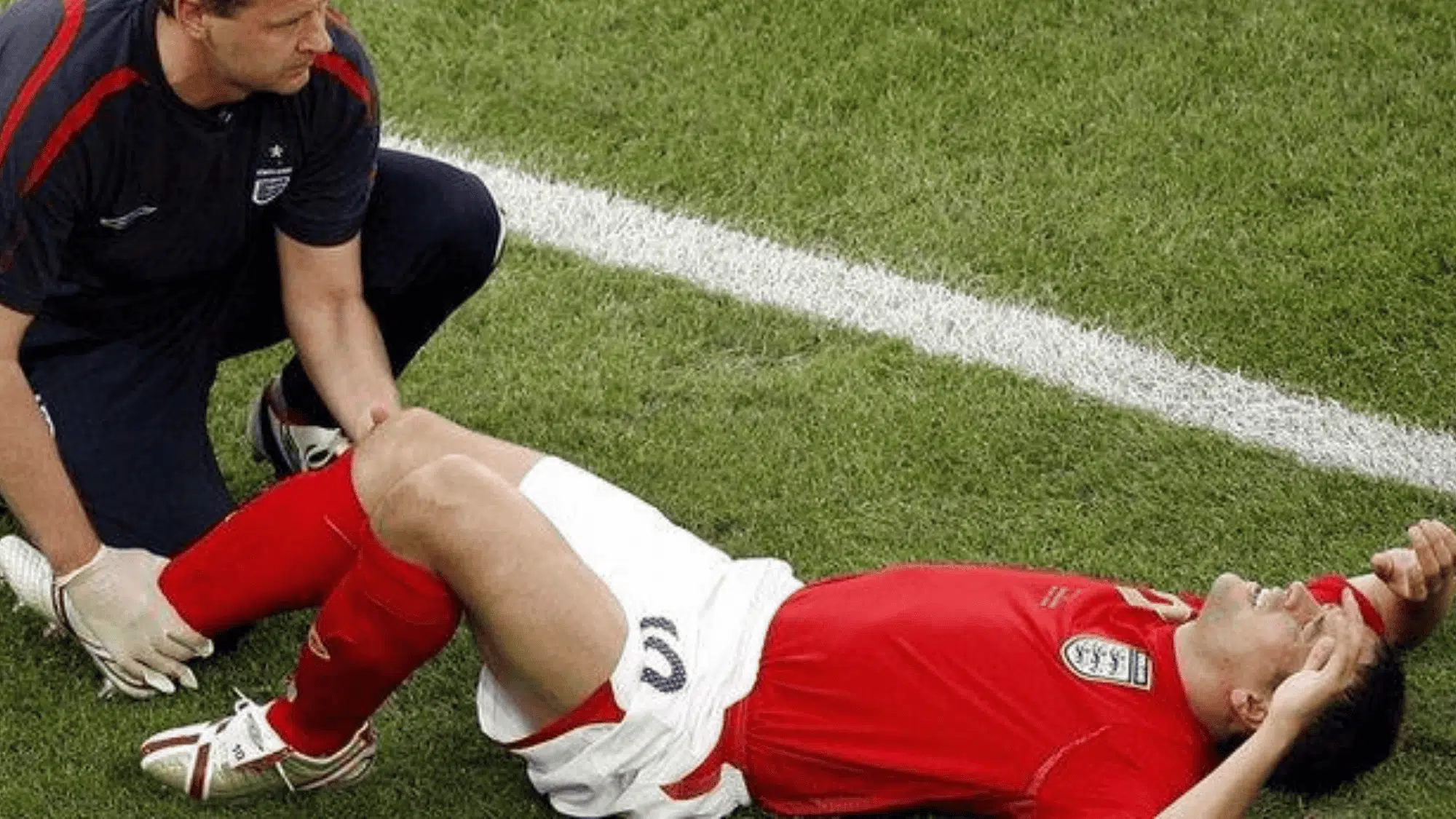
England’s golden boy suffered a cruel cruciate ligament rupture during the 2006 World Cup match against Sweden.
Owen was chasing a through ball when his knee simply gave way without any contact, leaving him crumpled on the turf in agony.
The injury required major surgery and ruled him out for nearly a year. When he returned, the lightning pace that defined his game had vanished, forcing him to completely reinvent his playing style.
- The injury occurred in the final group game, and England’s subsequent tournament struggles highlighted how desperately they missed his pace and finishing ability
- Owen went from scoring 40 goals in 89 England appearances before the injury to just 8 goals in 20 caps afterward, essentially ending his international career
10. Abou Diaby’s Injury Curse (2006-2016)
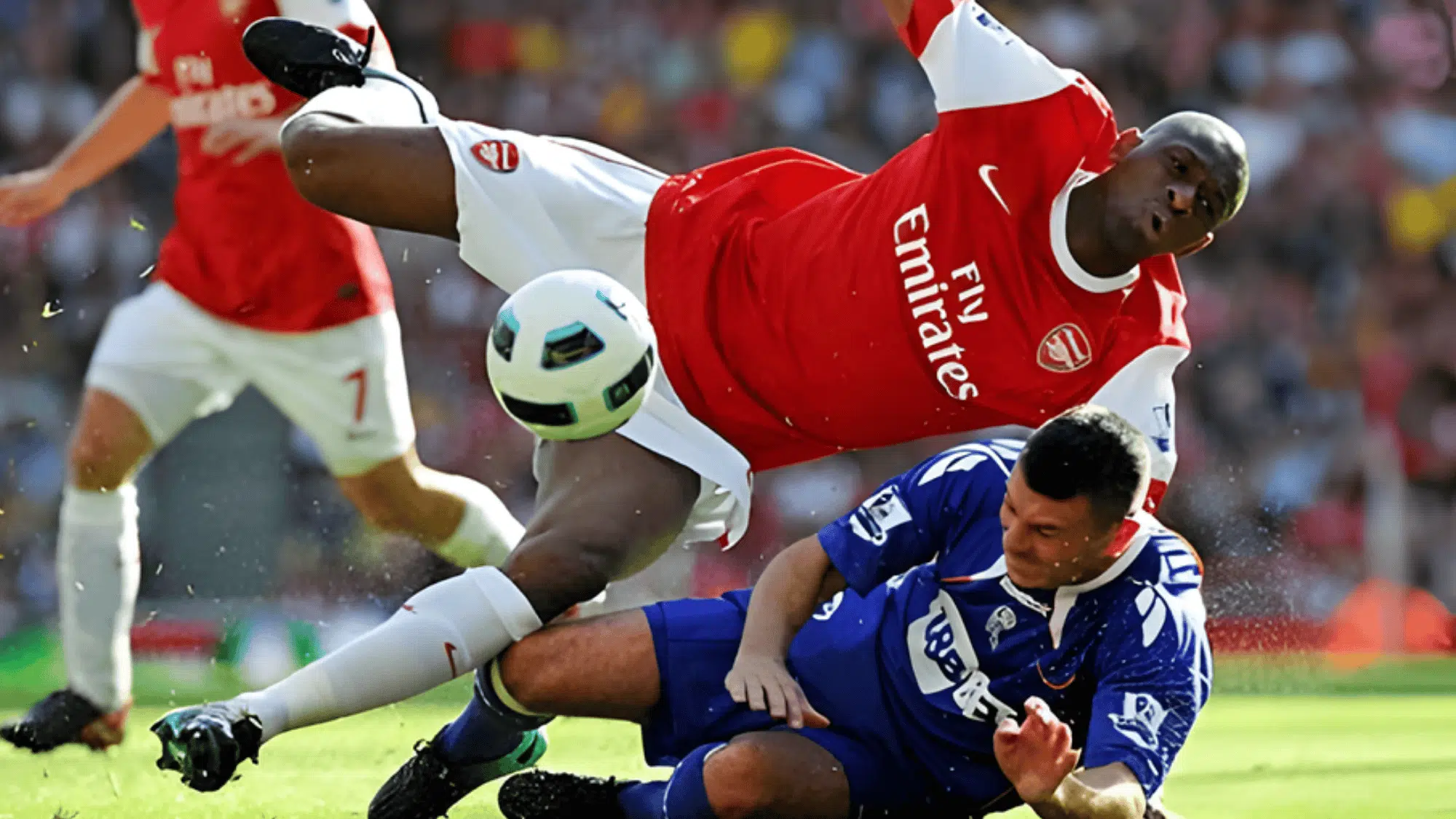
Arsenal’s French midfielder suffered an ankle injury against Sunderland that sparked a decade-long nightmare of recurring problems.
Dan Smith’s horrific challenge dislocated Diaby’s ankle and fractured his fibula, requiring surgery and months of rehabilitation.
What followed was heartbreaking: 42 separate injuries over his career, keeping him sidelined for nearly 300 matches.
Arsène Wenger called him a potential world-beater, but Diaby’s body simply couldn’t withstand professional football’s demands.
- The initial injury was so poorly healed that it created biomechanical issues throughout his body, making him susceptible to muscle tears, ligament damage, and joint problems
- In nine years at Arsenal, Diaby managed just 124 appearances despite his obvious talent, eventually retiring at age 30 after playing only one match in two seasons
11. Petr Čech’s Skull Fracture (2006)
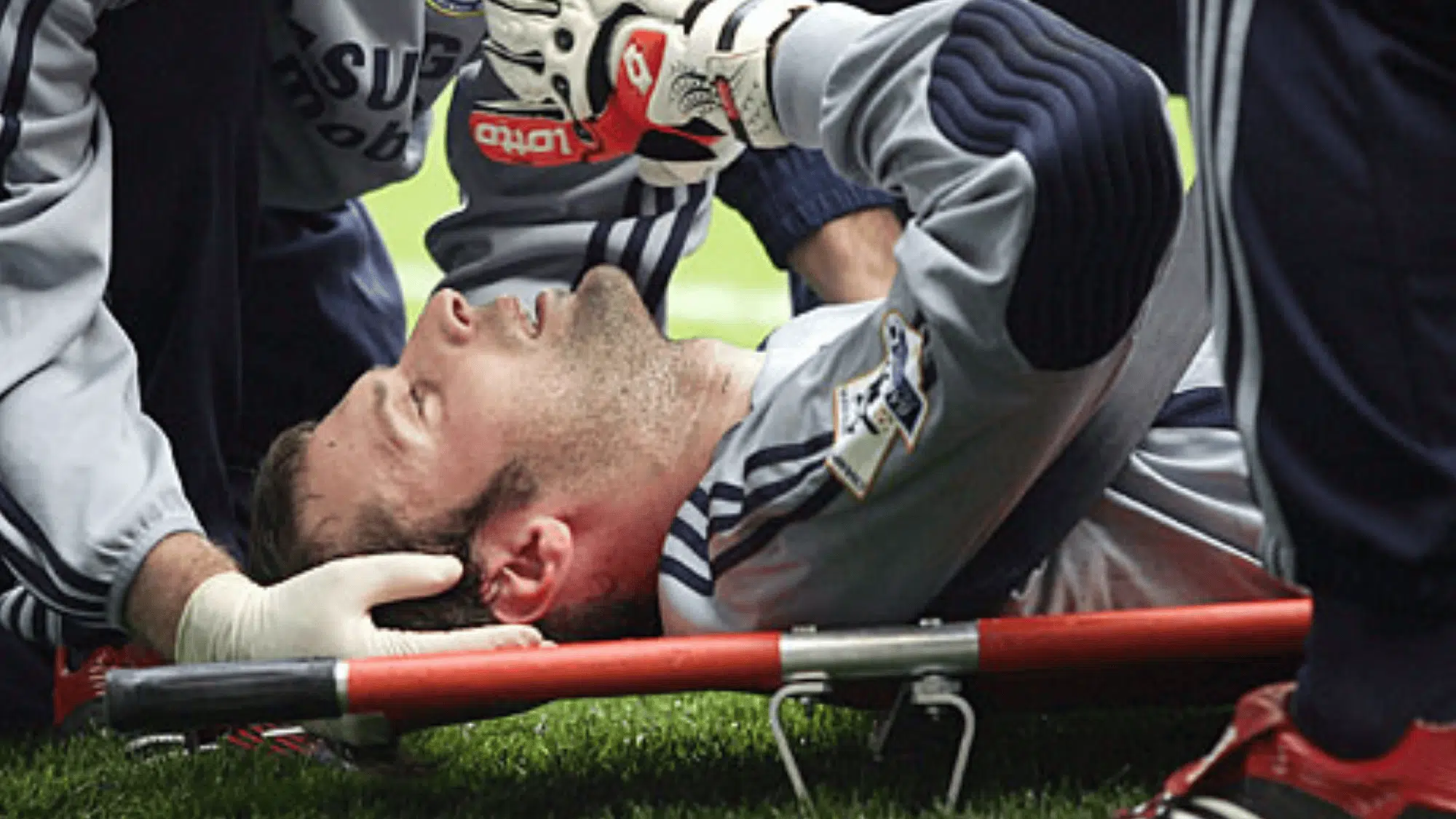
Chelsea’s goalkeeper suffered a life-threatening head injury when Reading’s Stephen Hunt’s knee collided with his skull during a routine challenge.
Čech collapsed unconscious on the pitch, requiring emergency surgery to relieve pressure on his brain from a depressed skull fracture. Surgeons inserted metal plates into his head, and doctors warned he might never play again.
Remarkably, Čech returned after just three months, but forever wore his iconic protective helmet as a reminder of how close he came to death.
- The incident sparked major debates about goalkeeper protection, with many calling for mandatory headgear in situations where strikers challenge with raised feet or knees
- Čech’s bravery and mental strength after the injury became legendary – he won nearly everything possible afterward, including the Golden Glove multiple times, despite his vulnerability
12. Kieron Dyer’s Double Break (2007)
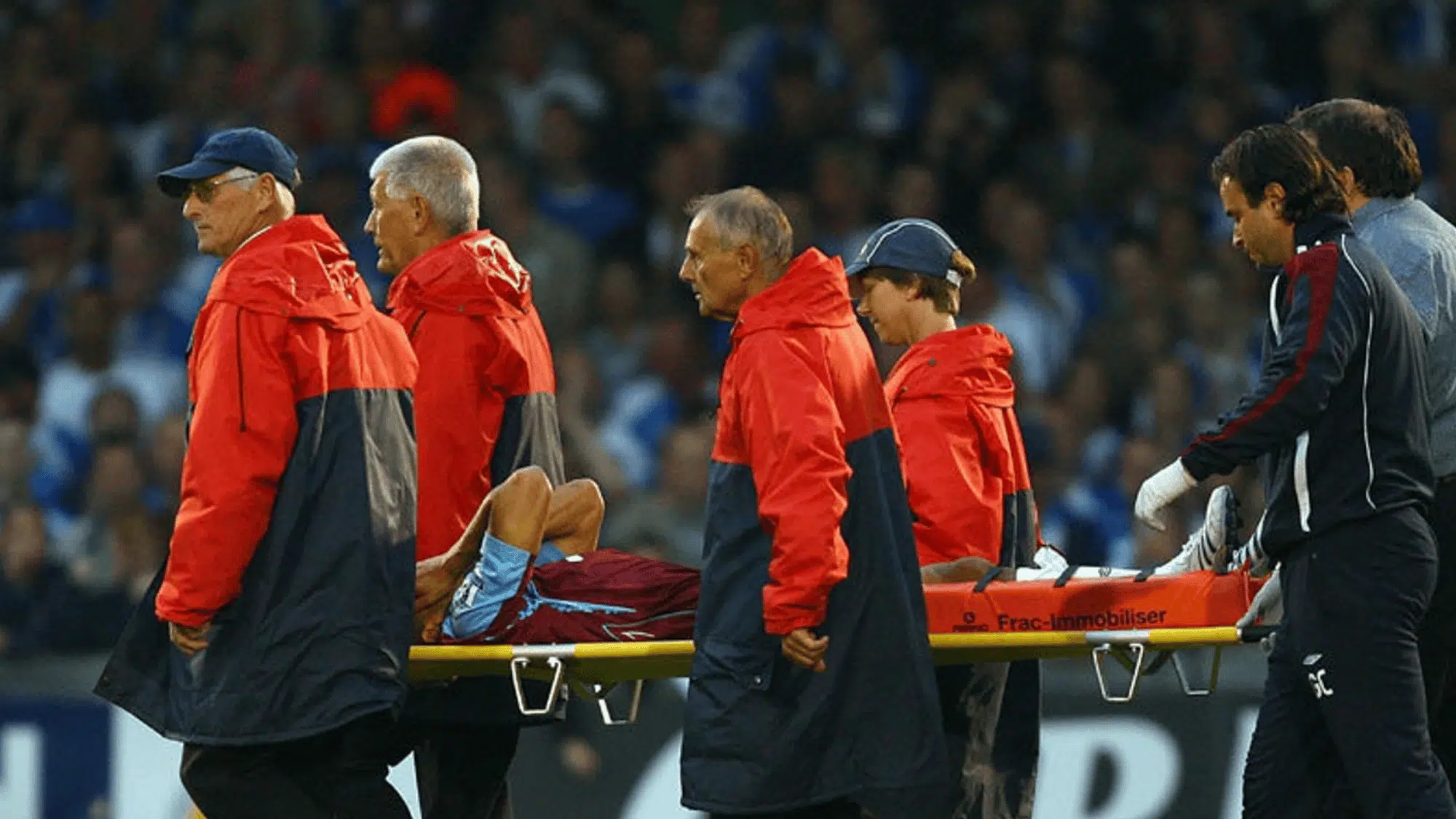
Newcastle United’s energetic midfielder suffered a sickening double leg fracture during a match against Bristol City when his studs caught in the turf awkwardly.
Both his tibia and fibula snapped completely, with teammates immediately signaling the severity to medical staff. The injury occurred at a critical juncture when Dyer was fighting to regain his England place after previous fitness struggles.
His recovery took over a year, and he never recaptured the dynamic form that once made him indispensable.
- Dyer later revealed he heard the bones snap and immediately knew his career had changed forever, experiencing instant depression while lying on the pitch
- The psychological impact proved almost harder than the physical recovery – Dyer developed chronic anxiety about re-injury that affected his confidence and playing style permanently
13. Demba Ba’s Gruesome Break (2017)
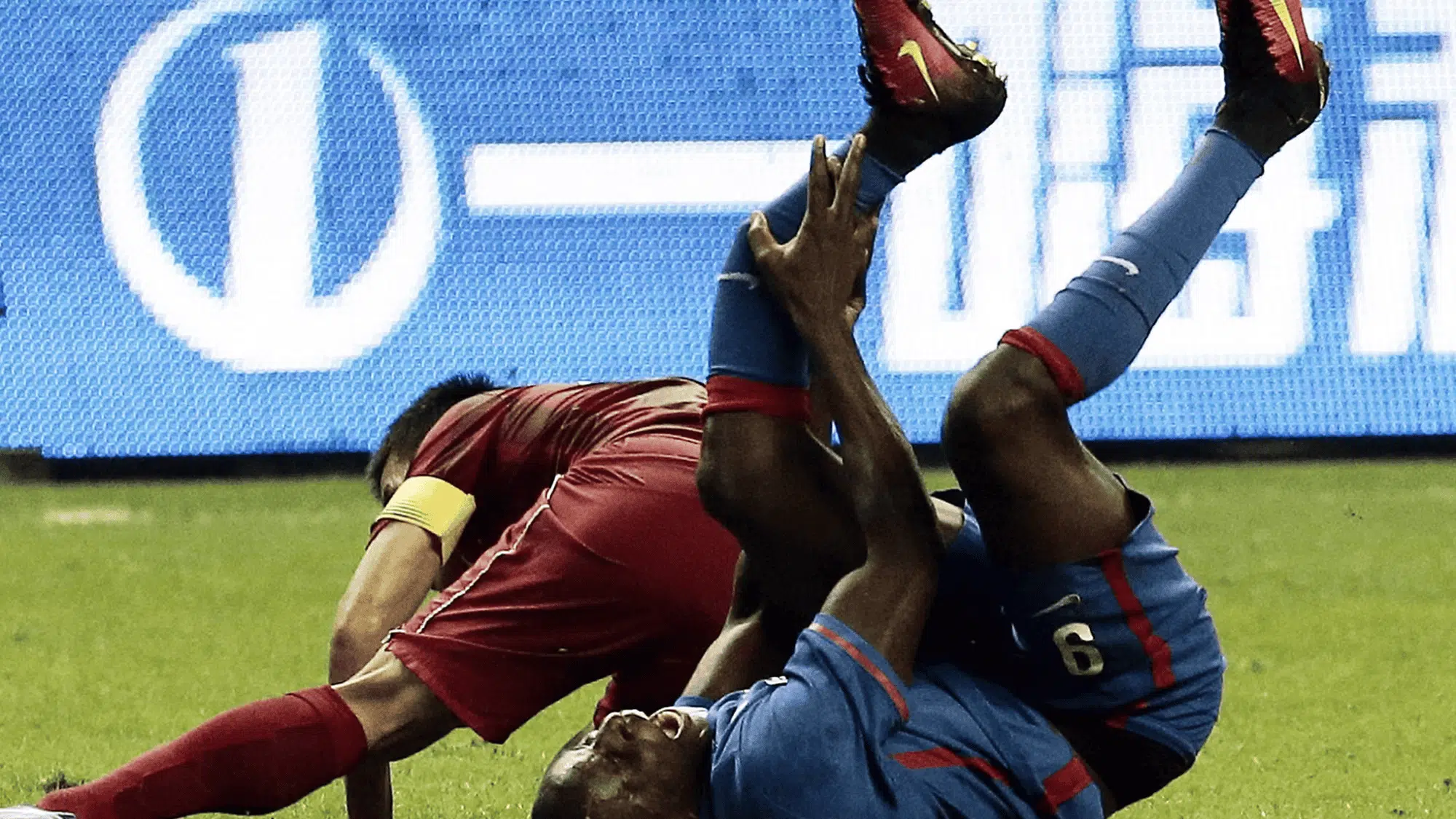
The Senegalese striker, then playing in China for Shanghai Shenhua, suffered a horrifying leg fracture that shocked the football world.
During a routine challenge, Ba’s left leg folded at an unnatural angle, breaking his tibia and fibula in multiple places. The injury was so severe that teammates immediately turned away, unable to watch, while Ba screamed in agony.
At 32, many feared his career was over, though Ba fought through rehabilitation with remarkable determination.
- The graphic images circulated globally within minutes, reigniting discussions about whether broadcasters should show such injuries or protect viewers from traumatic content
- Ba eventually returned to professional football in Turkey, defying expectations, but admitted the mental scars and fear of re-injury never completely disappeared from his mind
14. Antonio Valencia’s Ankle Horror (2010)
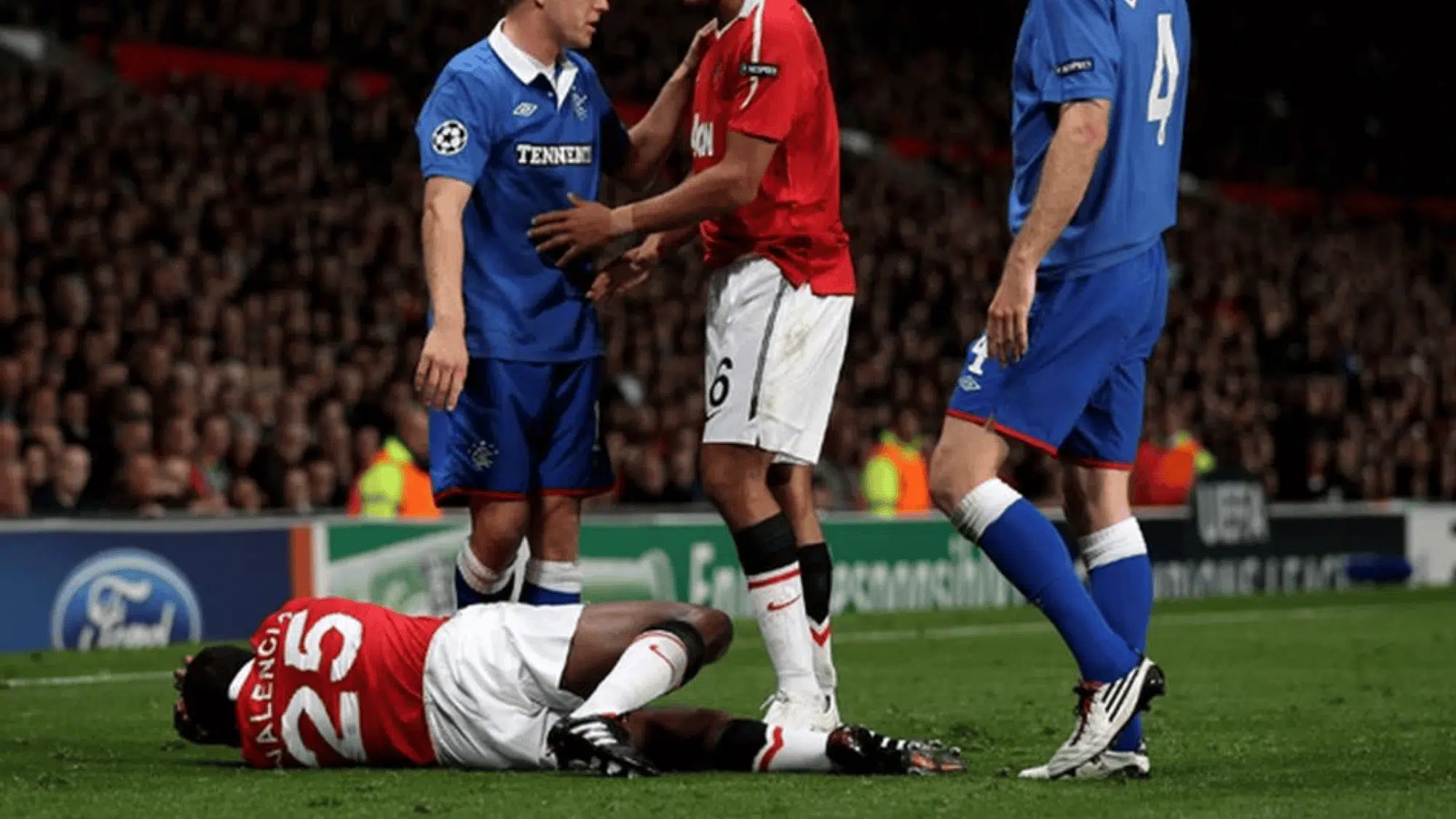
Manchester United’s Ecuadorian winger suffered a sickening ankle dislocation and fracture against Rangers in a Champions League match.
His left foot twisted completely backward after catching in the turf, causing several players to immediately wave for help in distress. The graphic injury occurred on live television, traumatizing viewers worldwide.
Valencia required emergency surgery and missed seven months, returning with noticeable hesitation when using his left foot for several seasons afterward.
- Sir Alex Ferguson admitted it was one of the worst injuries he’d witnessed in decades of management, comparing it to the severity of David Busst’s catastrophic leg break
- Valencia remarkably reinvented himself as a right-back later in his career, partly to reduce the explosive movements and sharp turns that risked re-injury to his reconstructed ankle
15. Henrik Larsson’s Broken Leg (1999)
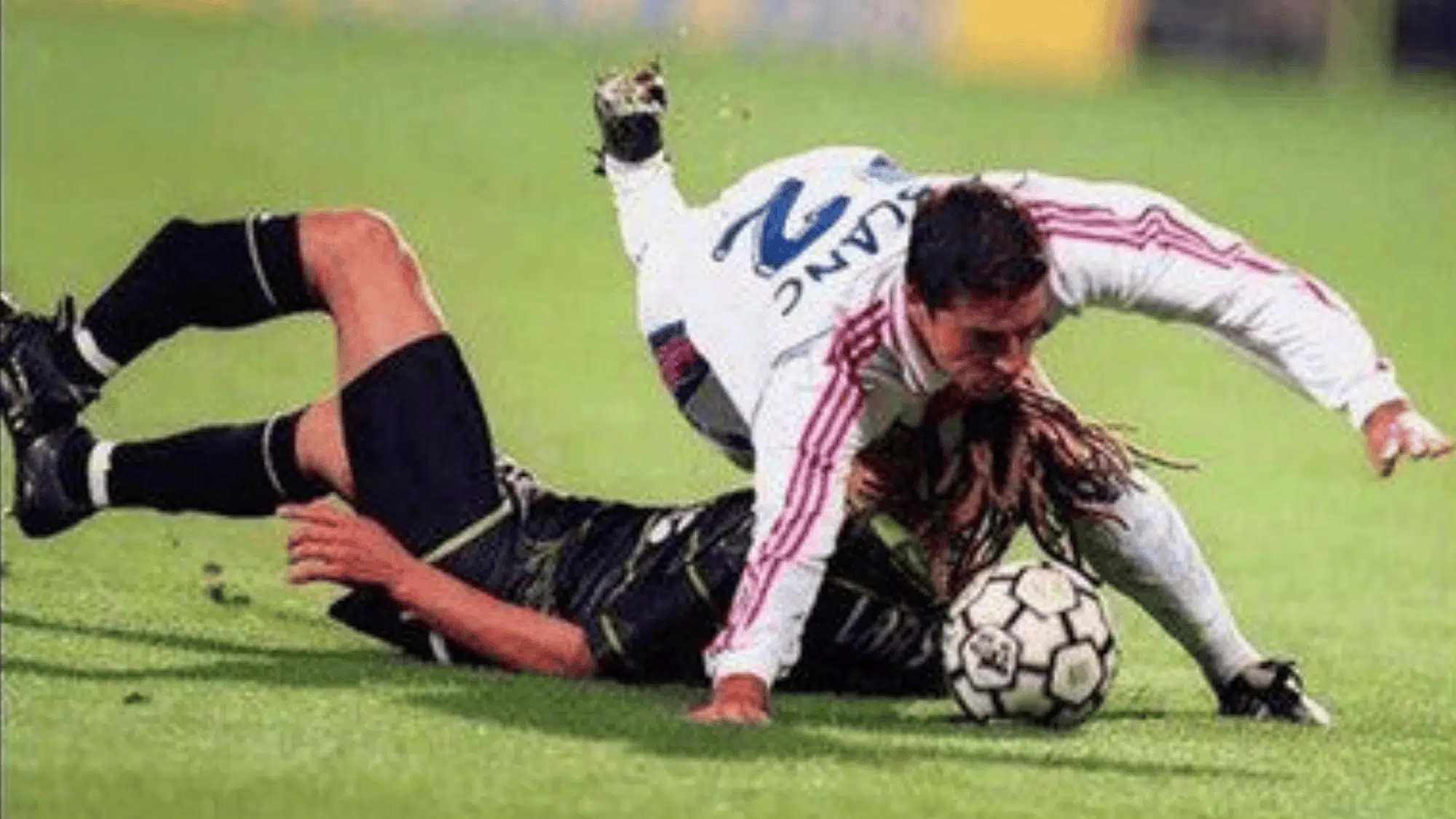
Celtic’s Swedish superstar suffered a double leg fracture during a UEFA Cup match against Lyon that threatened to end his career at its peak.
Larsson’s tibia and fibula snapped after an innocuous-looking challenge, leaving him writhing in agony on the pitch. The injury required extensive surgery and sidelined him for eight months during what should have been his prime years.
Medical experts expressed doubt that he’d ever return to his previous level of performance.
- Larsson defied all expectations by returning stronger than ever, scoring 53 goals the following season and becoming one of Europe’s most feared strikers for years
- He credited his recovery to Celtic’s medical staff and his own mental resilience, later saying the injury taught him to appreciate every moment on the pitch more deeply
16. Matija Nastasić’s Knee Destruction (2014)
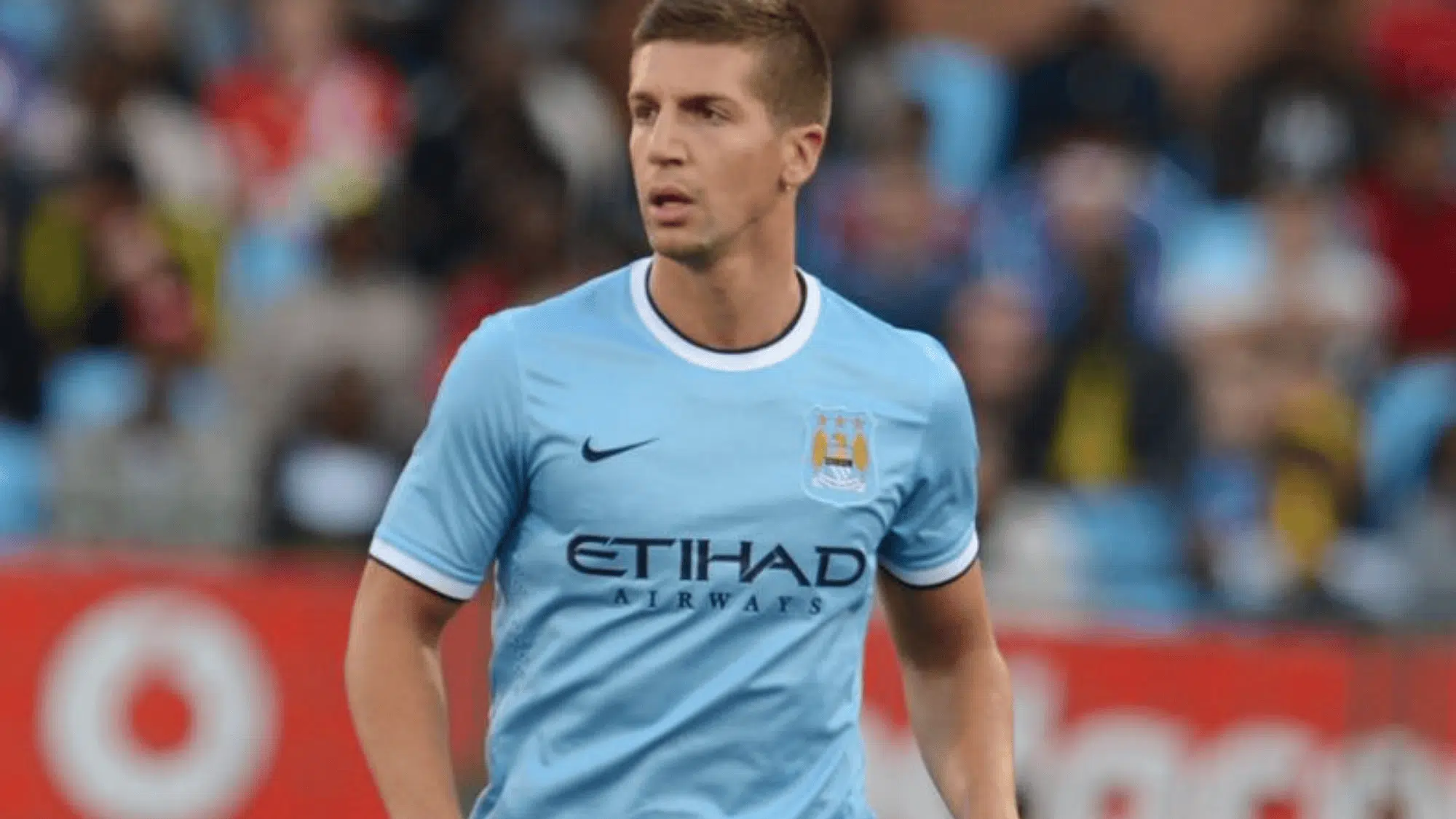
Manchester City’s Serbian defender suffered a severe knee injury during a match against West Bromwich Albion that derailed a promising career.
The 21-year-old twisted his knee awkwardly in a challenge, tearing his anterior cruciate ligament and damaging cartilage extensively.
Nastasić had been considered one of Europe’s brightest young defensive talents, regularly partnering Vincent Kompany in City’s backline.
The lengthy rehabilitation and loss of pace transformed him from a future star into a journeyman defender struggling for regular football.
- City’s medical team discovered the injury was worse than initially diagnosed, requiring multiple surgeries and extending his recovery time to nearly a full year of absence
- The psychological impact proved devastating. Nastasić later admitted he lost confidence in his body and never attempted the aggressive, front-foot defending that defined his early promise
17. Santi Cazorla’s Ankle Nightmare (2016-2018)
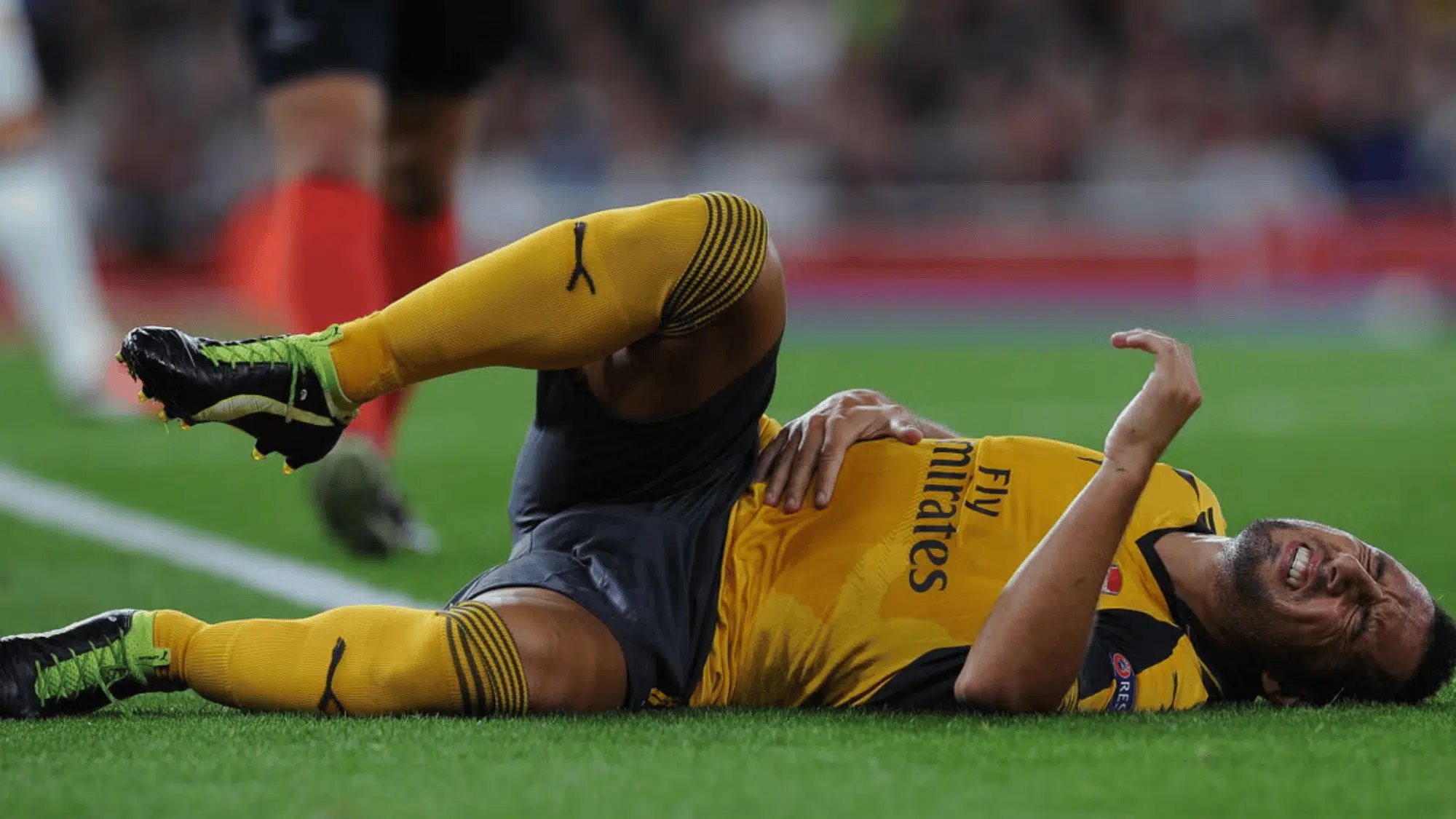
Arsenal’s Spanish playmaker suffered what became an eight-surgery ordeal after a seemingly minor ankle problem developed into a career-threatening infection.
Cazorla’s Achilles tendon became infected after initial surgery, with doctors warning he might lose his foot entirely due to the risk of gangrene.
He spent nearly two years unable to walk properly, undergoing skin grafts and multiple reconstructive procedures.
- The beloved midfielder fought back against impossible odds, eventually returning to professional football in Spain at age 34.
- Cazorla revealed that surgeons took skin from his arm to reconstruct his ankle, and at one point, he couldn’t tie his own shoes or walk his daughter to school
18. Neymar’s Vertebrae Fracture (2014)
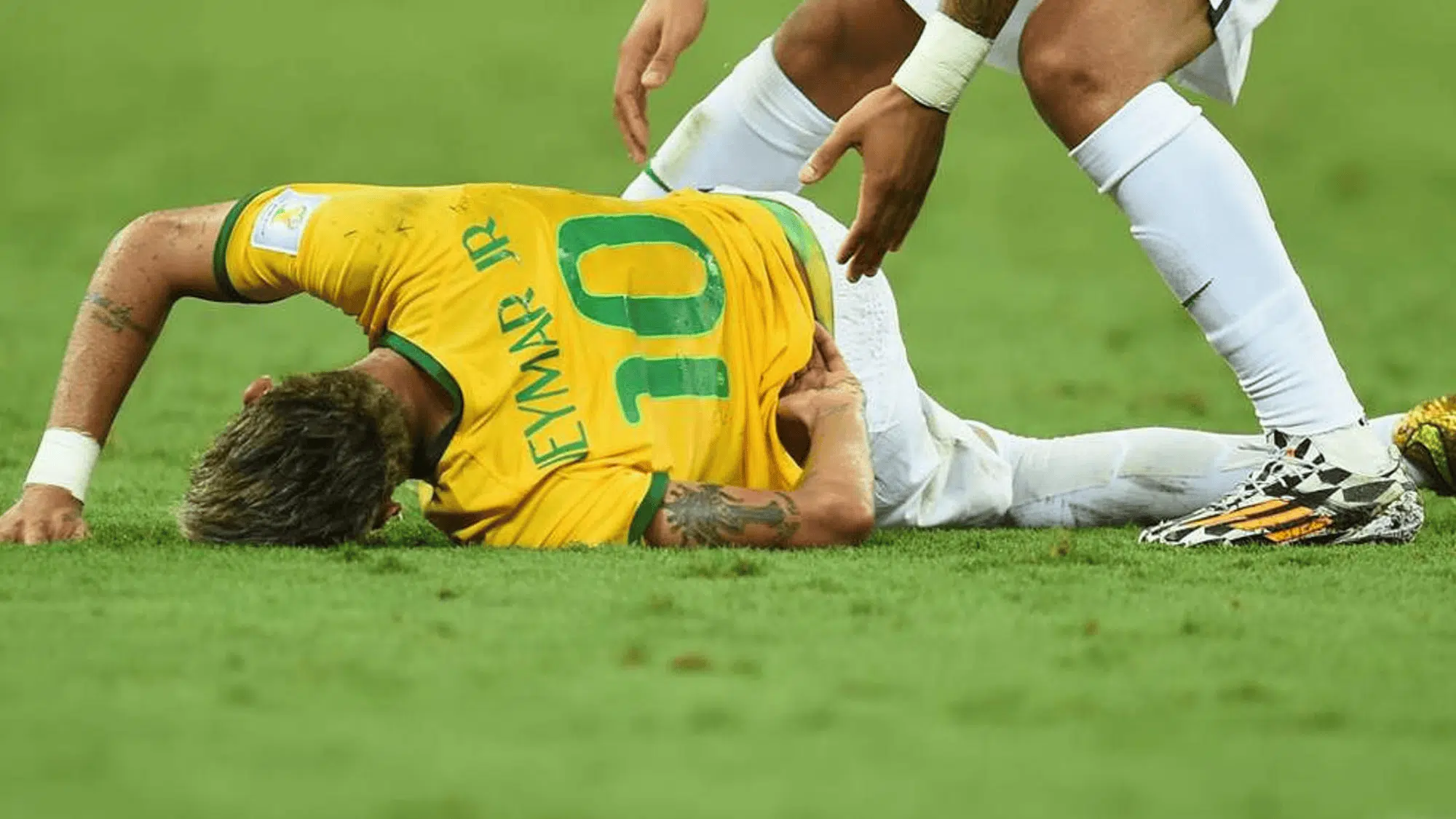
Brazil’s superstar forward suffered a fractured vertebra during the World Cup quarterfinal against Colombia when Juan Zúñiga’s knee crashed into his back.
The collision left Neymar writhing in agony before being stretchered off, and scans revealed a cracked vertebra that could have paralyzed him if struck differently.
His tournament ended immediately, and Brazil’s subsequent 7-1 semifinal humiliation at the hands of Germany showed just how dependent they were on their talisman.
Neymar required three months of careful rehabilitation to avoid permanent spinal damage.
- The entire nation mourned Neymar’s injury, with his absence being cited as the primary reason for Brazil’s historic collapse and most humiliating defeat ever on home soil
- Medical experts later confirmed that if Zúñiga’s knee had struck just centimeters in a different direction, Neymar could have suffered permanent paralysis or even death
19. Alan Smith’s Dislocated Ankle (2006)
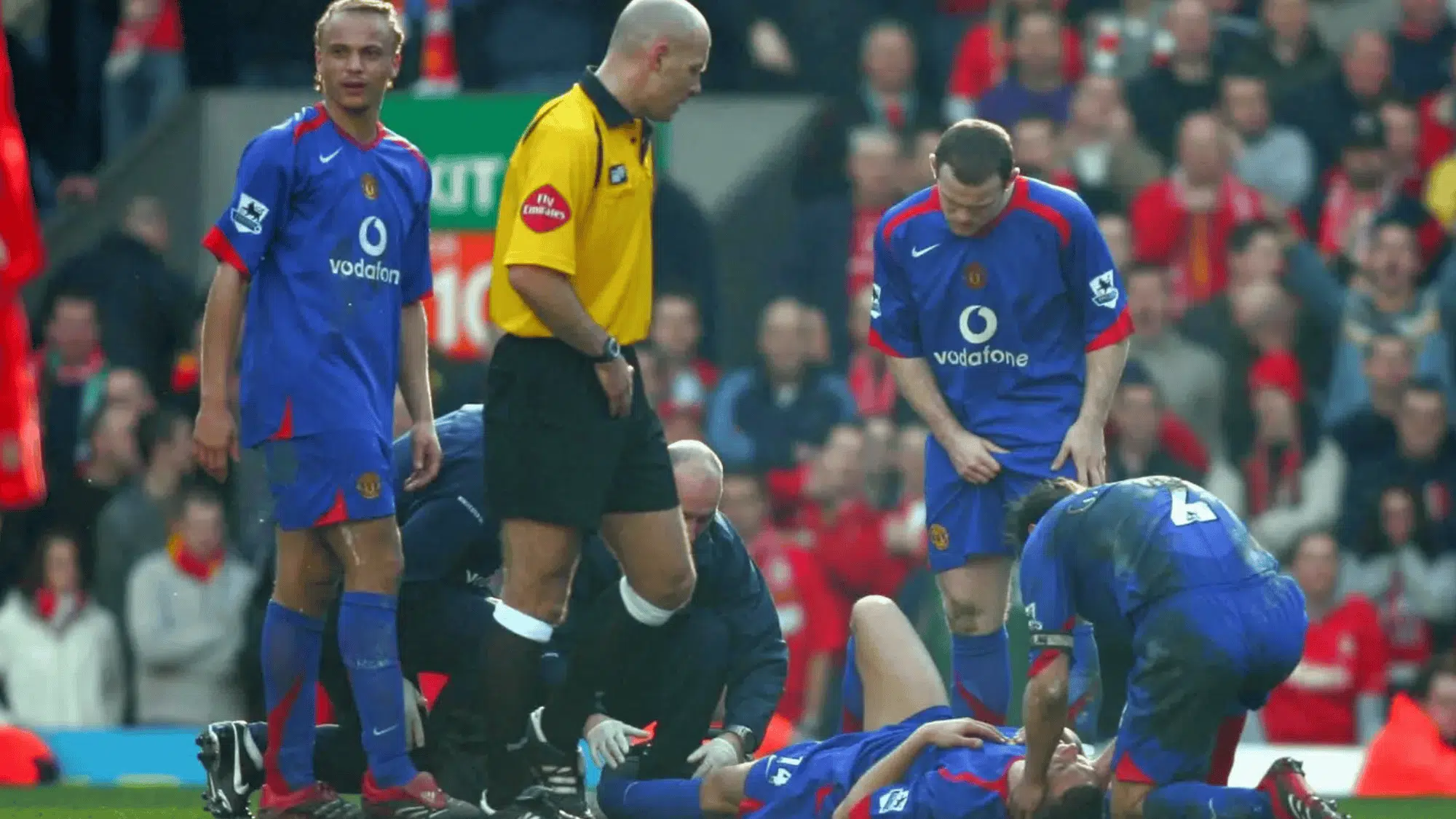
Manchester United’s converted striker-turned-midfielder suffered a horrific ankle dislocation and leg fracture while blocking a free kick against Liverpool.
Smith’s ankle bent at a sickening angle, with the bone protruding visibly through his sock. He required emergency surgery and was given morphine on the pitch due to excruciating pain.
The injury effectively ended his career as a top-level player, transforming him from a promising United midfielder into a lower-league footballer struggling for fitness.
- Smith’s dedication was evident as he attempted to continue playing after the injury before collapsing, with teammates having to physically restrain him from trying to stand
- Complications during recovery included a severe infection that required additional surgeries, and Smith later admitted he developed painkiller dependency during his grueling rehabilitation process
20. Marco van Basten’s Ankle Tragedy (1993)
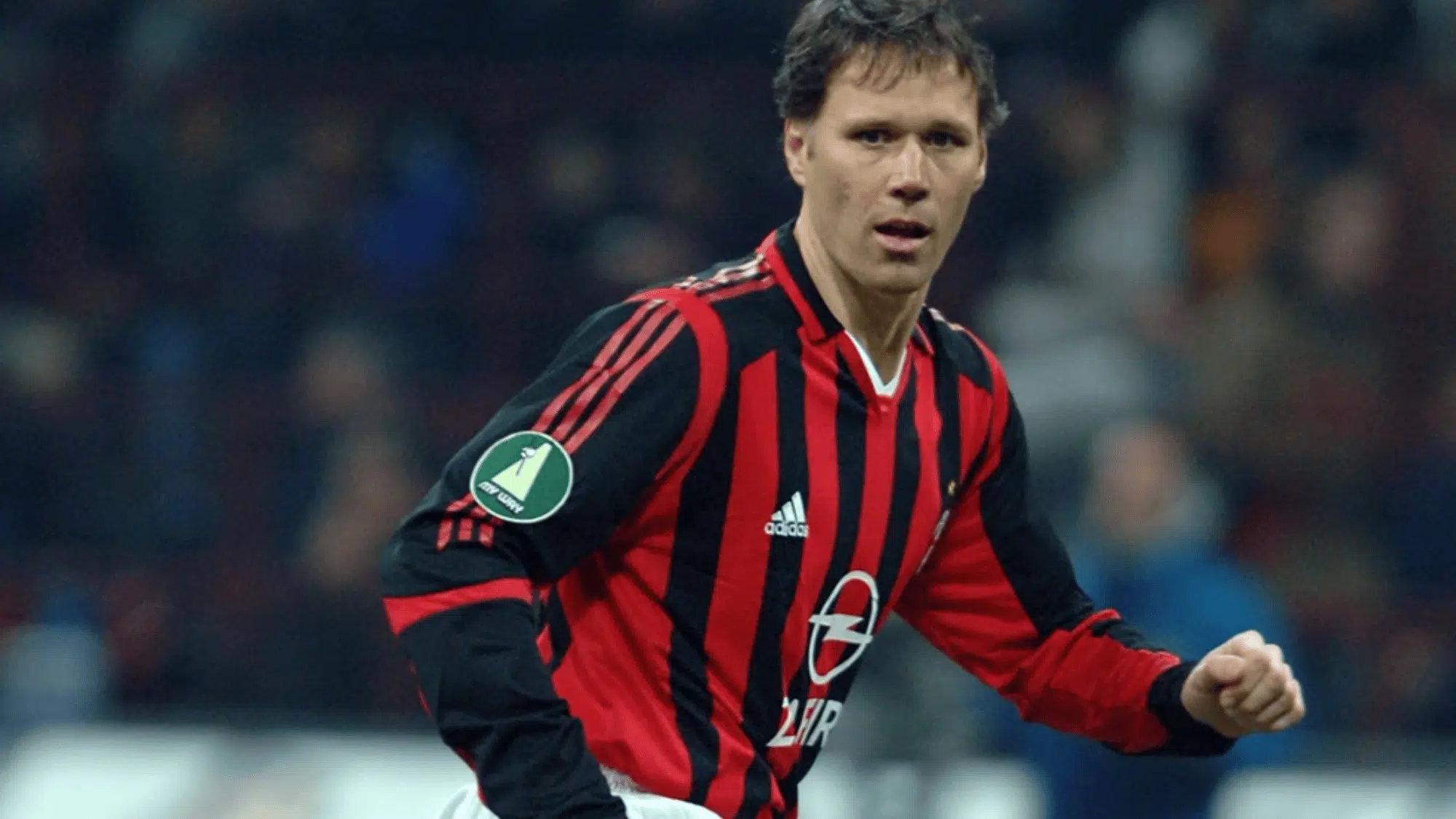
AC Milan’s Dutch legend suffered persistent ankle injuries that ultimately forced him to retire at just 28, robbing football of a generational talent.
Van Basten underwent multiple surgeries attempting to repair damaged cartilage and ligaments, but each operation brought complications and infections.
After two years of failed comeback attempts and constant pain, he finally accepted retirement despite being in his absolute prime. Many consider him the greatest striker never to fulfill his complete potential due to injury.
- Van Basten’s ankle was so damaged that he struggled with basic walking for years after retirement, requiring a cane and enduring chronic pain throughout his managerial career
- He won three Ballon d’Or awards before age 28, leading experts to speculate he could have won five or six total if his body had allowed him to continue playing
21. Kurt Zouma’s Knee Rupture (2016)
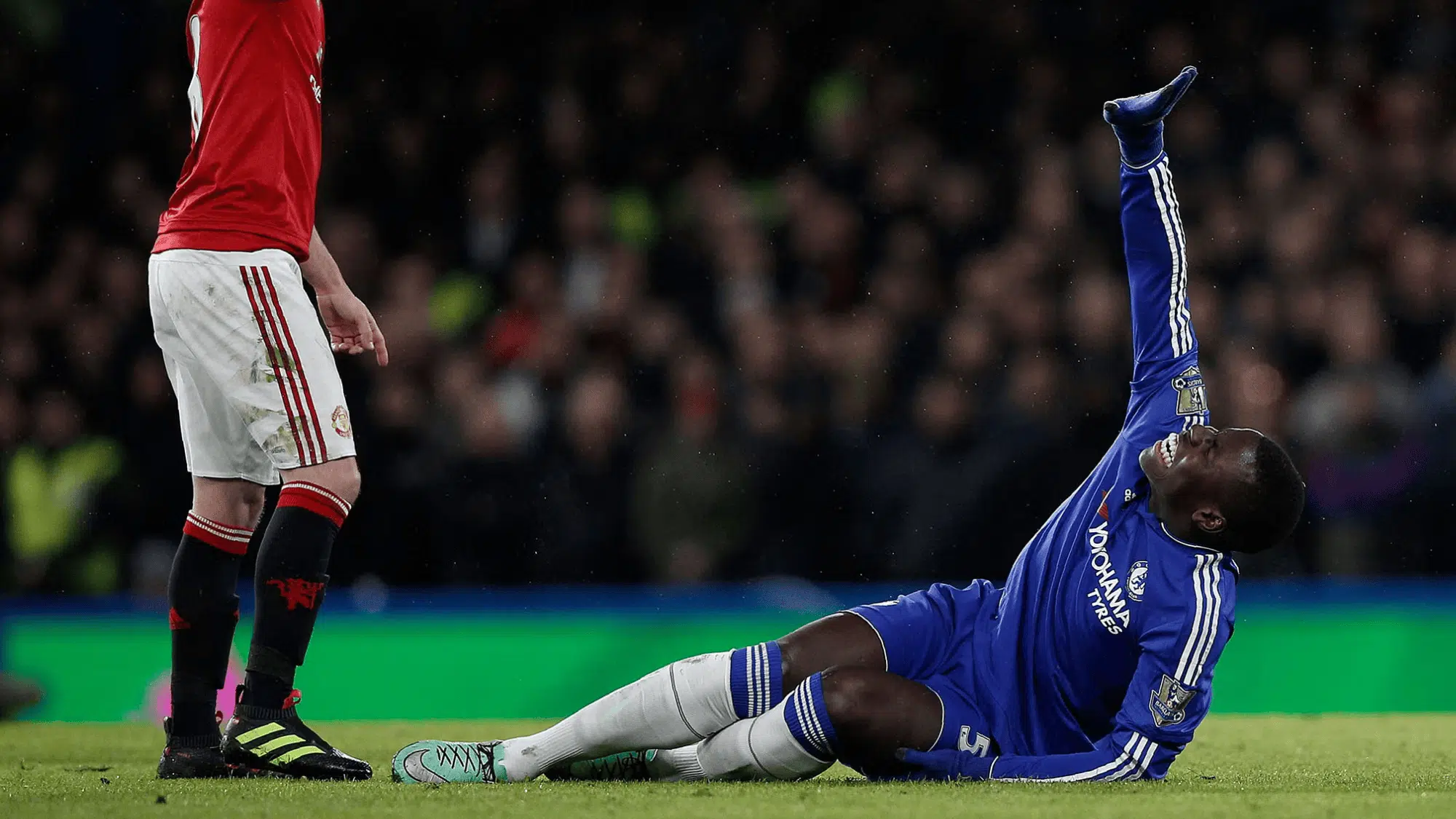
Chelsea’s French defender suffered a devastating anterior cruciate ligament rupture during a routine match against Manchester United, collapsing without contact while simply running.
The 21-year-old’s knee gave way suddenly, and the diagnosis revealed a complete ACL tear requiring major reconstructive surgery.
Zouma had been establishing himself as Chelsea’s defensive future alongside John Terry, but the injury sidelined him for six months and significantly reduced his athleticism.
He returned to play regularly but never quite achieved the dominant, commanding presence many predicted before the injury.
- The non-contact nature of the injury particularly concerned Chelsea’s medical staff, suggesting potential biomechanical issues or training load problems that needed addressing across the squad
- Zouma’s recovery coincided with Antonio Conte’s arrival at Chelsea, and missing the crucial pre-season meant he never became a regular starter under the Italian manager, who prioritized established partnerships
Understanding the Worst Types of Soccer Injuries
Let’s break down the injuries that cause the most problems for soccer players. Knowing what to watch out for can help you stay safe on the field.
1. Knee Injuries: The Career Killers
Your knee is incredibly complex, and soccer puts enormous stress on it. Every time you cut, jump, or land awkwardly, your knee absorbs tremendous force.
| Injury | Description | Key Symptoms | Recovery & Risks |
|---|---|---|---|
| ACL Tear | A severe anterior cruciate ligament injury destabilizes the knee and is often the nightmare injury for soccer players. | A loud “pop”, immediate swelling, and instability in the knee. | Requires surgery and 6–12 months of rehab. High risk of re-tearing in the future. |
| Meniscus Tear | Damage to the cartilage that cushions the knee joint, usually from twisting motions. | Sharp pain when twisting, knee locking, or catching. | Mild tears may heal with rest; severe cases often require surgery. |
| Patellar Tendinitis (Jumper’s Knee) | Chronic inflammation of the patellar tendon from repeated stress over time. | Front knee pain that worsens with activity, stiffness. | Can become long-term career-altering pain if untreated; improves with rest, therapy, and load management. |
2. Head Injuries: The Hidden Danger
Concussions don’t always look serious on the field, but they’re incredibly dangerous. When your brain bounces inside your skull from impact, it can cause problems with memory, concentration, mood, and sleep.
Multiple concussions increase the risk of long-term brain damage significantly. This is why modern soccer takes head injuries so seriously – your brain is irreplaceable.
3. Foot and Ankle Problems
Achilles Tendon Ruptures often happen without any contact. Players describe feeling like someone kicked them in the back of the leg, followed by the inability to push off that foot. This injury has ended many careers because even after surgery and rehab, players often lose their explosiveness and acceleration.
Ankle Sprains are the most common acute injury in soccer. While most are minor, severe high ankle sprains can keep players out for months and lead to chronic instability.
4. Muscle Injuries That Keep Happening
Hamstring Strains are frustratingly common, especially for fast players. That sudden, sharp pain in the back of your thigh often comes from sprinting at maximum speed. The real problem is that hamstring injuries tend to recur if not properly rehabilitated.
Groin Pulls affect the muscles you use for kicking and quick side-to-side movements. These injuries can linger for months if players return too quickly.
5. Broken Bones and Spine Issues
Fractures range from small stress fractures that develop over time to horrifying compound fractures where bone breaks through skin. Compound fractures require immediate surgery and carry high infection risks.
Herniated Discs in the spine might not be as famous as ACL tears, but they can cause nerve pain that radiates down your legs and affects your ability to run and kick properly.
Why Do These Injuries Happen?
Understanding what causes severe injuries helps you avoid them. Here are the main culprits:
- High-impact tackles – especially sliding tackles from the side or behind
- Sudden direction changes – those quick cuts that make defenders fall also stress your knees
- Overuse and fatigue – tired muscles can’t protect your joints properly
- Poor landing mechanics – landing stiff-legged or off-balance puts a huge force on your knees
- Bad field conditions – divots, hard ground, and slippery surfaces increase injury risk
Warning Signs You Should Never Ignore
Your body usually gives you warning signs before a serious injury happens. Pay attention to these red flags:
- Knee popping or giving way – this often means ligament damage
- Swelling that won’t go away – chronic inflammation indicates a real problem
- Sudden weakness – if a body part suddenly feels weak, stop playing
- Shooting nerve pain – sharp pain that travels down your leg needs immediate attention
- Headache or dizziness after contact – possible concussion symptoms
If you feel any of these symptoms, don’t try to “tough it out.” Taking a few days off now is way better than taking months off later.
How to Protect Yourself from Serious Injuries
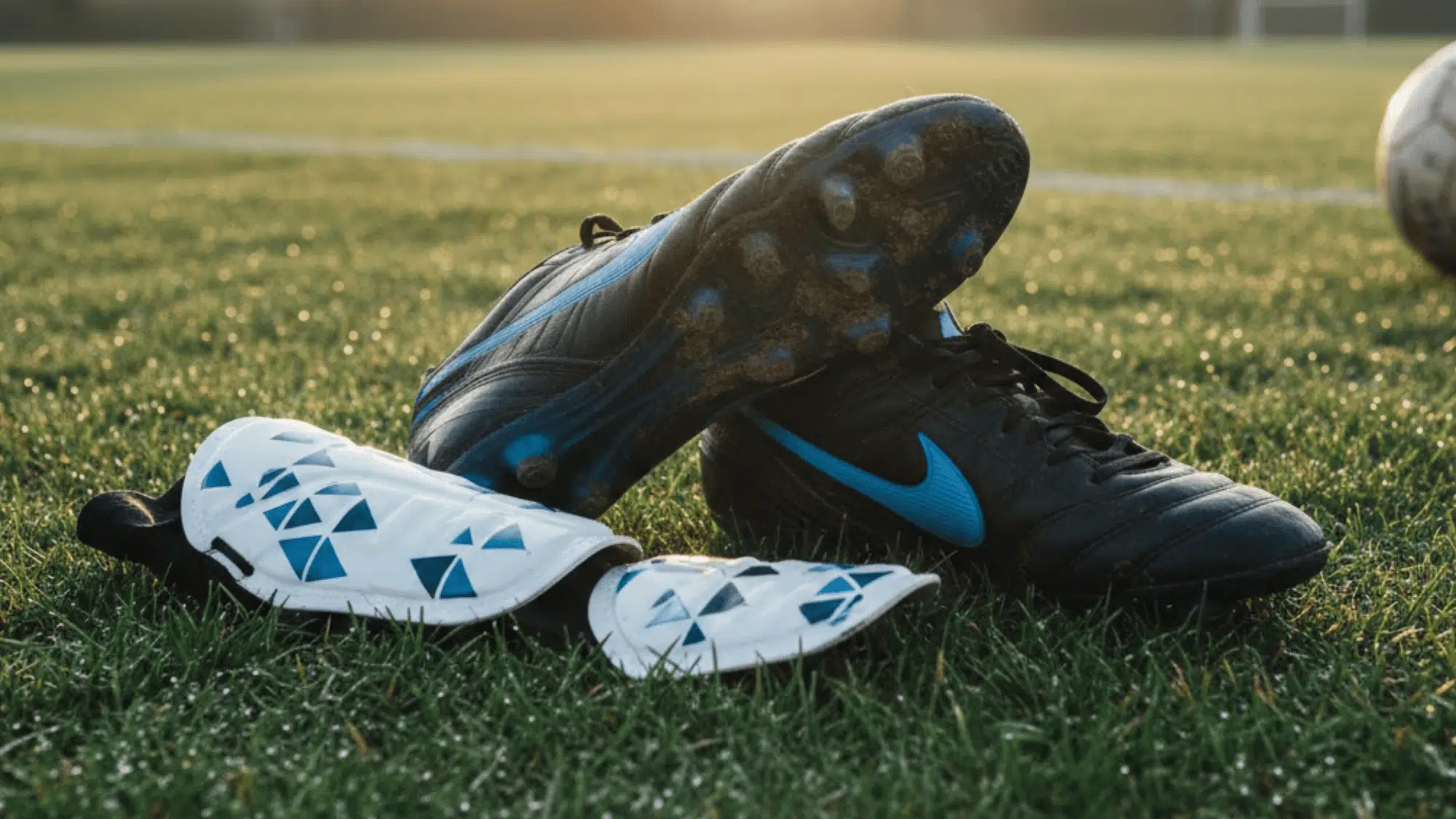
The best treatment for terrible injuries is preventing them in the first place. Here’s what actually works:
1. Build Strength Where It Matters
Your muscles protect your joints, so strength training isn’t just about looking good – it’s about staying healthy. Focus on:
- ACL prevention exercises – Nordic hamstring curls and single-leg squats strengthen the muscles that protect your knee
- Core stability work – a strong core helps you control your body during quick movements
- Hip strengthening – strong hips improve your balance and reduce knee stress
2. Warm Up the Right Way
Jumping straight into intense activity is asking for trouble. The FIFA 11+ warm-up program was specifically designed to prevent soccer injuries, and research shows it really works. This 20-minute routine includes:
- Dynamic stretching (no static stretching before playing)
- Balance exercises
- Plyometric movements
- Sport-specific drills
3. Choose the Right Equipment
Your cleats matter more than you might think. Make sure they:
- Fit properly with no sliding
- Match the playing surface (different studs for different fields)
- Aren’t worn down – old cleats lose their grip and support
Also, if you’re recovering from an ankle injury, consider wearing a brace during games until your ankle is fully strong again.
4. Learn Proper Technique
How you move matters just as much as how strong you are:
- Safe tackling – aim for the ball, not the player’s planted leg
- Landing mechanics – land on both feet when possible, with knees bent
- Cutting technique – keep your knees over your toes, not collapsed inward
The Road to Recovery
If you do suffer a serious injury, knowing what to expect helps you stay mentally strong during recovery.
Surgery decisions depend on the specific injury and your goals. ACL tears almost always require surgery for players who want to return to competitive soccer. Meniscus tears might heal with rest alone if they’re in the right location.
Physical therapy is where real recovery happens. The work you do with your PT is more important than the surgery itself. Be patient; rushing back is the number one reason players get injured again.
Mental recovery doesn’t get enough attention, but it’s huge. Many players struggle with fear and anxiety about getting injured again. Working with a sports psychologist can make the difference between a good comeback and a great one.
Final Thoughts
Soccer is an amazing sport, but the stories in this blog show how quickly things can change. Serious injuries don’t just affect a player’s season; they can shape an entire career and even their life off the field.
Understanding these injuries, knowing the warning signs, and learning how to protect the body make a huge difference for anyone who loves the game.
With the right training, good habits, and proper recovery, players have a much better chance of staying healthy and strong. Soccer will always carry risks, but smart choices help keep the joy in the sport.
Want more helpful guides like this? Stay tuned for more soccer tips and stories.