
When covering football tactics, I often notice how small adjustments can shift the momentum of a game.
One defensive system that consistently shapes the outcome of passing plays is zone coverage football.
It may not look flashy, but it controls space, limits big plays, and forces tough throws. Teams that run it well can quickly disrupt an offense’s rhythm.
You will often see it on long passing downs or late in close games, when defenses must protect space and avoid mistakes.
It looks simple, but it demands awareness, discipline, and strong communication.
In this guide, you will learn what zone coverage is and how it works, the main types of teams that use it, and why coaches rely on it against different offensive looks.
I also explain how offenses try to attack it and what makes the scheme succeed.
What Is Zone Coverage Football?
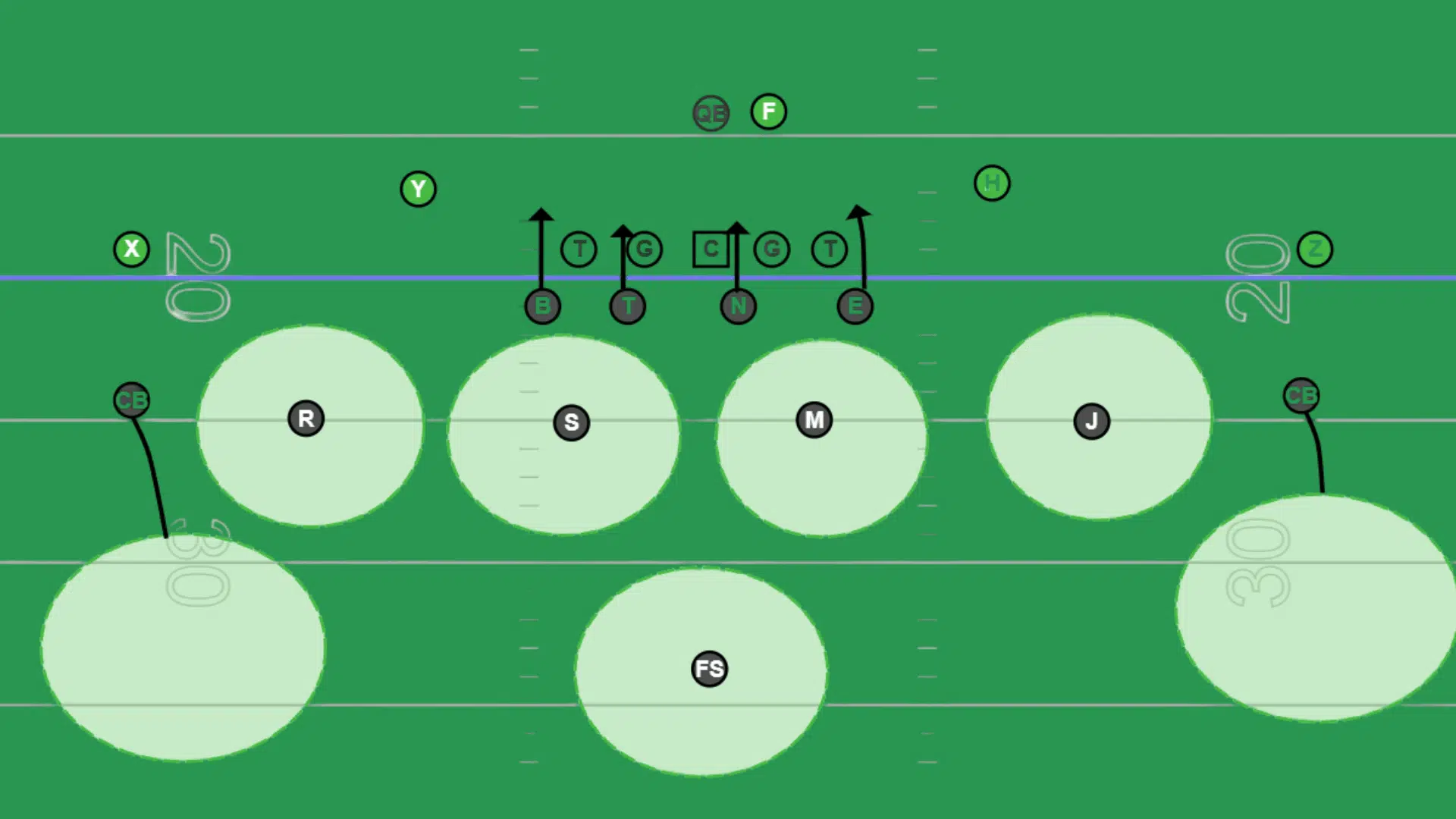
Zone coverage in football is a defensive system in which each player guards a specific area of the field rather than following one receiver.
Each defender is responsible for a zone. When a receiver enters that space, the defender covers him.
When the receiver moves out, the defender passes him to a teammate and looks for another threat. The main goal is to control open space and prevent big passing plays.
Coaches often call zone coverage on clear passing downs because it keeps the action in front of the defense.
It also allows defenders to watch the quarterback’s eyes and react to the throw.
While it may look simple from the stands, it requires strong communication and discipline. If one player leaves his area too soon, it can create an opening for the offense.
Good teamwork and awareness are key to effective zone coverage.
Key Techniques for Playing Zone Coverage
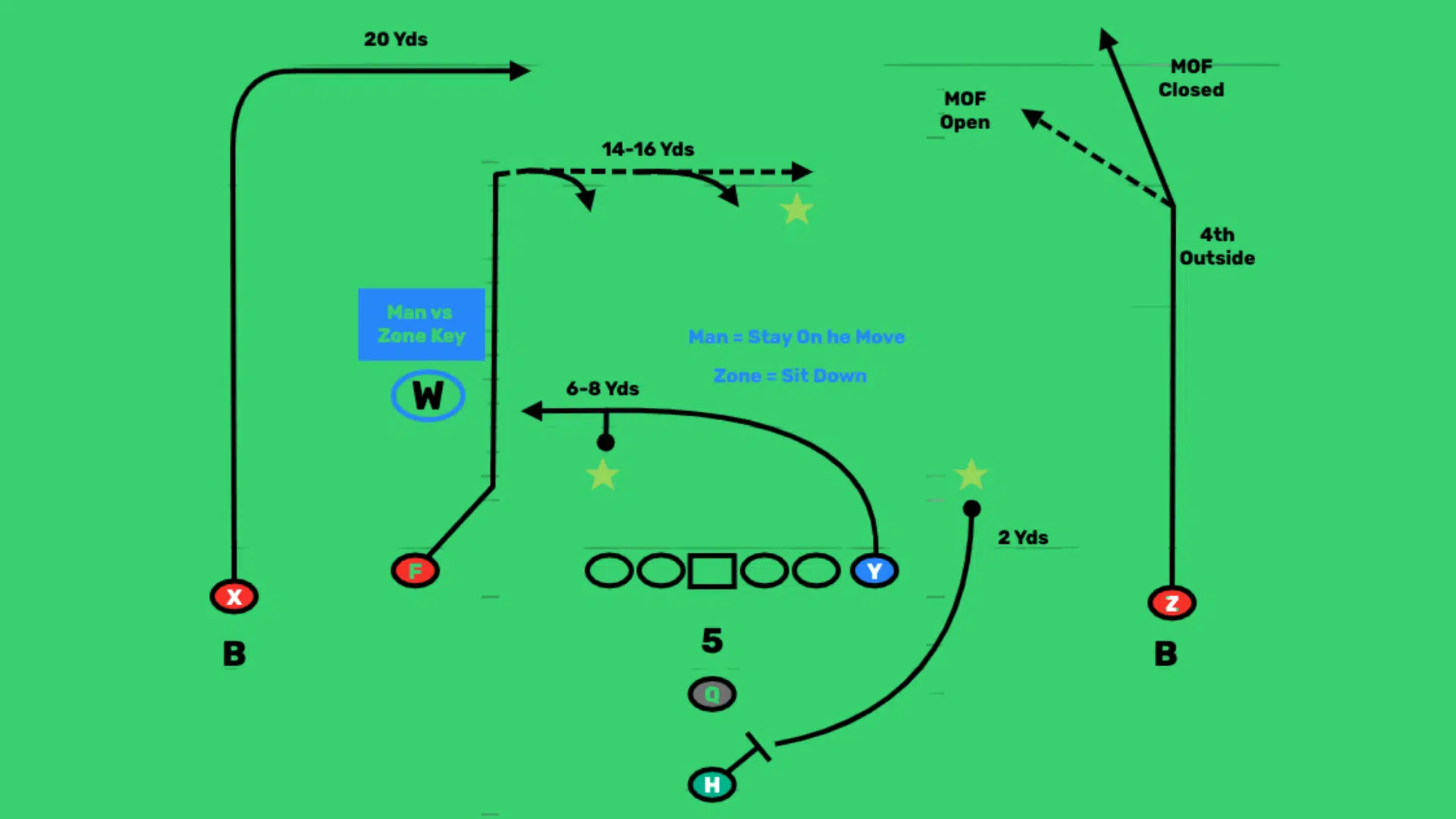
Strong zone defense depends on discipline and teamwork. Each defender must understand his role and react with control.
1. Proper Alignment Before the Snap
Proper alignment sets the tone for the entire play. Defenders must line up based on the coverage call and down situation.
Good alignment helps protect deep zones and short areas at the same time.
Players should check receiver splits and formation strength before the snap. Small shifts can change responsibilities.
If alignment is off, gaps open quickly. Staying balanced and ready allows defenders to move in any direction. A strong start often prevents problems later in the play.
2. Controlled Backpedal Technique
A smooth and controlled backpedal keeps defenders in position. Players must stay low with their weight balanced over their feet.
Quick, short steps help maintain control and prevent slipping. Defenders should keep their eyes forward to read the quarterback and routes. Moving too fast can create space behind them.
Moving too slowly can allow short completions.
The goal is to stay patient and react at the right moment. Good footwork keeps the defender ready to break on the ball.
3. Quick and Decisive Break on the Ball
Zone defenders must react fast once the quarterback commits to a throw. Reading the eyes and shoulder movement of the passer gives clues.
As soon as the ball leaves the hand, the defender should plant and drive forward.
Hesitation often leads to extra yards after the catch. Strong angles are important to close space quickly.
Players should aim to meet the ball at its highest point. A sharp and confident break can turn a short gain into a pass breakup.
4. Strong Field Awareness
Field awareness allows defenders to understand what is happening around them. Players must know their zone depth and the position of nearby teammates.
This helps avoid overlap and missed assignments. Watching route combinations is also important.
Some plays are designed to stretch a zone or create confusion. Staying alert prevents easy completions in soft spots.
Good awareness helps defenders adjust when plays extend. It also builds trust between teammates who depend on each other’s positioning.
5. Smooth Hip Transitions
Changing direction quickly is key in zone coverage. Defenders must open their hips smoothly when receivers threaten deep areas.
Stiff movement can create separation. Smooth transitions allow players to turn and run without losing balance.
Practicing footwork drills improves this skill. Staying relaxed also helps prevent overcommitting. Quick hip turns are especially important against double moves.
If a defender can shift directions with control, he can stay in phase and limit passing lanes effectively.
6. Maintain Proper Cushion
Maintaining the right cushion keeps plays in front of the defense. Cushion refers to the space between the defender and the receiver.
Too much space allows easy completions. Too little space risks getting beaten deep.
Defenders must judge distance based on down and coverage call. Keeping proper depth protects against long passes while still allowing quick reactions.
Patience is important here. Smart spacing forces quarterbacks to throw short and gives teammates time to rally to the ball.
How Zone Coverage Differs from Man Coverage?
Both systems aim to stop the pass, but they assign responsibility in different ways. The choice often depends on the game plan and the type of offense faced.
| Feature | Zone Coverage | Man Coverage |
| Player Responsibility | Each defender guards a specific area of the field. | Each defender covers one assigned receiver. |
| Focus | Protects space and reacts to receivers entering the zone. | Stays locked on a single player from snap to whistle. |
| Vision | Defenders watch the quarterback and the play develop. | Defenders focus mainly on their assigned receiver. |
| Big Play Risk | Limits deep passes by keeping plays in front. | Can give up big plays if a defender loses his matchup. |
| Communication | Requires strong teamwork to pass off receivers. | Relies more on individual coverage skills. |
| Best Use | Works well against strong passing teams. | Useful when defenders can match up well physically. |
Core Rules of Zone Coverage Defense
Zone coverage is effective when every defender follows the same structure and discipline on every snap, because a small mistake can create space that offenses quickly exploit.
- Protect Your Assigned Zone: Stay responsible for your area and avoid chasing receivers outside your space, even if they try to pull you away.
- Maintain Proper Depth: Keep the right distance from the line of scrimmage so you can defend short passes while still reacting to deep throws.
- Keep Eyes on the Quarterback: Read his shoulders, feet, and release point so you can break toward the ball at the right time.
- Stay Balanced in Your Stance: Use controlled footwork so you can move forward, backward, or sideways without losing control.
- Control Inside Leverage: Position your body to protect the middle of your zone first, since most passing routes attack inside space.
- Avoid Overcommitting Early: Do not jump short routes too quickly, as this can open deep space behind you. Stay patient and read the full play.
Most Common Zone Coverage Schemes
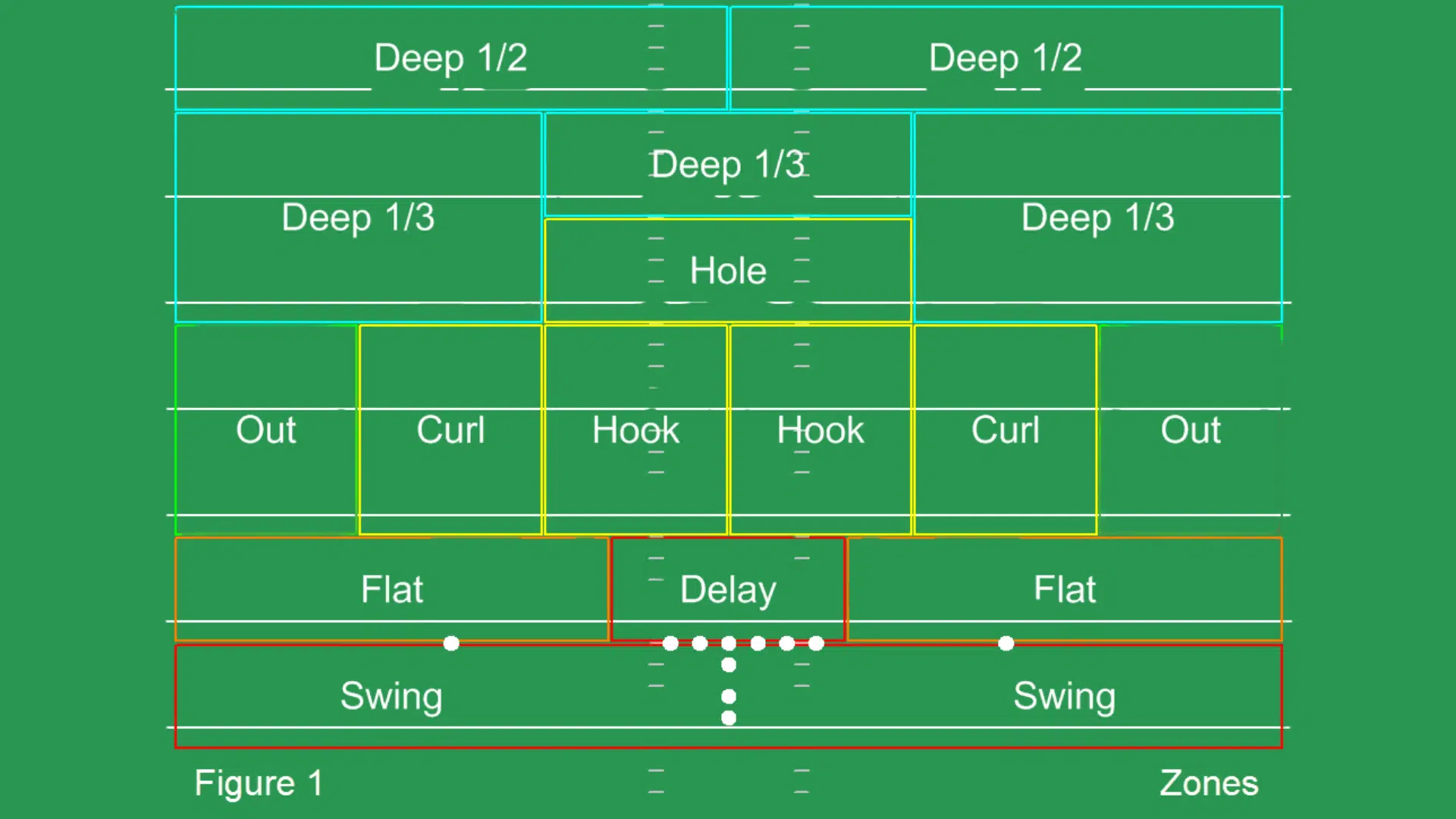
Coaches rely on a few core zone schemes in zone coverage football, and each divides the field differently to handle specific route concepts, protect certain areas, and respond to different down-and-distance situations.
Cover 2 Zone
Cover 2 is one of the easiest zone coverages to recognize. Two safeties split the deep part of the field into halves, while cornerbacks protect the short outside areas.
Linebackers cover the middle zones underneath. I often see teams use this on early downs to keep plays in front of them.
You must stay disciplined in your depth because the middle seam can open if linebackers drop too shallow.
When executed well, Cover 2 limits deep sideline throws and forces short completions.
Cover 3 Zone
Cover 3 divides the deep field into three sections. Two cornerbacks and one safety each protect a deep third, while the remaining defenders handle underneath zones.
This coverage balances deep protection with run support. It works well against teams that like vertical routes and play-action passes.
You need strong communication because crossing routes can test spacing between zones.
If everyone holds their responsibility, Cover 3 keeps the ball in front and reduces the chance of long touchdowns.
Cover 4 Quarters
Cover 4, also called Quarters, uses four defenders to protect deep sections of the field. Each defender covers one quarter, making it hard for offenses to complete long passes.
This covers against pass-heavy teams that stretch the field.
You must read route combinations carefully because short throws underneath can add up if you drop too deep.
Discipline matters here. When players trust their assignments, Cover 4 limits explosive plays and keeps everything controlled.
Strengths and Weaknesses of Zone Coverage
Zone coverage adds structure and balance to a defense, helping players guard specific areas of the field. It requires strong discipline and awareness to prevent gaps that can lead to easy yards.
| Strengths | Weaknesses |
|---|---|
| Limits deep passes by keeping multiple defenders over the top. | Creates soft spots between zones if spacing is poor. |
| Keeps plays in front and reduces explosive touchdowns. | Allows short completions underneath the coverage. |
| Gives defenders a better vision of the quarterback. | Requires constant communication to avoid confusion. |
| Helps defenders support each other across the field. | Can struggle against quick timing routes and precise passing. |
| Strong against vertical route concepts. | Vulnerable to well-designed crossing patterns. |
| Supports run defense in a zone that resembles Cover 3. | Can break down if one defender misses an assignment. |
Best Situations to Use Zone Coverage
Coaches use this scheme in key moments during a game. Calling it at the right time helps control the pace, limit big plays, and reduce overall defensive risk.
- Third and Long: On clear passing downs, zone coverage protects the first-down marker. Defenders guard key areas and keep plays in front, forcing short throws instead of deep passes.
- Facing a Strong Passing Team: Against teams that throw often, zone coverage limits explosive plays. It allows defenders to watch the quarterback and react quickly, instead of chasing receivers across the field.
- Red Zone Defense: Near the goal line, space becomes tight. Zone coverage helps defenders guard key areas and break quickly on short routes, which are common in this part of the field.
- Protecting a Lead Late in the Game: When a team is ahead, the goal is to prevent big plays. Zone coverage keeps everything in front and forces the offense to use more time.
- When Defenders Need Help Over the Top: If cornerbacks are facing fast receivers, zone coverage provides safety support deep. This reduces the risk of giving up long touchdown passes.
Conclusion
Zone coverage football may look simple at first, but once you understand the details, you start to see how much discipline and teamwork it really takes.
When each defender protects his zone with focus and patience, the defense becomes much harder to break.
It is not about one big play. It is about steady execution snap after snap.
Now that you know the core rules, common schemes, strengths, and mistakes, you can watch games with a sharper eye or improve your own performance on the field.
Zone coverage is about trust, awareness, and smart positioning.
Have you played in a zone defense or noticed it during a key game moment? Share your experience or thoughts in the comments below.