
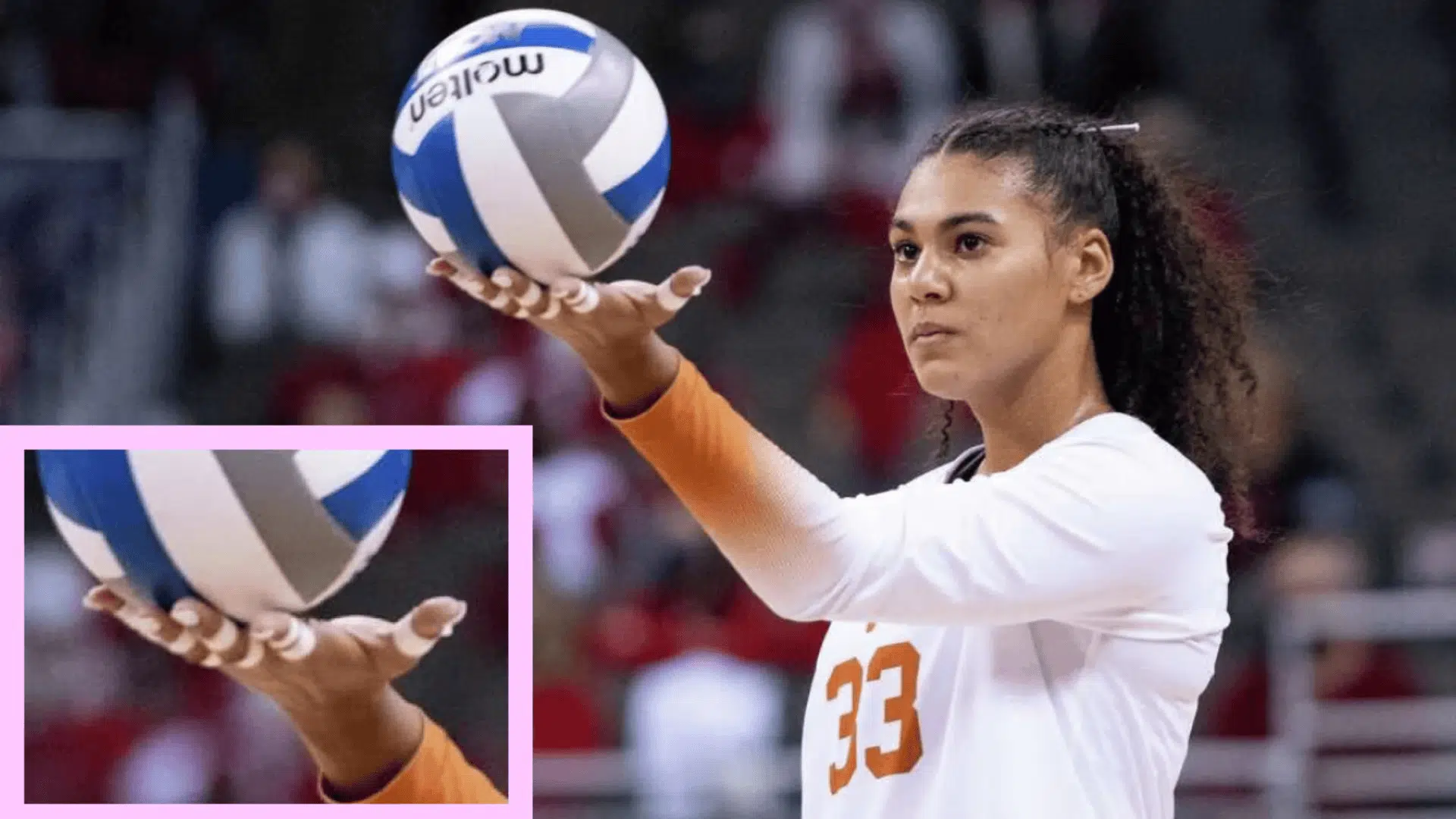
Volleyball players show up with taped fingers all the time, and it makes a lot of people wonder: Why do volleyball players tape their fingers?
It can look like a “pro thing,” but most of the time it’s simply a smart way to protect the hands during fast, hard contact.
I first started paying closer attention to finger taping after seeing how one awkward block at the net can change the way a player uses their hands for the rest of a match, and that little hesitation can matter.
In this blog, I will break down what finger taping is and why it’s so common in volleyball.
I’ll explain when it makes sense to tape and when it’s not needed.
You’ll also learn the most common methods, easy steps to do it, the types of tape players used, and the mistakes that can make taping less effective.
Let’s get started!
What Is Finger Taping in Volleyball?
Finger taping in volleyball is basically a quick “hand insurance” move. Players wrap athletic tape around a finger or two before a match because fingers take a beating in this sport.
One bad block, a hard serve receive, or a set that comes in weird, and boom, jammed finger.
Some players tape every match, while others only do it when they know they’ll be blocking a lot or facing heavy hitters.
It becomes part of their pre-game routine, like tying shoes or adjusting knee pads. Even if it’s not a perfect shield, the small bit of extra support can help them play with more confidence.
Some tape to prevent issues, but a lot of them start taping after that first painful jam and never stop.
It’s simple, cheap, and it gives a little peace of mind when the ball is flying at your hands all game.
Why Do Volleyball Players Tape Their Fingers?
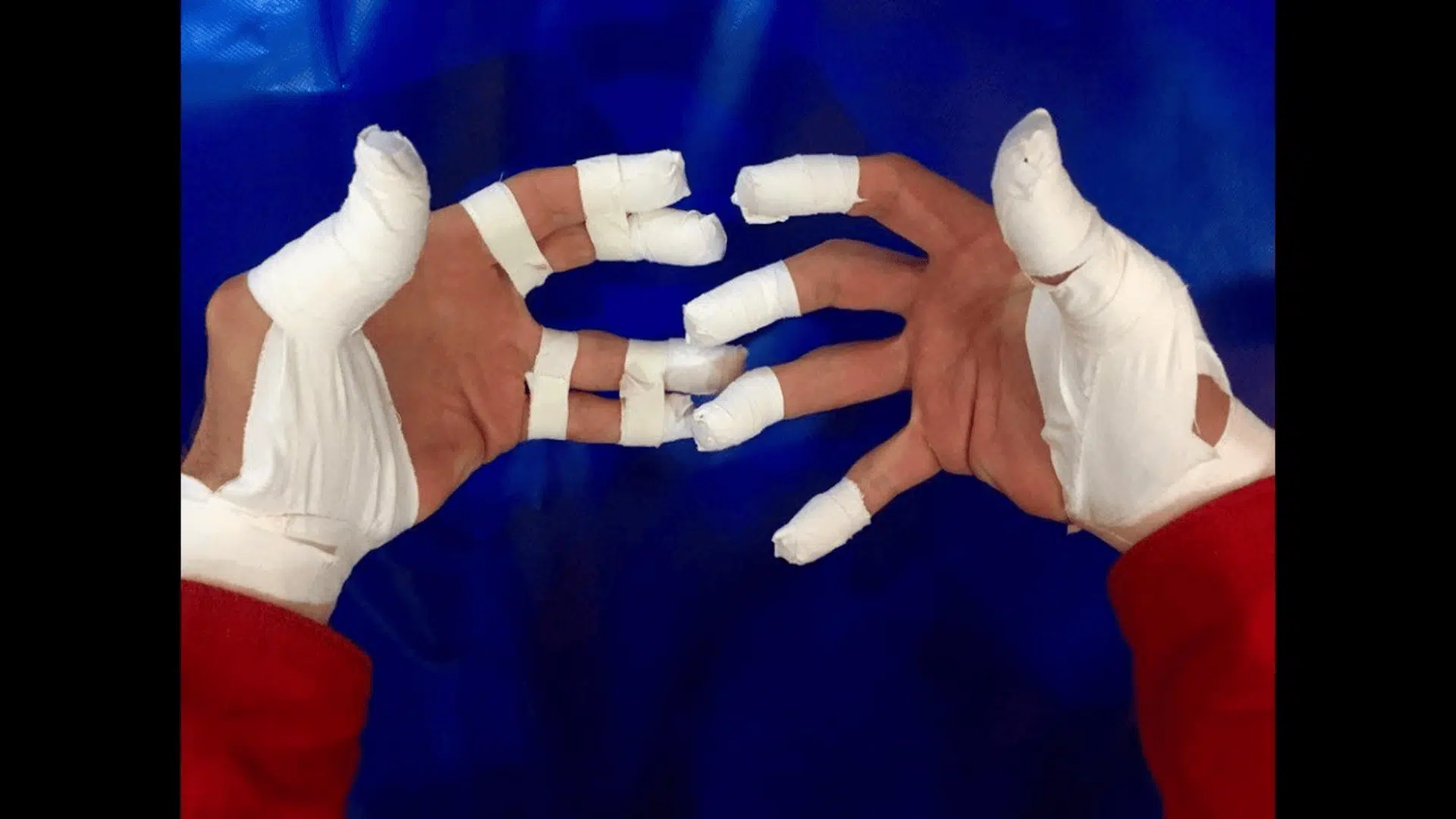
Finger taping can make a big difference in comfort, support, and confidence on the court. Below are the main reasons players choose to tape their fingers, explained clearly and simply.
1. Protect Sore Joints from Getting Worse
When a finger is already sore from a jam, a bad block, or even a tough practice, taping helps keep it from moving too much during play.
The tape provides support around the joint, so it doesn’t take the full impact every time the ball makes contact.
A teammate of mine used to say she taped “the moment it starts talking,” because waiting until it really hurts usually meant it got worse.
It also helps the finger feel steadier, so it’s easier to play without constantly worrying about it.
2. Limit Awkward Bending on Hard Contact
In volleyball, the ball doesn’t always hit the hands cleanly. On blocks, digs, and quick saves, fingers can bend backward or sideways in a split second.
Taping helps limit that extreme movement by keeping the finger more aligned.
It doesn’t make the finger stiff like a splint, but it adds a small “stop” that can reduce painful jams. This is especially useful for fingers that have been injured before or feel naturally weak.
3. Reduce Pain During Long Matches
During long matches or weekend tournaments, fingers take repeated impact from passing, setting, and blocking. Even if nothing is “injured,” the hands can become sore and tired from constant contact.
Taping adds light compression and stability, which many players say helps reduce discomfort as the game goes on.
It won’t completely remove pain, but it can make extended play feel more manageable, especially when the hands start feeling beat up late in the match.
4. Add Support for Blocking and Net Play
Blocking puts a lot of pressure on the fingers, especially against strong hitters.
One bad contact at the net can bend a finger back fast. Tape helps fingers feel more secure and supported when meeting the ball at the top.
Many front-row players tape their fingers so they feel more “locked in” and less likely to flare out on impact.
That support can reduce hesitation and help players stay aggressive without constantly adjusting their blocking.
5. Help Players Keep Playing While Healing
Minor finger injuries can take a while to fully settle down, and sitting out isn’t always an option. Taping can let players keep practicing or competing while the finger heals, as long as the injury isn’t serious.
The tape supports the joint and helps protect it from getting bumped in the same painful way again.
A coach I know puts it simply: “Tape doesn’t make you invincible, it just helps you get through reps without re-jamming the same spot every play.”
For many players, taping is a way to stay involved while still being smart about recovery and avoiding repeat injuries.
6. Boost Confidence on Tough Balls
Confidence matters a lot when the ball is moving fast. If a player has jammed a finger before, they might hesitate on blocks or pull away on hard digs without even realizing it.
Taping often gives a “safer” feeling, which makes players more willing to commit fully.
Instead of playing scared, they go all-in on hard serves, quick reactions, and messy scramble plays. Even if the physical support is small, the mental boost can be big.
7. Protect Fingers During Setting and Quick Reactions
Setting and quick hand movements put constant strain on finger joints. Even a slightly off-set or a fast ball to the hands can stress a finger that’s already tired.
Taping helps keep joints steady during repeated touches, especially in long practice sessions.
Setters, liberos, and defensive specialists often tape when they’re doing lots of reps because small strain adds up over time.
It can also help reduce soreness after practice when the hands have taken hundreds of contacts.
8. Create a Consistent Feel in the Hands
Some players tape their fingers simply because it makes their hands feel more consistent from day to day.
When fingers feel supported, the hands feel more predictable during play, especially when making quick touches and handling blocks.
This consistency can help with timing, comfort, and overall control. For these players, taping becomes part of a pre-game routine, even when there’s no active pain.
It’s less about fixing an injury and more about feeling ready and stable every time they step on the court.
What Reddit Users Say on Finger Taping?
Reddit users are pretty clear about one thing: finger tape is mostly about support and protection, not looks.
Many players say they started taping after a jammed pinky or weak joints made playing uncomfortable. Blockers and front-row players mention taping to reduce how badly a finger bends when the ball hits at a bad angle.
Others use it while recovering from injuries, such as sprains or mallet finger, so they can keep playing without making things worse.
A few users also point out that tape can help cover skin issues or small wounds when bandages don’t stay on.
Most agree it doesn’t have to be fancy or expensive; simple athletic tape works fine.
Overall, Reddit players see finger taping as a practical habit, something you use when your fingers need help, not something you wear just to copy the pros.
How Volleyball Players Tape Their Fingers?
Most volleyball players don’t follow one strict taping rule. Below are the most common taping methods used during practice and matches in volleyball.
1. Buddy taping
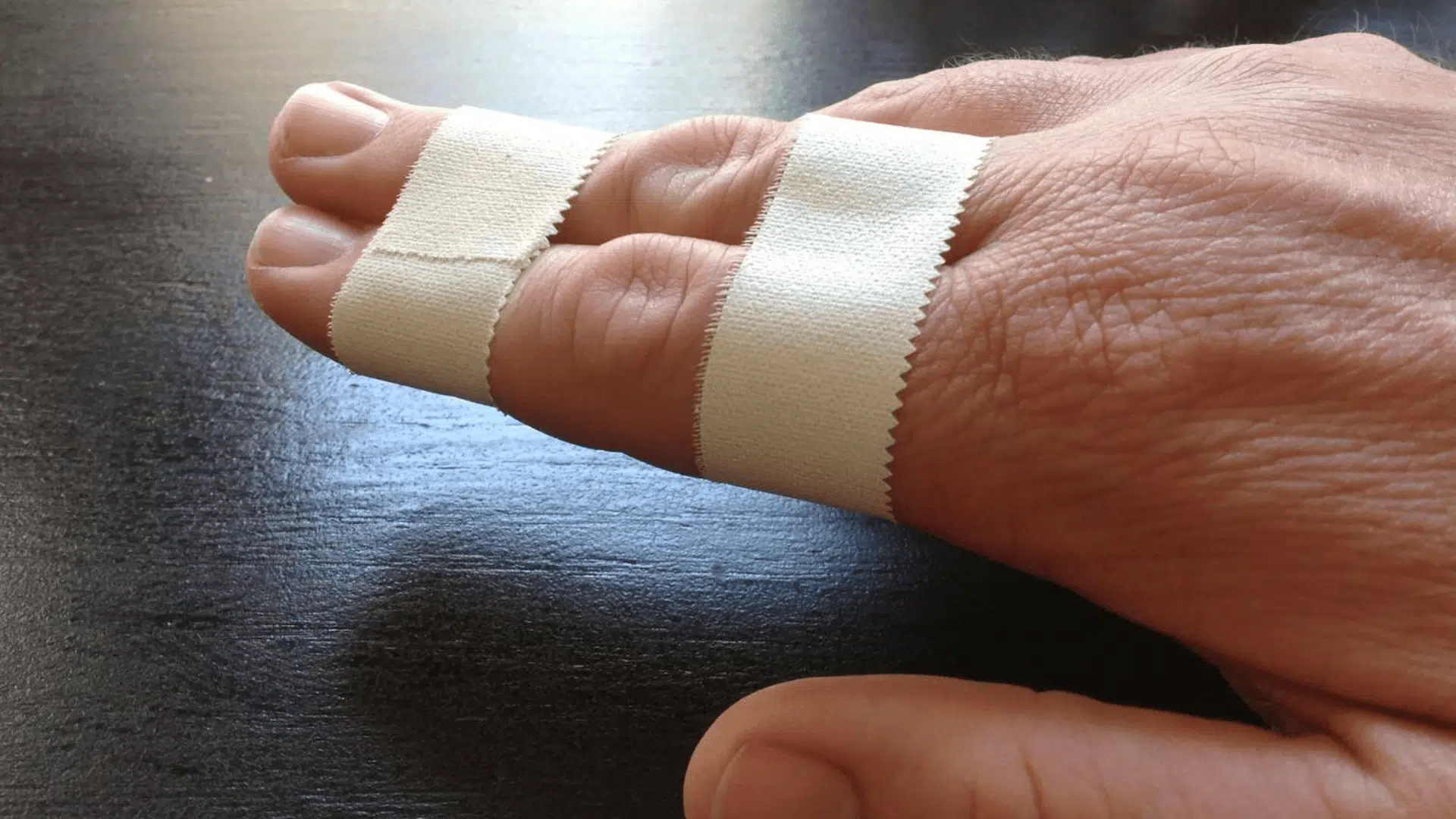
Buddy taping means securing the injured finger to the adjacent finger, so they move together.
This helps reduce how far the sore finger can bend when the ball hits. Players usually tape the pinky to the ring finger, but any neighboring finger can be used.
To buddy tape a finger, players usually follow these simple steps:
- Step 1: Cut two short strips of athletic tape, each about two to three inches long.
- Step 2: Wrap the first strip around both fingers just above the middle joint, keeping it firm but not tight.
- Step 3: Wrap the second strip around both fingers just below the middle joint to add stability.
- Step 4: Check that the tape feels supportive without restricting movement or circulation.
- Step 5: Open and close the fist or lightly pass a ball; if there is tingling or numbness, loosen and reapply the tape.
2. X-Taping
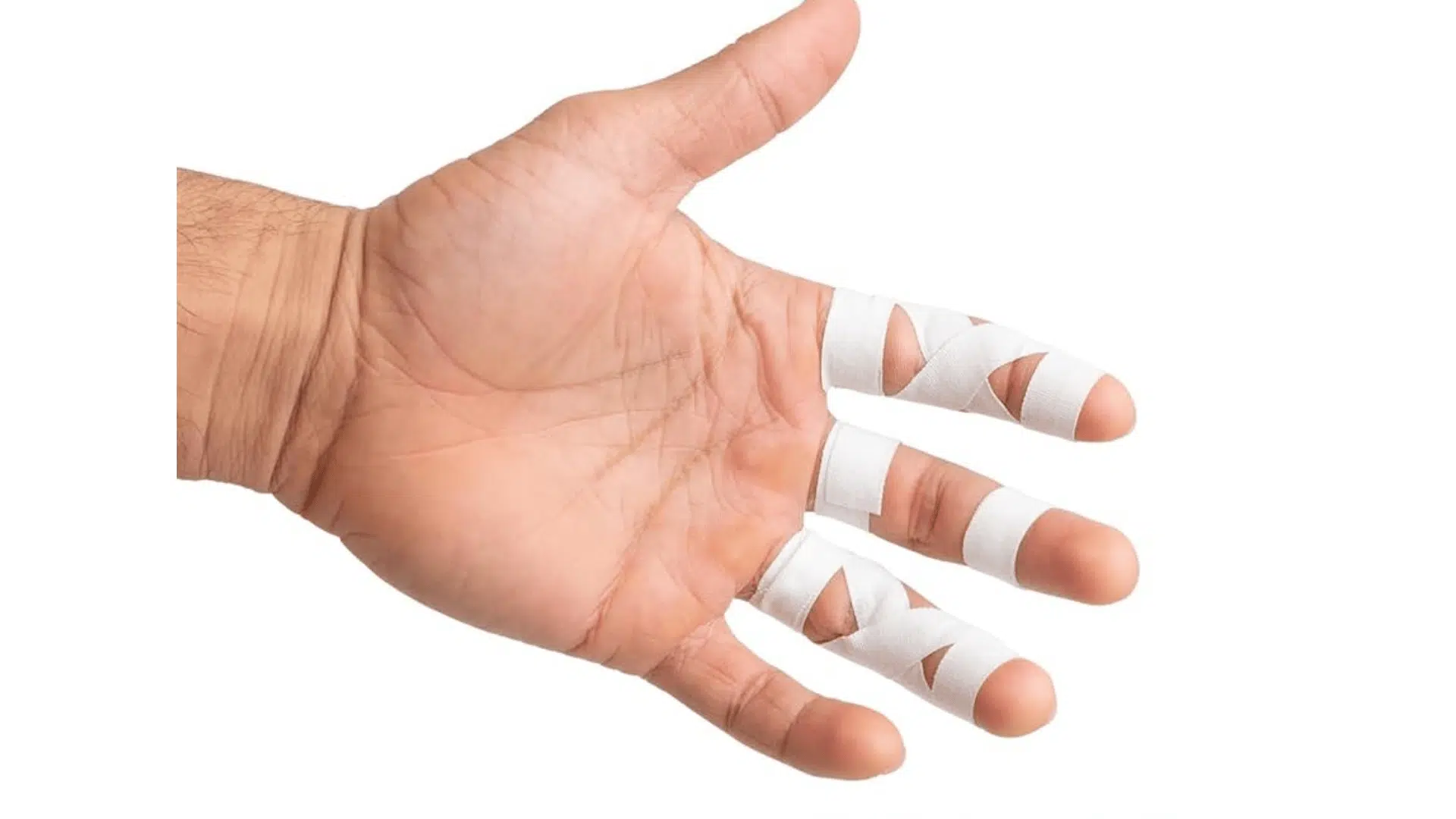
This taping method is designed to protect the knuckle from strong impact during games or practice.
By forming an “X” shape over the joint, it helps spread the force across the hand and wrist instead of letting it hit one small area.
Hitters and blockers often use this style to reduce stress, support the joint, and stay more comfortable during play.
- Step 1: Cut two 4-inch strips of 1-inch tape, plus two short 1-inch anchors.
- Step 2: Anchor the first strip around the finger base (near the palm) and extend it up one side of the knuckle.
- Step 3: Cross the second strip from the opposite base anchor over the knuckle, forming an “X” intersection at the top joint.
- Step 4: Secure ends with short wraps at the base and tip, overlapping slightly for hold.
- Step 5: Test with a fist clench or mock block; if it slips or pinches, add a middle anchor and reapply firmly.
3. H-Taping
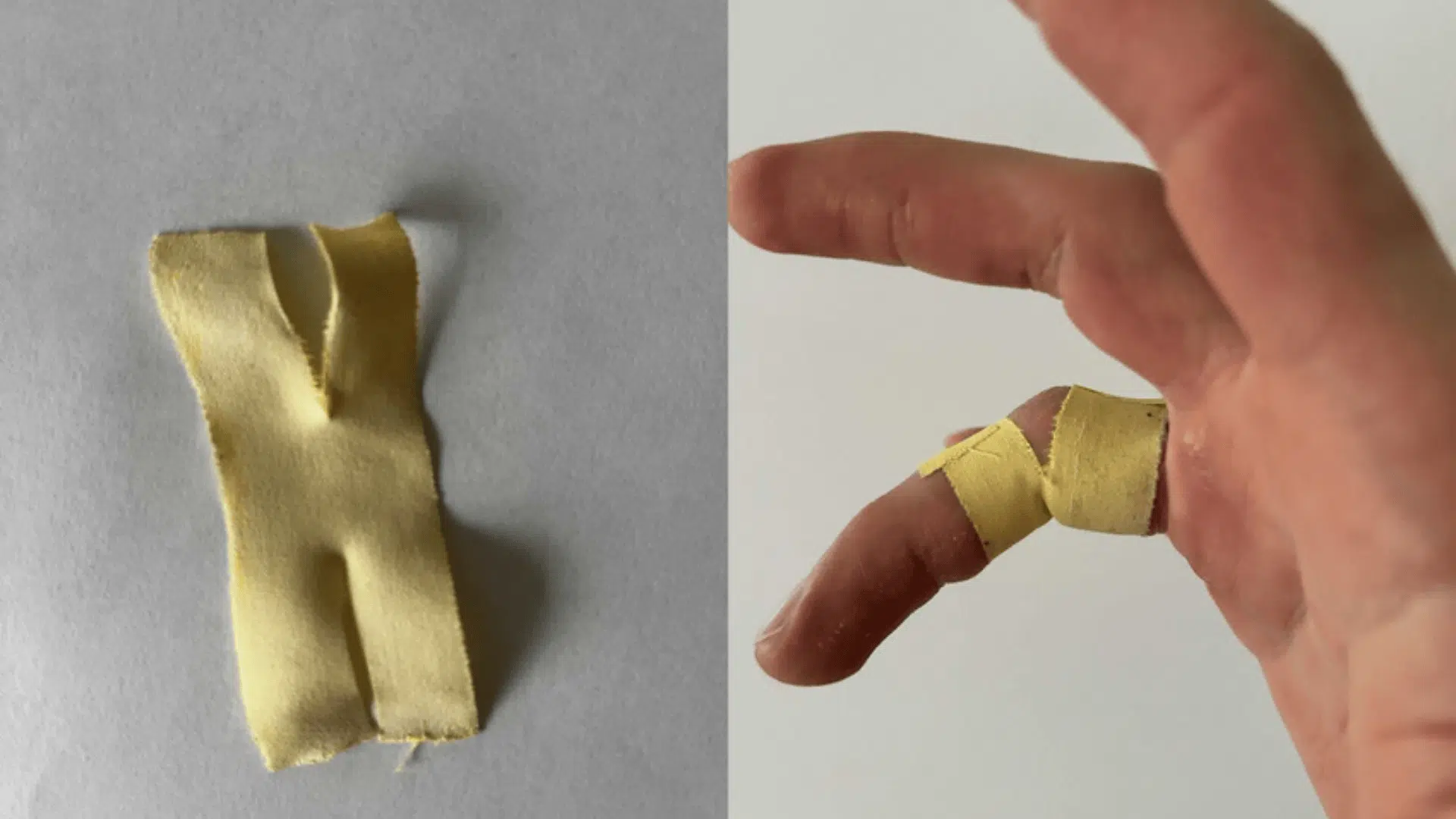
This taping method helps relieve joint pain during games and practice. It forms an “H” shape over the finger to provide balanced and steady support.
The design helps limit unwanted movement while still allowing flexibility.
Liberos often use this style on the ring or middle fingers for extra control and comfort during long matches.
- Step 1: Cut four 3-inch strips of 1-inch tape.
- Step 2: Place two vertical strips: one down the front from the knuckle to the tip, and one on the back.
- Step 3: Connect them with two horizontal strips, one over the middle joint and one midway between the joints, to form the “H.”
- Step 4: Secure edges with short anchor wraps at base and tip.
- Step 5: Simulate a block or dig; if it shifts, overlap and reapply snugly.
Types of Tapes used for Finger Support in Volleyball
Volleyball players choose from various sports tapes based on the taping method, injury type, and position demands. The following table compares common tape types in volleyball:
| Tape Type | Use Case | Pros | Cons | Best Method |
| Rigid Zinc-Oxide Sports Tape | Buddy taping or splinting injured fingers | Top-tier stability; locks joints against jams and lateral bends | Stiff feel; can limit flex if layered thick | Buddy, H, Splint |
| Elastic Athletic Tape (cloth-stretch) | Light wraps or a figure-8 for grip and blister guard | Breathable and comfy; moves with your hand during digs | Weaker on heavy joint support; may shift in sweat | Figure-8, X |
| Kinesiology Tape | Performance wraps or X-taping for mild compression | Full range of motion; boosts circulation without bulk | Stickiness fades in long matches or wet conditions | X, Light Buddy |
Common Finger Taping Mistakes to Avoid
Taping the fingers is not as easy as it may seem; even professional players make mistakes while taping. These are the mistakes players learn the hard way.
- Taping Too Tightly: If the finger starts tingling or changing color, the tape is cutting off circulation. Tight tape hurts more than it helps.
- Using Too Much Tape: Big, bulky wraps can make the hand feel stiff and clumsy.
- Taping Every Finger “Just in Case”: Wrapping fingers that feel fine can mess with natural movement and control.
- Taping on Sweaty or Dirty Skin: Dry the fingers first so the tape stays put; otherwise, it won’t stick well and can slide around during play.
- Covering the Wrong Joint: If the pain is in one joint but the tape is placed somewhere else, it won’t help much.
- Ignoring Pain Under the Tape: If it hurts sharply even with tape, the finger may need rest.
Conclusion
At the end of the day, I see finger taping as a simple tool, not a magic fix. It can give support, lower stress on sore joints, and help players feel steadier during tough plays.
It may also give you that small boost of confidence to go all in on blocks and quick reactions.
But I always remind athletes that tape should not hide serious pain. If a finger keeps swelling, bruising, or hurting, it needs proper care, not just another layer of tape.
What matters most is knowing your body and paying attention to warning signs.
Try taping in practice, see how your hands feel, and keep it light and comfortable. When used the right way, it can be a helpful part of your routine.
If this guide helped you, share it with a teammate and check out my other injury prevention tips.