
Football has its own language, and I notice that every time I watch game film or study defensive schemes.
The sport uses many terms that can sound confusing at first, especially if you are new to the game.
You often hear phrases like nickel defense, Cover 2, or 3 technique during TV broadcasts. Commentators use them quickly, assuming most fans already understand what they mean.
Even long-time fans may recognize the term “3 technique” but struggle to explain it clearly.
It sounds technical, yet it simply refers to a specific alignment on the defensive line.
In American football, mainly at the college and NFL levels, coaches use numbered techniques to describe where a defensive lineman lines up before the snap.
In this guide, you’ll learn what the 3 technique is and its key defensive role. By the end, you’ll know where it lines up and why it matters.
What Is a 3-Technique in Football?
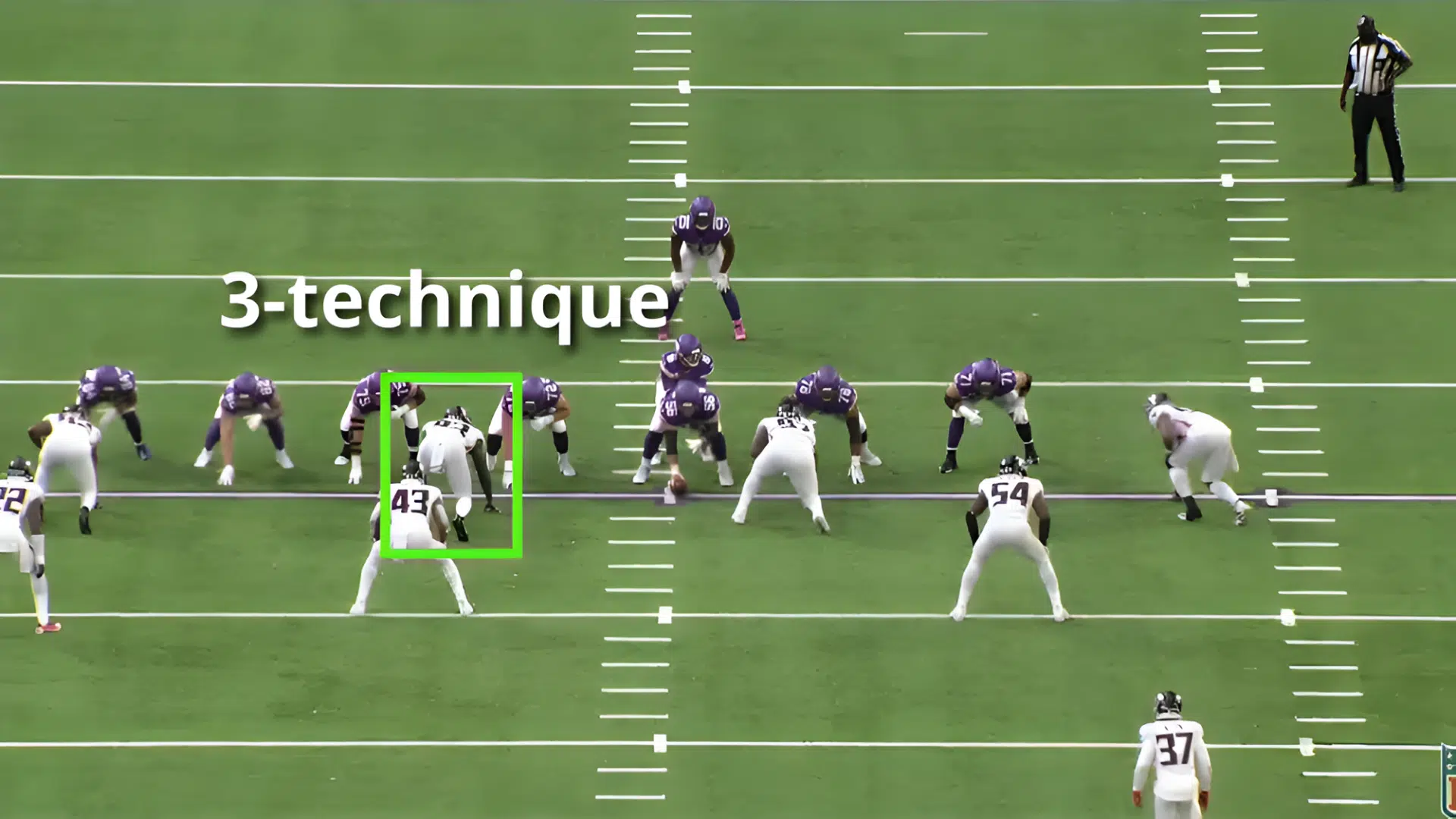
A 3-technique in football is a defensive tackle who lines up on the outside shoulder of the offensive guard.
Coaches use numbered techniques to show exact spots on the line, and the number 3 points to this position.
The 3-technique lines up in the B-gap, which is the space between the guard and the tackle. This alignment lets him attack one gap instead of reading both sides.
His main job is to rush the passer and break through the line quickly. He must be fast, strong, and able to move well in tight spaces.
The goal is to create pressure and disrupt plays in the backfield.
In many defenses, especially the 4-3 scheme, the 3-technique plays a key role.
He is often one of the most explosive players on the defensive line and helps the defense control the line of scrimmage.
Other Defensive Line Techniques in Football
In football, coaches use numbers to describe exactly where a defensive lineman lines up before the snap. These numbers are called techniques, and each one shows alignment.
1-Technique
The 1 technique lines up on the outside shoulder of the center, which places the defender in the A gap between the center and the guard.
This alignment is slightly shaded, not directly over the center.
The main job of a 1 technique is to stop inside runs and control the middle of the line.
The player must be strong enough to handle double teams and hold their ground. Their goal is to clog the gap, take on blockers, and free up linebackers to make tackles.
2-Technique
The 2 technique lines up directly over the offensive guard in a head-up position. Unlike the 1 or 3 technique, this defender is not shaded to one side.
This alignment allows them to react to the play and control either gap if needed.
The 2 technique must read the guard quickly after the snap and respond based on movement.
Their role is to engage the blocker, control space at the line of scrimmage, and help stop both inside runs and short passes by pushing the pocket.
A Quick Overview of Defensive Line Techniques in Football
Defensive line techniques are numbered to show exact alignment spots. Each number tells you where a lineman lines up and what gap he controls.
| Technique | Alignment Position | Gap Responsibility | Main Role | Playing Style |
| 1 Technique | Outside shoulder of the center | A-gap | Stop inside runs | Strong, space-controlling |
| 2 Technique | Head-up on the guard | Reads inside or outside the gap | Control the line | Balanced, reactive |
| 3 Technique | Outside the shoulder of the guard | B-gap | Penetrate and disrupt | Explosive, aggressive |
Core Responsibilities of the 3-Technique
A 3 technique in football focuses on attacking the B-gap and disrupting plays in the backfield. His main job is to create pressure, stop inside runs, and make life difficult for the quarterback.
1. Attack the B-Gap
At the snap, the 3 technique explodes into the B-gap between the guard and tackle. The first step is critical. A fast and powerful first move can immediately put the offensive guard on the defensive.
The goal is not to sit and read the play for long. Instead, the defender attacks the space with force and purpose.
By penetrating the B gap quickly, the 3 technique can break down blocking schemes.
If they get into the backfield early, they can force the running back to hesitate or change direction. Even a small amount of penetration can disrupt timing and ruin the design of the play.
2. Disrupt the Backfield
Disruption defines the 3 technique role. On run plays, he closes lanes before the runner reaches the line.
They try to shed the guard’s block, free their hands, and make the tackle, or at least slow the runner down, so teammates can finish the play.
On passing plays, the focus shifts to interior pressure.
The 3 technique attacks the guard one-on-one and attempts to collapse the pocket from the middle.
Pressure up the middle is difficult for quarterbacks to escape because it limits their ability to step forward into a throw. This can lead to sacks, rushed passes, or turnovers.
Physical Traits and Skills of a 3-Technique Player
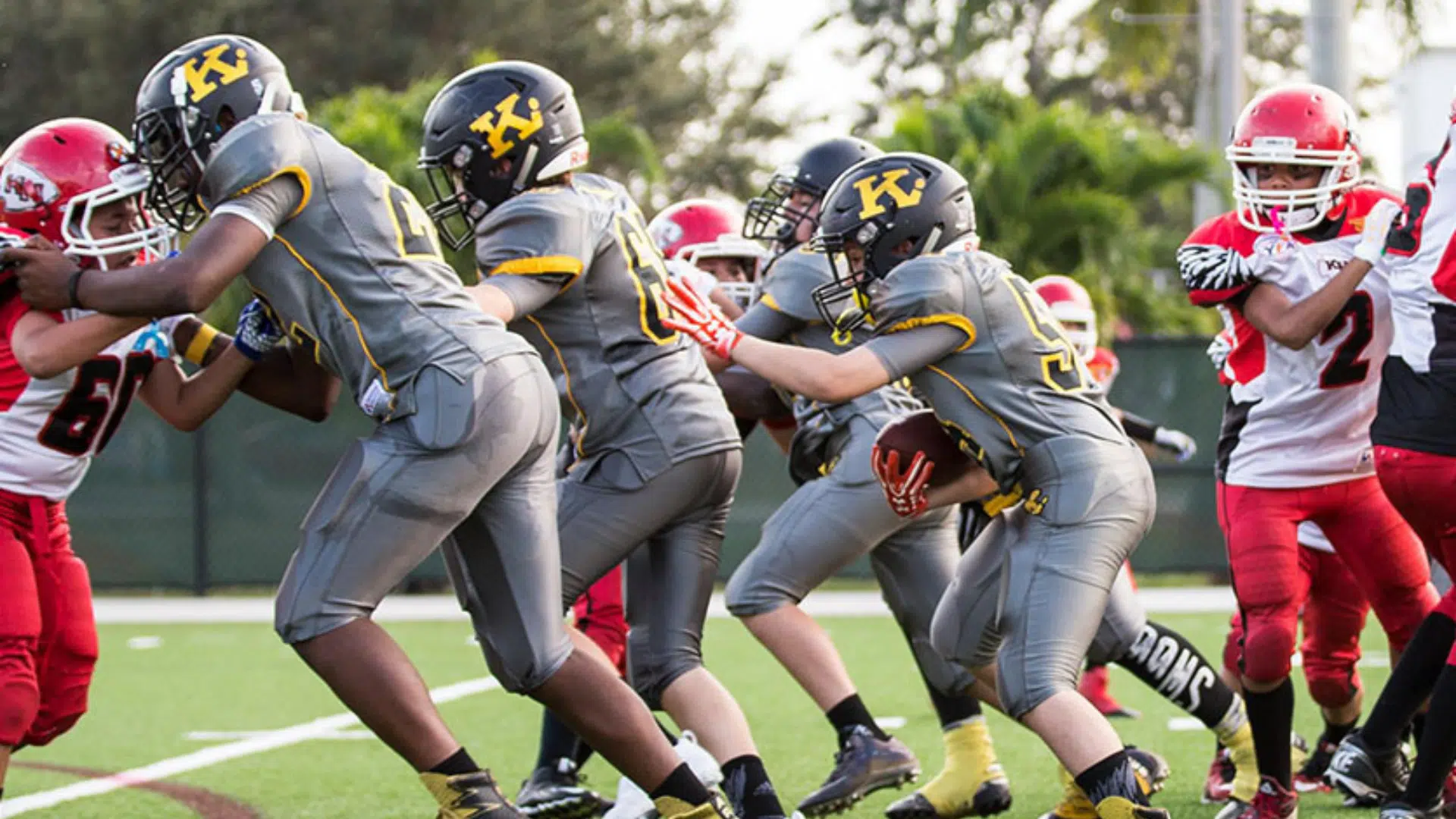
A 3 technique in football must be quick, strong, and aggressive. This position focuses on beating the offensive guard and attacking the B-gap.
- Explosive First Step: A 3-technique in football must react quickly at the snap. A quick first step helps him beat the offensive guard and enter the B-gap before the block is set.
- Strong Hands: Good hand strength allows the player to control the guard, push through blocks, and stay balanced as they move toward the ball.
- Low Pad Level and Leverage: Staying low gives better power and control. Proper leverage helps the 3-tech win one-on-one matchups inside the line.
- Agility and Balance: A 3-technique is usually quicker than a nose tackle. He must move side to side, adjust quickly, and stay steady while fighting through traffic.
- Interior Pass Rush Skills: This player must pressure the quarterback from the middle. Inside pressure limits the quarterback’s space and can lead to sacks or hurried throws.
Key Techniques in Different Defensive Schemes
The role of the 3-technique can shift based on the defensive scheme. Each system changes its alignment, focus, and overall impact on the play.
| Defensive Scheme | Role of the 3-Technique | Key Focus |
| 4-3 Defense | Lines up on the outside shoulder of the guard in the B-gap. | Quick penetration, interior pressure, disrupt run plays. |
| 3-4 Defense | May shift responsibilities depending on the front. Sometimes used in hybrid looks to attack inside gaps. | Create pressure inside and free up linebackers. |
| Nickel Defense | Often used in passing situations as an interior pass rusher. | Collapse the pocket and rush the quarterback. |
| Hybrid Fronts | Moves between techniques based on play design and alignment. | Attack the B-gap and adjust to offensive formations. |
Why the 3-Technique Matters?
The 3 technique has become one of the most important positions in modern defensive football. As offenses have grown faster and more pass-focused, defenses need interior players who can create pressure quickly.
Edge rushers matter, but pressure up the middle can be even more disruptive.
When a 3-technique collapses the pocket from inside, the quarterback cannot step forward. That often leads to rushed throws, bad decisions, or sacks.
I once spoke with a defensive lineman who played this role, and he told me quarterbacks hate inside pressure more than edge rush.
That stuck with me. Offenses must adjust protection against a strong 3 technique, often using double teams.
This also helps control the run and frees up linebackers and edge rushers. One strong 3 technique can lift the entire defense.
Notable 3-Technique Players in Football
Several great defensive tackles have played the 3-technique role at a high level. These players show how speed, strength, and quick hands can change a game from the inside.
- Aaron Donald: One of the most dominant defensive tackles in NFL history. Known for his quick first step and strong inside pass rush.
- Warren Sapp: A key part of the Tampa Bay Buccaneers’ defense. Famous for his ability to penetrate the B gap and pressure quarterbacks.
- John Randle: An undersized but explosive defensive tackle who made a big impact with speed and technique.
- Chris Jones: A modern interior defender known for collapsing the pocket and making plays in big moments.
- Tommy Harris: Played a strong 3 technique role and was known for quickness and disruption on the inside.
Conclusion
The 3-technique may not always get the same spotlight as quarterbacks or edge rushers, but it plays a huge role in how a defense succeeds.
When you understand where this player lines up and what he is asked to do, the game starts to make more sense.
You can see how one quick move into the B-gap can change a run, force a bad throw, or shift an entire protection scheme.
Next time you watch a game, pay attention to the defensive tackle lined up on the guard’s outside shoulder.
Notice how often he affects the play, even without making the tackle. That impact shows his true value.
Have you ever played or watched someone dominate at this position? Share your thoughts and experiences in the comments below.
Frequently Asked Questions
Can a 3-Technique Play in Any Defensive System?
Most defensive systems use a 3-technique in some form, especially 4–3 defenses. However, the exact role may change depending on the scheme and coaching style.
How Is a 3-Technique Different from a Nose Tackle?
A nose tackle usually lines up over the center and focuses on stopping the run. A 3 technique lines up on the guard’s outside shoulder and is more focused on penetration and disruption.
Why Is Inside Pressure so Important in Football?
Inside pressure makes it harder for quarterbacks to step forward in the pocket. When the middle collapses, it forces quicker decisions and can lead to mistakes or sacks.