
Ever notice how some everyday tasks feel harder than they should, like carrying groceries, lifting a laundry basket, or getting up from the floor?
Functional strength training helps make those moments easier. It builds strength that actually works in real life, not just in the gym.
In this blog, the focus is on what functional strength training is, how it works, and why it matters.
You’ll also see the key benefits, the differences from traditional training, the best beginner exercises, and ready-to-follow workout routines.
By the end, it becomes clear how to fit functional strength training into a weekly routine in a simple, safe, and practical way.
What Is Functional Strength Training?
Functional strength training prepares your body for real-life movements and daily activities.
Instead of just making muscles bigger, it helps you move better when carrying groceries, playing with kids, climbing stairs, or bending down to pick something up.
Think of it as training your body for the things you actually do every day, not just for how you look in the mirror.
Exercises like squats, lunges, and deadlifts are perfect examples because they mirror movements you make all the time.
How Functional Strength Training Works

Here’s what makes functional training special: it teaches your muscles to work as a team rather than solo performers.
Multi-joint movements are the foundation. When you squat down to lift a box, you’re not just using your legs; your ankles, knees, hips, core, and back all work together. Functional training replicates this teamwork in the gym.
Multi-planar movements mean you’re not stuck moving in just one direction. Real life doesn’t happen on a straight track.
You twist to look behind you while driving, reach diagonally to grab something off a shelf, and step to the side to avoid obstacles.
Functional exercises train your body to handle movement in all directions: forward and back, side to side, and rotational.
The training focuses on six fundamental movement patterns that cover almost everything you do:
- Push (pressing a door open, putting luggage overhead)
- Pull (opening a heavy door, starting a lawnmower)
- Hinge (bending to tie your shoes, lifting a toddler)
- Squat (sitting down and standing up, picking up dropped items)
- Rotate (turning to check your blind spot, swinging a golf club)
- Carry (hauling groceries, moving furniture)
What really sets functional training apart is the emphasis on stability and coordination. Your core isn’t just along for the ride; it’s actively working to keep you balanced and controlled during every movement.
This builds strength that actually transfers to daily life.
Functional Strength Training vs. Traditional Strength Training
Both types of training have their place, but they serve different purposes. Here’s how they stack up:
| Aspect | Functional Strength Training | Traditional Strength Training |
|---|---|---|
| Primary Purpose | Improve real-life movement and daily function | Build muscle size and specific strength |
| Movement Style | Multi-directional, dynamic, uses multiple joints | Often single-plane, controlled, isolated movements |
| Muscle Engagement | Multiple muscle groups work together | Focuses on individual muscles or muscle groups |
| Equipment | Bodyweight, kettlebells, bands, sandbags, medicine balls | Barbells, machines, dumbbells |
| Training Focus | Movement patterns and coordination | Muscle hypertrophy and maximum strength |
| Best For | Daily life activities, injury prevention, and overall fitness | Building muscle mass, powerlifting, and bodybuilding |
Neither approach is “better”; they’re just different tools for different goals. Many people find that mixing both styles gives the best overall results.
Key Benefits of Functional Strength Training
The benefits go way beyond just getting stronger. Here’s what functional training can do for you:
- Makes Everyday Life Easier: When you train the movements you use daily, those activities become less tiring. Carrying kids upstairs, rearranging furniture, or gardening won’t leave you sore and exhausted.
- Builds a Rock-Solid Core: Since almost every functional exercise requires core stability, your midsection gets stronger without doing endless crunches. A strong core means better posture and less back pain.
- Improves Balance and Coordination: Many functional exercises challenge your balance, a skill that becomes increasingly crucial as we age. Better balance means fewer falls and more confidence in your movements.
- Reduces Injury Risk: By strengthening the muscles around your joints and teaching proper movement patterns, functional training helps protect you from common injuries, both in the gym and in daily life.
- Enhances Mobility and Posture: These exercises often take your joints through their full range of motion, keeping you flexible and mobile. Plus, a stronger body naturally stands taller and moves better.
- Eases Joint Pain: Strengthening the muscles that support your joints can relieve pressure and reduce chronic pain, especially in the knees, hips, and lower back.
- Burns More Calories: Because functional exercises involve multiple muscle groups, they require more energy. This means you’re getting more bang for your buck in every workout.
Functional Strength Training Workouts You Can Start Today
Here are three ready-to-use routines that you can begin right away:
Beginner Functional Circuit (Bodyweight Only)
Perform each exercise for 30 seconds with 15 seconds rest between, and repeat 2-3 times:
- Bodyweight squats
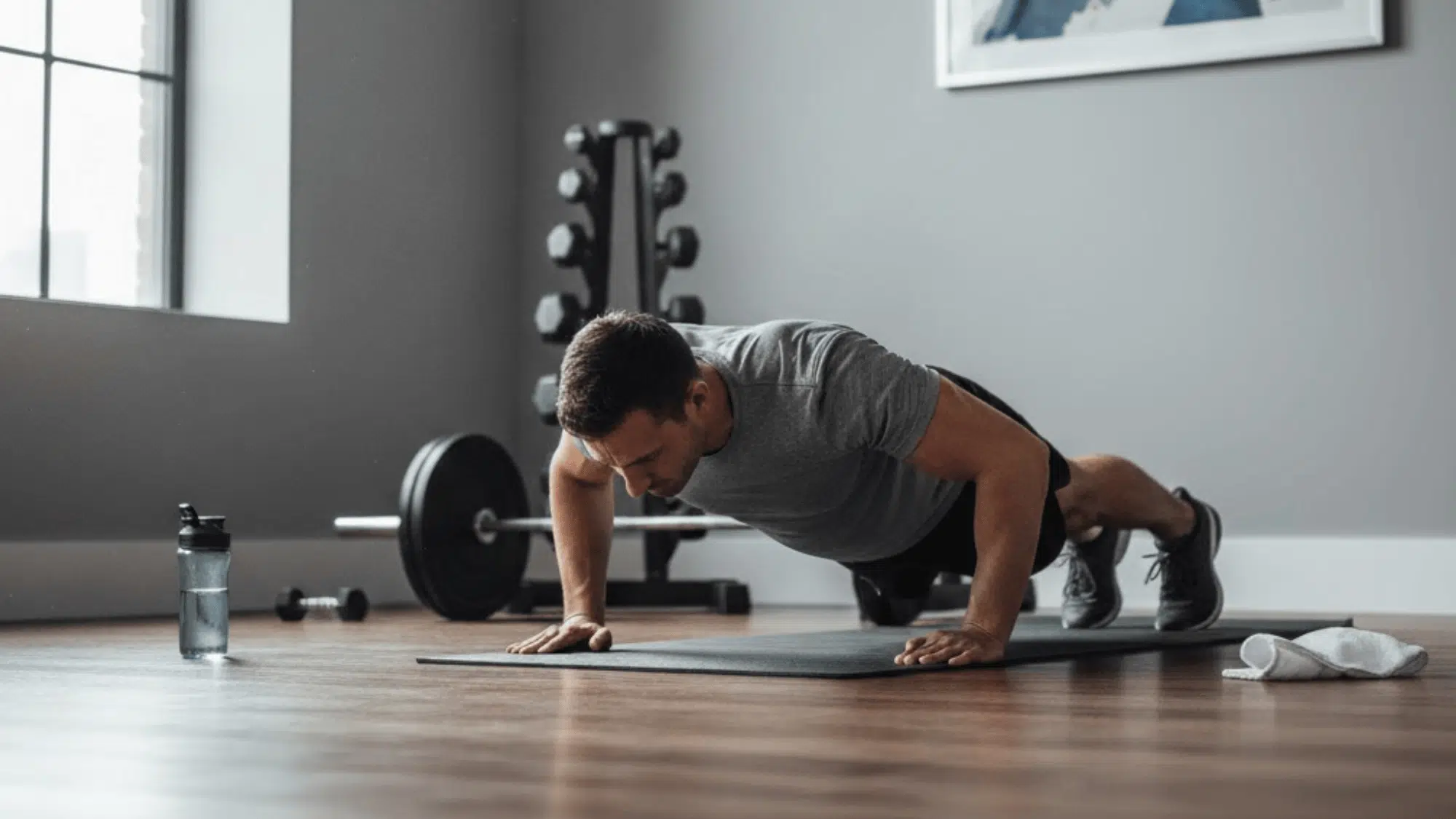
- Push-ups (do knee pushups if normal pushups feel hard)
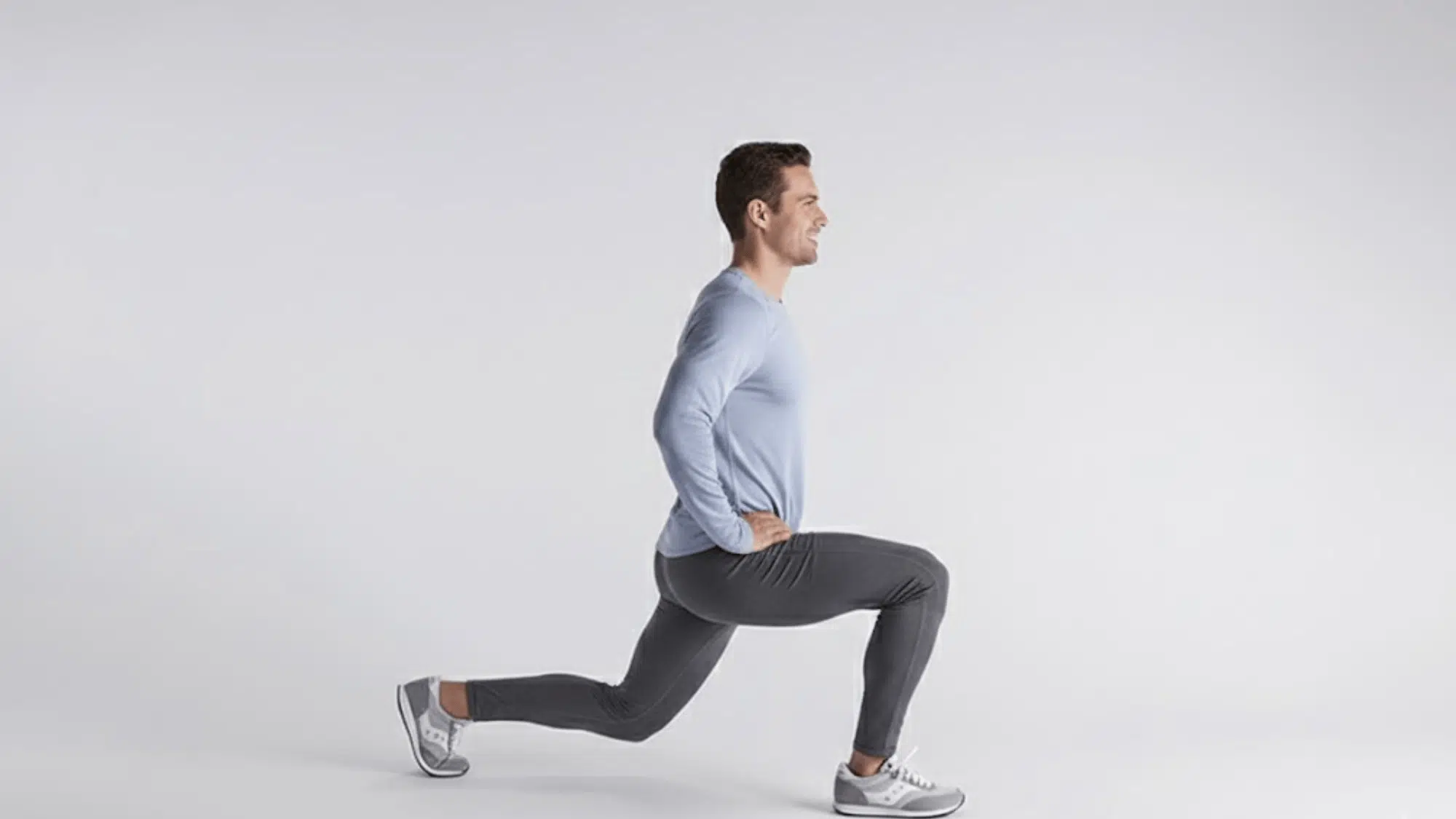
- Walking lunges
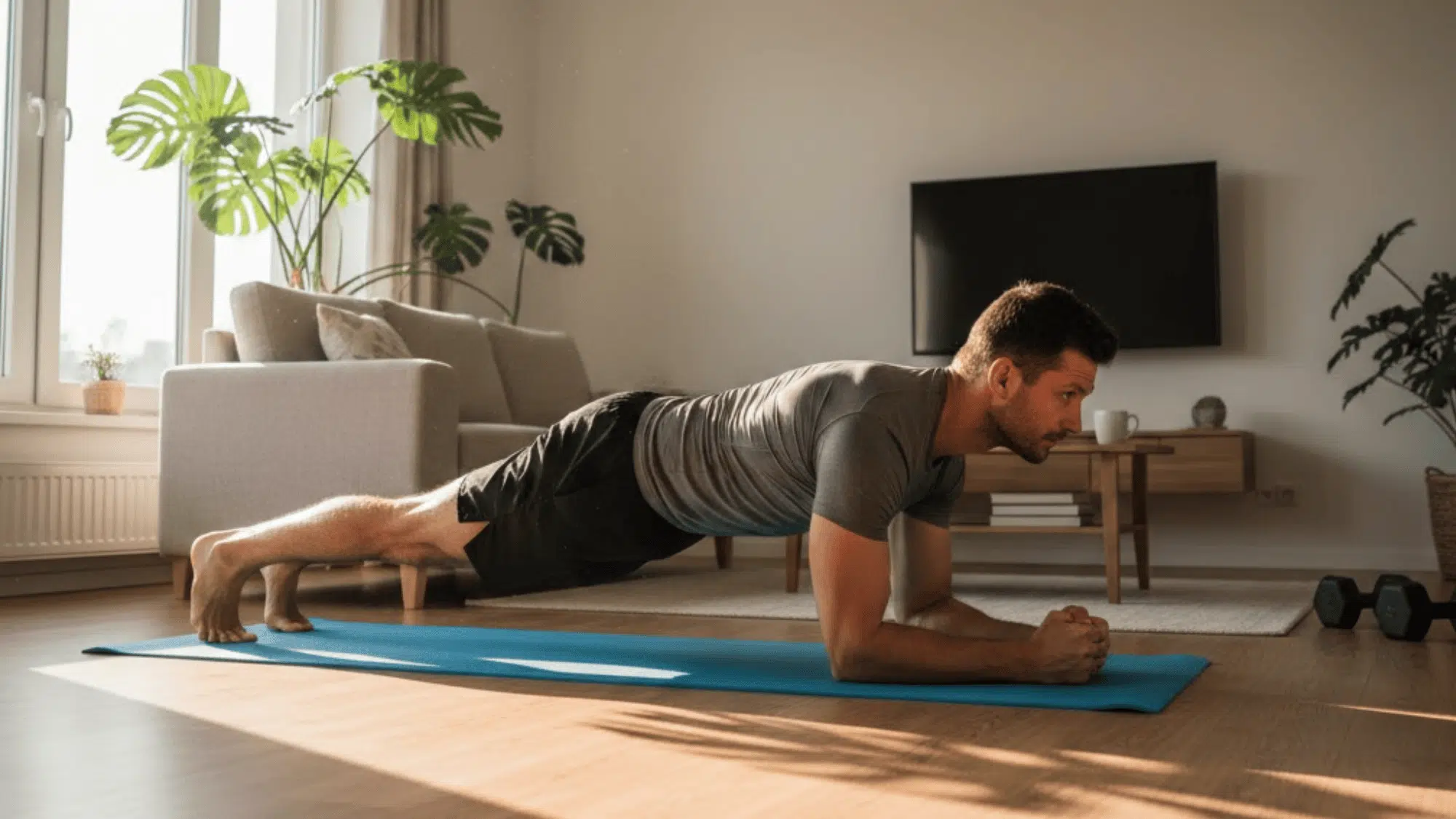
- Plank hold
- Glute bridges
- Standing knee raises
This routine teaches basic movement patterns without needing any equipment.
Intermediate Functional Strength Routine (Kettlebells)
Complete 10-12 reps of each exercise, rest 30 seconds, and repeat 3 rounds:
- Goblet squats (holding weight at chest)
- Overhead press
- Reverse lunges with weight
- Russian twists
- Farmer’s carry (30 seconds)
This workout adds resistance while maintaining real-world movement patterns.
Advanced Functional Strength Routine
Designed to mirror actual daily activities and rest and repeat 3 times:
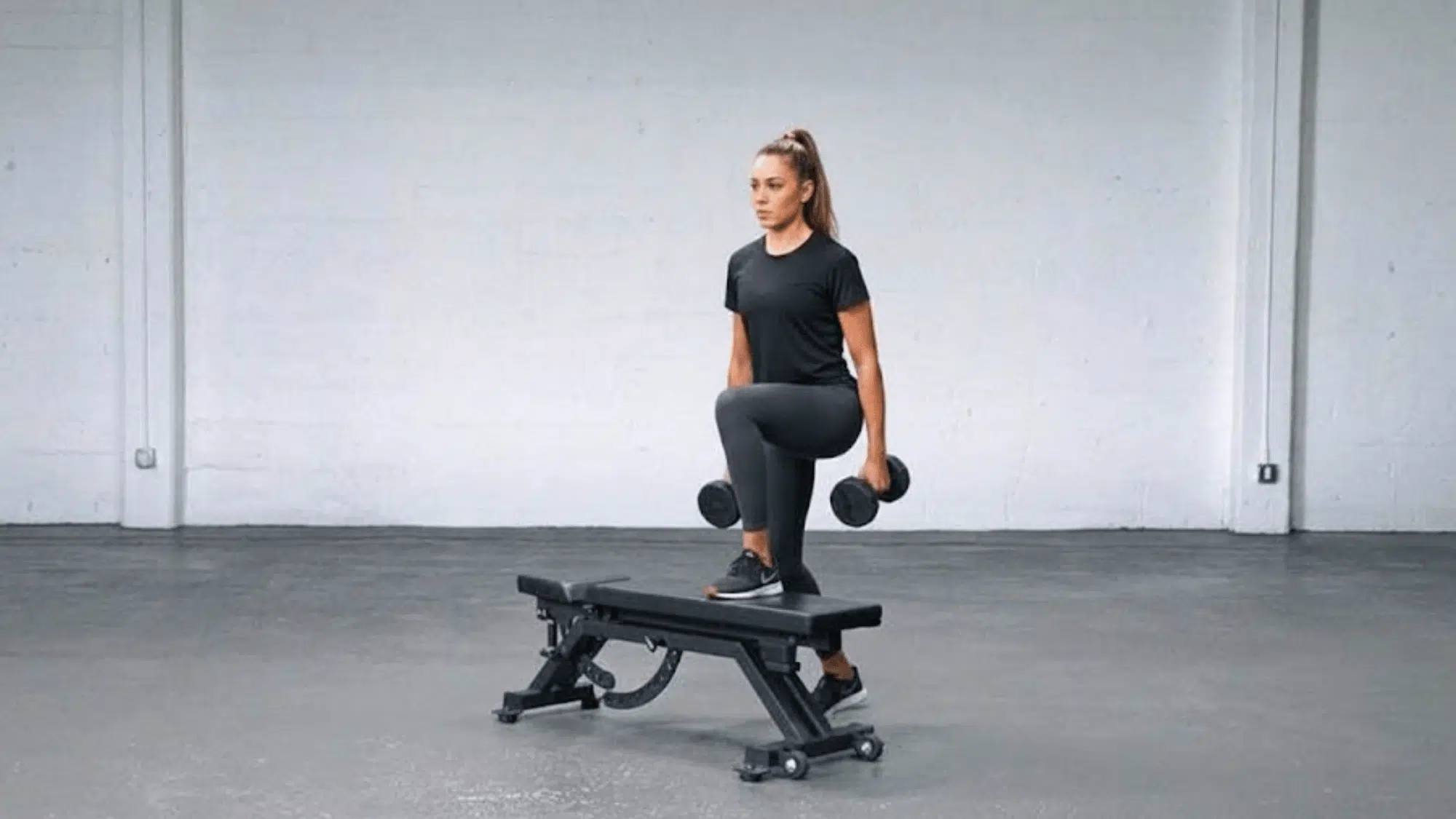
- Box or chair step-ups (like climbing stairs) – 10 each leg
- Weighted carries (like carrying groceries) – 40 seconds
- Kettlebell swings (like lifting a suitcase) – 15 reps
- Medicine ball slams (like chopping wood) – 12 reps
- Rotating lunges (like changing direction while walking) – 10 total
- Dead bug holds (for core stability) – 30 seconds
Each exercise in this circuit directly translates to something you might do in everyday life.
Is Functional Strength Training Right for You?
The short answer for most people is yes. Here’s who benefits most:
Beginners enjoy it because the movements feel natural and build confidence, especially when starting with bodyweight exercises.
Busy adults like that it trains multiple muscle groups at once, making workouts quick and efficient.
Older adults benefit by staying strong for everyday tasks, while athletes use functional movements to boost coordination and performance.
It’s generally low-impact and easy on the joints, especially compared to high-intensity programs like CrossFit.
You can scale everything: begin with bodyweight, add light weights as you improve, and adjust movements to your ability level. Just check with your doctor first if you’re new to exercise or have any health conditions.
How to Add Functional Strength Training to Your Routine
Getting started is simpler than you might think. Follow these practical steps:
Begin with The Basics
Master the fundamental movement patterns first: squat, hinge, push, pull, and carry. Don’t worry about adding weight until your form is solid.
Progress Gradually
Start with bodyweight exercises for 2-3 weeks. When those feel comfortable, add light weights, like 5-10-pound dumbbells. Increase weight gradually as you build strength.
Train Consistently
Aim for 2-3 functional strength sessions per week. This gives your body time to recover while steadily building strength.
Focus on Form over Weight
Better form means better results and fewer injuries. If your form breaks down, reduce the weight or simplify the movement.
Mix It up for the Best Results
Combining functional training with some traditional strength work gives you the benefits of both approaches. Use functional exercises as your foundation, then add isolated exercises if you have specific goals.
Listen to Your Body
Some muscle soreness is normal, but sharp pain or joint discomfort means you should stop and reassess your technique.
The key is to start where you are and build from there. There’s no rush, and every small improvement in how you move pays dividends in daily life.
Final Thoughts
Functional strength training is one of the most practical ways to build a stronger, more capable body.
It helps make everyday movements feel smoother, safer, and easier, whether that means lifting, bending, carrying, or simply staying balanced.
With the right mix of basic patterns, gradual progress, and consistent practice, anyone can improve strength and feel more confident in daily life.
The best part is that functional training grows with you, starting simple and building naturally as your body gets stronger. Now that the key movements, benefits, and workouts are clear, it’s a great time to put them into action.
Ready to begin? Start with one routine from this blog and take the first step toward moving better every day.