If you are getting into football or want to better understand the game, learning the defensive positions is a smart place to start. Defense often decides who wins and who loses.
Still, many fans focus only on big scoring moments and miss the structure that makes those plays possible.
I have covered major leagues and game tactics, so I know how confusing formations and roles can seem at first.
In this guide, I will share the basic defensive and offensive positions in football, along with their roles, core duties, and the skills each player needs.
By the end, you will see how defenders read the field, stop attacks, and shape the rhythm of the entire game.
Overview of Core Offensive and Defensive Positions in Football
Football has two main units: offense and defense. The offense tries to move the ball down the field and score points.
The quarterback leads the offense and decides when to pass or hand off the ball. Running backs carry the ball and look for open space.
Wide receivers run routes and catch passes. The offensive line blocks to protect the quarterback and create running lanes. On defense, the goal is to stop the offense from scoring.
The defensive line pushes through blockers to pressure the quarterback and stop runs.
Linebackers stand behind them and react to both run and pass plays. Defensive backs cover receivers and defend deep throws.
Each position has a clear job and requires working with others.
When players understand their roles and communicate well, the team plays with better control, balance, and consistency on the field.
Different Defensive Line Positions in Football
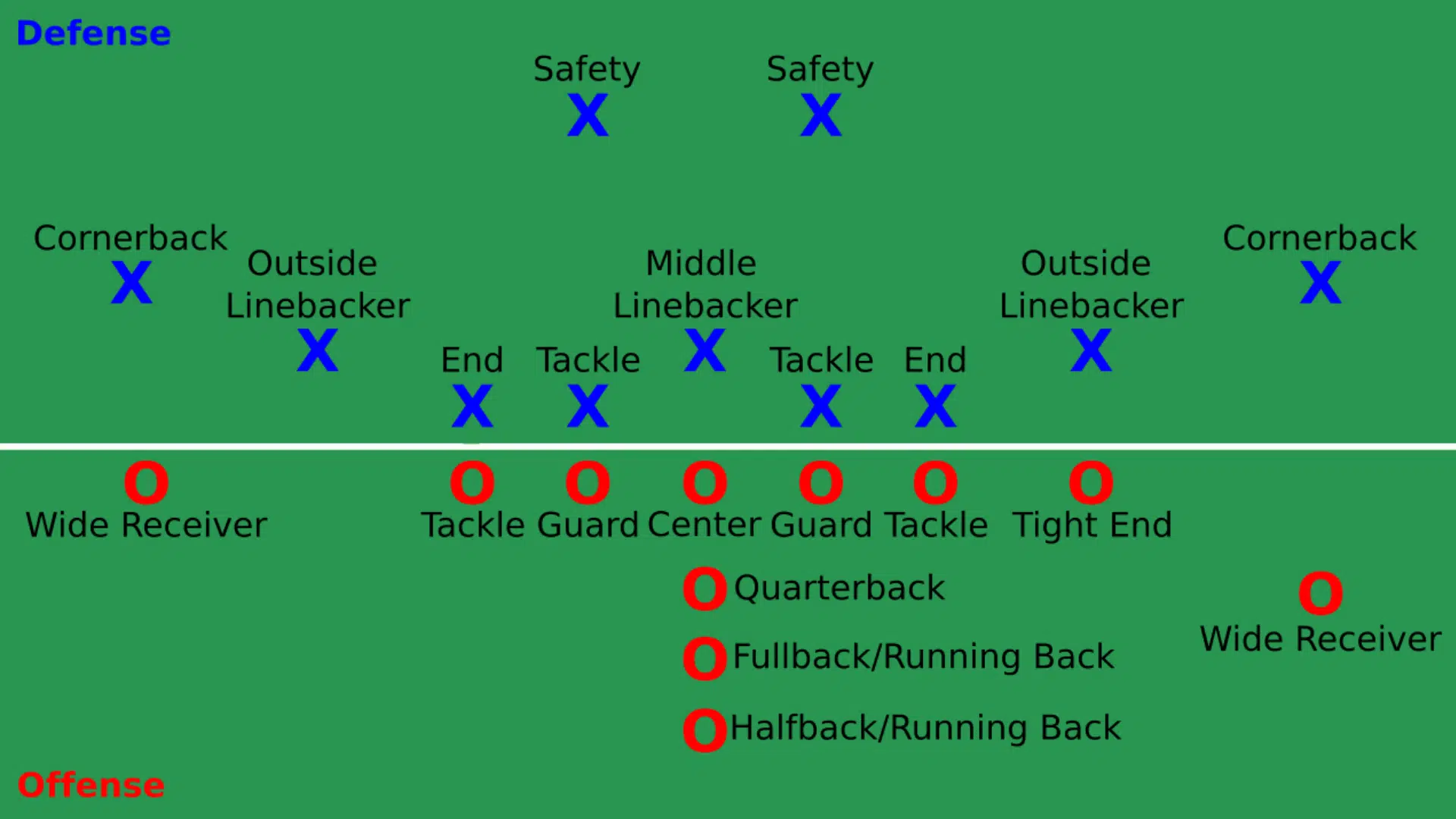
The defensive line controls the line of scrimmage. These players are strong and hold their ground. I once covered a game where their pressure forced mistakes and changed the outcome.
1. Defensive Tackles
Defensive tackles line up inside, near the center of the line. Their main job is to block running lanes in the middle. They face strong offensive linemen on almost every snap.
Because space is tight, they must stay low and hold their ground.
On pass plays, they try to push straight ahead and collapse the pocket. When they do their job well, the offense struggles to run between the tackles.
2. Defensive Ends
Defensive ends play on the outer side of the defensive line. Their job is to protect the edge and chase the quarterback.
They must react fast and stay disciplined. If a runner tries to go outside, the defensive end forces him back inside.
On passing plays, they attack the tackle and aim for a sack. This position needs speed, strength, and strong awareness on every down.
3. Noseguard
The nose guard lines up directly over the center and anchors the middle of the defensive line. This player focuses on controlling space and blocking inside running lanes.
They often face two offensive linemen at the same time, which requires strength and balance.
The nose guard’s job is not always to collect tackles but to stop the forward push.
By holding their ground, they allow linebackers to move freely and make clean tackles. A strong nose guard makes inside runs very difficult.
4. Defensive Guard
A defensive guard lines up on the inside of the defensive line, often beside the nose guard.
Their main job is to protect the interior gaps and stop running plays up the middle. They face strong blockers and must stay low and balanced.
Good hand use helps them shed blocks and move toward the ball.
On passing plays, they rush the passer to pressure the quarterback. Defensive guards support both run defense and pass rush on every down.
5. Cornerbacks
Cornerbacks line up on the outside of the defense, across from wide receivers. Their main job is to cover receivers and defend against passes.
They must stay close to their man and react quickly when the ball is thrown. Speed and quick footwork are very important in this role.
Cornerbacks also help stop outside runs by forcing the ball carrier back inside.
They need strong focus because one missed step can lead to a big play. Good cornerbacks stay confident and alert on every snap.
6. Free Safety
The free safety plays deep in the secondary, usually in the center of the field. This player acts as the last line of defense against long passes and breakaway runs.
The free safety reads the quarterback’s eyes and moves toward the ball. Quick thinking and good timing are key in this role.
I once watched a free safety anticipate a deep throw, step in front of the receiver, and turn the game with one interception. They also help cornerbacks if a receiver gets past them.
A smart free safety can prevent big gains and keep the defense organized during passing plays.
7. Strong Safety
The strong safety lines up closer to the line of scrimmage than the free safety. This position supports both the run defense and pass coverage.
Strong safeties often cover tight ends and help stop running backs.
They must tackle well in open space and read plays quickly. Strength and awareness both matter in this role.
On many plays, the strong safety works like an extra linebacker. They help protect the middle and keep short passes under control.
8. Inside Linebackers
Inside linebackers line up behind the defensive line, close to the middle of the field.
Their main job is to stop runs between the tackles and defend short passing routes. They must read the offense quickly and react without delay.
Strong tackling is important because they face runners in tight spaces.
Inside linebackers also communicate with teammates and help adjust the defense before the snap. They stay involved in most plays and support both the run and pass defense.
9. Outside Linebackers
Outside linebackers line up on each side of the defense, just outside the defensive line. Their role includes stopping outside runs and covering tight ends or running backs.
On certain plays, they rush the quarterback to create pressure.
This position requires speed, balance, and awareness. Outside linebackers must decide quickly whether to attack or drop into coverage.
They play a key part in keeping the defense strong against both rushing and passing plays.
10. Middle Linebacker
The middle linebacker, known as the Mike, plays in the center of the defense and often leads the unit.
He calls out signals before the snap and makes sure everyone is set. The Mike studies the offense and reacts as the play unfolds. His duties include stopping inside runs and covering short routes across the middle.
I once saw Mike adjust the formation seconds before the snap, which stopped a big run and saved the drive.
He must tackle well and stay calm under pressure. A strong Mike keeps the defense organized and ready on every down.
11. Rover
The rover, monster, or nickel linebacker is a flexible defender used in special situations. This player can line up in different spots based on the offense.
They often cover slot receivers or help defend quick passes.
Speed and strong tackling skills are important in this role. In passing downs, they may replace another defender to improve coverage.
This position helps the defense adjust to spread formations and faster offensive players.
Offensive Positions in Football
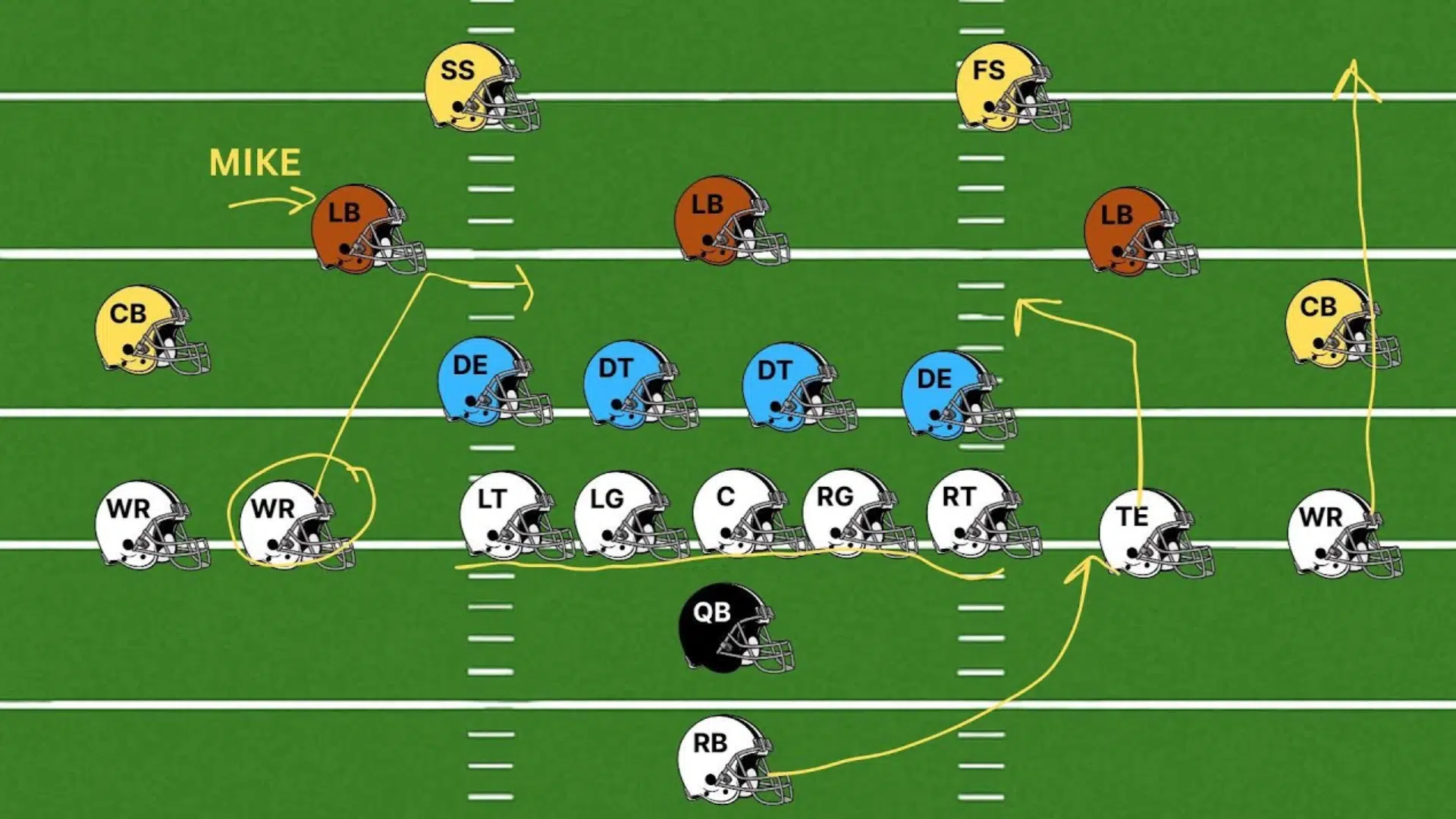
Each offensive role has a clear job, and together these players work to move the ball down the field and create scoring chances.
1. Center (C)
The center plays in the middle of the offensive line and begins every play by snapping the ball to the quarterback. This player must deliver a clean snap and quickly move into a blocking position.
The center protects the inside of the line and helps stop defenders from pushing through the middle.
They often communicate blocking changes before the snap.
Strength, balance, and focus are important. A reliable center helps the offense stay organized and keeps plays running smoothly.
2. Offensive Guard (OG)
Offensive guards line up on each side of the center and protect the inside part of the offensive line. Their main job is to block defensive tackles and stop pressure up the middle.
They create space for running backs by opening clear paths through the line.
A former college lineman once told me that guards take pride in doing the hard work that few fans notice but every teammate depends on.
Guards stay low, use strong hands, and keep their balance.
They may pull to lead block. Strong guards help the offense gain steady yards.
3. Offensive Tackle (OT)
Offensive tackles line up on the outer side of the offensive line, next to the guards.
Their main job is to protect the quarterback from edge rushers, who are often fast and strong.
The left tackle usually protects the quarterback’s blind side, which makes this role very important. Tacklers must use quick footwork and strong hands to keep defenders away.
They also block on outside running plays. Good tackles give the quarterback time and help the offense stay balanced.
4. Quarterback (QB)
The quarterback leads the offense and handles the ball on almost every play.
This player receives the snap from the center and decides whether to pass, hand off, or run. The quarterback must read the defense and make quick decisions under pressure.
Strong passing skills and clear communication are important. They guide teammates and control the pace of the game.
A confident quarterback helps the offense move the ball and create scoring chances.
5. Running Back (RB)
The running back lines up in the backfield behind or beside the quarterback. Their main job is to carry the ball on rushing plays and gain yards.
They must quickly spot open lanes and move through defenders with speed and balance.
Running backs also catch short passes and help block during passing plays. Vision and quick reactions are key in this role.
A strong running back can turn small gaps into big gains for the offense.
6. Fullback (FB)
The fullback lines up in the backfield, usually in front of the running back. This player’s main job is to block and clear a path for the ball carrier.
Fullbacks are strong and physical, often leading the way through defenders on running plays.
Once, I spoke with a coach who said a tough fullback sets the tone for the entire offense with every block.
They may also carry the ball in short-yardage situations or catch short passes. Their role is to support the run game and protect teammates from heavy contact.
7. Wide Receiver (WR)
Wide receivers line up near the sidelines and focus on catching passes from the quarterback.
They run planned routes and try to create space from defenders using speed and sharp cuts.
Strong hands and good timing are important in this role. Wide receivers must track the ball and secure the catch under pressure. On running plays, they also block downfield.
Their speed helps stretch the defense and create more scoring chances.
8. Tight End (TE)
The tight end lines up next to the offensive tackle and plays a mix of blocker and receiver. On running plays, this player helps seal the edge and open lanes for the running back.
On passing plays, the tight end runs short or medium routes and catches the ball.
This position requires both strength and good hands. A dependable tight end gives the offense balance and adds another strong target in key situations.
9. Slot Receiver
The slot receiver lines up between the wide receiver and the offensive line, usually a few steps off the line of scrimmage.
This player focuses on short and medium routes across the middle of the field. Quick cuts and fast reactions help them get open in tight spaces.
Slot receivers must handle contact and secure catches in traffic.
They also block on certain plays. Their role adds another reliable option in the passing game.
10. Wingback
The wingback lines up just outside and slightly behind the tight end.
This position is used in certain offensive formations. The wingback can run the ball, catch passes, or block, depending on the play call.
Speed and timing are important because this player may move before the snap.
The wingback adds variety to the offense and can create confusion for the defense through different alignments.
11. H-Back
The H-back lines up just behind the line of scrimmage and can move before the snap.
This player acts as a mix between a tight end and a fullback. On running plays, the H-back blocks and helps create space.
On passing plays, they run short routes and give the quarterback another target.
Coaches use this position to change formations and create better matchups. The H-back adds flexibility and balance to the offense.
Differences Between Offensive & Defensive Positions in Football
Understanding how each side works helps you see the team strategy more clearly. I have seen fans enjoy games more once they recognize formations and understand why certain plays are called.
| Basis of Difference | Offensive Positions | Defensive Positions |
|---|---|---|
| Main Goal | Score points and move the ball forward | Stop the offense and prevent scoring |
| Ball Control | Quarterback, Running Back, and Wide Receiver handle the ball | Defensive players try to recover the ball through tackles or interceptions |
| Line Players | Offensive Tackle, Offensive Guard, and Center protect the quarterback | Defensive Tackle, Defensive End, Nose Guard attack the line |
| Support Roles | Tight End, Fullback support blocking and receiving | Linebackers (Inside, Outside, Mike) support run and pass defense |
| Backfield Players | Wide Receiver, Slot Receiver focus on catching passes | Cornerback, Free Safety, Strong Safety cover receivers |
| Play Approach | Offense plans and starts the play | Defense reacts and adjusts to the play |
Mental Strengths Needed in Defensive Positions in Football
Mental toughness is key for defensive players. They must stay calm and focused under pressure. It includes resilience, sharp focus, quick thinking, and confidence to perform well throughout the game.
- Resilience: Defensive players need to bounce back quickly after setbacks, such as allowing a big play or making a mistake. Resilience helps them stay focused and keep fighting throughout the game.
- Focus: Linebackers, cornerbacks, and safeties must stay alert and focused, especially when reacting to fast, unpredictable plays. Staying mentally sharp is key to making quick decisions.
- Mental Flexibility: Defensive players must adjust fast to changing offenses. Linebackers often shift from run defense to pass coverage, using quick thinking and mental flexibility.
- Confidence: Defensive players must stay confident, especially against strong offenses. Cornerbacks and safeties trust their coverage skills, while linemen rely on their strength and technique.
- Patience and Discipline: Players in defensive positions in football, especially linemen and cornerbacks, need patience to time their moves. Discipline helps them avoid costly mistakes.
Core Physical Skills for Defensive Positions in Football
Defense demands more than just knowing the playbook. Players need the right physical traits to compete on every snap.
1. Strength
Defensive linemen must be incredibly strong to push past offensive linemen and disrupt plays early.
They use upper-body strength to beat blockers, control gaps, and stop runs. Strong pressure on the quarterback can quickly shift the game.
Linebackers need a balance of strength and agility to handle multiple tasks on defense.
They must tackle effectively, shed blockers, and stay quick enough to move across the field. Linebackers also read plays fast, help stop the run, and assist in pass coverage when needed.
2. Speed
Cornerbacks and safeties depend on speed to keep up with fast wide receivers and cover large areas of the field.
Quick acceleration helps them react to passes, close gaps, and limit big plays.
Speed also allows them to recover quickly if a receiver creates space. Linebackers use speed to cover ground fast, whether stopping the run or defending passes.
It helps them move across the field, fill gaps, and drop into coverage. Quick reactions let them stop plays before the offense builds momentum.
3. Agility
Defensive backs depend on agility to change direction quickly while covering receivers or reacting to the quarterback’s movements.
This skill helps them stay close to receivers, adjust to sudden route changes, and respond fast to the ball in the air.
Linebackers also rely on agility to shift smoothly between run defense and pass coverage.
It helps them read plays fast and move into position without losing balance or speed. Agility keeps them effective during quick game changes.
4. Endurance
All defensive positions in football need strong stamina to keep up their level of play. Football brings nonstop action, contact, and fast decisions on every down.
I have seen games where a defense looked solid early but struggled late because players ran out of energy.
Long drives and back-to-back snaps test both body and focus. Good stamina helps defenders stay alert, move quickly, and compete hard until the final whistle.
5. Footwork
Defensive backs and linebackers rely on excellent footwork to make quick direction changes, maintain balance, and stay in proper position during every play.
Good footwork helps them cover receivers and react to routes.
It also keeps them balanced when tackling and reduces missed tackles. Strong footwork improves reaction time, body control, and overall awareness on the field.
In both roles, sharp footwork helps them react faster, stay disciplined, and handle quick, unpredictable plays.
How Defensive Positions in Football Stop the Offense?
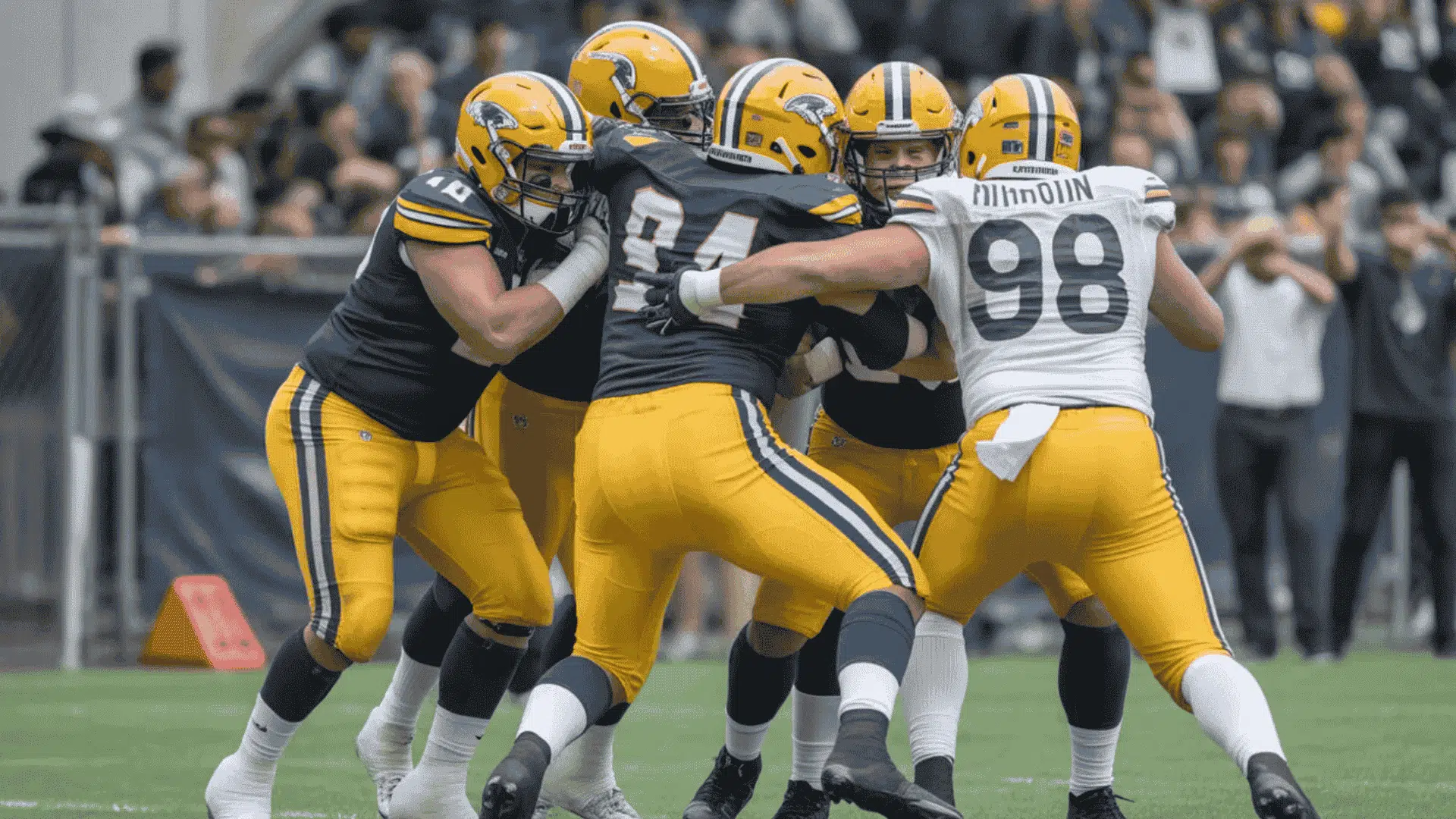
Defensive positions must work together to stop the offense. Every player has a specific role, and their collaboration is what makes the defense effective.
- Defensive line and linebackers: The defensive line focuses on pressuring the quarterback and stopping the run, while linebackers support them by cleaning up plays that break through and covering short passes.
- Linebackers and defensive backs: Linebackers help defend short passes and stop the run, while cornerbacks and safeties focus on covering wide receivers and protecting against deep passes.
- Zone defense responsibilities: Each player covers a specific area of the field, with the defensive line controlling the front, linebackers guarding the middle, and defensive backs covering deep and outside zones.
- Blitz execution: Linebackers or defensive backs rush the quarterback to add pressure, while the defensive line holds its position, requiring strong timing and coordination.
- Communication and teamwork: Defensive position players in football communicate, adjust to movement, and support each other to stay organized and effective.
Conclusion
Football makes more sense when you understand how every position fits together.
Now that you have seen how defensive and offensive positions in football connect, you can watch a game with a sharper eye.
You will start to notice why a linebacker shifts before the snap or how a safety reads the quarterback. Small details become easier to spot.
The more you understand defensive positions in football, the more you enjoy the strategy behind each play.
It is not just about scoring. It is about timing, teamwork, and smart decisions on every down. Next time you watch a game, pay attention to the defense and see what stands out to you.
Share your thoughts or game-day experience in the comments below. I would love to hear how you see the game now.