
If you play, coach, or line a field for match day, soccer goal dimensions are not just numbers on paper.
They shape how the game unfolds, from shot selection to goalkeeper positioning and overall scoring balance.
Over the years, as I’ve covered rule updates and competition standards, I’ve seen how even small measurement details can influence match outcomes.
Many fans assume every soccer goal is identical, but sizes vary by age group and level of play.
Professional matches follow the official 8-foot-high by 24-foot-wide standard, while youth leagues adjust the dimensions to support player development.
Indoor and futsal competitions use different measurements as well. Understanding these distinctions helps coaches, parents, and players stay compliant with league rules and better prepare for competition.
Official Soccer Goal Dimensions (FIFA)
FIFA sets the standard size for soccer goals used in professional and international matches. The official goal must measure 8 feet high and 24 feet wide.
The height is measured from the ground to the lower edge of the crossbar, and the width is measured between the inside edges of the two goalposts.
These measurements ensure consistency in matches played around the world. The goalposts and crossbar must be made from approved materials such as metal or other safe materials.
They must also be the same width and depth, and they are usually white.
While nets are commonly attached to the goal, they must not interfere with the goalkeeper or players during play. These regulations help maintain fairness and safety at the highest levels of the game.
Why Standardization Matters
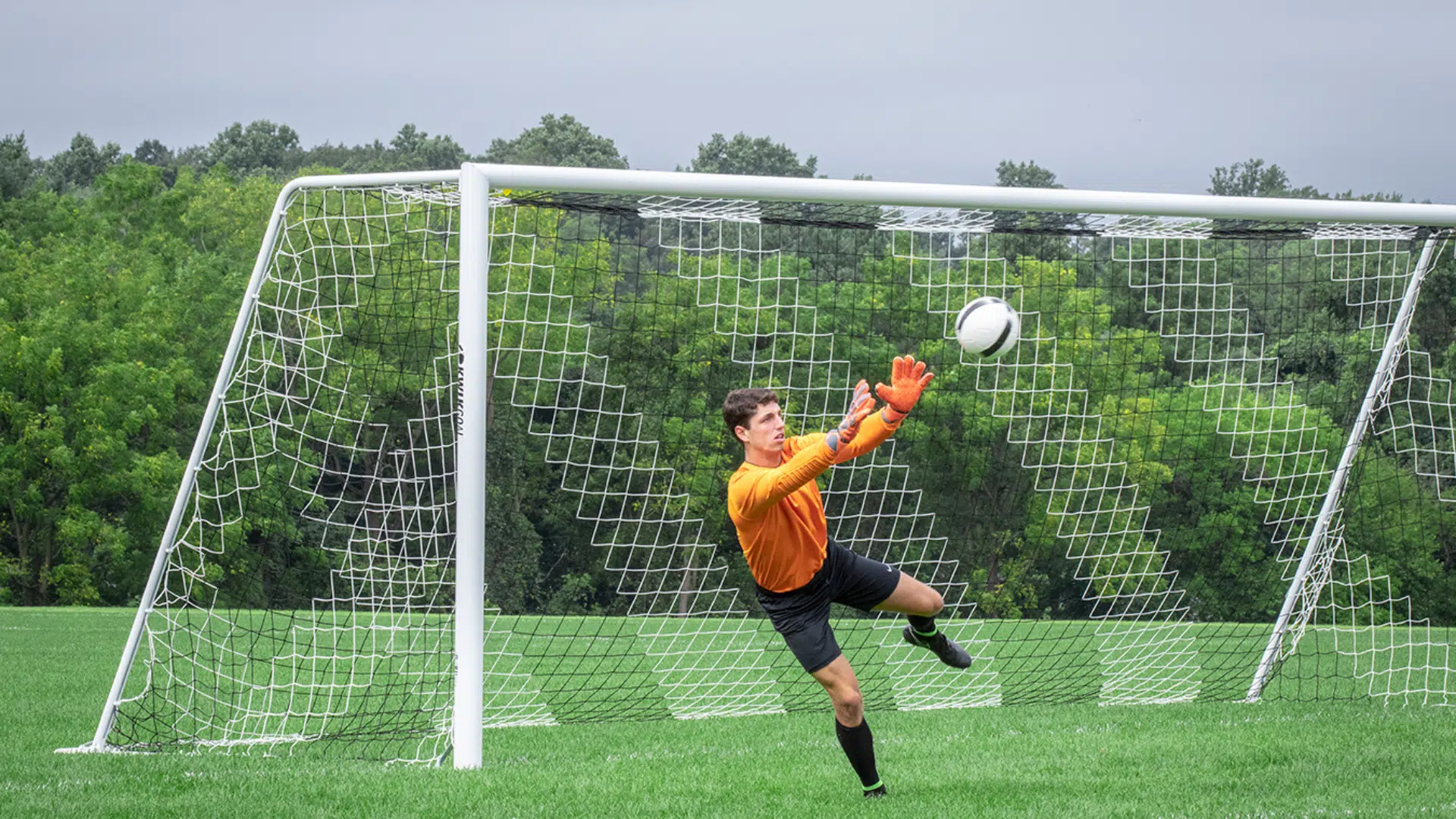
Standard soccer goal dimensions are important because they keep the game consistent and fair at every level. When goals follow the same measurements, players train with a clear target in mind.
Goalkeepers learn to cover the same area in every official match, and attackers practice shooting at a fixed goal. This helps players build real skill rather than adjust to different goal sizes in each competition.
Standardization also allows teams from different regions and countries to compete under the same conditions. A team playing at home or away faces the same goal dimensions, which keeps the competition balanced.
Clear size rules also make it easier for coaches, referees, and organizers to prepare fields correctly. In the end, fixed measurements protect the integrity of the game and make results more reliable.
Soccer Goal Sizes by Age & Format
Soccer goal sizes change based on the player’s age and match format. Smaller goals help young players build skills, while full-size goals prepare older players for competitive matches.
| Age Group | Goal Width | Goal Height | Match Format |
|---|---|---|---|
| U6 – U7 | 6 feet | 4 feet | 3v3 / 4v4 |
| U8 – U9 | 12 feet | 6.5 feet | 5v5 |
| U10 – U11 | 18.5 feet | 6.5 feet | 7v7 / 9v9 |
| U12 | 21 feet | 7 feet | 9v9 |
| U13 and Above | 24 feet | 8 feet | 11v11 (Full Size) |
| Futsal | 9.84 feet (3 m) | 6.56 feet (2 m) | 5v5 Indoor |
Alternate Goal Types & Variations
Not all soccer games use the standard 8 × 24 feet goal. Some formats use smaller or modified goals based on field size, player age, and game style.
1. 9v9 Soccer Goals
9v9 soccer is common for players around U11 and U12. The goal size used in this format is usually 18.5 feet wide and 6.5 feet high.
This size acts as a bridge between small youth goals and the full-size 11v11 goal. It gives young goalkeepers a bigger area to defend without overwhelming them.
The slightly smaller frame also helps players adjust their shooting accuracy before moving to full-size competition. Many youth leagues choose this size to support skill growth while keeping the game competitive and balanced.
2. Futsal Goals
Futsal is a fast-paced indoor version of soccer played on a smaller court. The official futsal goal measures 3 meters wide and 2 meters high, which equals about 9.84 feet by 6.56 feet.
These goals are smaller than outdoor soccer goals because the court is compact and the game focuses on quick passes and close control.
The reduced goal size keeps scoring balanced and challenges players to be precise. Futsal goals are commonly made of metal and are securely anchored for safety during indoor play.
3. Indoor Soccer Goals
Indoor soccer goals can vary in size depending on the league and facility. Some indoor leagues use goals similar to futsal dimensions, while others use slightly larger versions.
Since indoor fields often have walls and smaller playing areas, goal sizes are adjusted to fit the space. These goals are designed to handle faster shots due to the hard playing surface.
The exact dimensions may differ, so it is important to check league rules before purchasing or setting up indoor soccer goals.
Goal Construction & Regulations
Soccer goals must meet specific construction and safety standards set by governing bodies such as FIFA.
The goalposts and crossbar must be made from approved materials, such as aluminum or steel, and must be white for clear visibility.
The width and depth of the posts and crossbar must be equal, and the thickness should not exceed 5 inches (12 cm). Measurements are taken from the inside edges of the posts and from the ground to the lower edge of the crossbar.
Safety is also a key requirement. Goals must be securely anchored to the ground to prevent tipping during play.
The frame should be smooth and free from sharp edges to reduce the risk of injury. Nets must be properly attached so they do not interfere with the goalkeeper or affect gameplay.
These regulations ensure fairness, consistency, and player protection at all levels of soccer.
Practical Tips
Choosing the right goal setup improves both safety and player development. Keep these simple tips in mind before buying or setting up a soccer goal.
- Match Goal Size to Player Age: Always use age-appropriate goal dimensions. Smaller goals help young players build confidence and improve shooting accuracy.
- Follow League Regulations: Check official league or federation rules before purchasing goals. Requirements can vary slightly by competition level.
- Secure the Goal Properly: Make sure portable and permanent goals are firmly anchored. Unsecured goals can tip over and cause serious injuries.
- Choose Durable Materials: Invest in sturdy frames and high-quality nets that can withstand repeated shots and weather conditions.
- Measure Your Playing Space: Confirm that your field, school yard, or backyard has enough space for safe goal placement and player movement.
Wrapping It Up
When I think about soccer goal dimensions, it’s clear how important they are in keeping the game fair, balanced, and consistent across all levels.
In professional and adult matches, there’s a certain size for the goals that sets the standard worldwide, creating a level playing field. But as the game adapts to younger players or different formats, I notice that the goals shrink a bit.
This change is really about making sure players, no matter their age or skill level, have a goal size that matches their stage of growth.
By adjusting the goal size, it helps players develop their skills without getting discouraged by a goal that’s just too big.
I also realize how crucial it is to select the right goal size and stick to the official construction guidelines. It’s all about safety and ensuring the match runs smoothly.
When the goals are anchored properly, built with the right materials, and accurately measured, it really does make a difference in how the game flows and keeps everyone safe.
Frequently Asked Questions
How Much does a Regulation Soccer Goal Weigh?
A full-size regulation soccer goal can weigh between 150 and 500 pounds, depending on the material used. Aluminum models are lighter, while steel frames are heavier and built for long-term durability.
Can Soccer Goals Be Adjustable in Size?
Yes, some training and portable soccer goals come with adjustable frames. These are often used for youth practice sessions and small-sided drills.
Are there Weather-Resistant Soccer Goals?
Many outdoor soccer goals are made with rust-resistant aluminum and UV-protected nets. These materials help the goal withstand rain, sun, and changing weather conditions.
Do Professional Stadiums Use Permanent Or Portable Goals?
Most professional stadiums use securely anchored or semi-permanent goal systems. They are installed in accordance with strict safety and competition regulations.