
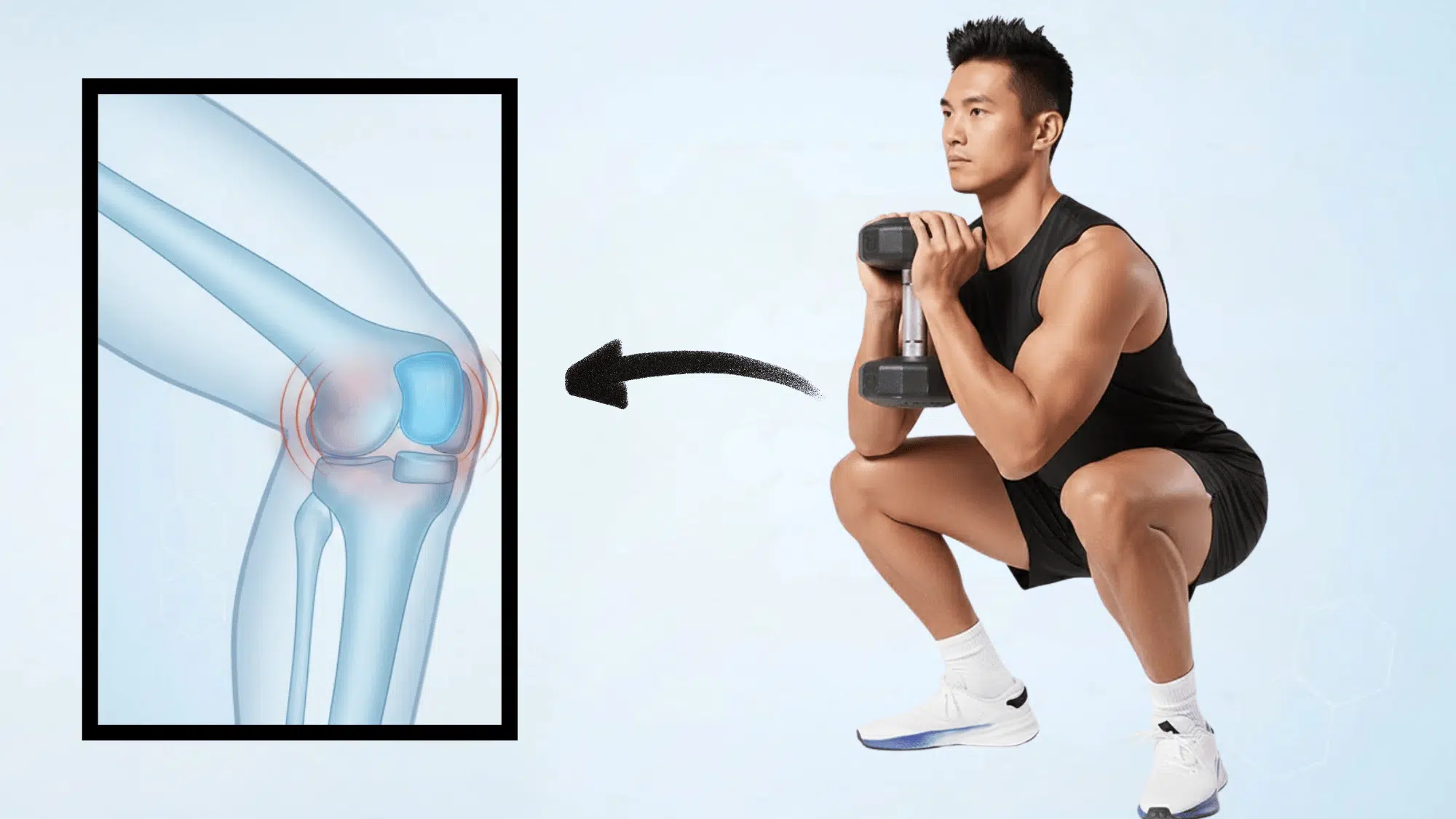
Ever drop into a squat and feel a sudden pinch in the knee that makes the whole movement stop? Knee pain during squats is more common than most people think, and it often has simple causes.
When the knees start to ache, pop, or feel tight, it usually means something in the joint or surrounding muscles needs a little extra care.
In this blog, we will break everything down in an easy way so the reasons actually make sense.
We will cover what causes knee pain when squatting, how form and muscle imbalances contribute, and the conditions that can lead to sharp or recurring pain.
It also includes helpful treatments, simple exercises, and signs that mean it’s time to see a doctor.
Why Do My Knees Hurt When I Squat?
When your knees hurt when squatting, it usually means something is putting extra stress on your knee joint. Here are the most common reasons:
- Wrong squat form
- Weak or tight muscles
- Kneecap tracking problems
- Overuse injuries
- Cartilage or meniscus damage
- Arthritis
The knee joint has to handle a lot of pressure during squats. Tendons, cartilage, and ligaments all work together to keep things moving smoothly. When one part isn’t working right, you feel pain.
Causes of Knee Pain When Squatting
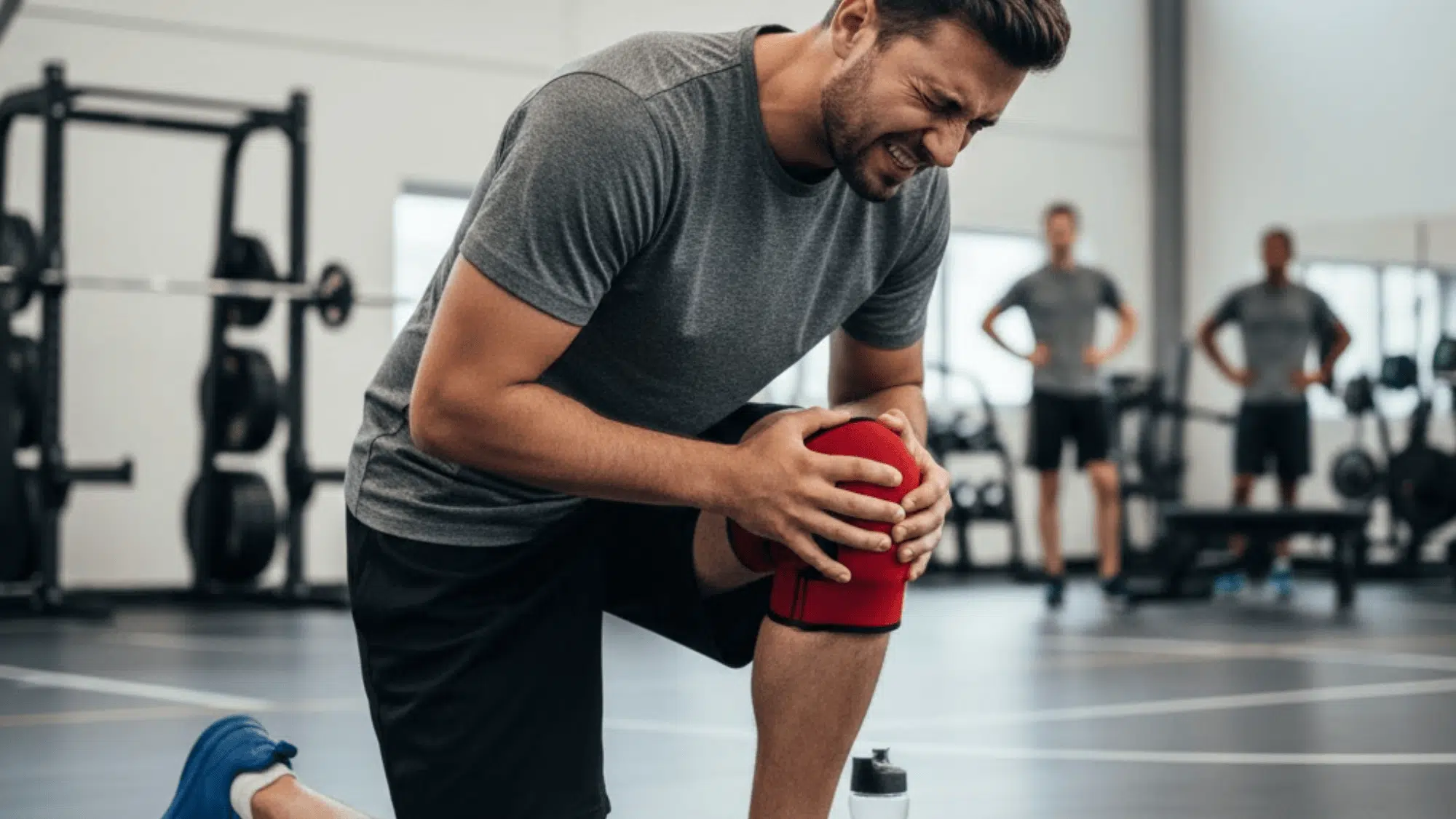
Let’s look at what might be happening inside your knee.
1. Patellofemoral Pain Syndrome (Runner’s Knee)
This is the most common cause of front-of-knee pain. Your kneecap (patella) isn’t tracking properly in its groove, causing:
- Pain around or behind the kneecap
- Grinding or popping sounds
- Pain that gets worse when going downstairs or squatting
Why It Happens: Weak hip muscles can’t control your knee position, making your kneecap slide off track.
2. Patellar Tendinitis (Jumper’s Knee)
Feel a sharp pain right under your kneecap? That’s probably your patellar tendon complaining.
This happens when you:
- Do lots of jumping or squatting
- Add too much weight too quickly
- Don’t rest enough between workouts
The pain gets worse when lowering into a squat because that’s when the tendon stretches the most.
3. Meniscus Tears or Cartilage Damage
Your meniscus is like a shock absorber between your thigh bone and shin bone. Squatting compresses it, which can hurt if it’s torn or damaged.
Warning Signs:
- Knee locks or catches
- Swelling after activity
- Can’t fully straighten your knee
- Sharp pain with twisting movements
Some tears happen suddenly (like during sports), while others develop slowly over time.
4. Ligament Strains (ACL/MCL)
If you twisted your knee or had a forceful impact, you might have strained a ligament. You’ll notice:
- Knee feels unstable or wobbly
- Swelling within hours
- Pain when putting weight on it
- Difficulty squatting without support
5. Osteoarthritis
This is wear-and-tear arthritis where the cartilage cushion breaks down. It’s more common as we age, but it can affect younger people, too.
Squatting increases friction in the joint, causing:
- Stiffness, especially in the morning
- Aching pain during or after squats
- Swelling around the knee
- Reduced range of motion
6. IT Band Syndrome
Feeling pain on the outer side of your knee could be a sign of IT Band Syndrome. The IT band is a thick strip of tissue that runs along the outside of your thigh.
When it becomes tight or irritated, it pulls on the knee joint during bending or squatting, causing sharp discomfort, stiffness, or soreness on the outside of the knee.
7. Form Problems
Even if your knees are perfectly healthy, bad squat technique can cause pain. Here’s what to watch for:
- Knees Collapse Inward: Puts twisting stress on the knee ligaments and the kneecap.
- Heels Lift off the Floor: Shifts all weight forward onto the knees instead of the hips.
- Knees Shoot Too Far Forward: Overloads the patellar tendon and quadriceps.
- Leaning Too Far Forward: Reduces glute engagement and increases strain on the knees.
- No Core Engagement: Lowers stability, forcing the knees to compensate.
How Bad Form Damages Your Knees
When your form is off, your knee joint takes on stress it wasn’t designed to handle:
| What Happens | Why Does It Cause Knee Pain |
|---|---|
| The patellar tendon gets stretched too much | Increases pressure and irritation under the kneecap |
| Kneecap gets pulled out of alignment | Causes rubbing and uneven movement in the joint |
| Quads do all the work | Takes load away from the glutes, putting extra stress on the knees |
| Knee joint angles become unstable | Makes the knees wobble, increasing strain and discomfort |
Think of it like this: your knees are the middle managers. When the hips and ankles don’t do their jobs, the knees have to pick up the slack, and they get overworked.
Muscle Imbalances that Trigger Knee Pain
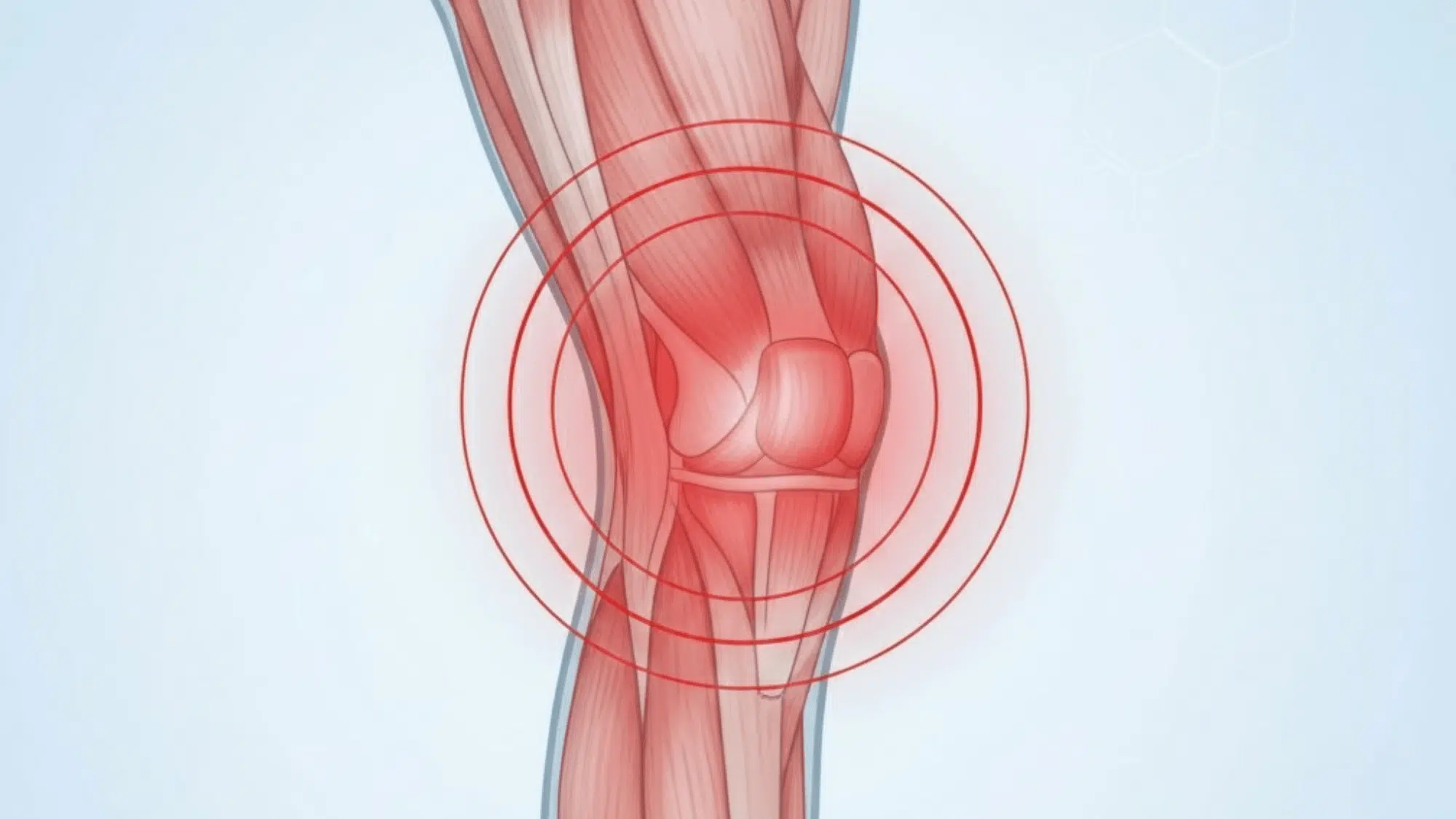
Your muscles work as a team. When some are weak or tight, others have to compensate, and your knees suffer.
Weak Quads
Your quadriceps (front thigh muscles) control how you lower into a squat. Weak quads can’t control the descent, making your knee joint absorb shock it shouldn’t have to handle.
Tight Quads or Hamstrings
Ironically, super-tight quads or hamstrings restrict movement and pull on the knee joint from both directions. This creates uneven pressure on your kneecap.
Weak Glutes or Hip Stabilizers
Here’s the big one: weak glutes are involved in most cases of knee pain. Your glutes should power the squat movement. When they’re weak:
- Your knees cave inward
- Your hips don’t extend properly
- All the stress transfers to your knees
Poor Ankle Mobility
Can’t squat deep without your heels lifting? Limited ankle flexibility forces your knees to travel too far forward, overloading the front of your knee.
Treatment Options for Sharp Kneecap Pain
Managing sudden pain around the kneecap depends on the underlying cause, but most treatments start with simple home care and move toward medical support only when needed.
Below is the usual progression, from the easiest steps to more advanced care:
1. Home Remedies (RICE): Many people start with the RICE method: Rest, Ice, Compression, and Elevation. Rest helps reduce strain, ice controls swelling, compression adds support, and elevating the leg boosts circulation.
2. Over-the-Counter Pain Relief: If the discomfort continues, common medications like ibuprofen or acetaminophen can help ease pain and lower inflammation. These are often used for short-term relief, especially after physical activity.
3. Physical Therapy & Strengthening Exercises: For persistent pain, a doctor may recommend physical therapy to strengthen knee muscles, especially the quads and hamstrings, which can improve stability and reduce kneecap pressure.
4. Supportive Gear: Knee braces, sleeves, or supportive shoe inserts may be recommended to help with alignment and reduce stress on the area. Taping methods can also guide the kneecap into better movement during daily tasks or workouts.
5. Medical Treatments: If pain persists despite conservative care, options include corticosteroid injections to quickly reduce inflammation or, rarely, surgery to repair damaged cartilage, ligaments, or a severely injured kneecap.
Exercises to Ease & Prevent Knee Pain
If you’ve ever felt a sharp ache beneath your kneecap, these movements can help strengthen your legs, boost stability, and ease everyday discomfort.
1. Straight Leg Raises
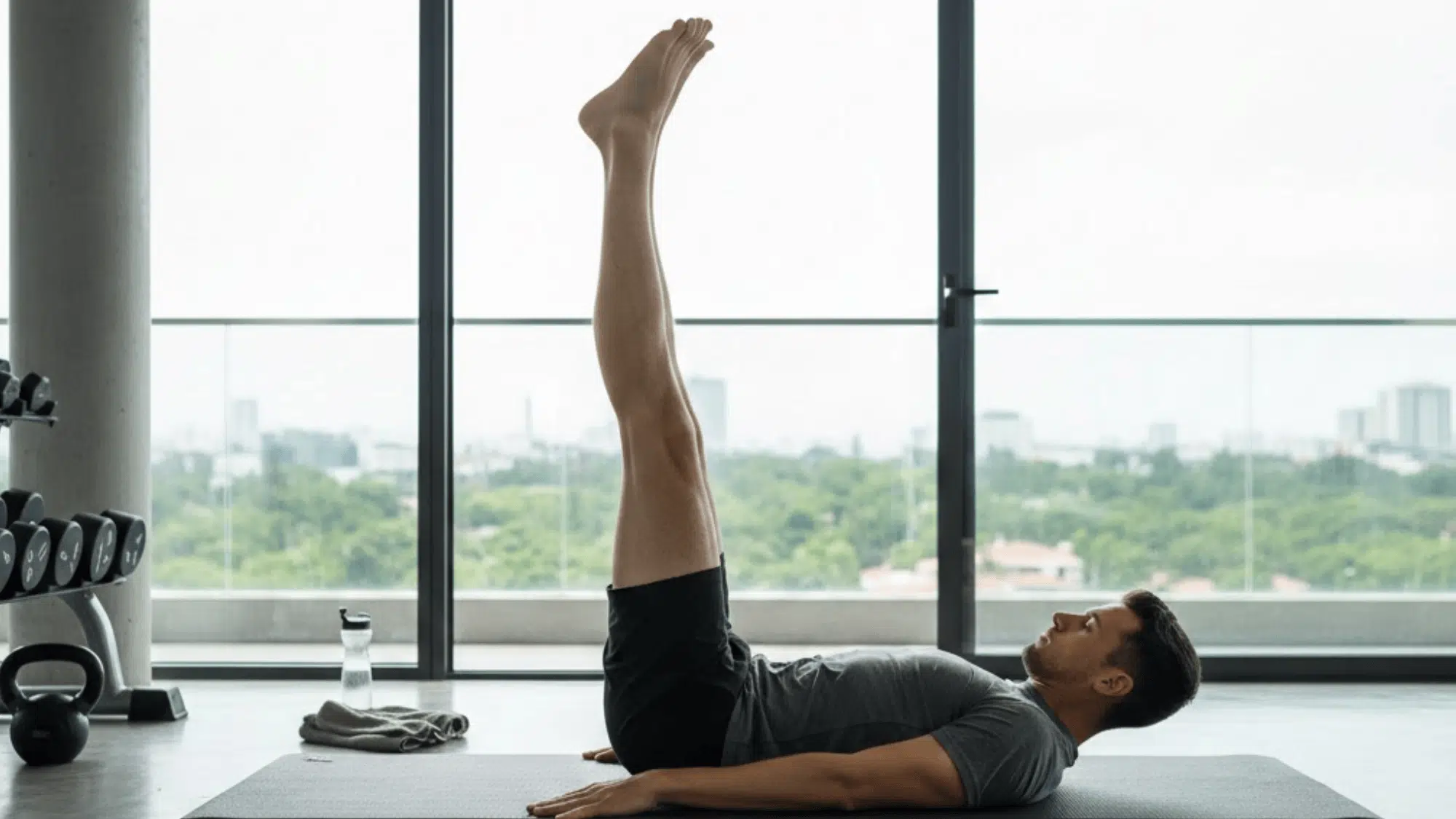
Lie on your back with one knee bent and the other stretched out. Lift the straight leg about a foot off the ground, pause for a moment, then gently lower it.
This beginner-friendly exercise builds your quadriceps without putting extra pressure on the kneecap, making it helpful for anyone dealing with knee pain.
2. Clamshells for Hip Support
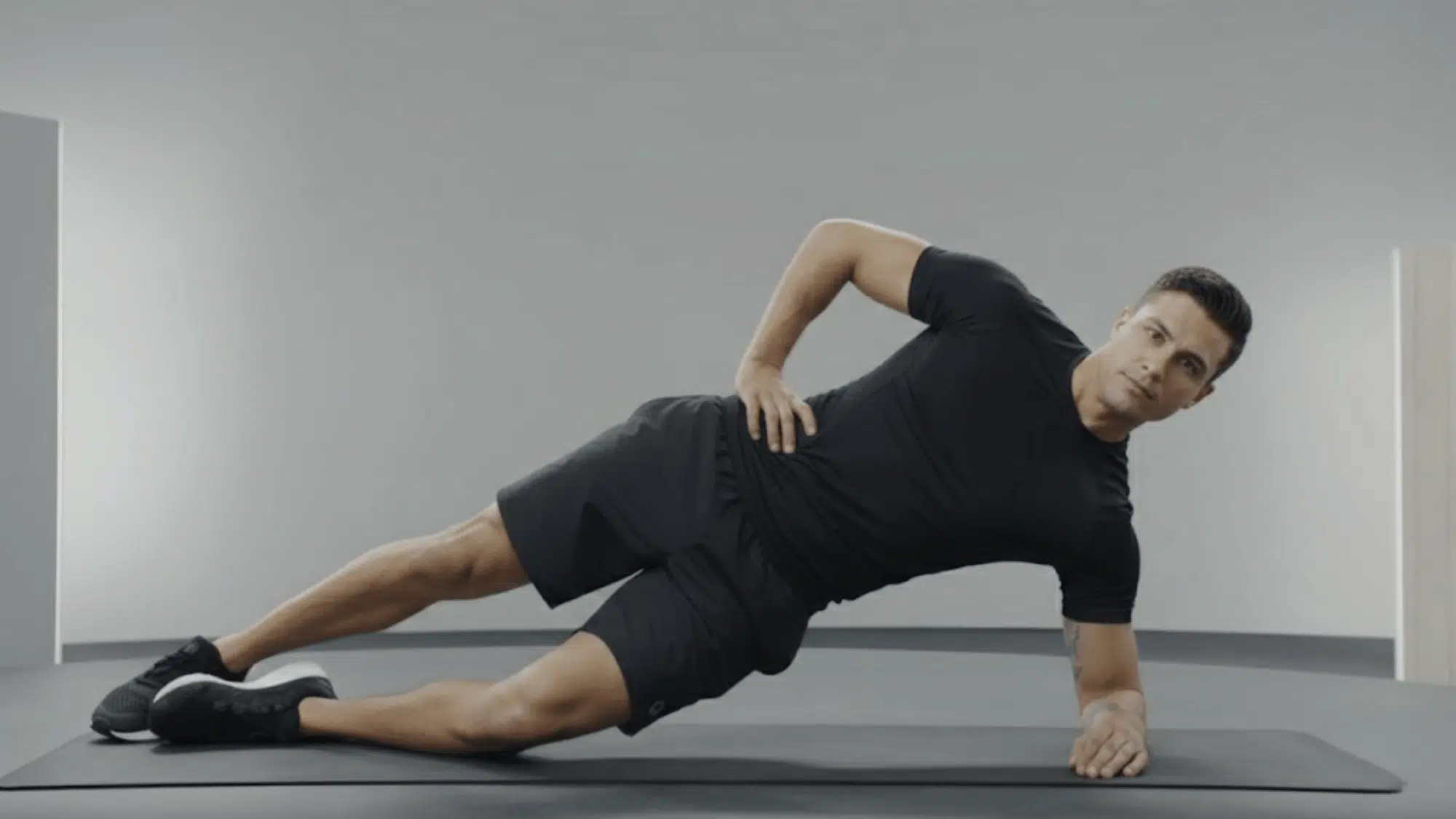
Lie on your side with your knees bent and feet touching. Raise your top knee while keeping your feet together, then slowly lower it.
This move targets the hips and glutes, improving knee stability. Stronger hips help take the load off the kneecap, reducing irritation and supporting smoother movement.
3. Quad and Hamstring Stretching
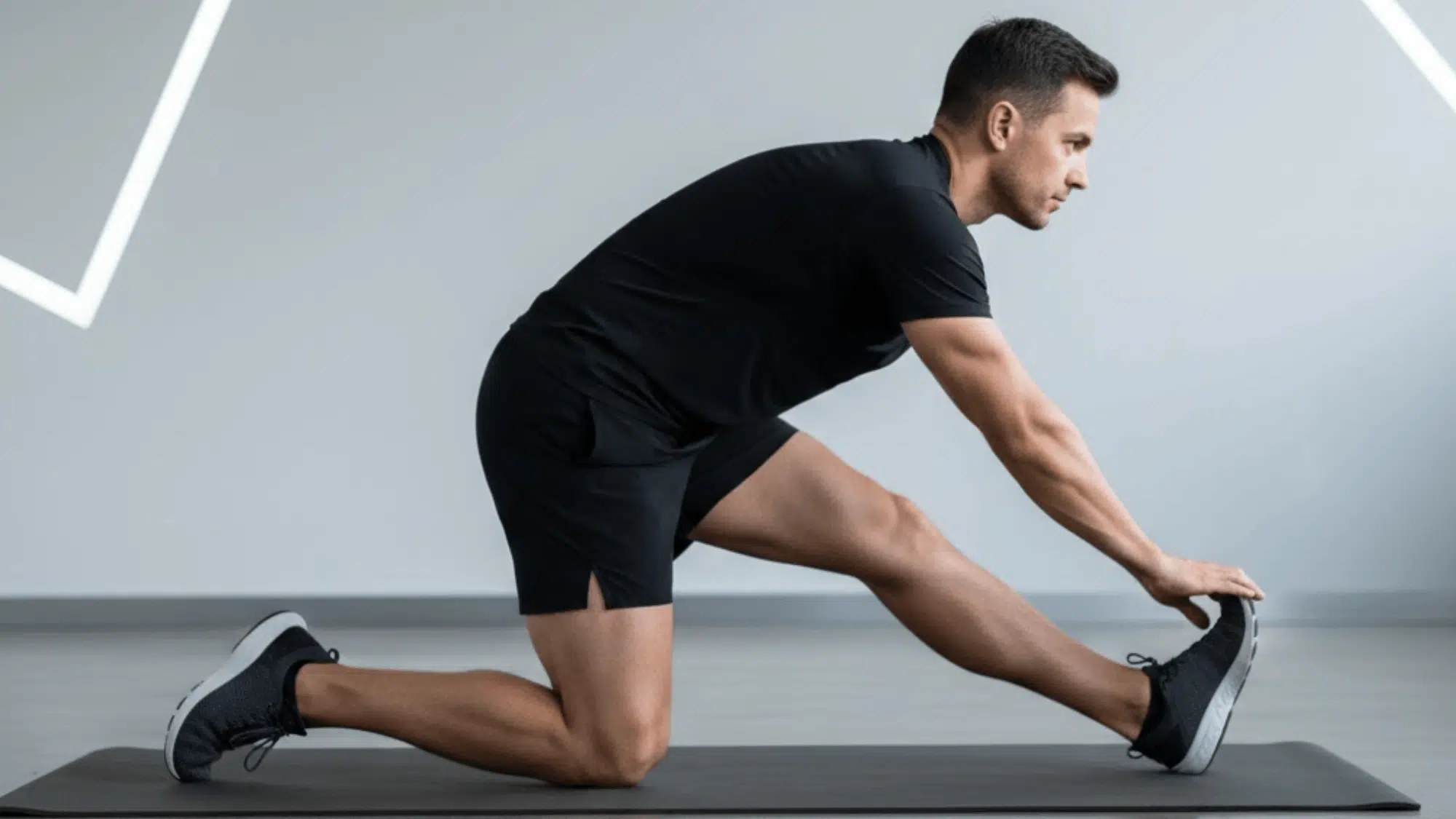
Tight thigh muscles can pull on the kneecap, worsening pain. Stretching both your quads (front thigh) and hamstrings (back thigh) increases flexibility and reduces knee tension.
For a quad stretch, bring your heel toward your glutes. For a hamstring stretch, extend one leg straight and gently lean forward.
4. Low-Impact Cardio (Swimming, Cycling)
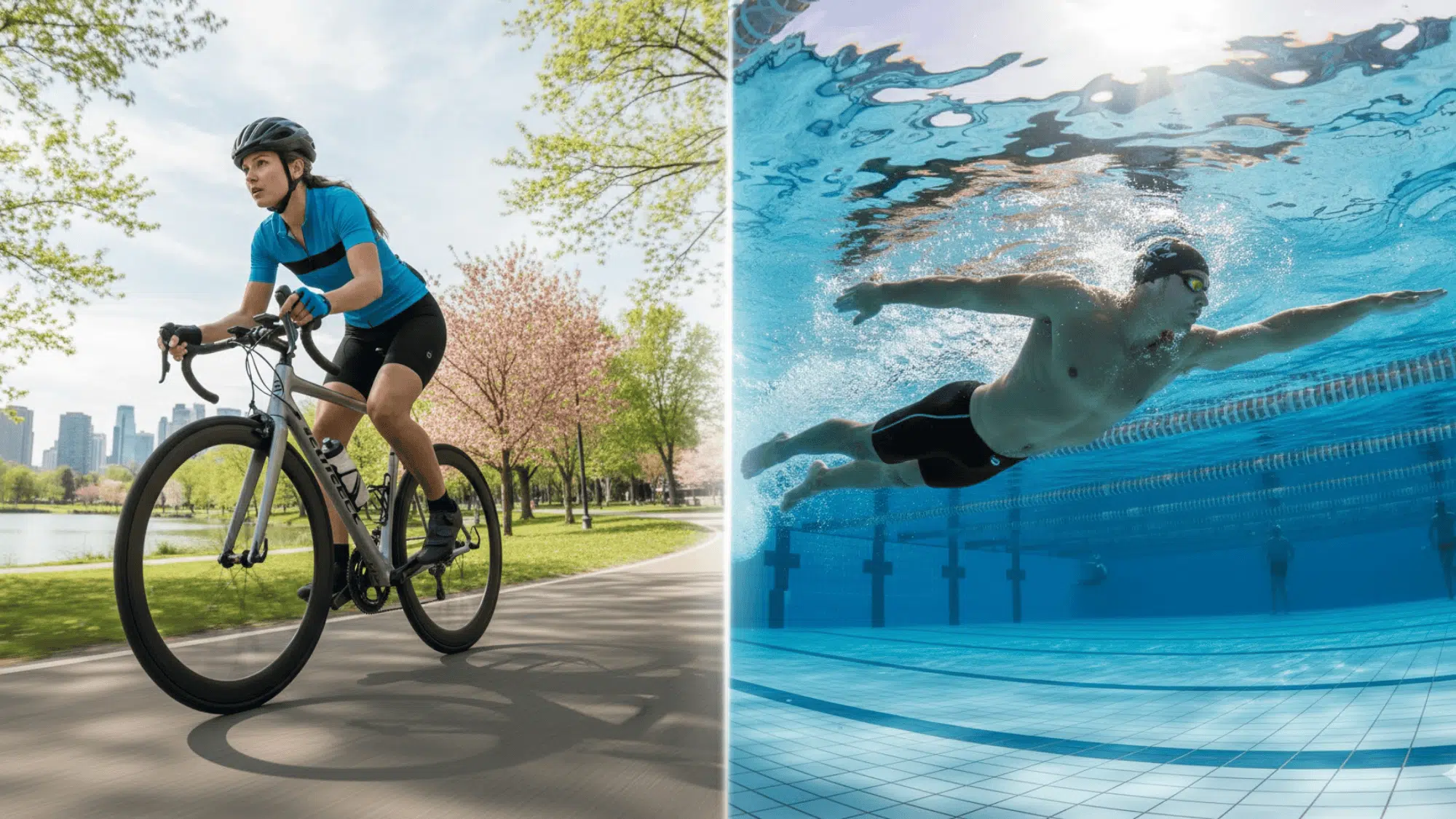
High-impact exercises, like running, can strain sore knees. Low-impact cardio strengthens the muscles around the joint without extra stress.
Swimming, biking, or using an elliptical are excellent options. They help keep joints loose, boost circulation, support healing, and reduce the risk of flare-ups.
Symptoms that Mean You Should See a Doctor
Most knee pain from squatting improves with rest and form corrections. But watch for these red flags:
- Clicking, locking, or buckling – Your knee gives out or gets stuck
- Pain that doesn’t improve – Still hurts after 2-3 weeks of rest
- Visible swelling – Knee looks puffy or feels hot
- Sharp, stabbing pain – Instead of dull pressure or aching
- Can’t bear weight – Hurts too much to walk normally
- Limited movement – Can’t fully bend or straighten your knee
If you notice any of these, book an appointment with an orthopedic specialist. Early diagnosis prevents small problems from becoming big ones.
Final Thoughts
Knee pain during squats doesn’t always mean something serious is wrong, but it is a sign the body needs better support, stronger muscles, or improved movement patterns.
Understanding what causes the pain makes it easier to fix the problem and protect the knees in the long term.
With the right exercises, better form, and a little consistency, squatting can feel smoother, safer, and more comfortable.
Paying attention to early symptoms also helps stop small issues from growing into bigger ones. If the pain continues, becomes more severe, or affects daily activities, getting checked by a professional is the safest next step.
Ready to take care of your knees? Start with a few simple changes today and give your body the support it deserves.