
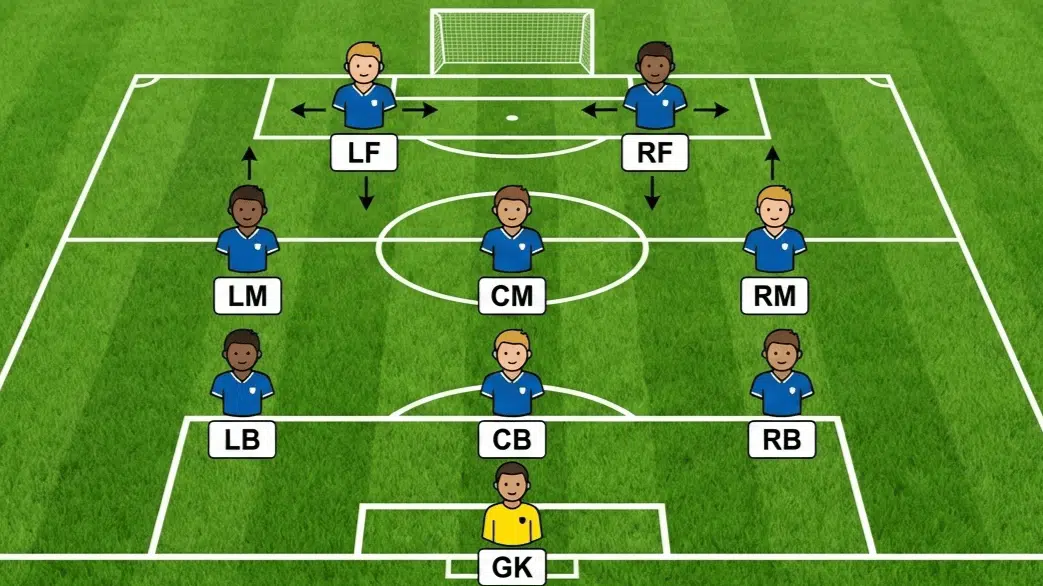
When I first started watching youth soccer games, I noticed the same problem again and again: kids running all over the field, all chasing the ball at once.
It looked fun, but also a bit confusing. That’s when I realized how important it is to teach youth soccer positions the right way.
In this guide, I’ll explain each position in simple terms so it’s easy for young players to understand. I’ll also share how positions change by age, common team setups, and easy ways to assign players to roles.
By the end, you’ll have clear and practical ideas to help kids play smarter, stay organized, and enjoy the game more.
What Are Youth Soccer Positions?
Youth soccer positions are specific areas on the field where players perform specific jobs. These positions help organize the team so everyone knows their role during the game.
Why Positions Matter in Youth Soccer
Positions create structure and prevent chaos on the field. When kids understand their position, they know where to stand and what to do with the ball.
This organization helps teams work together instead of everyone chasing the ball at once. Positions also teach responsibility because each player contributes to the team’s success.
Teaching positions early builds soccer intelligence, helping players make better decisions as they grow older and the game becomes more complex.
How Youth Soccer Differs from Professional Soccer
Professional soccer uses 11 players per side in fixed positions, while youth soccer adapts to age. Younger players start with fewer teammates on the field, making positions simpler to teach and understand.
Kids under 10 typically rotate through multiple positions to develop diverse skills rather than specializing early.
Youth soccer emphasizes learning and fun over strict tactical play. As players get older and move to larger field formats, positions become more defined and specialized, like the professional game.
Basic Youth Soccer Positions Breakdown
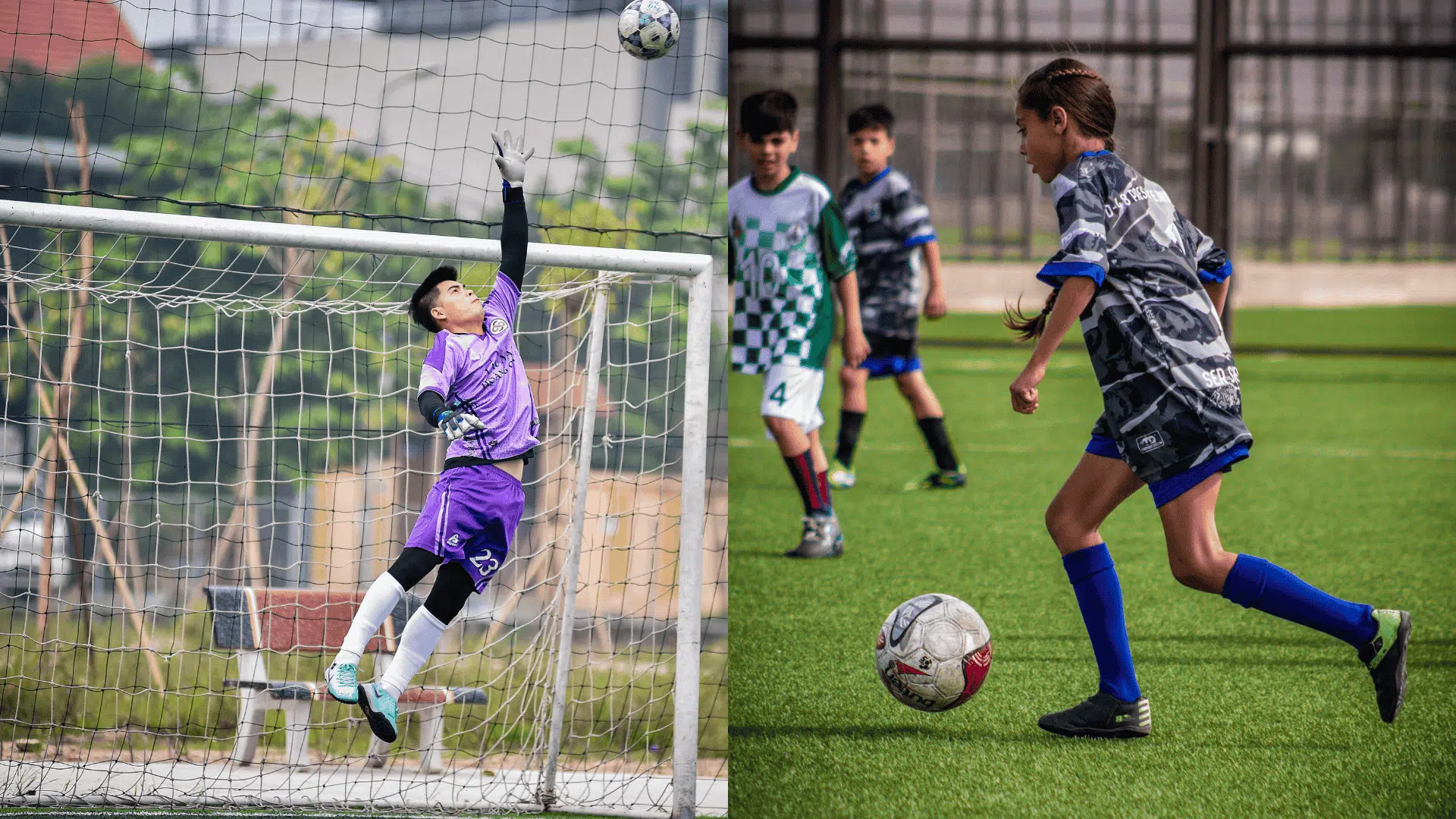
Soccer has four main positions: goalkeeper, defender, midfielder, and forward. Each group has specific responsibilities that help the team defend and attack effectively.
1. Goalkeeper (GK) – Roles, Responsibilities & Key Skills
The goalkeeper protects the goal and is the only player who can use their hands inside the penalty box. They stop shots, catch crosses, and distribute the ball to start attacks after making saves.
Goalkeepers need quick reflexes, good hand-eye coordination, and the bravery to dive to reach players’ feet. They must communicate loudly with defenders to organize the backline.
Strong kicking skills help them send the ball upfield quickly. Coaches should create a supportive environment where young goalkeepers feel encouraged rather than blamed for goals conceded.
2. Defenders (CB, LB, RB) – Roles, Responsibilities & Key Skills
Defenders protect the goal and stop opposing attackers from scoring. Center backs play in the middle of defense, winning headers and blocking shots.
Left-backs and right-backs cover the sides, stopping crosses and supporting attacks when safe.
Defenders need strong tackling ability, good positioning sense, and tactical discipline to know when to push forward. Speed helps them recover if beaten by attackers.
Teach defenders to clear the ball toward the sidelines rather than across the goal. Communication and leadership skills are vital for organizing the defensive line.
3. Midfielders (DM, CM, AM, Wingers) – Roles, Responsibilities & Key Skills
Midfielders connect defense to attack and control the game’s tempo. Defensive midfielders shield the backline and win the ball back.
Central midfielders distribute passes and support both the defense and the attack. Attacking midfielders create scoring chances with clever passes and shots.
Wingers provide width, beat defenders one-on-one, and deliver crosses. Midfielders need excellent stamina to cover lots of ground, good passing accuracy, and vision to spot open teammates.
Coaches should emphasize that midfielders require the most balanced skill set of any position.
4. Forwards (Strikers, Wing Forwards) – Roles, Responsibilities & Key Skills
Forwards lead the attack and score goals for the team. Strikers play centrally, finishing chances and holding up the ball for teammates.
Wing forwards operate on the sides, cutting inside to shoot or crossing to the striker.
Forwards need sharp shooting skills, quick acceleration to beat defenders, and good positioning to find open spaces. They should press opposing defenders to force mistakes and create turnovers.
Teach forwards that goals come from smart positioning and movement, not just individual speed or skill.
Youth Soccer Positions by Age Group
Youth soccer uses different field sizes and player numbers based on age. As players develop, positions become more specialized, and the game grows more complex.
U6-U8 Soccer Positions (4v4)
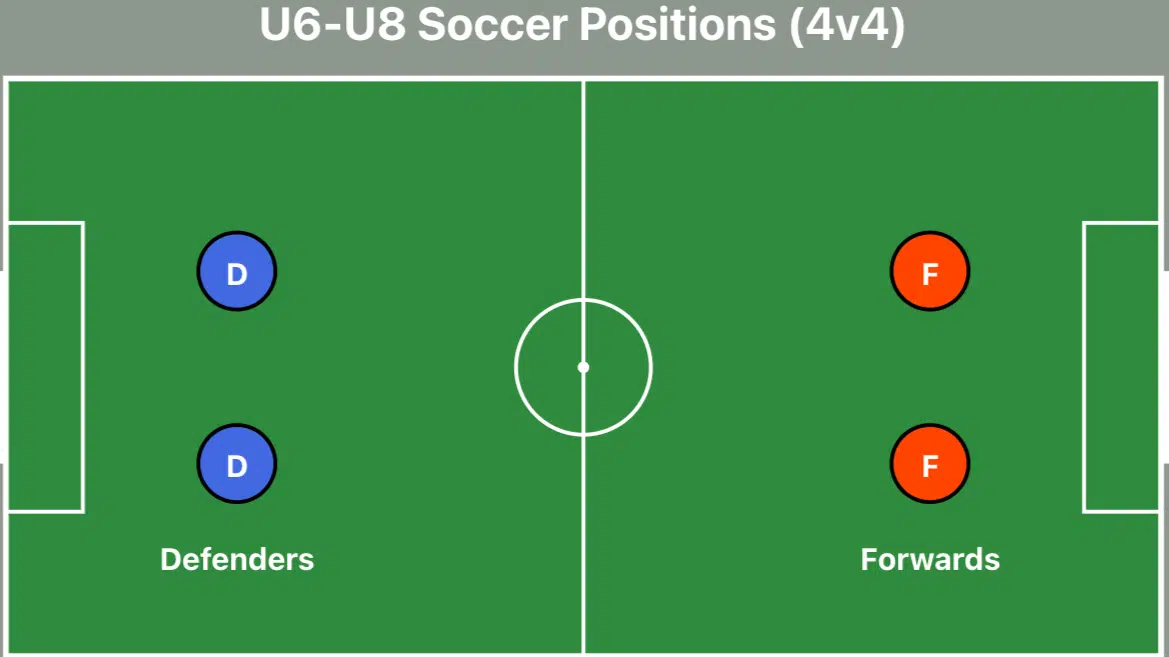
The youngest age groups play with four players per side and no goalkeeper. Teams use two forwards to attack and two defenders to defend.
Position names stay simple at this level to avoid confusing young players. Everyone gets more touches on the ball because there are fewer players on the field.
Coaches should rotate positions constantly so kids experience all areas of the field. Focus on fun, basic ball skills, and teaching that soccer is a team sport where players must work together.
U10 Soccer Positions (7v7)
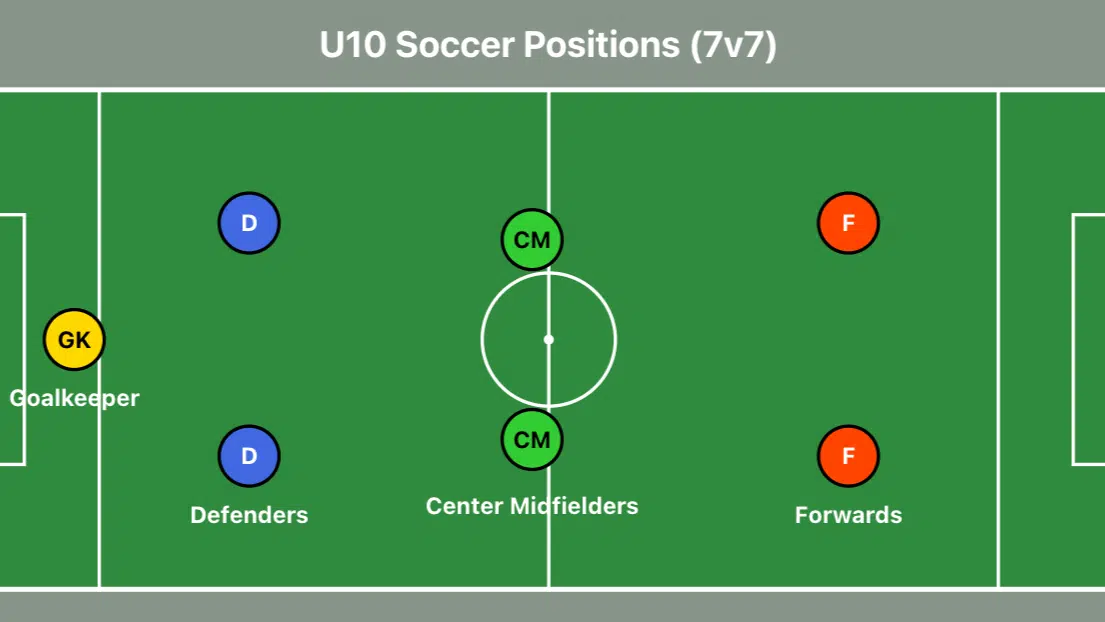
U10 teams play a 7v7 format, introducing goalkeepers for the first time. A typical setup includes one goalkeeper, two or three defenders, two or three midfielders, and one or two forwards.
Midfielders are important because they connect the defense to the attack. Players begin learning specific roles, but coaches should still rotate them regularly to support their development.
The field size increases, requiring teaching about spacing and positioning.
Introduce basic formations while keeping tactics simple and age-appropriate, prioritizing player development over winning games.
While covering youth tournaments, I’ve noticed that U10 teams who maintain position rotation produce more confident players by U12 compared to teams that specialize early.
U12 Soccer Positions (9v9)
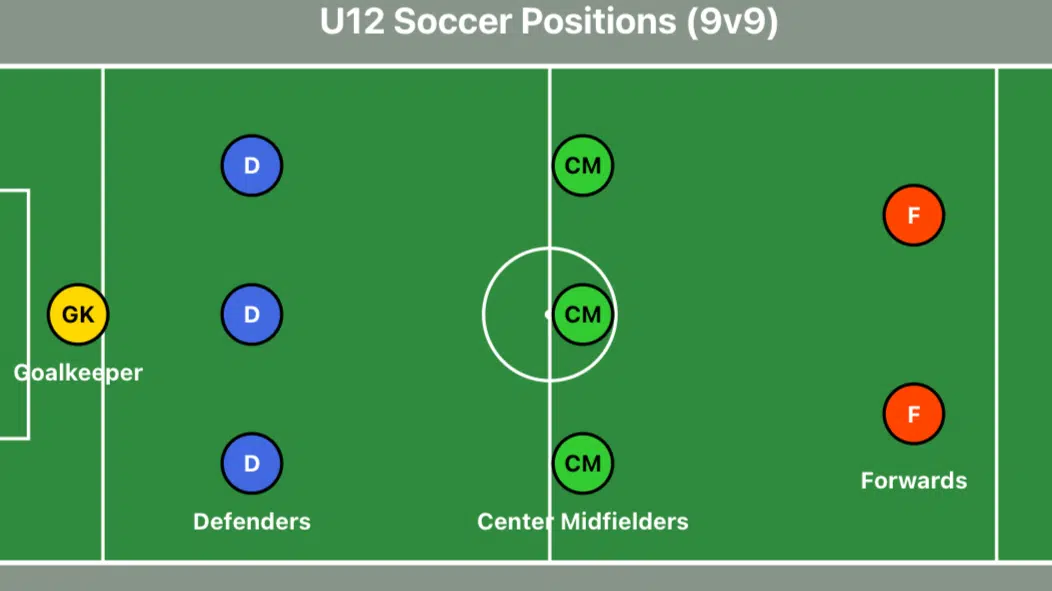
U12 soccer uses nine players per side with more defined positions. Teams typically field one goalkeeper, three or four defenders, three midfielders, and one or two forwards.
Left-backs and right-backs appear as dedicated positions for the first time. Center midfielders become crucial for controlling possession and game tempo.
The larger field requires better fitness and positioning awareness from players.
Coaches should help players identify their strengths while still encouraging position rotation to maintain versatility and prevent premature specialization.
U13+ Soccer Positions (11v11)
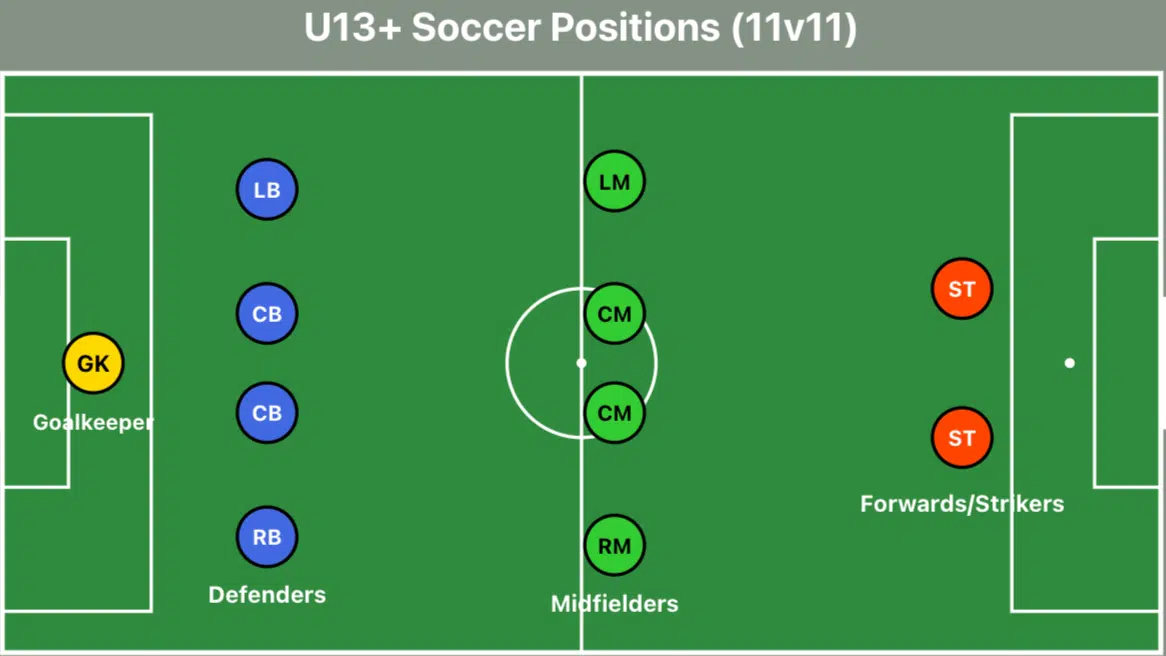
At U13 and older, teams move to full 11v11 soccer as professionals play. All traditional positions are now in use, including specialized roles like wing-backs and attacking midfielders.
Formations become more tactical as coaches implement systems such as 4-4-2 or 4-3-3. Players begin specializing in one or two positions where they perform best.
The full-sized field demands high fitness levels and advanced tactical understanding.
Coaches should balance position specialization with continued training in versatility to develop complete players ready for competitive soccer.
Common Youth Soccer Formations
Formations are how coaches arrange players on the field using numbers. The numbers represent defenders, midfielders, and forwards from back to front, with the goalkeeper always assumed.
4-4-2 Formation
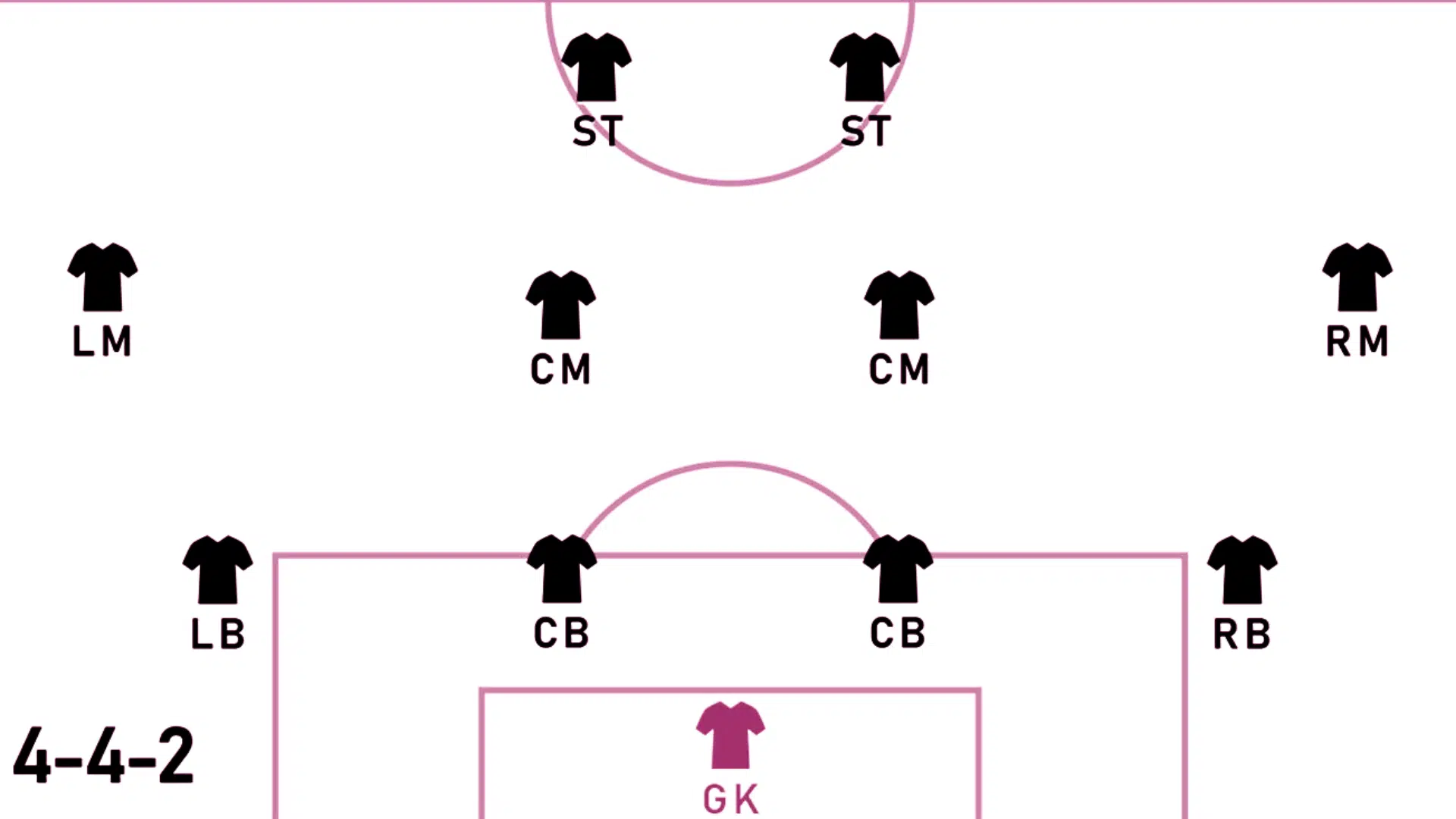
The 4-4-2 formation uses four defenders, four midfielders, and two forwards. It’s balanced between defense and attack, making it popular for youth teams learning tactics.
The two strikers work together to create and finish chances. Four midfielders provide good coverage across the field while supporting both defense and attack.
This formation is simple to teach and understand, perfect for developing players.
Use this when you have two strong forwards who can combine effectively and midfielders with solid all-around skills.
4-3-3 Formation
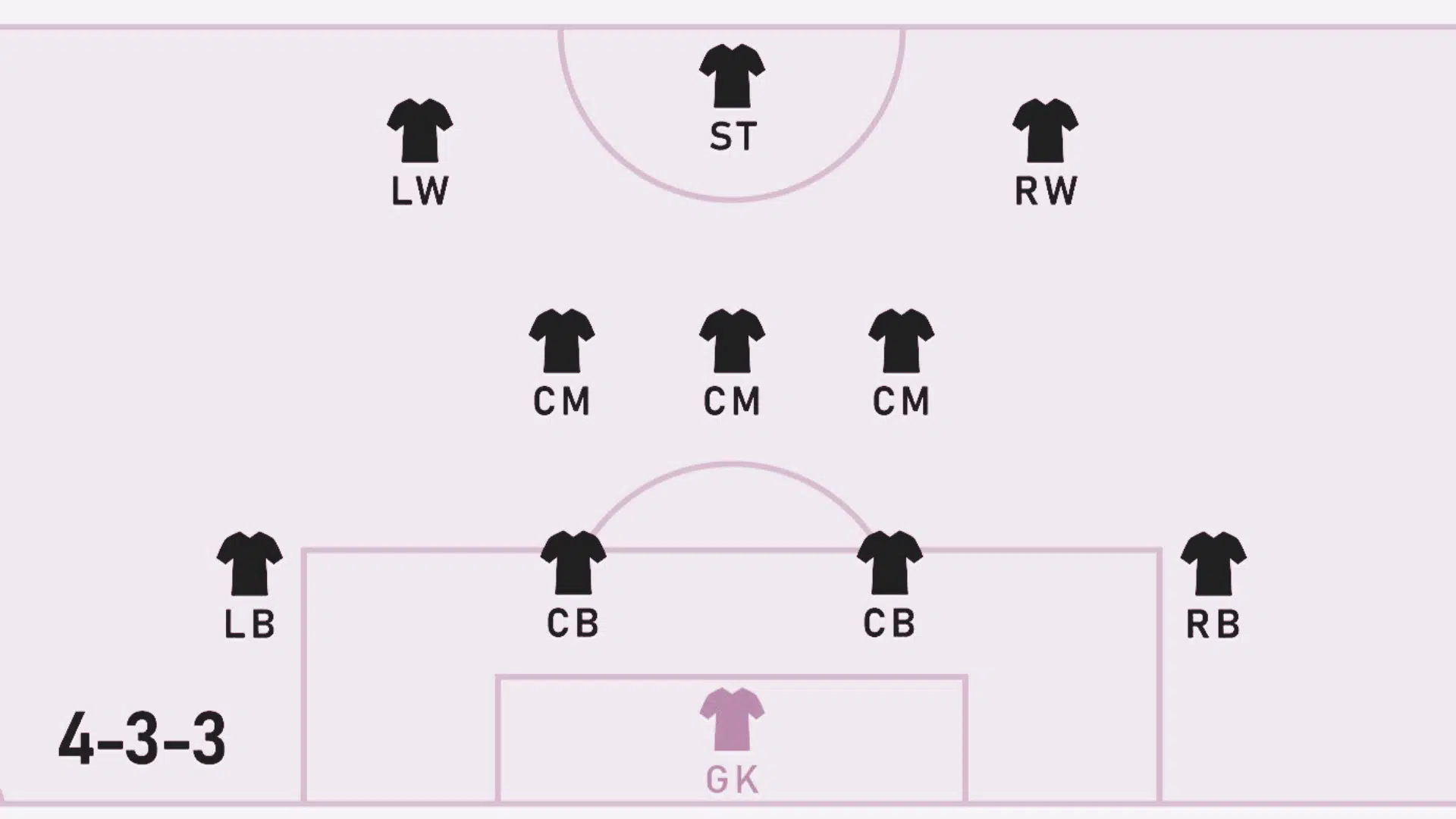
The 4-3-3 formation features four defenders, three midfielders, and three forwards. It’s an attacking setup that puts pressure on opposing defenses with three front players.
The three forwards spread across the field, with wingers providing width and the striker playing centrally. Three midfielders must work extremely hard to cover the middle of the field.
Choose this formation when you have fast, skilled attackers and midfielders with excellent stamina and work rate.
It emphasizes possession soccer and teaches players to build attacks patiently.
3-5-2 Formation
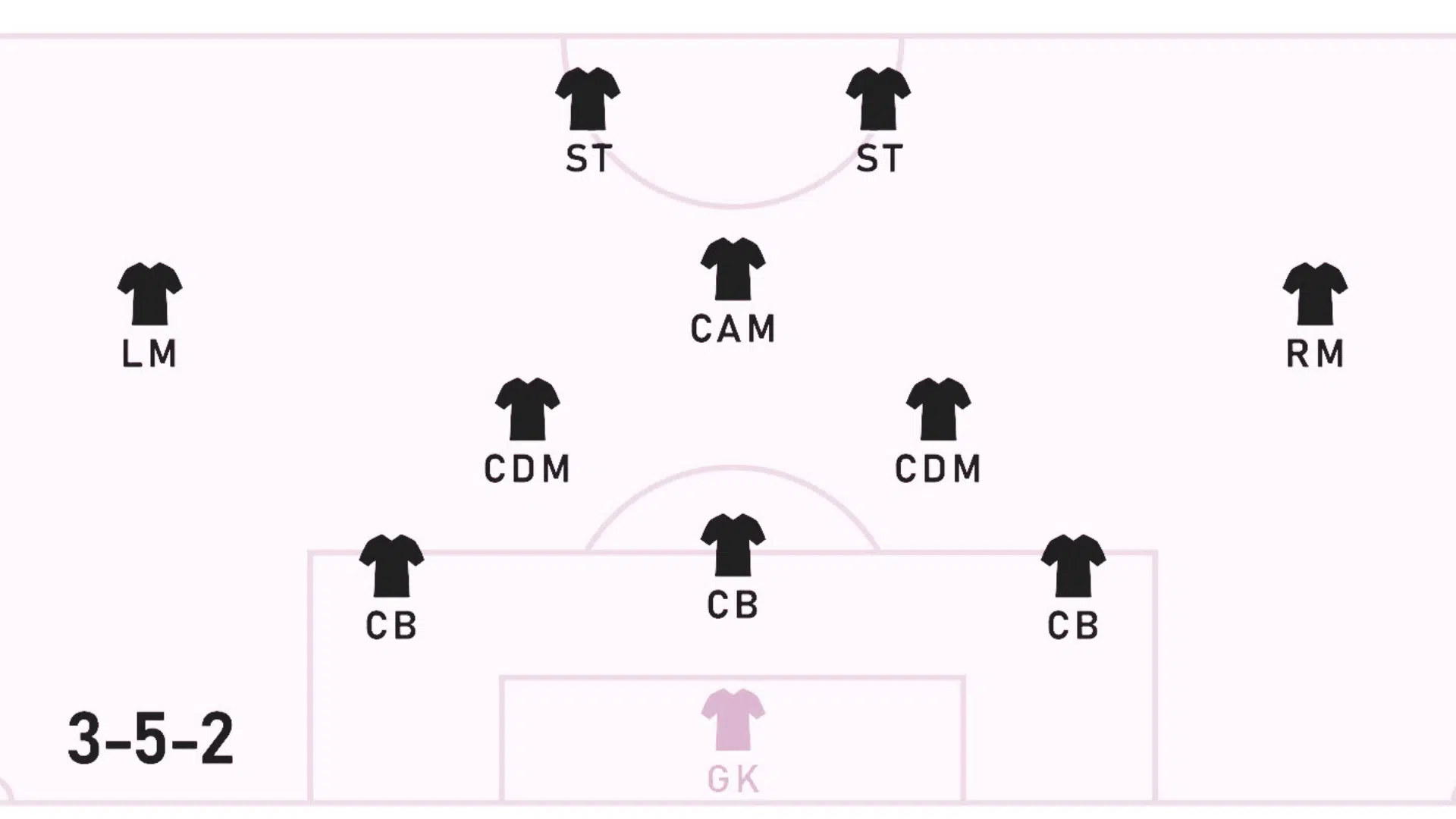
The 3-5-2 formation uses three center backs, five midfielders, and two forwards. It packs the midfield to control possession and dominate the center of the field.
Wing-backs in this system must be able to attack and defend, requiring exceptional fitness and tactical awareness.
Three center-backs provide solid defensive coverage and allow more players to push forward. Two forwards work as a partnership up front.
Implement this formation when you have strong midfielders and versatile wing-backs capable of handling dual responsibilities.
How to Assign Players to Positions?
Assigning players to positions requires careful observation of their physical traits, technical skills, and personality. Coaches should evaluate multiple factors before making position decisions.
| Section | Key Points |
|---|---|
| Evaluating Player Strengths | Watch natural play in games and practice. Fast players fit wide roles. Tall, strong players suit defense or striker. Good passers fit midfield. Consider player preferences too. |
| Balancing Physical & Technical Skills | Combine physical traits with skill level. Slower players can excel with good control. Smaller players can succeed with speed and movement. Height helps, but isn’t required. |
| Implementing Position Rotation | Let young players try many positions. It builds skills and game understanding. Prevents burnout. Rotate players until age 12–13. |
Coaching Strategies for Teaching Positions
Coaching young soccer players requires patience and focusing on long-term development over short-term wins. These strategies help create positive experiences while effectively teaching positions.
Building Position Versatility
- Push players to try every position, including goalkeeper, during their early years
- Versatility makes players more valuable and improves their overall soccer IQ
- Don’t label players as “only a defender” or “just a forward” when they’re young
- Celebrate when players learn something new in an unfamiliar position
- Create practice drills where players rotate through different roles regularly
Preventing Early Specialization
- Resist pressure to specialize players in one position before age 12 or 13
- Early specialization increases injury risk from repetitive movements
- It limits technical development and causes mental burnout from repetition
- Young players need varied experiences to stay engaged long-term
- Trying different positions accelerates learning and creates complete players
Creating a Positive Learning Environment
- Focus coaching feedback on effort and improvement, not wins or statistics
- Ask players what they learned instead of critiquing performance immediately
- Handle tactical instruction calmly during games
- Save detailed feedback for practice sessions
- Encourage players to communicate and ask questions about positioning
- Keep soccer fun with low pressure and high praise for effort
Wrapping Up
Understanding youth soccer positions helps coaches develop players effectively and build organized, successful teams.
Each position teaches valuable skills, from the goalkeeper’s bravery and shot-stopping to the forward’s finishing ability and movement.
Remember that young players benefit most from trying multiple positions before specializing in their teenage years.
The right position for a player combines their physical strengths, technical skills, and what they genuinely enjoy doing on the field.
Coaches should prioritize versatility and fun over winning at young ages to build complete, well-rounded players.
As players grow and move through different age groups, their understanding of positions will deepen naturally through experience and quality coaching.
Which position do you find hardest to teach young players, and what coaching strategies have worked best for you? Drop a comment below and share your tips with other youth soccer coaches.