

When I watch a football game, I see how much space players have, especially near the sidelines. It makes me wonder how wide the field really is. If you’ve thought about this too, you’re not alone.
Many people look up the size of a football field, but don’t always get a clear, consistent answer.
Over the years, I have covered various sports stories and explained rule updates, so I know how small details like field size can shape the way you see the game.
In this guide, I will share the width of a football field in both yards and feet.
You will also learn how the size stays consistent across levels of play and why that width matters for spacing, routes, and defense.
By the end, you’ll have a clear picture of the field and why its width matters, without any confusing details.
How Wide Is a Football Field in Yards and Feet?
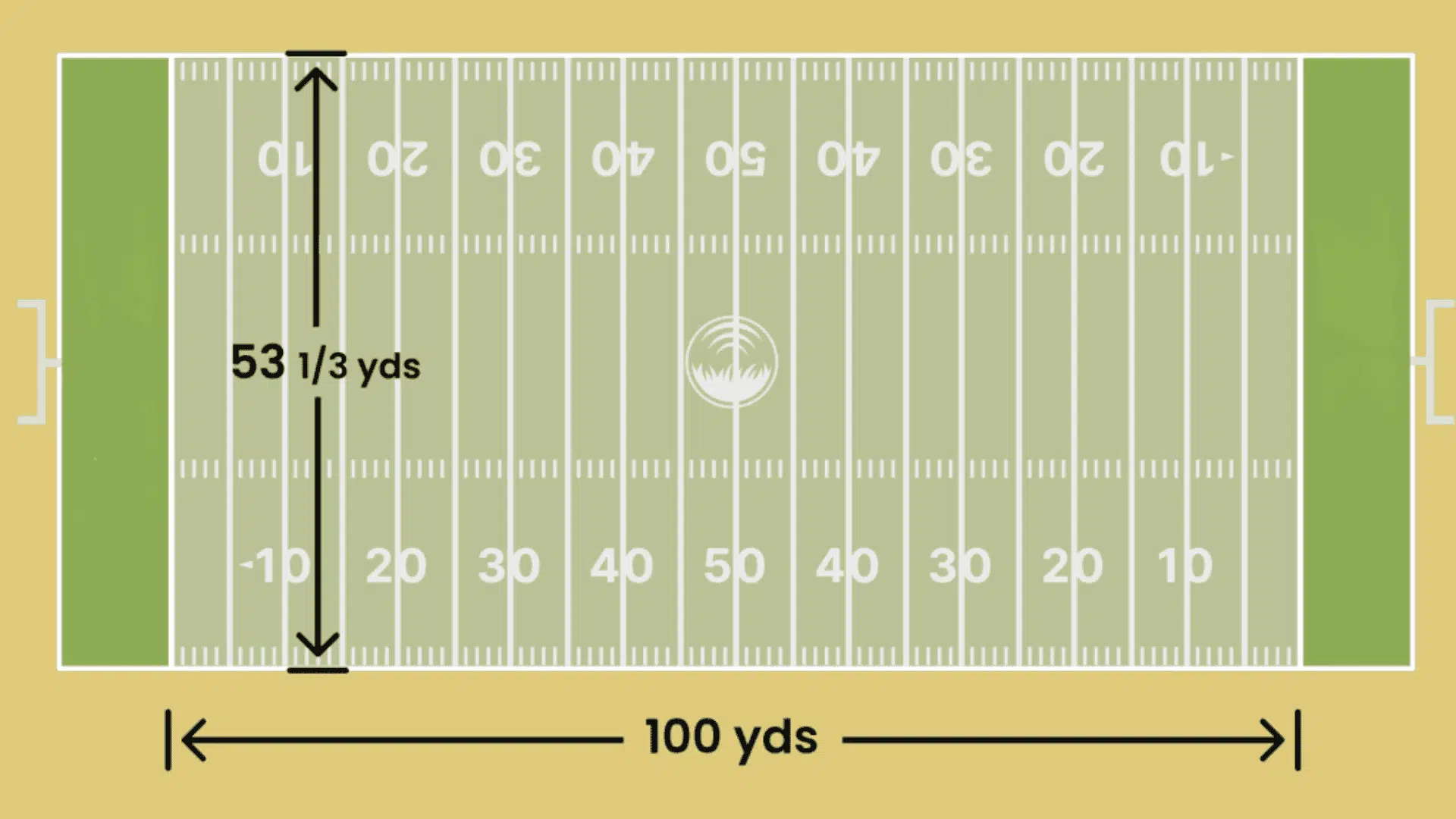
A standard football field is 53⅓ yards wide. In feet, that equals 160 feet from one sideline to the other. This width is the same in both the NFL and college football.
The measurement does not change at different stadiums. The wide space gives players room to run routes, block, and defend.
Coaches use the full width to spread out the offense and create passing lanes.
Defenses also adjust their coverage based on this space. During kick returns, players often move from one sideline to the other. Even short passes can use the full width of the field.
So when you watch a game, remember that players are working across 53⅓ yards, or 160 feet, every time they line up and run a play.
Why Is a Football Field 53⅓ Yards Wide?
The measurement was not random. It developed as early football rules became standardized, creating a consistent playing surface for schools and professional leagues.
- Early Rugby Influence: Football grew from rugby, where fields were wider. As rules changed, leaders narrowed the field to better match the faster and more organized American style.
- Standardization in 1881: Rule makers officially set the width at 53⅓ yards in 1881. This created uniform rules for schools and teams across the country.
- Balance Between Space and Control: The width gives enough room for passing and running plays while keeping defenders close enough to maintain physical and competitive balance.
- Stadium Practicality: A 160-foot width fits well inside early stadium designs. It allowed seating to stay close while keeping the playing area manageable.
- Long-Term Consistency: Once teams adapted to this size, there was no strong reason to change it. Strategies and records were built around this measurement.
How Did the Football Field Get Its Standard Width?
Football fields were not always the same size. In the early days of the game, there were few rules, so fields often varied depending on the location and available space. Some were wider, while others were much narrower.
| Year/Period | Length (goal line to goal line) | Width (sidelines) |
|---|---|---|
| Pre-1876 (early rugby-style) | Varied (around 140 yards) | Varied (around 70 yards or 210 ft) |
| 1876–1880 | 140 yards (420 ft) | 70 yards (210 ft) |
| 1881 | 110 yards (330 ft) | 53⅓ yards (160 ft) |
| 1892–1911 (pro/college) | 110 yards | 53⅓ yards (160 ft) |
| 1912–Present | 100 yards (+10-yard end zones each) | 53⅓ yards (160 ft) |
Once this width proved effective, it stayed in place. When college and professional rules were finalized, the same measurement carried over. That is how the football field ended up with the standard width used today.
Are All Football Fields the Same Width Today?
Football fields today are built using the same standard width across most levels of the game. High school, college, and NFL fields all measure 53⅓ yards wide (160 feet) from sideline to sideline.
This keeps the playing surface consistent and familiar. Some details inside the field can still vary.
The spacing of the hash marks varies at each level, and the goalposts are not placed the same way everywhere.
These differences change how teams line up, but do not affect the overall width. This shared width also helps players adjust as they move between levels.
Coaches and officials benefit from clear field markings that follow the same basic layout.
When you look at the full field from one sideline to the other, the width remains the same across modern football fields.
How Long Is the Football Field?
A standard football field measures100 yards long from one goal line to the other. That equals 300 feet of main playing space.
However, the full length of the field includes the end zones. Each end zone is 10 yards deep, adding 20 extra yards in total.
When you include both end zones, the complete field measures 120 yards, or 360 feet, from end line to end line.
This size is the same in the NFL and college football. High school fields follow the same total length as well.
The consistent measurement keeps the game balanced and easy to manage across all levels. The length works together with the width to create enough space for offense and defense.
Yard lines placed every five yards help track progress down the field and guide each play clearly.
Areas of a Football Field and Markings

A football field is split into clear sections that help control play and keep the game organized. Each area has a specific role, and the markings make it easy to spot where the ball should be placed and where plays begin or end.
1. Side Lines
The sidelines run the full length of the football field and mark the outer edge of play. If a player steps on or beyond the sideline while holding the ball, the play ends right away.
I once covered a tight game where a receiver caught a pass near the boundary and tried to gain extra yards.
His foot barely touched the sideline, and officials called the play dead.
That small step stopped the drive. The next play begins at the nearest yard line, while benches and coaches remain outside the boundary.
2. End Zones
End zones are the scoring areas located at both ends of the field. Each end zone sits between the goal line and the end line and stretches the full width of the field.
They are 10 yards long and remain the same size in high school, college, and NFL games.
Touchdowns and safeties are scored here. Clear markings and team names often appear in this area to help players and fans identify scoring space.
End zones also help officials judge scoring plays and ball placement near the goal line.
3. Yard Lines
Yard lines run across the entire width of the field and appear every five yards.
These lines help show how far the offense has moved the ball and how much distance remains for a first down.
Every ten yards, numbers are painted near the sidelines for easy viewing. These numbers begin at 10 near each end zone and count up toward the 50-yard line at the center of the field.
Coaches and referees rely on these lines to manage downs and distance.
4. Hash Marks
Hash marks are short white lines that mark each individual yard between the goal lines. They play a key role in ball placement.
When a play ends near the sideline, the ball is moved to the nearest hash mark before the next snap.
This keeps the play centered on the field. Hash marks appear across the field, and their spacing can vary by level, which slightly affects how teams line up.
This spacing can also affect play design and route alignment.
How Does Football Field Width Compare to Other Sports?
Field size affects how each sport flows and how players use space. Looking at the numbers side by side makes the differences easier to understand.
| Sport | Standard Width | Width in Feet | Notes on Field Size Rules |
| American Football (NFL & College) | 53⅓ yards | 160 feet | Fixed width across all major levels |
| High School Football | 53⅓ yards | 160 feet | Same overall width as the NFL and college |
| Canadian Football | 65 yards | 195 feet | Wider field, more open space for passing |
| Soccer (FIFA standard range) | 50–100 yards | 150–300 feet | Width varies by stadium and competition |
| Rugby Union | Up to 70 meters | About 229 feet | Slightly wider than American football |
| Rugby League | 68 meters | About 223 feet | Wider than American football |
Does Football Field Width Affect Gameplay?
The width of a football field affects how the game unfolds. With a standard width of 53⅓ yards (160 feet), players have a set amount of space to work with on every play.
I have seen how tight the space can feel during live games, especially near the sidelines, where every step matters.
It made me realize that every yard of width matters in both passing and running plays.
This width affects how offenses spread receivers and how defenses cover space. It keeps the game balanced by limiting the room while still allowing movement.
With a set width, teams must move side to side within clear boundaries.
This can open passing lanes and running paths near the sidelines, while forcing defenses to cover more ground and stay disciplined.
Field markings, like hash marks, affect where plays start. They also shape play calls, positioning, and how teams use space.
Conclusion
Understanding the width of a football field makes the game feel less abstract and more real.
Once you know the numbers and the reasons behind them, it’s easier to picture how plays develop and why space matters so much on the field.
The standard width developed over years of rule changes to keep the game fair and consistent.
Whether you watch football every week, played at some point, or just looked this up out of curiosity, knowing these details adds context to what you see on the screen or at the stadium.
Next time you notice a play stretching toward the sideline, you’ll know exactly how much room is in play.
Have you ever noticed field dimensions affecting a game you watched or played? Share your thoughts and experiences in the comments below.
Frequently Asked Questions
Is a Football Field Wider than a Soccer Field?
No, a football field is usually narrower. Soccer fields have flexible width rules, and many are wider than a standard football field.
Why Does Football Use Yards Instead of Meters?
American football uses yards because the sport developed in the United States, where the imperial system was already standard for measurements and field markings.
Can Football Fields Be Wider for Practice or Training?
Yes, practice fields can vary in width. Teams sometimes use wider or smaller spaces during drills to focus on speed, spacing, or control.
How Long Does It Take to Mark a Football Field Correctly?
Marking a full football field usually takes several hours and requires precise measurements to ensure all lines and markings meet official rules.