
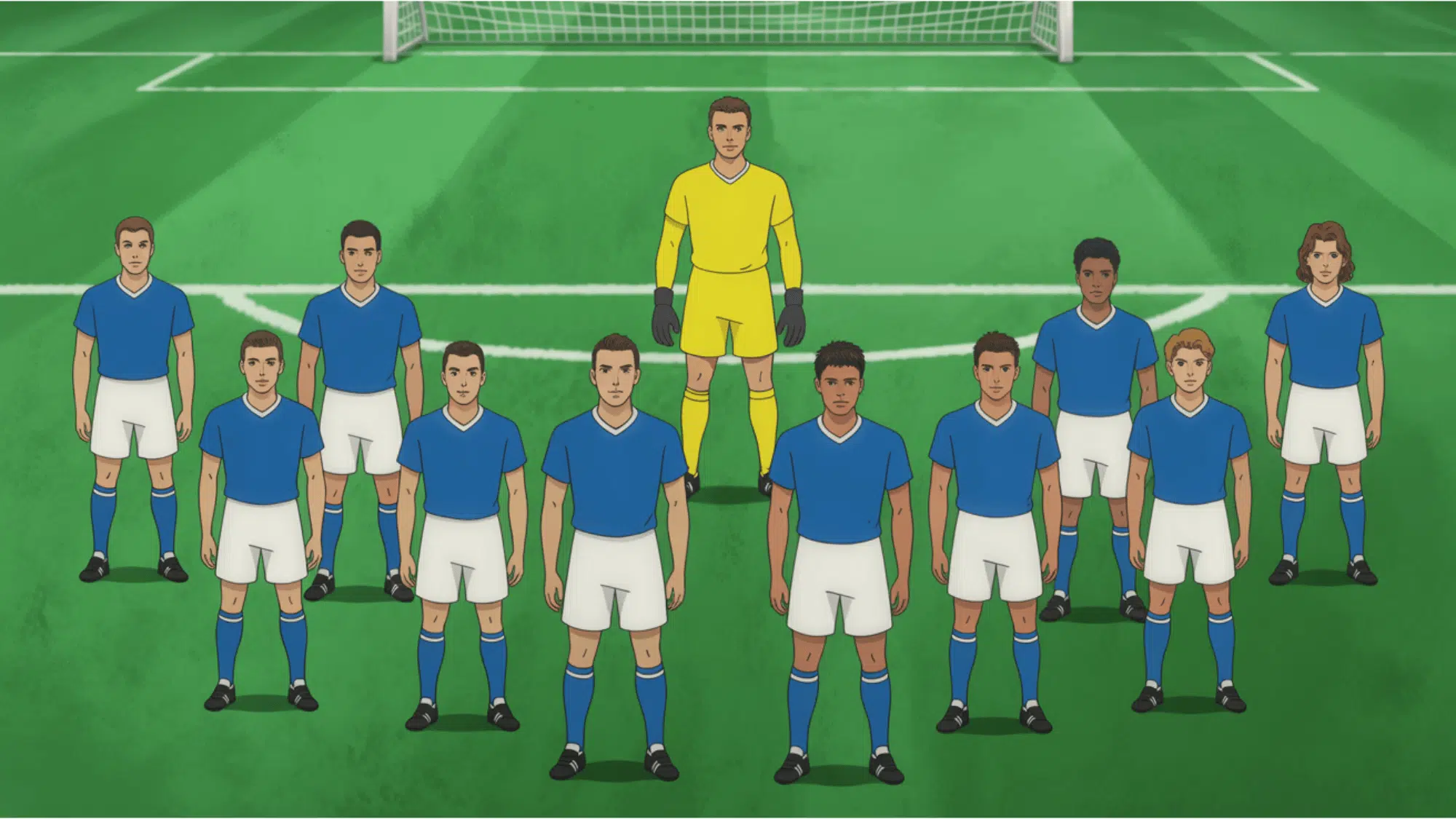
Soccer may look simple, but team size can confuse new fans and players. Many wonder how many players are on a soccer team, as the number can vary by rules and circumstances
Some counts focus only on players on the field, while others include substitutes and squad limits.
During my years covering matches across different leagues, I’ve noticed this question comes up constantly from fans trying to follow the game.
The mix of on-field players, bench size, and squad limits can make the answer feel unclear at first.
In this article, I will share how many players are on a soccer team according to the official rules.
You will learn the number of players allowed on the field, how many substitutes a team can have, and how team size works in different match settings.
By the end, you will understand the full team setup and know which number matters in each situation.
How Many Players Are on a Soccer Team?
Soccer rules can seem confusing when you first look at team size. Many people ask how many players are on a soccer team because the answer changes based on what is included.
In a standard match,each team has 11 players on the field, including the goalkeeper.
This number stays the same in most professional and amateur games. Teams can also have substitute players sitting on the bench.
The total squad size depends on league rules and match format.
Youth soccer and small-sided games often use fewer players to fit the field size and age level.
Some competitions allow more substitutes than others. Youth soccer and small-sided games often use fewer players to fit the field size and age level.
Knowing the difference between on-field players and the total squad size helps avoid confusion.
Understanding these rules makes it easier to follow matches, build teams, and learn the game with confidence.
Official Soccer Rules and Regulations
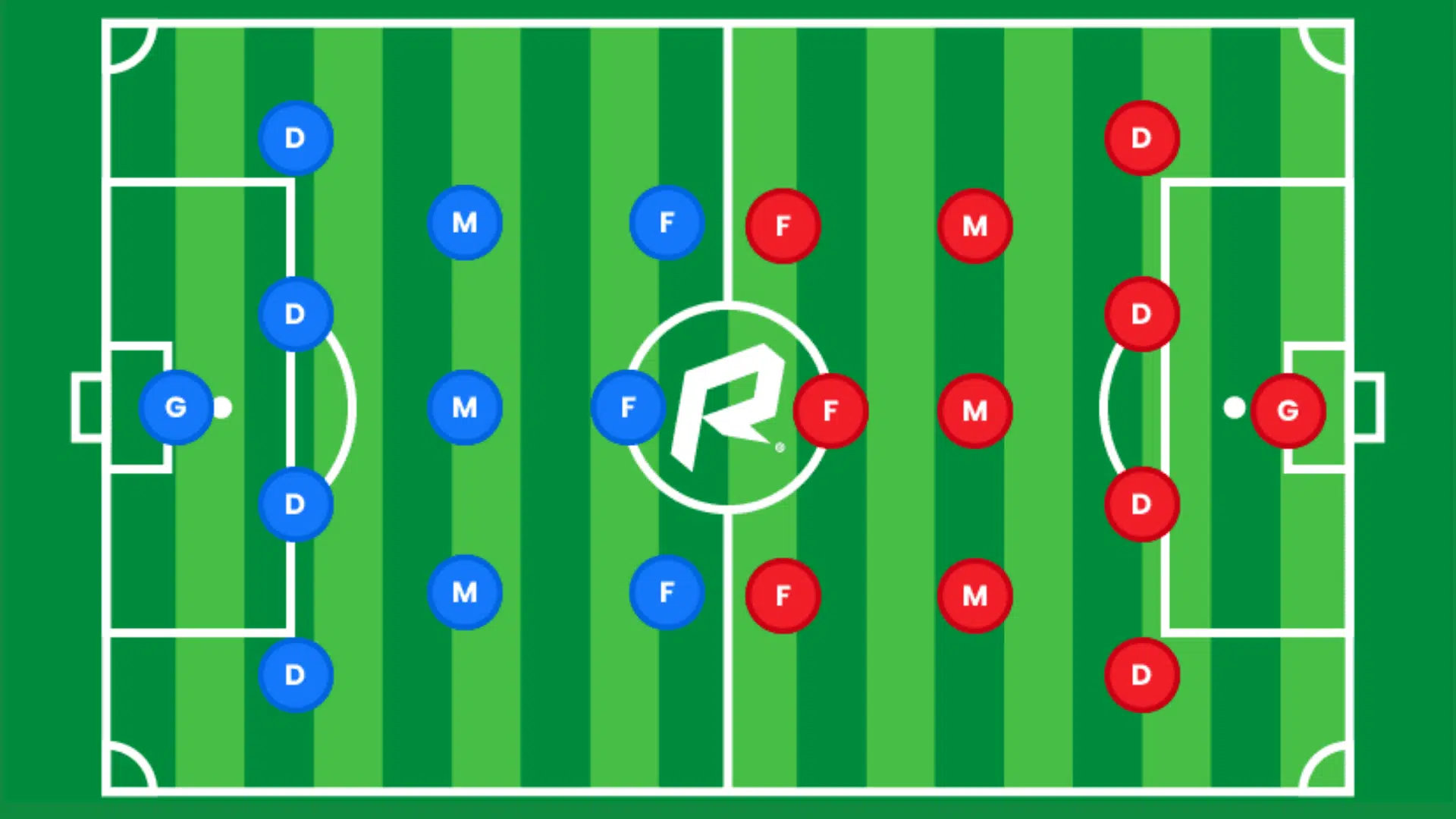
Understanding the size of soccer teams is just the start. Here are the fundamental rules that govern how the game is played.
1. Offside Rule
A player is offside if they are nearer to the goal line than the ball and the second-last defender when the pass is made.
Being offside isn’t an offense by itself; you must be actively involved in play. Players cannot be offside in their own half or from goal kicks, throw-ins, or corner kicks.
The offside rule prevents players from simply camping near the opponent’s goal, waiting for long passes.
Assistant referees signal offside with their flags, and the referee awards an indirect free kick to the defending team from where the offside occurred.
2. Fouls and Free Kicks
Fouls occur when players kick, trip, push, hold, or handle the ball illegally. The referee stops play and awards a free kick to the fouled team.
Direct free kicks allow players to shoot at the goal and are awarded for contact fouls, such as pushing or tripping.
Indirect free kicks require the ball to touch another player before a goal can count, typically awarded for non-contact violations.
The opposing team must stand at least 10 yards from the ball during free kicks. From match-day coverage, I’ve seen referees measure this distance carefully, knowing that small gaps can affect the result.
Opponents must stay 10 yards away on free kicks, and serious or repeated fouls can result in yellow or red cards.
3. Penalty Kicks
Penalty kicks are awarded when a defending player commits a foul inside their own penalty area. The ball is placed on the penalty spot, 12 yards from the goal.
Only the kicker and the opposing goalkeeper are involved; all other players must stay outside the penalty area until the kick is taken.
The goalkeeper must keep both feet on the goal line until the ball is kicked. Penalty kicks offer excellent scoring opportunities since only the goalkeeper defends the entire goal.
Handballs, tackles, and pushes inside the penalty area often result in penalties.
4. Match Duration and Halftime
A standard soccer match lasts 90 minutes, divided into two 45-minute halves. Teams switch sides at halftime, which typically lasts 15 minutes.
The referee adds extra time at the end of each half to compensate for injuries, substitutions, and other stoppages.
This added time usually ranges from 1-5 minutes but can be longer. The clock never stops during play, unlike basketball or football.
Youth matches often last 60 or 70 minutes. Tournament knockout matches that end in draws proceed to 30 minutes of extra time, split into two 15-minute periods.
5. Throw-Ins
A throw-in is given when the ball fully crosses the touchline during play. The team that did not touch the ball last takes the throw-in to restart the game.
The player must use both hands, keep both feet on or behind the line, and throw the ball from behind and over the head.
A goal cannot be scored directly from a throw-in.
If the throw is taken incorrectly, the referee awards possession to the opposing team. Throw-ins allow quick restarts and help keep the match moving smoothly.
6. Corner Kicks and Goal Kicks
A corner kick is awarded when the defending team last touches the ball before it crosses the goal line without a goal being scored.
The ball is placed inside the corner arc and kicked back into play. A goal kick is given when the attacking team touches the ball last before it crosses the goal line.
The kick is taken from within the goal area. During a goal kick, opposing players must stay outside the penalty area.
Both restarts help resume play and can create scoring chances.
IFAB vs FIFA: Who Sets the Official Rules?
When people talk about soccer rules, they often mention FIFA, but the official Laws of the Game are written by IFAB, the International Football Association Board.
IFAB is the body that creates and updates the rules used in matches around the world.
FIFA applies these rules in international competitions like the World Cup. In simple terms, IFAB makes the rules, and FIFA enforces them worldwide.
IFAB includes representatives from FIFA and the four British football associations. Any rule change must be approved during IFAB’s annual meeting. Once approved, FIFA ensures all member countries follow the updated laws.
This system keeps the game consistent across leagues and tournaments.
While FIFA manages global events and development, IFAB remains the final authority on soccer’s official rules.
Different Soccer Formats and Team Sizes
Soccer is played in different formats based on age group, skill level, and available space. Each format follows its own rules for team size and field dimensions.
| Soccer Format | Players Per Team | Total Players on Field | Total Squad Size | Field Size |
| Traditional Soccer | 11 | 22 | 18-20 players | Full-size pitch |
| Indoor Soccer | 5-6 | 10-12 | 10-12 players | Smaller court |
| Futsal | 5 | 10 | 12 players | Hard court |
| Beach Soccer | 5 | 10 | 8-12 players | Sand pitch |
| Youth Soccer (U6-U8) | 4-6 | 8-12 | 8-12 players | Smaller field |
| Youth Soccer (U10-U12) | 7-9 | 14-18 | 12-16 players | Medium field |
How Many Players Are on a Soccer Field at Different Times?
Team numbers on the field can change during a match due to rules, penalties, or special game formats. These situations affect how many players are allowed to play at a given moment.
- Kickoff: Each team starts with 11 players on the field, including one goalkeeper.
- After a Red Card: The team plays with one fewer player for the rest of the match.
- Injury Without Substitution: The team continues with fewer players until a change is allowed.
- Youth or Small-Sided Games: Fewer players are used based on age group and field size.
- Match Abandonment Rule: If a team drops below seven players, the match cannot continue.
Understanding Soccer Team Positions
Understanding soccer positions shows how each player supports the team. One coach told me that when roles are clear, the game feels more organized and purposeful.
1. Goalkeeper
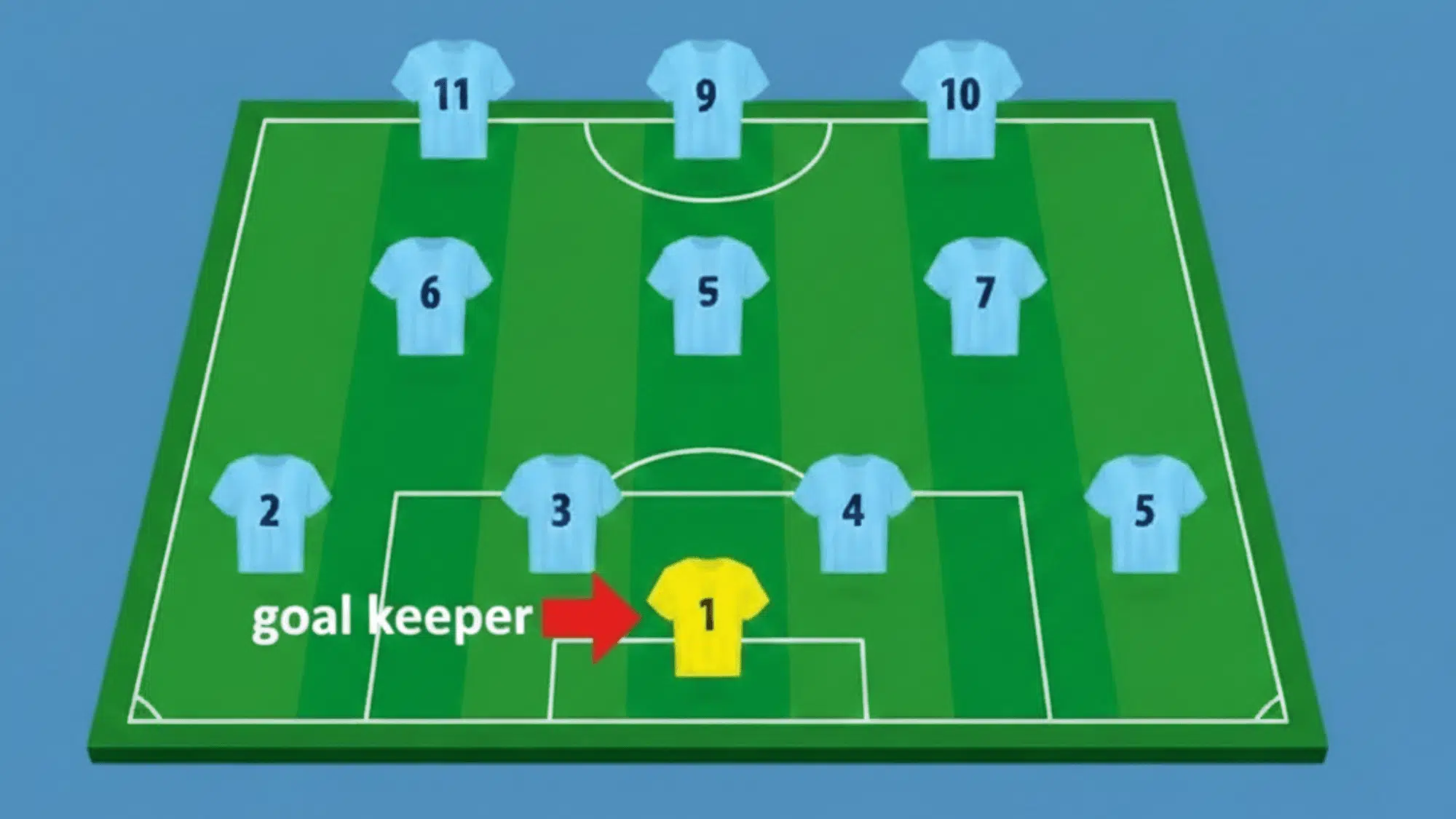
The goalkeeper is the only player allowed to use their hands within the penalty area. They protect the goal and serve as the last line of defense.
A good goalkeeper needs quick reflexes, strong communication skills, and the ability to read the game. They wear jerseys in different colors to stand out from other players and referees.
Modern goalkeepers also start attacks by distributing the ball accurately to teammates.
Teams can have only one goalkeeper on the field at a time, though they always have a backup on the bench in case of injury or poor performance.
2. Defenders
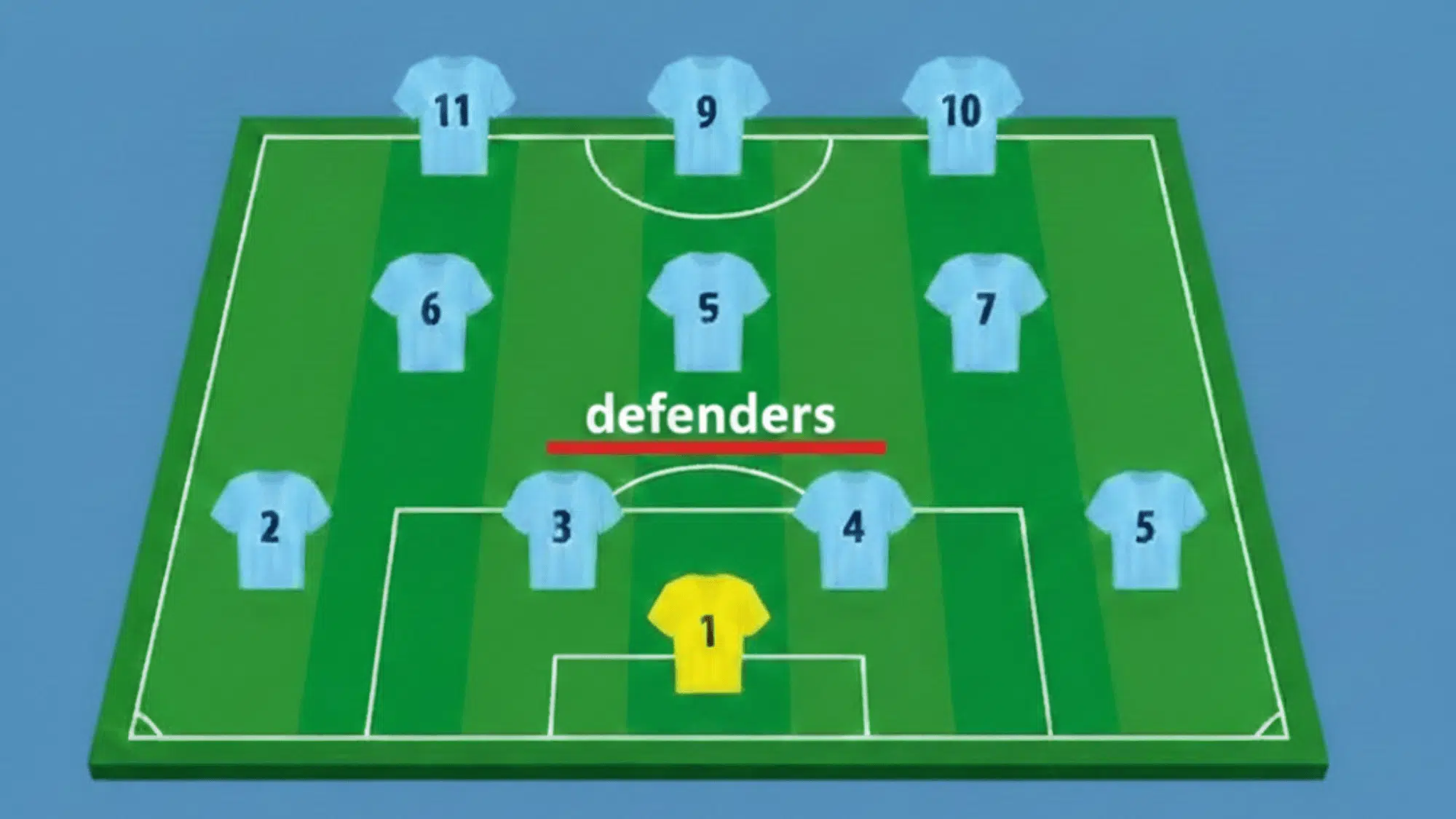
Defenders work to stop the opposing team from scoring goals. Most teams use 3-5 defenders depending on their formation.
Center backs play in the middle and are typically the strongest aerial players. Full-backs or wing-backs play on the sides and often push forward to support attacks.
Defensive duties include blocking shots, winning tackles, clearing the ball from dangerous areas, and marking opposing forwards.
Good defenders need strength and composure, forming the team’s backbone.
3. Midfielders
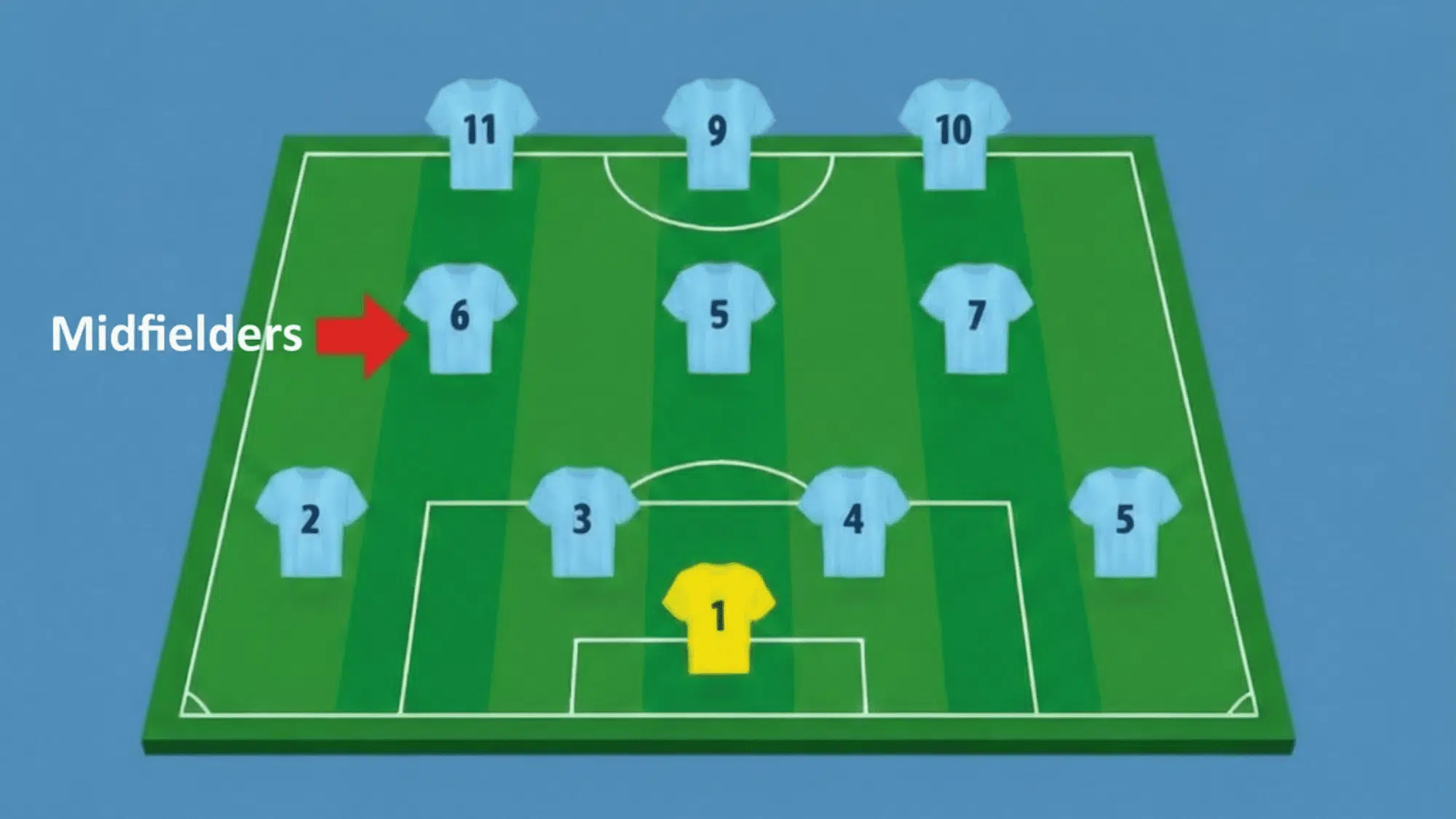
Midfielders connect the defense and attack, controlling the flow of the game. Teams usually field 3-5 midfielders in various roles. Defensive midfielders protect the back line and break up opposition attacks.
Central midfielders distribute passes and maintain possession.
Attacking midfielders create scoring chances and sometimes score themselves. Wide midfielders, or wingers, operate on the flanks and deliver crosses into the box.
Midfielders need the most stamina, along with strong passing, vision, and tactical awareness.
4. Forwards
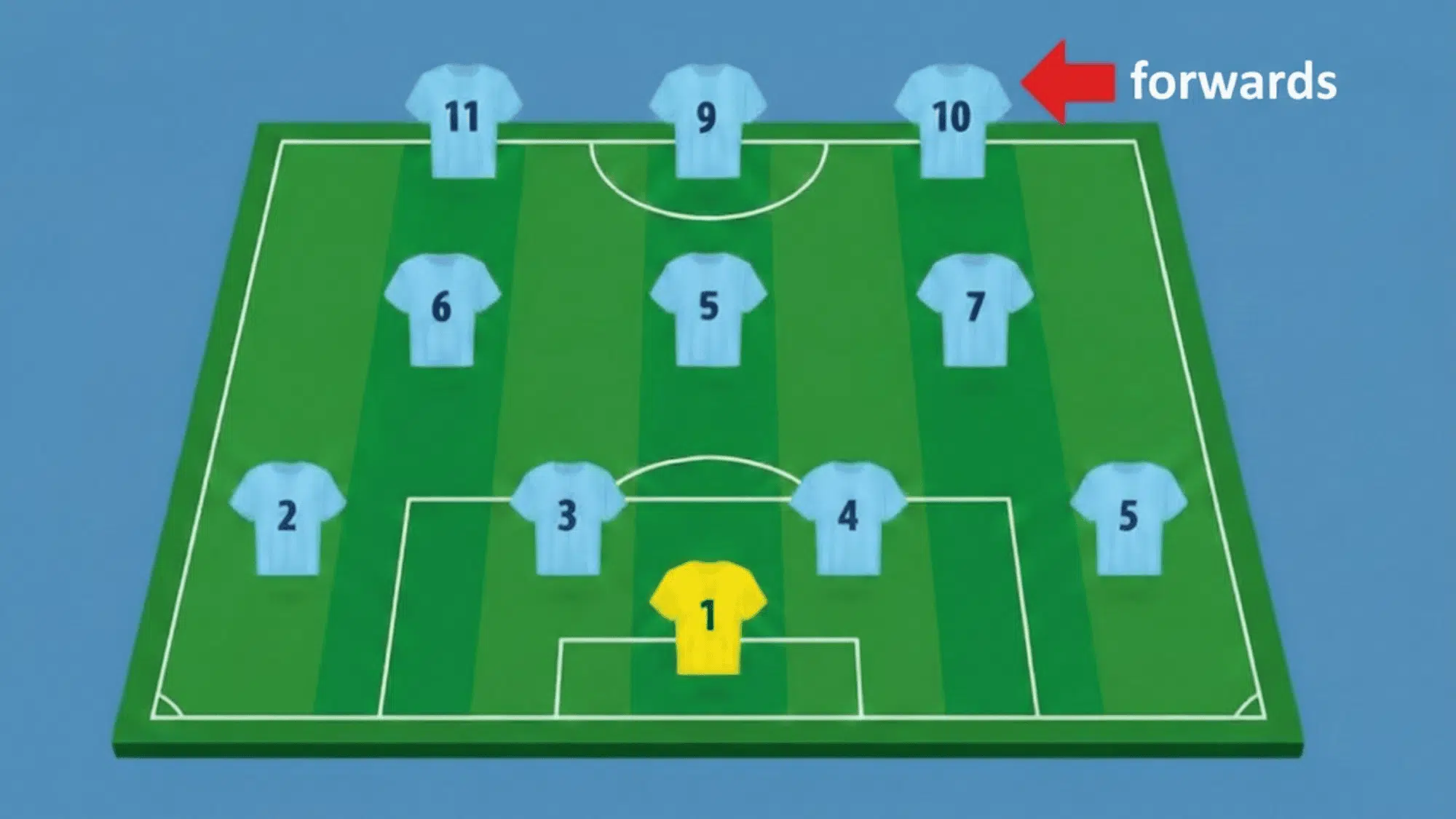
Forwards are the primary goal scorers on a team. Most formations include 1-3 forwards depending on the tactical approach.
Strikers play centrally and focus on finishing scoring chances. Some teams use a target forward who holds up the ball for teammates. Others prefer a poacher who stays in the penalty area waiting for opportunities.
Forwards need speed, accuracy, and the ability to create space while pressing defenders to win the ball back.
While scoring is their main job, modern forwards also help with defensive duties when their team loses possession.
Soccer Team Roster vs Playing Squad: Key Differences
Soccer teams follow clear rules when it comes to squad size and matchday limits. Knowing the difference helps avoid confusion when reading lineups or match reports.
| Aspect | Soccer Team Roster | Playing Squad |
| Purpose | Full list of registered players | Players eligible for a specific match |
| Size | Varies by league and club rules | Limited by match regulations |
| Includes | Starters, substitutes, and reserves | Starters and allowed substitutes |
| Used When | Season registration and transfers | Matchday team selection |
| Flexibility | Can change during transfer windows | Fixed once the match begins |
Officials and Staff on the Field
Beyond the 22 players on the field, several officials ensure the game runs smoothly and fairly. Checkout who else you’ll see during a soccer match:
- Referee: The head official who enforces all rules, makes final decisions on fouls, awards penalties, and keeps track of match time.
- Assistant Referees: Two officials who run along each sideline with flags to signal offsides, out-of-bounds calls, and fouls the referee might miss.
- Fourth Official: Manages substitutions, displays added time at the end of each half, and communicates between team benches and the referee.
- Video Assistant Referee (VAR): Used in professional matches to review major decisions like goals, penalties, red cards, and mistaken identity.
- Team Coaches and Staff: Each team has coaching staff, medical trainers, and equipment managers on the sidelines who support players during the match but cannot enter the field without permission.
Why Soccer Teams Have Specific Numbers?
The 11-player format exists for practical and historical reasons. When soccer was formalized in England during the 1860s, teams experimented with different numbers.
They settled on 11 because it provided the right balance between offense and defense on a full-size field.
Too few players would leave the field too open, creating exhausting running demands.
Too many players would crowd the space and reduce individual impact. The number also works well for tactical formations like 4-4-2 or 4-3-3, which have become soccer standards.
Having 11 players creates enough positions for specialized roles without overwhelming the playing area.
I’ve found that this number has remained unchanged for over 150 years because it simply works for the sport’s pace, field dimensions, and strategic depth.
Some leagues have tested alternative preseason formats, but the 11-player system remains standard.
Conclusion
Now you know that a standard soccer team has 11 players on the field, but the full picture includes substitutes and roster players, too.
Understanding these numbers helps you appreciate how teams are built and managed.
From the goalkeeper to the forwards, each position plays a specific role in the team’s success.
Different soccer formats change these numbers to fit their playing environments, but the 11-player tradition remains the gold standard worldwide.
Next time you watch a match, you’ll know how many players each team has and why it matters.
What’s your favorite position on a soccer team? Drop a comment below and let us know which role you think is most important!