
Many fans hear coaches mention the drag route in football, but few fully understand how important it is on game day.
It may look simple at first, yet it often helps teams gain steady yards and keep drives alive.
In this guide, you will learn everything you need to know about the drag route in football, what the route is, how receivers run it across the field, and why quarterbacks rely on it in short-yardage situations.
You will also learn when coaches call this play, how it fits into common passing concepts, and how defenses attempt to stop it.
The goal is to keep the information clear and easy to follow.
By the end, you will recognize the route during live games and understand why it remains one of the most dependable short passing options in modern football.
What Is a Drag Route in Football?
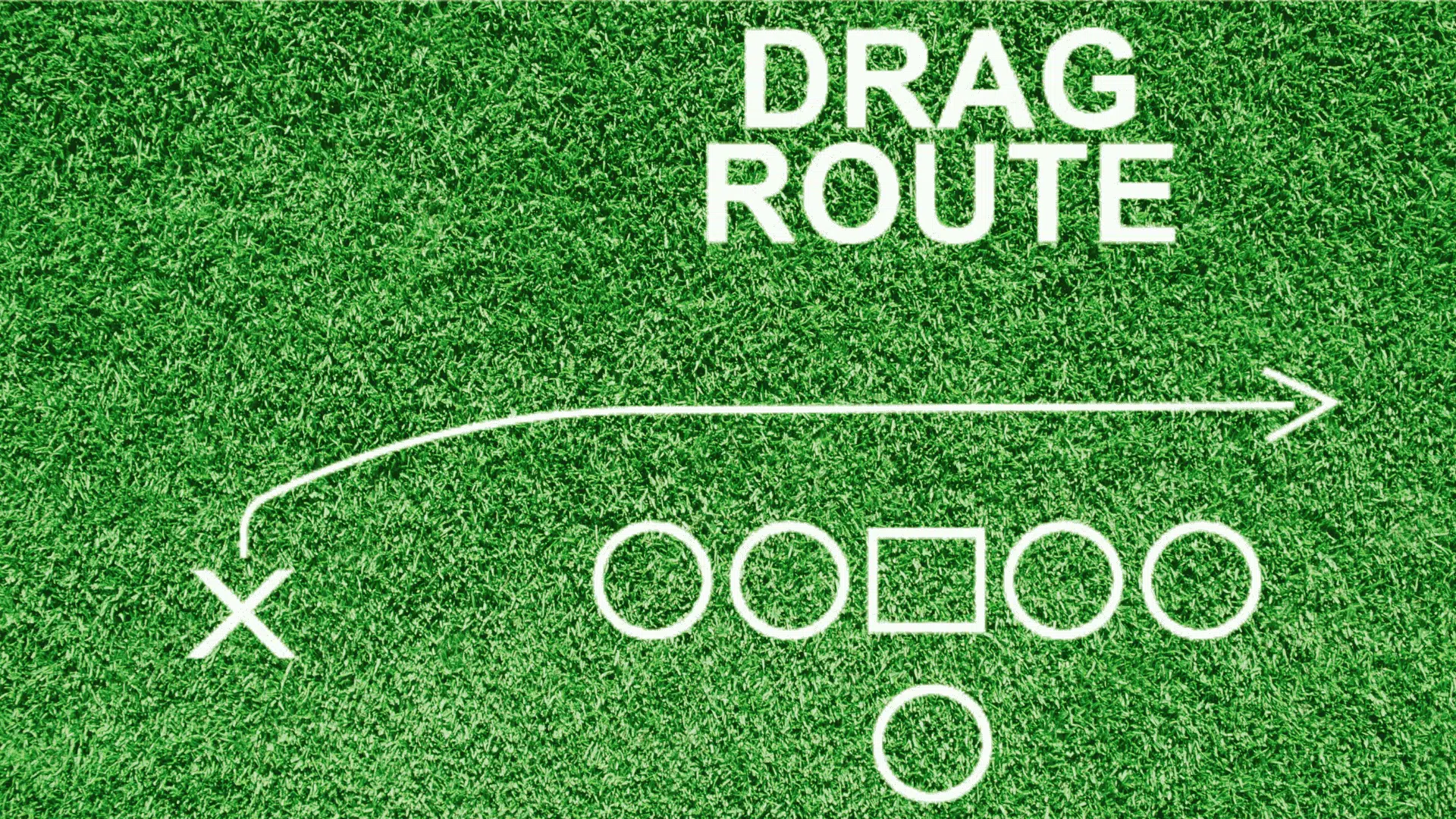
A drag route in football is a short passing route where a wide receiver runs straight across the field, just a few yards past the line of scrimmage.
The goal is to get open quickly and give the quarterback an easy, safe throw.
The receiver usually runs from one side of the field to the other, staying low and moving fast to avoid defenders.
This route works well against man coverage because it forces defenders to chase across traffic. It also helps against zone coverage by finding soft spots between linebackers.
Most drag routes gain short but steady yards, often on third down. Coaches use this play to move the chains and keep drives alive.
It is simple to run, easy to read, and fits into passing concepts in both high school and professional football games.
How a Receiver Runs the Drag Route?
Running a drag route takes control and close attention to detail. The receiver must explode off the line with a quick release.
He takes two or three hard steps upfield to make the defender think the route is going deeper.
Then he plants his foot and flattens his path, moving straight across the field at a shallow depth.
The route must stay tight and level. If the receiver drifts upfield, the timing can fall apart. He needs to keep a steady speed while crossing through traffic and avoid contact that slows him down.
Once he clears the middle, he snaps his head around and looks for the ball.
Strong footwork and field awareness make this route dependable. Even small mistakes in depth or angle can change how the play unfolds.
Most Common Wide Receiver Routes
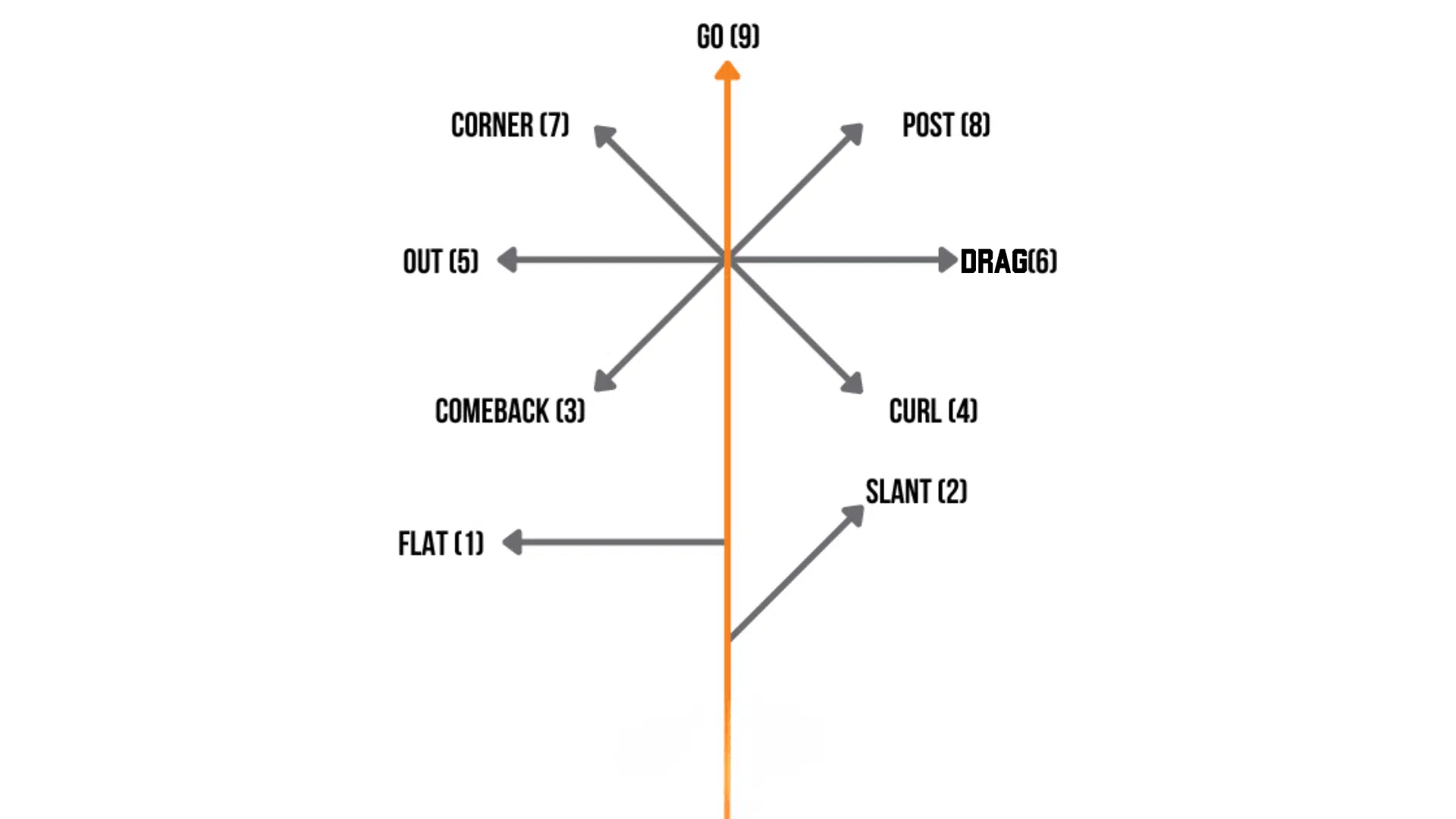
These routes form the foundation of most passing offenses. Each route targets a specific zone on the field, helping quarterbacks spread the defense and create open passing lanes at different depths.
1. Slant Route
The slant route is one of the fastest routes in football. The receiver takes three hard steps upfield, plants the outside foot, and cuts at a sharp angle toward the middle.
It is often part of the quick passing game, allowing the quarterback to throw the ball fast.
This route works well against tight man coverage because the quick break creates separation.
Strong hands and quick footwork are important. After the catch, the receiver can gain extra yards by accelerating through open space.
2. Flat Route
The flat route is a short out-breaking route toward the sideline. The receiver explodes off the line and runs directly to the flat area near the line of scrimmage.
Quarterbacks use this route for quick, safe throws. It is effective against defenses that drop deep or give cushion underneath.
The flat route often pairs with deeper inside routes to stretch the defense horizontally.
Timing is key because the ball must come out quickly before defenders close the space near the sideline.
3. Hitch Route
The hitch route is simple but effective. The receiver runs straight upfield for about five steps, then stops quickly and turns back toward the quarterback.
It is often used when defenders play several yards off the line.
The quarterback delivers the ball as soon as the receiver turns. This route requires sharp footwork to stop without drifting forward.
If run cleanly, it creates easy completions and keeps the offense on schedule during short-yardage situations.
4. Out Route
The out route begins with the receiver pushing vertically for about five yards. After selling the deep threat, the receiver plants and cuts sharply at a 90-degree angle toward the sideline.
This route attacks defenses that protect the middle of the field.
The quarterback must throw the ball before the receiver reaches the sideline to avoid tight coverage.
Precision in timing and depth matters. A clean break creates separation and provides a clear window near the boundary.
5. Curl Route
The curl route requires the receiver to run vertically for around ten yards before turning back toward the quarterback.
Instead of drifting backward, the receiver curls inside and presents a strong target.
This route works well against zone coverage because it settles in open space. Proper timing between the quarterback and receiver is critical.
The ball should arrive as the receiver finishes the turn. Strong body control helps secure the catch and protect the ball from defenders.
6. Dig Route
The dig route, also called a square-in, attacks the middle of the field at medium depth. The receiver runs hard upfield for seven to ten yards before planting and breaking inside at a sharp angle.
This route is effective when paired with a vertical route that clears defenders deep.
The quarterback must lead the receiver into open space.
Because it crosses traffic, awareness and strong hands are important. When timed correctly, the dig produces solid gains.
7. Post Route
The post route is a vertical pattern that angles toward the middle of the field.
The receiver runs straight for about seven to ten yards, then cuts diagonally toward the goal post. It is designed to attack the space between safeties.
Quarterbacks need arm strength and accuracy to complete this throw.
The receiver must sell the vertical release before making the break. When executed well, the post route can create explosive plays downfield.
8. Corner Route
The corner route breaks toward the back corner of the field. The receiver pushes vertically before angling toward the sideline at the top of the route.
This pattern is often used near the end zone to create separation from defenders.
The quarterback must place the ball high and outside where only the receiver can catch it.
Timing and body control matter on this throw. When thrown correctly, the corner route becomes a strong red zone weapon.
9. Go Route
The go route is a straight vertical sprint down the field. The receiver runs as fast as possible while tracking the ball over the shoulder.
It is simple in design but demands speed and concentration.
The quarterback throws deep, aiming to drop the ball in stride.
This route stretches the defense and forces safeties to respect the serious threat. When the receiver wins early leverage, the go route can lead to big plays.
10. Seam Route
The seam route is commonly run by a slot receiver. The player runs straight upfield between defenders, often bending slightly inside at the top.
It targets the space between safeties in two-high coverage looks.
Quarterbacks must read the safeties quickly to decide if the seam is open. Proper alignment and depth are important to avoid drifting into coverage.
When timed correctly, the seam route creates strong gains through the middle.
Quarterback Reads and Progressions on a Drag Route
The quarterback must process information quickly before and after the snap. The drag route is rarely the only option in the play, so reading coverage is critical.
- Check alignment: Read the defense before the snap to spot man or zone coverage.
- Use motion clue: Send a player in motion to see if a defender follows, which signals man coverage.
- Track linebackers: Watch their first steps after the snap to read coverage flow.
- Spot blitz: Identify extra rushers and speed up the throw if pressure comes.
- Read deep first: Look at the primary deeper route if it is designed as the first option.
- Move to drag: Shift to the drag route if the deep option is covered.
- Throw with anticipation: Aim for where the receiver is heading, not his current spot.
- Lead for YAC: Place the ball slightly ahead to allow yards after the catch.
- Protect the pass: Keep the throw low and away from trailing defenders.
Why Offensive Coordinators Call a Drag Route?
Offensive coordinators call the drag route because it brings balance and control to the passing game.
It is a reliable option that helps the offense stay on schedule, especially in third-and-short or second-and-medium situations.
When defenses focus on deep coverage, the drag gives quarterbacks a simple throw underneath.
This route also works well against pressure. If linebackers blitz or drop too deep, space opens across the middle. The quick release reduces sack risk and keeps the offense in rhythm.
Coordinators often pair it with deeper routes to stretch coverage at multiple levels.
In the red zone, where space is tight, the drag creates movement across the formation.
That movement forces defenders to communicate clearly and react quickly. Its value comes from timing, spacing, and smart play design.
Drag Route Against Different Coverages
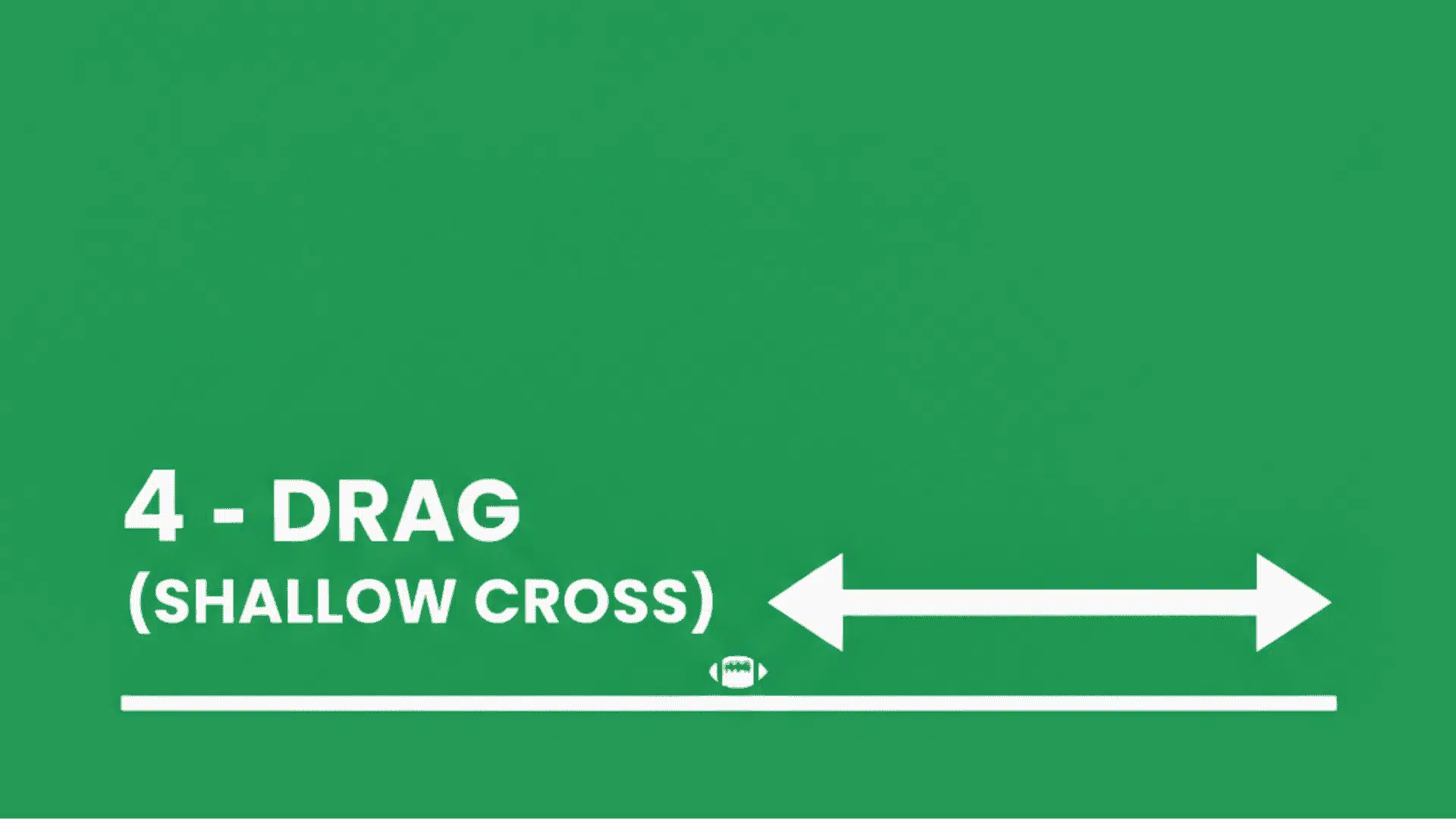
The drag route works in many defensive looks. Its success depends on how the coverage reacts to short crossing routes.
1. Drag Route Against Man Coverage
Against man coverage, the drag route is very effective. The receiver runs across the field, forcing the defender to chase through traffic.
This creates natural picks as other receivers run their routes. Even a small delay can give the receiver space to catch the ball. Speed and quick cuts matter here.
If the receiver gains a step, the quarterback can deliver a simple throw in stride.
The play often turns into extra yards after the catch. Timing and separation are key against tight-man defense.
2. Drag Route Against Zone Coverage
When facing zone coverage, the drag route attacks open space instead of a single defender.
Linebackers must decide whether to pass the receiver off or follow him across the middle. That short hesitation can create a clear throwing lane.
The receiver must stay at the right depth and avoid drifting upfield. Settling briefly in soft spots helps the quarterback make an accurate pass. Awareness is important because defenders watch the quarterback’s eyes.
Clean spacing and steady pace help the drag route stay effective against zone schemes.
How Defenses Adjust to Stop the Drag Route?
Defenses study tendencies and make structured adjustments when they expect shallow crossing patterns, such as the drag route. Coordinators focus on reducing space underneath and disrupting timing before the ball is released.
- Lower linebackers: Linebackers move closer to the line to block the shallow crossing lane and take away easy throws.
- Press at the line: Corners jam the receiver early to disrupt timing and delay the route.
- Robber in the middle: A defender watches the short middle and reacts quickly to crossing routes.
- Zone pass-off: Defenders switch coverage smoothly as the receiver crosses the field.
- Lower safety depth: Safeties are slightly closer to help cover the space underneath.
- Hands up front: Linemen raise their hands to block quick, short throws.
- Tighten coverage levels: Defenders reduce the space between zones to shrink throwing windows.
Drag Route vs Slant Route: Key Differences
The drag route and slant route are both short passing patterns used in modern offenses, but they differ in direction, timing, depth, and how they attack defensive coverage.
| Aspect | Drag Route | Slant Route |
| Path Direction | Runs flat across the field | Cuts diagonally upfield |
| Depth | Very shallow, 3–5 yards | Slightly deeper with a sharp inside break |
| Main Objective | Stretch defense horizontally | Attack inside leverage quickly |
| Timing | Develops while crossing traffic | Hits fast off the break |
| Quarterback Read | Often, a secondary or outlet option | Frequently, a primary quick read |
| Best Situation | Third-and-short, underneath space | Tight man coverage or quick rhythm throws |
When Not to Call a Drag Route?
Certain defensive looks and game situations reduce its effectiveness. Understanding these limits helps offenses avoid low-percentage throws.
- Tight Underneath Zone: When linebackers and nickel defenders sit low, the shallow middle becomes crowded. This removes the quick-throwing lane and increases the risk of tipped passes.
- Robber Coverage in the Middle: A safety or linebacker may sit in the short middle area, reading the quarterback’s eyes. That extra defender can jump the crossing route and create turnover chances.
- Press Coverage With Inside Leverage: If a corner jams the receiver and shades inside, it disrupts timing and blocks the path across the field. The delay can break the rhythm of the play.
- No Deep Route to Stretch Coverage: Without vertical routes pulling defenders back, coverage compresses underneath. This shrinks the space and makes the drag easier to defend.
- Heavy Blitz With Tight Coverage: If pressure arrives quickly and defenders stay tight in short zones, the quarterback may not have a clean window to deliver the ball safely.
Conclusion
The drag route is not flashy, but it often helps move the chains instead of punting. Now that you understand how it works, you can start spotting it during real games.
Watch how receivers stay flat across the field and how quarterbacks release the ball in rhythm.
Small details like timing and spacing shape the outcome more than most fans realize.
When you follow these patterns, the game slows down and becomes easier to understand. You see why coaches trust this route in key moments and how it fits into larger passing concepts.
Next time you watch football, pay close attention to shallow crosses.
Have you noticed teams using the drag route in big situations? Share what you’ve seen or your thoughts in the comments below.