
Are you training for a race and wondering what to eat? Your nutrition matters just as much as your miles.
Even if you’re gearing up for your first 5K or tackling a full marathon, the right runner’s diet plan can make all the difference in your performance and recovery.
This complete guide breaks down everything you need to fuel your training like a pro. You’ll discover the perfect balance of carbs, protein, and healthy fats that runners need.
Plus, you’ll get a ready-to-use 7-day meal plan with breakfast, lunch, dinner, and snack ideas for each day.
You’ll also learn exactly when to eat before and after your runs, how to customize meals for your goals, and get a complete grocery list to make shopping easy. Let’s fuel those miles!
The Three Key Macronutrients for Runners
Every runner’s diet plan should balance carbohydrates, protein, and healthy fats. Here’s what you need to know about each one.
1. Carbohydrates: Your Primary Fuel Source (50-60% of intake)
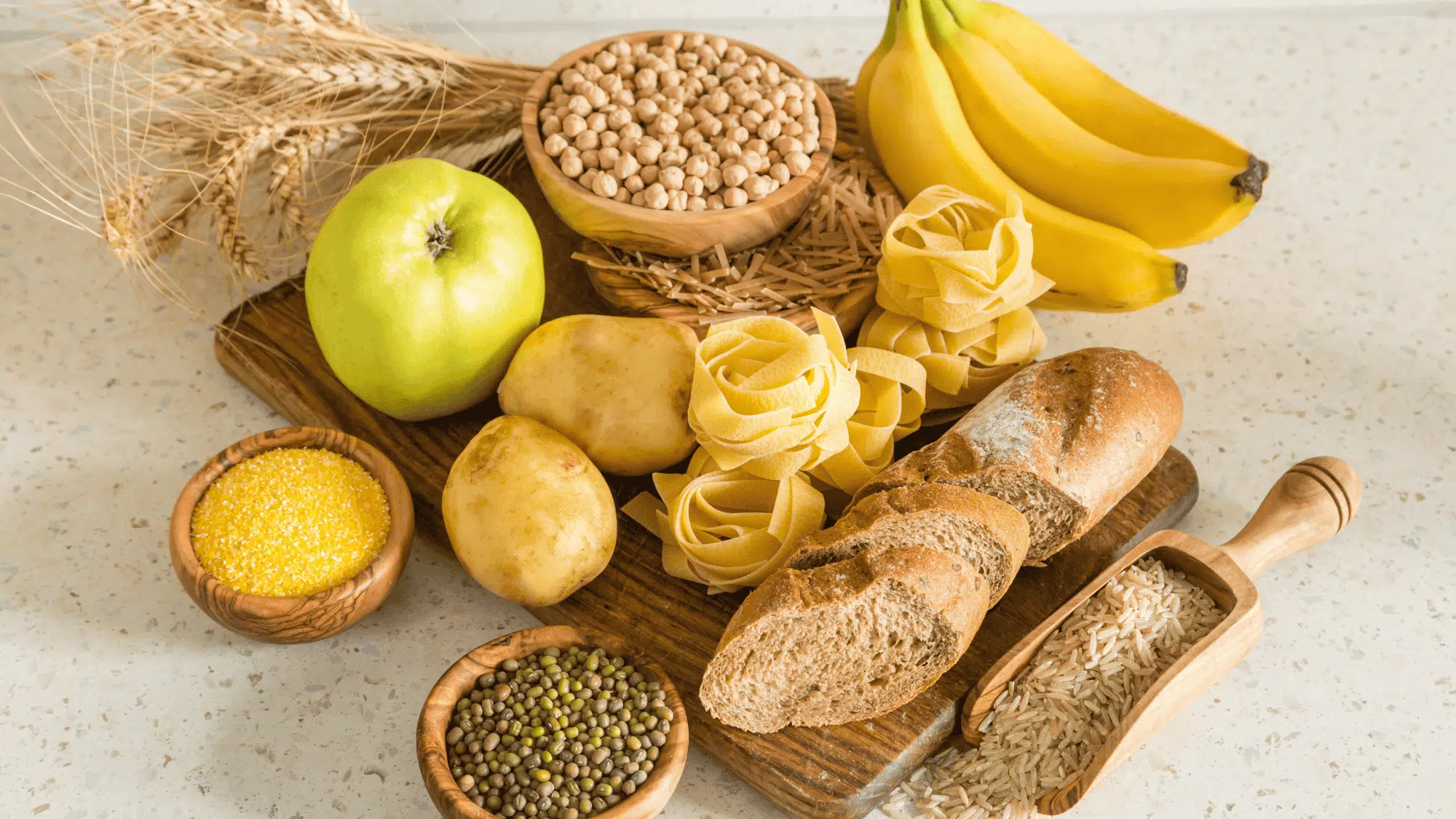
Carbs are your best friend as a runner. Your body breaks them down into glucose, which either gets used for energy or stored in your muscles as glycogen.
During runs, your body taps into these glycogen stores to keep you moving.
Best carb sources: Oats, whole grain bread and pasta, rice, potatoes, sweet potatoes, bananas, apples, and berries.
How many carbs do you need?
| Training Intensity | Carbs Per Day |
|---|---|
| Easy runs (30-60 min) | 3-5g per kg of body weight |
| Moderate runs (60 min) | 5-7g per kg |
| Hard runs (1-3 hours) | 6-10g per kg |
| Ultra-distance (4-5 hours) | 8-12g per kg |
Divide your weight in pounds by 2.2 to get kilograms. A 150-pound person (68 kg) needs 340-476g of carbs on moderate training days.
2. Protein: Muscle Repair and Recovery (15-30% of intake)
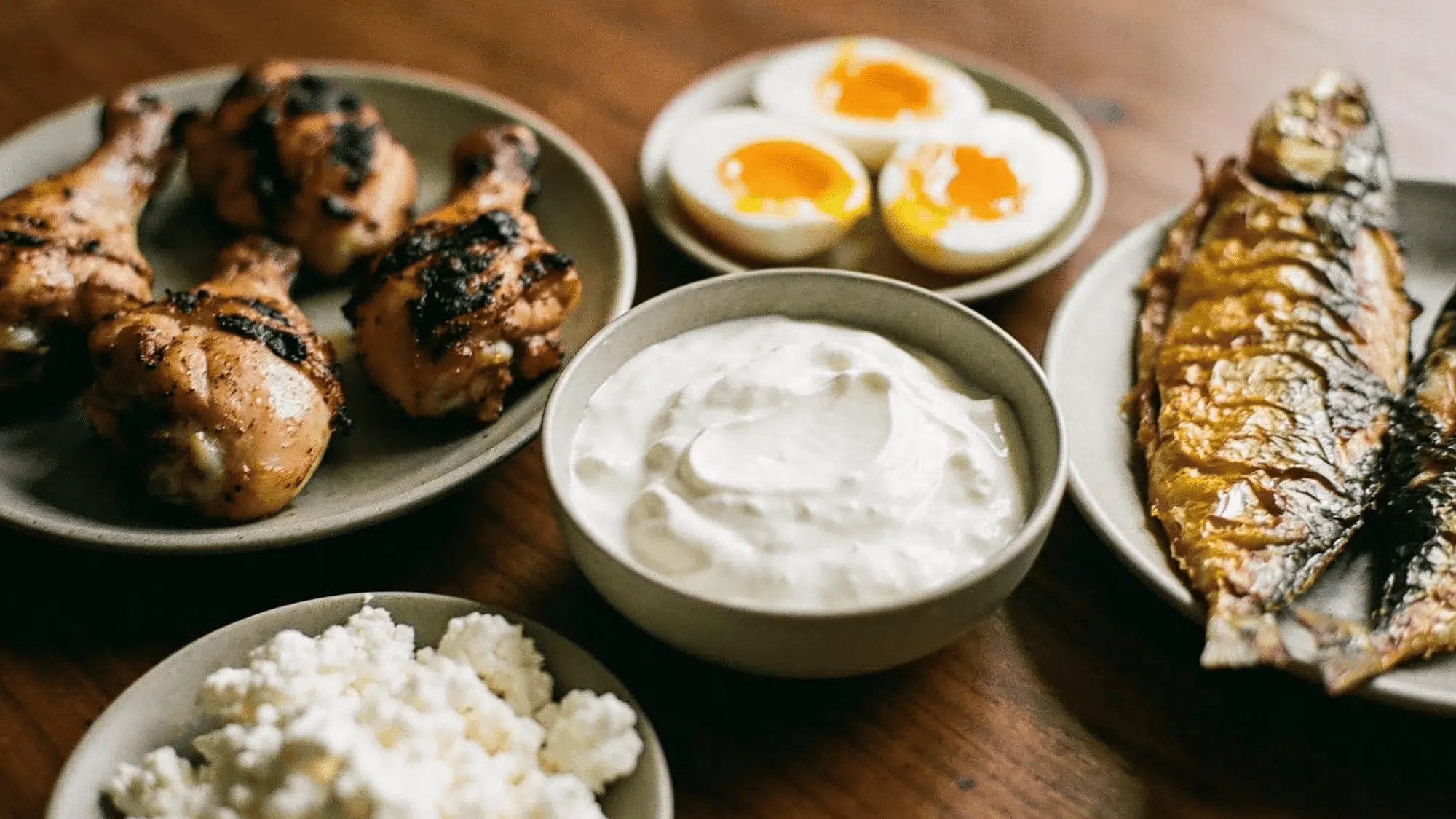
Every time you run, tiny tears form in your muscle fibers. Protein repairs those tears and builds your muscles back stronger.
How much protein:
- Minimum: 1.2g per kg of body weight
- Ideal range: 1.5-1.7g per kg
- With strength training: Up to 2.0g per kg
Best protein sources:
| Animal-Based | Plant-Based |
|---|---|
| Chicken, fish, eggs | Black beans, lentils, tofu |
| Greek yogurt, cottage cheese | Edamame, peanut butter, nuts |
Pro tip: Spread protein throughout the day, 15-40g at meals and 5-15g in snacks.
3. Healthy Fats: Sustained Energy (20-35% of intake)
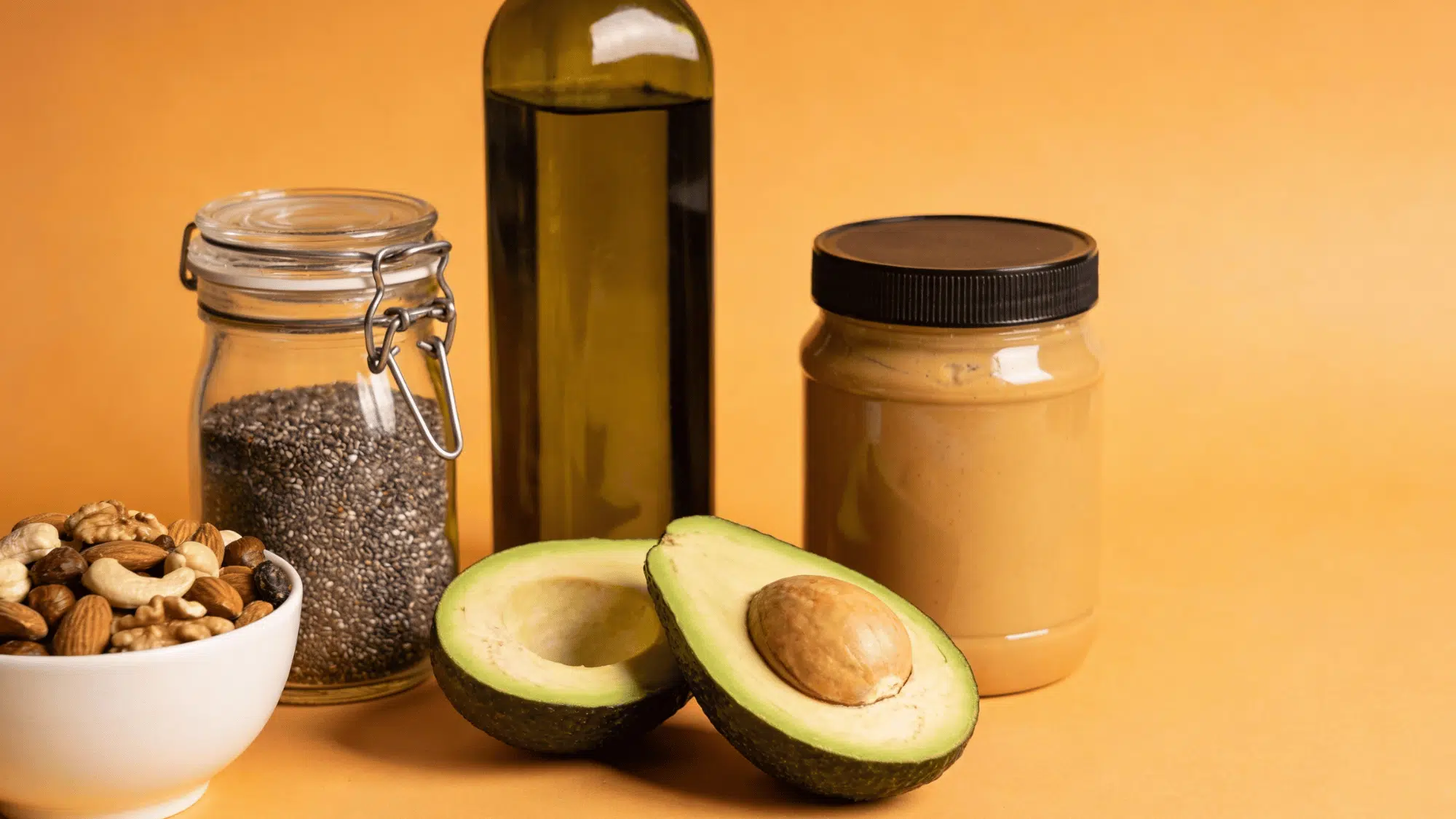
Fats are a key part of a runner’s diet plan because they give your body steady, long-lasting energy, especially on longer runs.
They also help you absorb essential vitamins (like A, D, E, and K), which support overall health and recovery. Healthy fats can also support hormone balance and may help calm inflammation after tough training days.
Most runners do well with about 1–2 grams of fat per kilogram of body weight per day, which usually lands around 20–35% of total daily calories.
Good choices include avocado, olive oil, nuts, seeds, and fatty fish like salmon. Keep portions balanced so you still have room for enough carbs and protein.
Best sources: Avocados, nuts, seeds, olive oil, peanut butter, fatty fish like salmon, eggs, and full-fat dairy.
When to Eat: Pre-Run, Post-Run, and Daily Nutrition
Knowing what to eat is only half the battle. When you eat matters just as much as what you eat. The right meal at the wrong time can leave you feeling sluggish, crampy, or running to the nearest bathroom mid-workout.
Let’s break down the perfect timing strategy for your runner’s diet plan.
Pre-Run Fuel (1-3 Hours Before)
Eating before a run gives your body the energy it needs to perform. But you can’t just eat anything—the goal is to fuel up without feeling weighed down or causing stomach issues.
The pre-run formula: Eat easily digestible carbs with some protein, and keep fat and fiber low to prevent cramping or stomach discomfort when running since fat and fiber take longer to digest.
Timing matters:
| Time Before Run | What to Eat | Examples |
|---|---|---|
| 2-3 hours before | Full meal with carbs + moderate protein | Oatmeal with banana, toast with peanut butter, and yogurt |
| 1-2 hours before | Light snack with mostly carbs | Banana with a small amount of peanut butter, a small bowl of cereal |
| 30-60 minutes before | Quick, simple carbs only | Graham crackers, dried mango, applesauce, banana |
Best pre-run foods:
- Banana (with or without a thin spread of peanut butter)
- Toast with jam or honey
- Yogurt with a small amount of fruit
- Small portion of oatmeal
- Whole-grain cereal with milk
- Graham crackers
- Dried mango or other dried fruit
- Applesauce
Pro tip: Everyone’s stomach is different. Test these foods during training runs, never on race day. What works for your running buddy might not work for you.
Post-Run Recovery (Within 1 Hour)
The hour after your run is prime time for recovery. Your muscles are like sponges, ready to soak up nutrients. This is when you want to eat a combination of carbs and protein to refuel and rebuild.
The post-run formula: Carbs replenish the glycogen (stored energy) you burned during your run. Protein repairs the muscle damage. Together, they speed up recovery and help you feel better faster.
Why the 1-hour window matters: Your body is most efficient at absorbing nutrients in the first hour after exercise. Miss this window, and you’ll still recover; it just takes longer.
Best post-run recovery foods:
| Food Option | Why It Works |
|---|---|
| Smoothie with fruit, yogurt, and protein powder | Quick to make, easy to digest, perfect carb-protein combo |
| Egg on whole-grain toast | Protein from egg, carbs from toast |
| Turkey or chicken sandwich | Lean protein plus carbs from bread |
| Chicken with rice | Classic recovery meal with great balance |
| Greek yogurt with banana and granola | High protein, natural sugars, easy to eat |
| Chocolate milk | Surprisingly perfect 3:1 carb-to-protein ratio |
Not hungry after a run? That’s normal, especially after hard workouts. Try a smoothie or chocolate milk; liquid calories go down easier when you’re not feeling hungry.
Your Day-by-Day Meal Plan for Optimal Running Performance

Ready to put everything into action? This complete 7-day runner’s diet plan takes the guesswork out of what to eat.
Each day is carefully balanced to fuel your training, support recovery, and keep you energized from your first mile to your last.
Day 1
Breakfast: Scrambled eggs with bell pepper, cherry tomatoes, blueberry muffin, and pear
Lunch: Macaroni lentil soup with hard-boiled eggs, cheese, and apple
Dinner: Chickpeas, rice, and salad with brussels sprouts, sliced almonds, and cheese
Snacks:
- Mid-afternoon: String cheese and apple
- Bedtime: Cinnamon yogurt
This day starts strong with a protein-packed breakfast to keep you full. The lunch combines plant and animal protein for complete amino acids, while dinner loads you with carbs and fiber for recovery.
Day 2
Breakfast: Chicken sausage and sweet potato hash with tangerine
Lunch: Cottage cheese, snap peas, large pita with apple, tangerine, and sunflower seeds
Dinner: Orange pork chops with rice, parsnips, and carrots
Snacks:
- Pre-run: Dried mango
- Bedtime: Yogurt and sliced apple
Sweet potatoes provide complex carbs to fuel your morning, while the cottage cheese at lunch delivers quick protein. The dried mango before your run gives you fast-digesting carbs without weighing you down.
Day 3
Breakfast: Smashed green pea toast with banana
Lunch: Black beans, couscous, and salad with mixed nuts and kiwi
Dinner: Chicken veggie fried rice with cucumber, tomato, and avocado salad
Snacks:
- Mid-afternoon: Banana and Greek yogurt
- Pre-run: Banana oaties
This plant-forward day is packed with fiber and nutrients. The chicken fried rice at dinner combines protein and carbs in one delicious meal. Banana oaties before your run provide sustained energy without stomach upset.
Day 4
Breakfast: Breakfast burrito bowl with scrambled eggs, black beans, and veggies
Lunch: Rice bowl with tomatoes, cucumbers, egg, and apple
Dinner: Potato lentil curry with edamame and bell pepper salad
Snacks:
- Pre-run: Graham crackers
- Evening: Date and cottage cheese cucumber boats
The breakfast burrito bowl is filling and packed with protein. Graham crackers before your run are super gentle on the stomach. The curry dinner provides warming spices that can help reduce inflammation.
Day 5
Breakfast: Strawberry overnight oats and banana
Lunch: Veggie pasta salad
Dinner: Cheesy beef pasta with roasted red beets
Snacks:
- Mid-morning/Second breakfast: Bagel with jam and grapes
- Afternoon: Yogurt and sunflower seeds
Overnight oats are perfect for busy mornings. Make them the night before! The extra mid-morning snack helps fuel a longer training day. Beets at dinner contain nitrates that may improve running performance.
Day 6
Breakfast: Egg muffin breakfast
Lunch: White bean pasta salad with yogurt and pear
Dinner: Roast potato salad with sunflower Dijon and macaroni salad
Snacks:
- Pre-run: Cheerios with tangerine
- Evening: Cherry tomatoes and cottage cheese
Egg muffins can be made ahead and grabbed on the go. White beans provide plant-based protein and fiber. The double-salad dinner is carb-heavy and perfect before a long run the next day.
Day 7
Breakfast: Turmeric oatmeal
Lunch: Miso beet rice
Dinner: Greek yogurt and zucchini pasta with garlicky Greek lemon baby potatoes
Snacks:
- Pre-run: Applesauce
- Evening: Your choice!
Turmeric has anti-inflammatory properties perfect for recovery. Miso adds probiotics for gut health. The zucchini pasta dinner is lighter but still carb-focused.
Choose your own evening snack based on what you’re craving!
What Runners Should Limit or Avoid
Eating the right foods helps you run strong, but eating the wrong foods, especially at the wrong time, can ruin a run fast. These foods don’t need to be banned forever, but they’re best limited or avoided around training.
| What to Limit/Avoid | Why It Can Be a Problem | Better Choice (Pre-Run) |
|---|---|---|
| High-fiber foods (beans, big salads, broccoli) | Gas, cramps, bathroom urgency | Banana, oatmeal, applesauce |
| Fried/fatty meals (pizza, burgers, heavy sauces) | Slow digestion, heavy stomach | Toast with jam, rice, and a small cereal bowl |
| Sugary junk (candy, donuts, soda) | Energy spike + crash, upset stomach | Dried fruit, graham crackers |
| New/unfamiliar foods | Higher risk of GI issues | Stick to “safe”, tested foods |
| Too much caffeine | Jitters, stomach upset | Small coffee/tea + water |
| Alcohol | Dehydration, poor recovery, and bad sleep | Water + electrolytes (if needed) |
Final Thoughts
Getting your nutrition right isn’t just about eating healthy; it’s about eating smart for your specific running goals.
With the right balance of carbs, protein, and fats at the correct times, you’ll notice the difference in your energy levels, recovery speed, and overall performance.
This 7-day runner’s diet plan gives you everything you need to start fueling like a pro. Remember, every runner is different, so feel free to adjust portions and swap foods based on what works for your body.
Ready to take your running to the next level? Start with Day 1 tomorrow and see how proper nutrition transforms your training. Your personal best is waiting!
Follow this meal plan and start eating like the runner you want to become.