

Have you ever been to a baseball game and felt like you were the only one who didn’t get all the baseball terms? Yeah, that happens all the time, especially when you’re just a beginner.
Baseball has its own language, and sometimes the words can be a bit confusing when you first hear them.
So, I’d make things easier with this simple list of common baseball terms and their meanings.
You know, you’ll pick up on these words all over the place, on TV, when you’re at a baseball game, or just talking with a player, coach, or even a fan.
I’ve spent years turning complex sports moments into simple explanations that anyone can understand.
That’s exactly what I’m doing here. Read the list, learn a few terms, and spot them in your next game. Baseball will feel less confusing and more fun.
Why Learning Baseball Terms Is Important?
Learning baseball terms is important because it really helps you understand the game. If you’re just getting into baseball, understanding the language really makes the game a lot more enjoyable.
When you understand the language, you won’t feel lost trying to keep up with what’s going on.
You’ll finally get why the announcers are saying what they’re saying on TV, and why fans just go wild after some plays.
Knowing baseball terms also makes it easier to chat about the game with friends, players, or coaches without any awkwardness.
When you first hear baseball talk, it might sound a bit confusing, and that’s completely normal.
Once you get a handle on some of the basic baseball terms, it all starts to make sense. This simple baseball guide helps kids, parents, and beginners learn fast.
Baseball Terms for Pitching

Like batting, pitching has its own set of baseball terms. These words really help explain what a pitcher gets up to in a game, you know, like all the different moves they make, their actions, and the stats that go along with it.
1. Ace: the best pitcher on the team, is the one everyone trusts the most.
2. Bullpen: is the area where backup pitchers wait and prepare to play.
3. Changeup: a slower pitch that appears fast at first and deceives the batter.
4. Curveball: a pitch that bends as it approaches the batter.
5. Fastball: is a very fast pitch thrown straight at the batter.
6. No-hitter: is a game in which the opposing team does not get a single hit.
7. Pickoff: When the pitcher throws the ball to a base to catch a runner off guard.
8. Reliever: a pitcher who comes in after the starting pitcher leaves the game.
9. Slider: a pitch that moves sideways as it nears the batter.
10. Walk: when a batter reaches first base because the pitcher throws four bad pitches.
11.Breaking ball: any pitch that curves or moves instead of going straight.
12. Heat: another term for a fastball.
Baseball Terms for Batting

Let’s understand by checking out some everyday baseball terms we use for batting. These words help people chat about a player’s stats, what’s going on in the game, or what a batter does when trying to get a hit.
13. Ahead in the count: When the batter has more balls than strikes or the pitcher has more strikes than balls, meaning one of them is winning in the at-bat.
14.Barrel it up: Hitting the ball hard with the best part of the bat.
15. Base hit: A hit that allows the batter to safely reach a base without anyone making an error.
16. Base knock: Another way to say a single hit.
17.Bat around: When every player on the team gets a turn to bat in one inning.
18.Bat flip: When a batter throws or flips their bat in the air to celebrate after hitting a home run.
19.Behind in the count: When the batter has more strikes than balls or when the pitcher has more balls than strikes.
20.Big fly: Another way to say a home run.
21.Bleeder: A softly hit ground ball that ends up as a base hit.
22.Blistered: A ball hit really hard.
23. Blooper: A weakly hit ball that lands safely, often between the infield and outfield. It’s also called a “bloop single.”
24. Bomb: A home run, usually hit very far.
25. Bunt: When the batter taps the ball lightly with the bat instead of swinging hard, usually to move a runner forward.
26. Caught looking: When the batter gets called out on the third strike without swinging at the ball.
27.Checked swing: When the batter stops their swing before the bat goes all the way across the plate.
Baseball Terms for Fielding
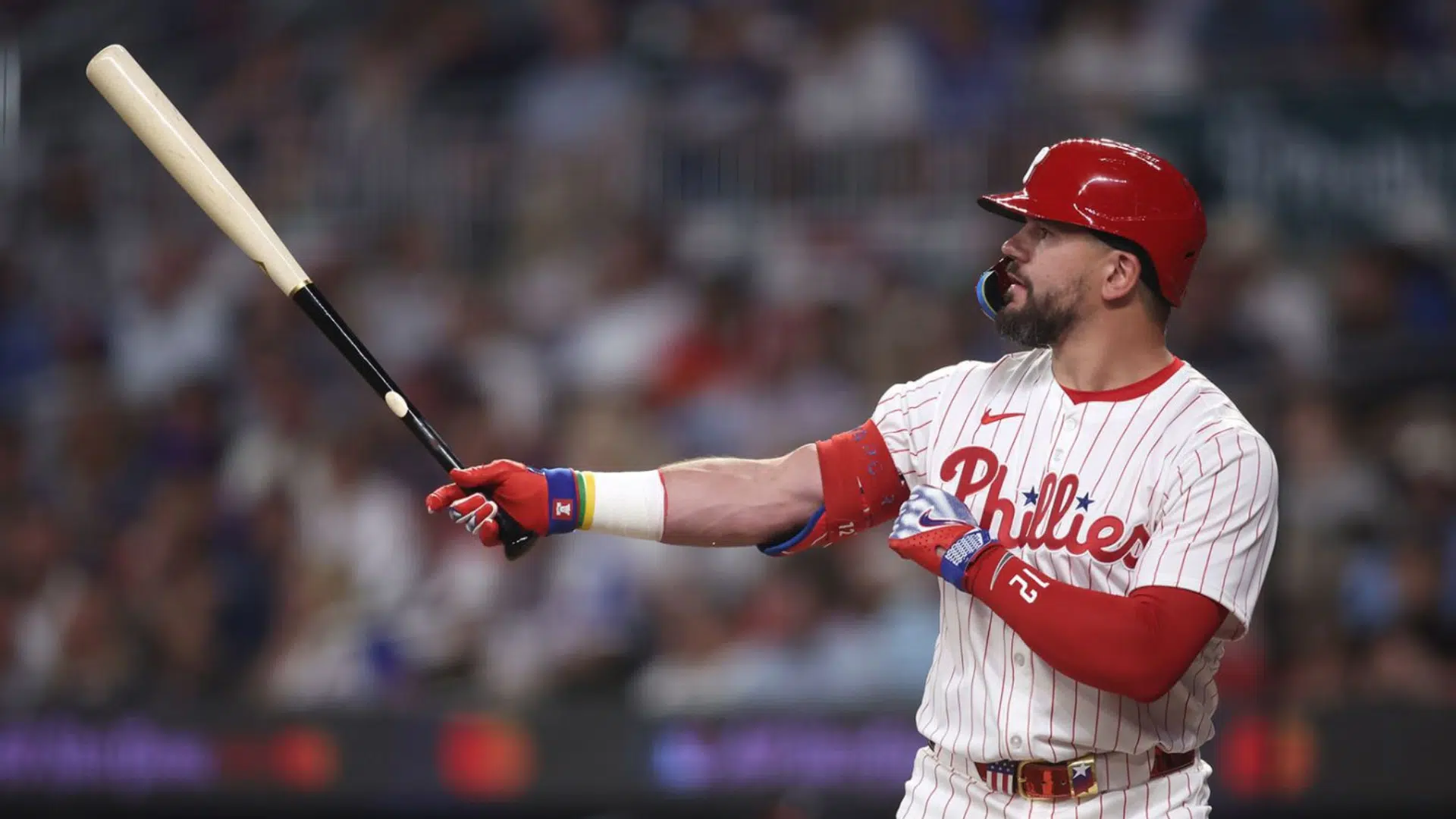
Baseball fielding terms keep changing over time. Sometimes when you first hear these words, they might sound a bit confusing.
28.Catch: When a player grabs the ball out of the air before it hits the ground.
29.Throw: When a player sends the ball to another player, usually to get an out.
30. Ground ball: A ball hit that rolls along the ground.
31. Fly ball: A ball hit into the air that an outfielder or infielder tries to catch.
32. Tag: When a fielder touches a base or player with the ball to get an out.
33.Double play: A defensive play that gets two outs in one action.
34.Triple play: A rare defensive play that gets three outs in one action.
35.Assist: When a player throws the ball to another player to help get an out.
36. Error: A mistake made by a fielder when they fail to make a play they should have.
37. Fielder’s Choice: When a fielder chooses to throw to a base to get a runner out instead of the batter.
Baseball Terms for Running
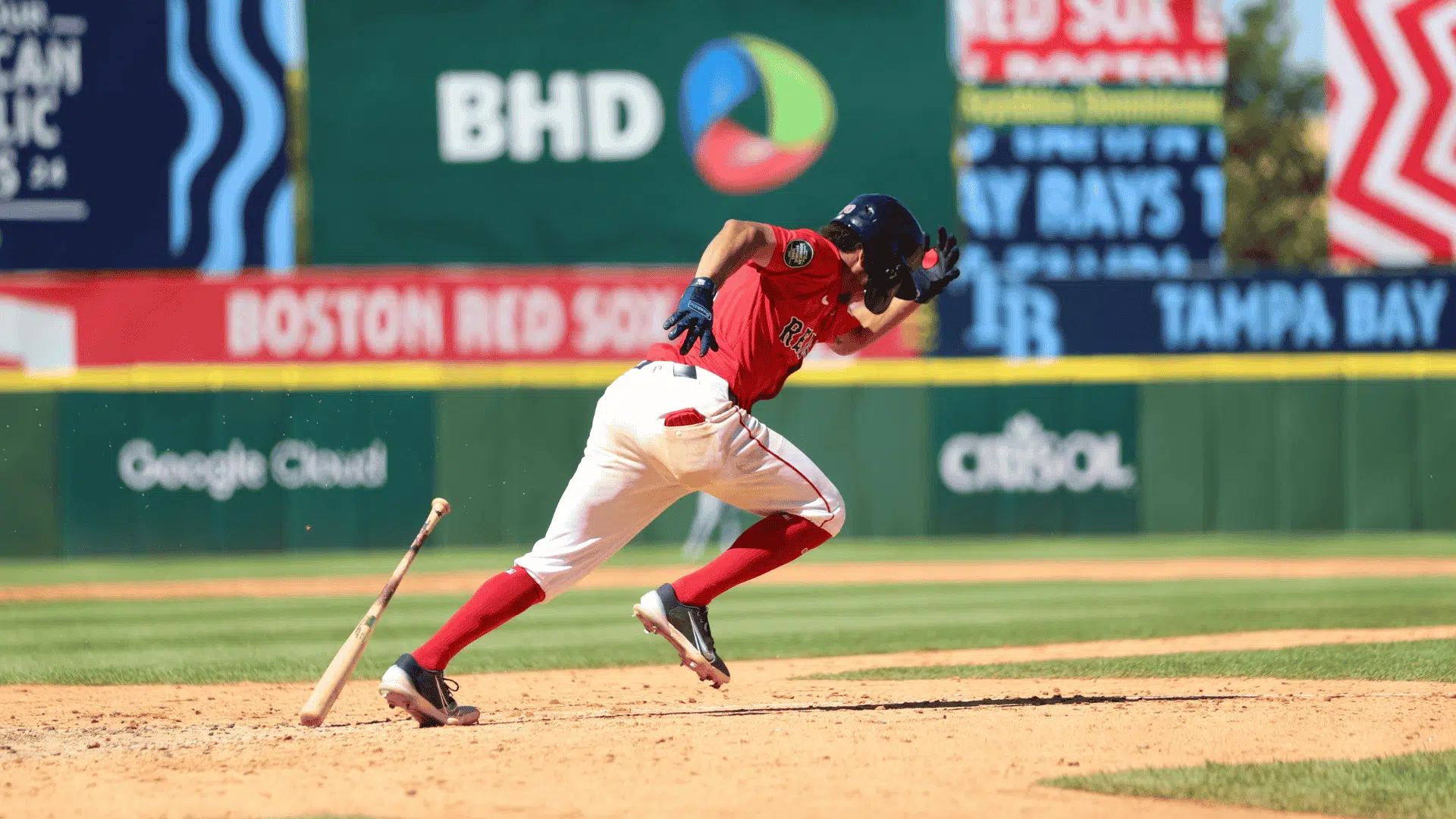
When we talk about base running, we use these words to describe what happened earlier or what’s happening now. It depends on the situation and sometimes the numbers, too.
38. Base hit: This happens when the batter hits the ball and reaches first base safely without an error.
39. Lead-off: This refers to the small distance a base runner takes before the pitcher throws the ball.
40. Steal: This is when a runner attempts to take the next base while the pitcher throws the ball.
41. Stolen base: This occurs when a runner successfully reaches the next base while the pitcher is distracted.
42.Tag up: This happens when a runner waits for the ball to be caught before trying to run to the next base.
43. Sliding: This describes when a runner slides into a base to avoid being tagged out, often using their hands or feet to reach the base safely.
44. Score: This occurs when a runner crosses home plate and scores a run for their team.
45.Double: This happens when a batter hits the ball and reaches second base safely.
46. Triple: This occurs when a batter hits the ball and reaches third base safely.
47. Home Run: This happens when a batter hits the ball out of the park, automatically scoring a run.
Baseball Terms for Field

The field has many simple terms that players and fans use every day. These words help explain what is happening during the game.
48. Backstop: The fence or wall behind home plate keeps wild pitches and foul balls from hitting spectators.
49.Bag: Another word for a base. A two-bagger is a double, which means hitting the ball and reaching second base. A three-bagger is a triple, or reaching third base.
50.Batter’s Box: A rectangular area next to home plate where the batter stands while hitting.
51. Batter’s Eye: A dark area beyond the center field wall where the batter focuses while waiting for a pitch from the pitcher.
52. Bullpen: A special area where pitchers warm up before it’s their turn to pitch in the game.
53.Bump: Another word for the pitcher’s mound, where the pitcher stands to throw the ball.
54.Short Porch: A part of the outfield where the fence is very close. It’s easier to hit a home run there. For example, “Left field is a short porch!”
55. Warning Track: The dirt path near the outfield fence helps players know how close they are to the fence while running.
56.Yard: A baseball field.
Other Baseball Terms

These are common baseball words you will often hear during games, on TV, or from players. They help fans better understand what is happening on the field.
57. Big leagues: Another name for Major League Baseball (MLB).
58. Bigs: A short way to say the Major Leagues. Example: “He made it to the bigs.”
59. Blue: A word players use to talk to an umpire because umpires often wear dark blue uniforms.
60. Bonus baseball: When the game goes beyond 9 innings due to a tie. This is also called extra innings.
61.Bottom of the inning: The second half of an inning, when the home team gets to bat.
62. Bush league: When someone plays in a rude, sloppy, or unfair way that doesn’t seem professional.
63.Extra innings: Extra innings are played when the score is tied after the regular 9 innings, allowing teams to find a winner. Some people also call these “extra frames.”
64.Frame: Half of an inning (either the top half or bottom half).
65. Inning: An inning has two halves. Each team gets a turn to bat. A team keeps batting until it gets three outs.
66.Out: An out is called when a batter or runner is declared out. After three outs, the team’s turn to bat ends. Outs can occur by strikeout, flyout, tag, or force out.
67.Position player: Any player on the field who is not the pitcher.
68.Seventh-inning stretch: A break between the two halves of the 7th inning when fans stand up, stretch, and usually sing “Take Me Out to the Ball Game.”
How to Remember the Baseball Terms Easily?
The easiest way to remember baseball terms is to connect each word to what happens on the field. When you hear a term like strikeout or double play, picture the action in your mind.
Watching games regularly also helps. The more you hear the words, the more natural they feel.
Try learning 5 to 10 terms at a time instead of memorizing everything at once. You can also write them down and test yourself later.
Talking about the game with friends is another simple trick.
When you use the terms in real conversations, they stick better. Focus on understanding, not memorizing.
If you know what is happening in the play, the term becomes easier to remember. Keep it simple, review often, and learn step by step.
Conclusion
Now that you know these common baseball terms, the game probably feels a lot less confusing and a lot more exciting.
Instead of feeling lost when the announcer mentions a double play or a full count, you can actually follow along and enjoy every pitch, swing, and out.
Baseball becomes even more fun when you understand the language behind it.
If you’re watching from the stands, cheering from your couch, or talking with friends, these terms help you feel like part of the action. Keep this guide handy, revisit it anytime, and keep learning as you watch.
The more you hear these words, the more natural they’ll sound.
Now tell me, what baseball term confused you the most at first? Share your experience in the comments below!