

I have followed Chris Bumstead’s training for a long time, and I know how confusing it can feel when you try to copy a pro workout. You might wonder what exercises he uses, how often he trains, and how it all fits together.
In this article, I will break down the Chris Bumstead’s workout routine step by step, in a way that is easy to follow and realistic.
I will walk you through his training split, main exercises, and the structure of each workout day. You will also learn how to adjust the routine to match your own strength level and recovery.
If you want a clear plan without hype or fluff, this guide is for you. Read on, follow the steps, and build a routine that delivers real results.
About CBum
Chris Bumstead, often called CBum, is a professional bodybuilder and a top name in the Classic Physique division. He is known for his balanced build, clean posing, and strict training style.
Over the years, he has won multiple Mr. Olympia Classic Physique titles, which made him a role model for many lifters.
CBum focuses on form, control, and steady progress rather than lifting heavy just for numbers. His workouts are structured, repeatable, and built around basic movements.
Outside the gym, he openly shares his training, diet, and mindset, helping people understand how a pro really trains. This honest approach is a big reason why so many people follow his fitness journey.
Here is the information organized in a clean table format:
| Detail | Information |
|---|---|
| Full Name | Chris Bumstead |
| Weight | 215–220 lbs |
| Height | 6’1″ |
| Date of Birth | February 2, 1995 |
| Profession | Bodybuilder |
| Era | 2010s, 2020s |
| Nationality | Canadian |
About CBum Diet

CBum focuses on eating clean and tracking his nutrition in MyFitnessPal to stay consistent.
During the off-season, he consumes around 5,000 calories per day to support muscle growth, strength, and recovery from intense training.
As he approaches the competitive season, he gradually cuts his calorie intake by about half to lean out while preserving muscle mass.
This slow, controlled change helps him maintain his energy and performance. Below is a detailed breakdown of Chris Bumstead’s full day of eating, showing how he spaces meals and balances nutrients throughout the day:
Breakfast – Meal 1
CBum prefers a simple breakfast and dislikes eggs, so he sticks to a shake.
- 2 Bananas
- 2 Scoops of Protein Powder
- Sun Fiber
- Ezekiel Toast with Almond Butter
For Breakfast, he consumed about 827 calories, including 80g of protein, 87g of carbs, and 20g of fat.
Lunch – Meals 2 & 3
- 300g of Potatoes
- 225g of Bison
- 220g of Chicken
- 250g of White Rice
- 15g of Olive Oil
For Lunch, he consumed about 1335 calories, including 128g of protein, 123g of carbs, and 30g of fat.
Meal 4
- 6-8 oz. of Ground Beef
- 150g of Carbs
- Marinara Sauce
- Glucose (GDA)
For Meal 4, he consumed about 1150 calories, including 60g of protein, 172g of carbs, and 28g of fat.
Dinner – Meal 5
- 6-8 oz. Ground Turkey
- Jasmine Rice
- 15g of Olive Oil
For Dinner, he consumed about 795 calories, including 54g of protein, 70g of carbs, and 33g of fat.
Before Bed – Meal 6
- 1 Scoop of Protein Powder
- 80g Oatmeal
- Almond Butter
- Revive Glutamine (added to the protein shake)
For Meal 6, he consumed about 520 calories, including 37g of protein, 57g of carbs, and 17g of fat.
CBum Workout Plan
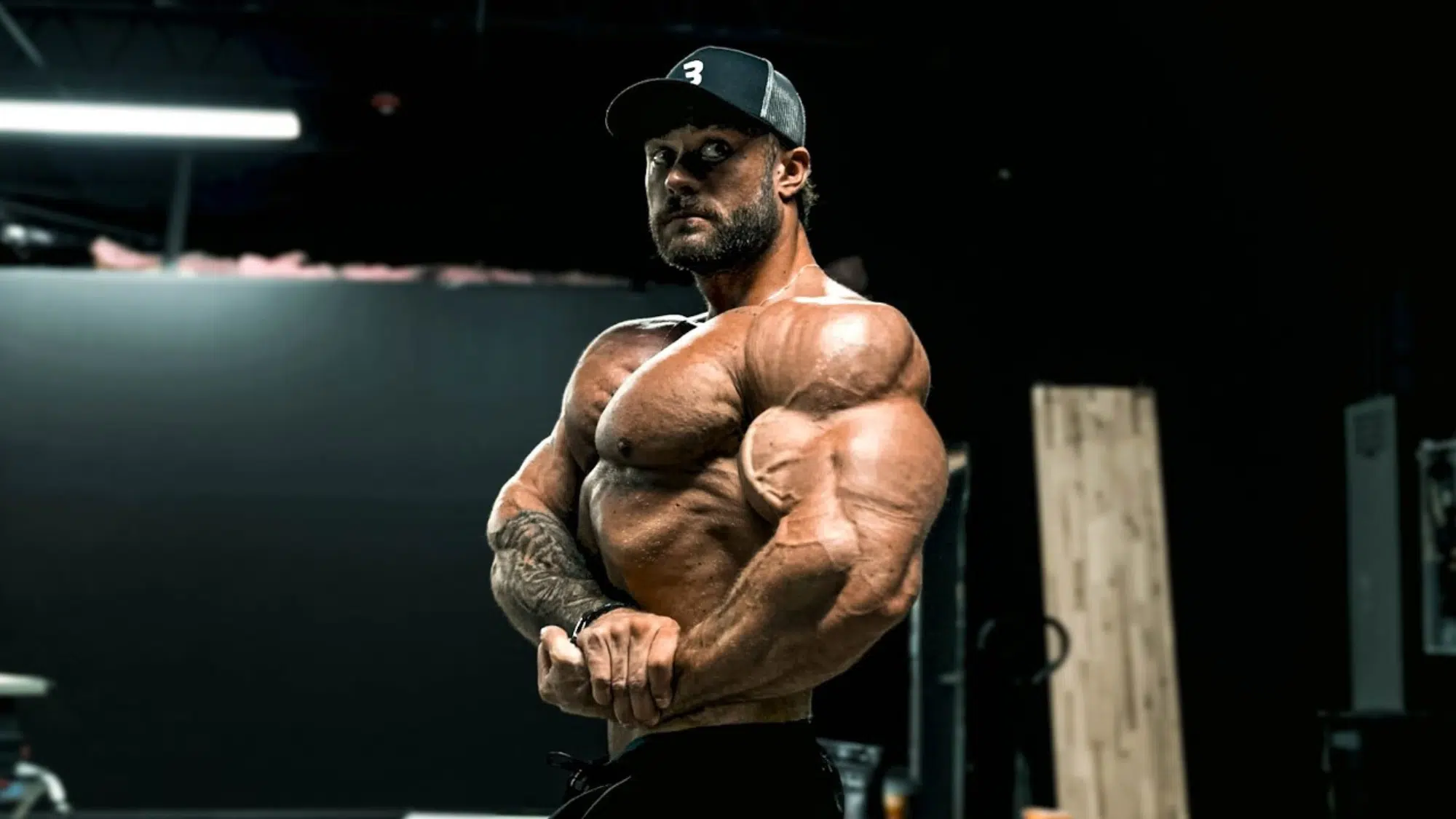
Here’s a clear and easy breakdown of a CBum-style workout plan, inspired by how Chris Bumstead trains. He follows an 8-day training plan that involves consecutive, intensive 3-day training sessions, followed by one day of rest. This is simplified so it works for regular lifters too.
- Day 1 – Calves & Quads (Legs)
- Day 2 – Chest & Triceps
- Day 3 – Back & Biceps
- Day 4 – Rest Day
- Day 5 – Shoulders & Chest
- Day 6 – Hamstrings & Back
- Day 7 – Arms
- Day 8 – Rest Day
Day 1 – Calves & Quads (Legs)
This training day focuses on building strength and size in the calves and quads. These muscle groups play a significant role in lower-body power, balance, and overall leg shape.
By dedicating an entire session to them, the workout allows for better focus and higher effort on each movement. This also helps improve muscle control and reduces the chance of rushing through sets.
The exercises listed below are selected to work the quads and calves from different angles and through a full range of motion. When done with proper form and controlled tempo, they support steady muscle growth and better definition.
This focused approach makes the session effective without being overly complicated.
| Exercise | Sets | Reps |
|---|---|---|
| Leg Extensions (Drop Sets) | 2 | 20 |
| Smith Machine Squats | 2 | 6–10 |
| Unilateral Leg Presses | 3 | 8–10 |
| Sissy Squats | 3 | 12–15 |
| Seated Calf Raises | 3 | 10–12 |
Day 2 – Chest & Triceps
This training day focuses on building strength and muscle in the chest and triceps. These two muscle groups work closely together during pressing movements, which makes pairing them in one session very effective.
Focusing on them in the same workout allows for better muscle activation and more controlled training volume.
The exercises listed below are chosen to target the chest from different angles while also placing steady tension on the triceps.
When performed with proper form and rest periods, this session supports muscle growth, improved pressing strength, and better upper-body balance without unnecessary complexity.
| Exercise | Sets | Reps |
|---|---|---|
| Incline Dumbbell Presses | 2 | 8–10 |
| Incline Dumbbell Flys | 2 | 8–10 |
| Hammer Strength Machine Incline Presses | 2 | 6–10 (Drop Sets) |
| Pec Decks Flyes | 3 | 15 |
| EZ Bar Skull Crushers | 2 | 8–10 |
| Pushups | 2 | Failure |
Day 3 – Back & Biceps
This training day focuses on developing strength and size in the back and biceps. These muscle groups naturally work together during pulling movements, which makes training them in the same session both efficient and effective.
A dedicated back and biceps day allows you to focus on proper form, full range of motion, and intense muscle contractions throughout each exercise.
The exercises listed below are selected to target the back from multiple angles while also placing consistent tension on the biceps.
This approach supports balanced muscle growth, improved pulling strength, and better upper-body posture when performed with controlled movements and proper rest.
| Exercise | Sets | RepsClose-Grip |
|---|---|---|
| p Underhand Lat Pulldowns | 3 | 10–12 |
| Chest-Supported Dumbbell Rows | 2 | 8–10 |
| Chest-Supported T-Bar Rows (Drop Set) | 2 | 8–10 |
| Machine Chest Supported Rows | 2 | 10–12 |
| Cable Lat Extensions | 2 | 10–12 |
| Machine Preacher Curls | 2 | 10–12 |
Day 4 – Rest Day
Chris Bumstead takes rest days because recovery is a critical part of muscle growth and long-term progress. Intense training places a lot of stress on the muscles, joints, and nervous system.
Rest days give the body time to repair muscle fibers, which is when growth actually happens.
In structured routines like his 3-day-on, 1-day-off split, rest days are planned so the body stays strong, balanced, and ready for heavy training sessions.
Day 5 – Shoulders & Chest
This training day emphasizes strengthening shoulders and chest, which work together during many upper-body pressing exercises, making it efficient to train both simultaneously.
A dedicated session like this helps improve muscle coordination and allows you to place more effort into each lift.
The exercises listed below are chosen to target the shoulders and chest from different angles, helping improve overall balance and upper-body shape.
When performed with proper form and steady pacing, this workout supports muscle growth, better pressing strength, and long-term joint stability.
| Exercise | Sets | Reps |
|---|---|---|
| Seated Dumbbell Shoulder Presses | 2 | 6–10 |
| Machine Shoulder Presses (Drop Sets) | 3 | 6–10 |
| Seated Dumbbell Lateral Raises (Drop Sets) | 2 | 8–10 |
| Machine Lateral Raises | 2 | 10–12 |
| Superset: Reverse Pec Decks & Machine Flyes | 2 | 10–12 |
Day 6 – Hamstrings & Back
This training day focuses on strengthening the hamstrings and back, two muscle groups that play a significant role in overall strength and posture.
Both areas are heavily involved in pulling and hinge movements, making pairing them in a single session a practical choice.
Focusing on these muscles together allows for better control, stronger contractions, and more efficient training.
The exercises listed below are selected to work the hamstrings and back through controlled movements and proper range of motion.
This approach supports muscle growth, improves stability, and helps build a solid foundation for heavier lifts while reducing the risk of poor form or imbalance.
| Exercise | Sets | Reps |
|---|---|---|
| Lying Leg Curls | 2 | 8–10 |
| Deadlifts | 2 | 4–8 |
| Seated Leg Curls | 2 | 8–10 |
| Standing Leg Curls | 2 | 8–10 |
| Wide Grip Lat Pulldowns | 3 | 8–10 |
| Cable Lat Extension | 2 | 10–12 |
Day 7 – Arms
This training day is mainly focused on building size and strength in the arms, with attention given to both the biceps and triceps.
Dedicating an entire session to arms lets you slow each movement and focus more on muscle engagement, rather than rushing through sets. This helps improve control and overall arm development.
The exercises listed below are chosen to target the arms from different angles and through a full range of motion.
When performed with proper form and steady rest periods, this session supports muscle growth, better definition, and improved strength for other upper-body lifts.
| Exercise | Sets | Reps |
| Rope Cable Triceps Pressdowns (Drop Sets) | 2 | 8-10 |
| Incline Dumbbell Skull Crushers | 2 | 8-10 |
| EZ Bar Preacher Curls (Drop Sets) | 3 | 8-10 |
| Dumbbell Curls | 2 | 10-12 |
| Cable Cross Body Triceps | 2 | 10-15 |
| Low Pulley Cable Curl With V-Bar Handles (Drop Sets) | 2 | 10-12 |
Day 8 – Rest Day
Another reason for rest days is injury prevention. Training hard every day without enough recovery can lead to fatigue, poor form, and overuse issues.
By stepping away from the gym, Bumstead allows his joints and connective tissues to recover, helping him stay consistent over the long run.
Rest days also help maintain performance. Proper recovery restores energy levels, improves focus, and allows him to train at high intensity when he returns.
Off-Season Training
Chris Bumstead’s training plan is not locked into rigid rules or a fixed exercise list. While the core structure stays the same, individual movements can change based on recovery, goals, or how his body feels on a given day.
This flexibility allows him to train hard while still adjusting when needed. What does stay consistent, though, is his overall schedule.
Bumstead follows an 8-day workout split built around a 3-day-on, 1-day-off pattern, which helps balance intensity with proper recovery.
In this routine, most muscle groups are trained once per cycle, with one clear exception. His back receives extra attention and is trained twice during the split.
This approach is common in bodybuilding, especially for athletes who want to build width and thickness through multiple angles and movements.
Workout Tips From Chris Bumstead
Chris Bumstead’s workout tips emphasize precision, mind-muscle focus, and consistent progression, helping you build strength, muscle growth, and overall performance with smart training strategies.
- Controlled Eccentrics: Focus on the slow lowering phase (negative) of each lift to promote muscle growth.
- Mind-Muscle Connection: Rather than just moving weight, focus on feeling the specific muscle group contracting and stretching.
- Supersets & Volume: Incorporate 3-4 sets of 10-12 reps per exercise, often using supersets to increase intensity.
- Prioritize Compound Movements: Build a foundation with heavy compound lifts such as squats, deadlifts, and incline dumbbell presses before moving on to isolation exercises.
- Back Training (Pulling): Pull elbows “backward and up” in an arched motion for back exercises to maximize lat engagement.
- Training to Failure: Periodically train to failure on sets to stimulate muscle growth.
- Progression: Use double progression, increase reps within a set range before increasing the weight.
Warpping Up
Following Chris Bumstead’s workout routine takes dedication and consistency, but the results can be truly rewarding.
By sticking to his 8-day split, focusing on controlled movements, and prioritizing recovery, you’ll start to see improvements in strength and muscle growth over time.
Remember, it’s not just about lifting heavy; it’s about form, control, and steady progress. Don’t forget the importance of nutrition, rest, and recovery in your journey.
Stick to the plan, trust the process, and you’ll see the physical changes you’re aiming for.
If you’re ready to level up your training, start incorporating these tips and routines into your own workout. Stay disciplined, and let’s get stronger together!