

You’re playing volleyball when suddenly the ball drops right near your feet. Your hands can’t reach it in time, so you instinctively kick it up. Then you stand there thinking, “Wait, am I allowed to do that?”
Most people think volleyball is only about using your hands, so it’s easy to assume other body parts are not allowed.
This often leads to confusion about what moves are actually permitted, especially when the ball comes in low or fast.
I’ve covered countless rule changes and tricky game situations across different leagues. Many people ask if you can kick the ball in volleyball, and the answer surprises them.
In this blog, I’ll explain the rules on using your feet in volleyball and when it’s allowed during a game.
Volleyball rules allow different parts of the body to keep the ball in play.
Can You Kick the Ball in Volleyball?
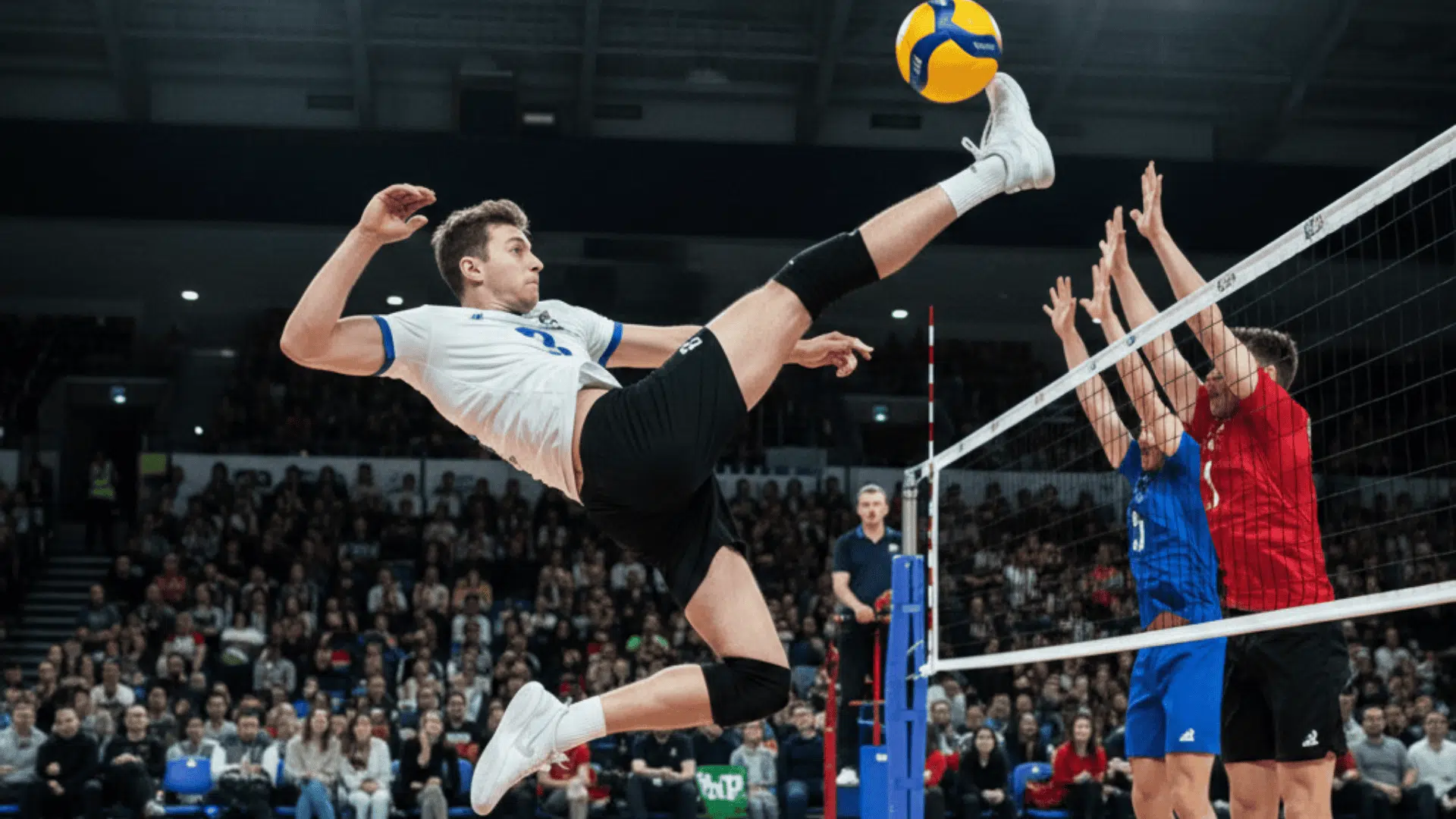
Many players believe volleyball only allows contact with the hands, but the rules are more flexible. Under current rules, the ball can touch any part of the body, including the feet, legs, knees, chest, or head.
A kick is legal as long as the contact is clean and the ball is not caught, lifted, or thrown.
Kicks usually happen during quick saves, low balls, or sudden deflections near the floor. While not common, they still count as a normal team contact.
This was not always the case. When volleyball was created in 1895, the focus was mainly on hand and arm contact.
For years, foot contact was unclear or often ruled a fault. As the sport became faster, players needed more freedom to react.
In the 1990s, FIVB updated the rule to allow contact with any body part. This change improved flow and kept rallies alive.
What Counts as a Legal Kick in Volleyball?
A kick can be used in volleyball if it follows normal contact rules. I once tapped the ball with my foot in my school game, and the rally continued without any fault.
- Clean contact: The ball must rebound off the foot in one quick motion. It cannot be caught, held, or guided in any way.
- Single hit only: A kick counts as one contact. The same player cannot touch the ball again with another part of their body immediately afterward.
- No lifting or scooping: The foot cannot slide under the ball to lift it upward. This would be called a lift or carry.
- Natural motion: The kick should be a quick reaction, not a controlled trapping motion like in soccer.
- Follows normal play rules: All standard rules still apply, including team contacts and net violations.
Legal vs Illegal Kicks in Volleyball: Quick Reference
Referees judge foot contact the same way they judge any other hit. The key details are control, motion, and how the ball leaves the foot.
| Situation | Legal or Illegal | Why It Counts |
| Quick rebound off the foot | Legal | The ball is hit cleanly without being held |
| Emergency kick to save a low ball | Legal | Counts as a normal contact |
| The ball rolls or stays on the foot | Illegal | Considered a lift or carry |
| Trapping the ball like soccer | Illegal | The contact is controlled, not a hit |
| Kicking the ball over the net cleanly | Legal | Anybody’s body part may send the ball over |
| The foot slides under the ball to lift it | Illegal | Scooping the ball is not allowed |
| Accidental foot contact during play | Legal | Contact type matters, not body part |
| Double contact after a kick | Illegal | One player cannot hit twice in a row |
When to Avoid Kicking the Ball?
Kicking is allowed, but it is not always the best option during play. Certain situations call for more control and better setup choices.
- When You Have Time to Use Your Hands: If you can move into position, a forearm pass gives better control and direction than a kick.
- During Set Plays: Planned attacks need accurate passes, and kicking may disrupt timing between teammates.
- Near the Net: A kick close to the net can cause poor control and increase the risk of a fault.
- When Balance Is Off: Lifting your leg without stability may lead to weak contact or falling out of position.
- In Competitive Matches: At higher levels, clean and controlled touches matter more, so players avoid risky kicks unless necessary.
Kicking Rules Across Different Levels of Play
You might wonder if kicking the volleyball is allowed everywhere. In most places, the rules are the same. This is what to expect at each level.
1. Professional and International Play
In professional and international volleyball, kicking the ball is fully allowed. This includes major events like the Olympics, World Championships, and other FIVB matches.
The rules allow the ball to touch any part of the body. Players can use their feet, legs, or head as long as the contact is clean.
I remember covering an international match where a defender saved a powerful spike with his foot. The move looked unexpected, but the referee allowed play to continue because the contact was clean.
You do not often see kicking since it is harder to control, yet it is legal and useful in quick, last-second saves.
Key Rules and Regulations
- Three-Touch Limit: A kick counts as one of the team’s three allowed contacts.
- Clean Contact: The ball must rebound immediately and not be lifted, carried, or thrown.
- All Body Parts Legal: Feet, legs, knees, chest, and head are allowed under FIVB rules.
- Indoor and Beach Play: The same rule applies in both formats of professional volleyball.
- Referee Judgment: Officials focus on the quality of contact, not the body part used.
2. College (NCAA) Volleyball
College volleyball in the United States follows NCAA rules, which also allow contact with any part of the body. That means a kick counts as a legal hit if done cleanly.
Players cannot lift, carry, or throw the ball, and double contact rules still apply.
While most players rely on their hands for better control, feet are allowed during sudden saves or awkward plays.
Referees treat foot contact the same as any other legal hit. It may look unusual, but it is accepted during official NCAA matches.
Key Rules and Regulations
- Legal Body Contact: Any body part, including the foot, may contact the ball if done cleanly.
- Three-Hit Rule: A kick counts as one of the team’s three allowed touches.
- No Prolonged Contact: Lifts, carries, or throws are still faults.
- Double Contact Rule: Players cannot make two consecutive contacts unless blocking.
- Referee Evaluation: Officials judge the cleanness of the hit, not how unusual it looks.
3. High School Volleyball
High school volleyball uses NFHS rules, and foot contact is allowed at this level. A player may kick the ball to keep a rally going if the contact is clean.
Officials mainly watch for illegal lifts or throws, not the body part used.
In real games, kicks usually happen by accident or during quick floor saves. Coaches do not train players to kick often, but it is still legal.
As long as the play follows basic contact rules, referees will allow it without penalty.
Key Rules and Regulations
- NFHS Standards: Clean contact with any body part is permitted.
- Fault Monitoring: Referees watch for lifts or prolonged contact.
- Three-Touch Limit: A kick counts as one of the team’s three hits.
- Legal Defensive Saves: Foot contact is allowed during scrambles or quick reactions.
- Same Contact Standards: The body part used does not matter if the hit is legal.
4. Youth and Recreational Leagues
Youth and recreational leagues are where rules can change the most. Many leagues follow standard volleyball rules that allow kicking.
Some local beginner leagues use house rules that limit foot contact to help players focus on basic hand skills.
A friend once told me he used his foot to save a low ball in a beginner league, but the referee called a foul because kicking was not allowed.
He later learned to always check the rules before playing. Because of differences like this, it is smart to ask the coach or review the rule sheet to avoid confusion.
Key Rules and Regulations
- League-Based Variations: Rules may differ depending on organizers.
- Standard Rule Adoption: Many leagues follow national contact guidelines.
- House Rule Limits: Some beginner leagues restrict foot contact.
- Pre-Game Clarification: Coaches or officials may explain special rules before play.
- Rule Sheet Reference: Always review local guidelines to avoid confusion.
Indoor vs Beach Volleyball: Any Difference?
Both versions of volleyball follow the same core contact rules, but whether you can kick the ball in volleyball depends on how the playing surface and game pace affect quick reactions during play.
| Aspect | Indoor Volleyball | Beach Volleyball |
| Foot contact rule | Allowed if the contact is clean | Allowed if the contact is clean |
| Governing rules | FIVB, NCAA, NFHS | FIVB beach rules |
| Common use of kicks | Rare and mostly accidental | Slightly more common due to sand |
| Game surface | Hard indoor court | Soft sand surface |
| Player reaction time | Faster rallies | Slower movement in sand |
| Referee focus | Clean contact and control | Clean contact and control |
| Strategic use | Emergency saves only | Emergency saves and recovery plays |
Conclusion
At the end of the day, knowing you can kick the ball in volleyball gives you confidence in those split-second moments when things go wrong.
It’s not about replacing good hand skills or changing how the game is played.
It’s about having one more option when the ball drops fast, and your hands just can’t get there in time.
A clean kick can save a rally, keep your team on the point, and even shift momentum. Still, it works best as a backup move, not a habit. Hands offer better control, cleaner passes, and smoother setups.
When you understand the rules, you play smarter and react faster. Now it’s your turn.
Have you ever used your foot to save a point, or seen someone else do it? Share your experience in the comments below.