
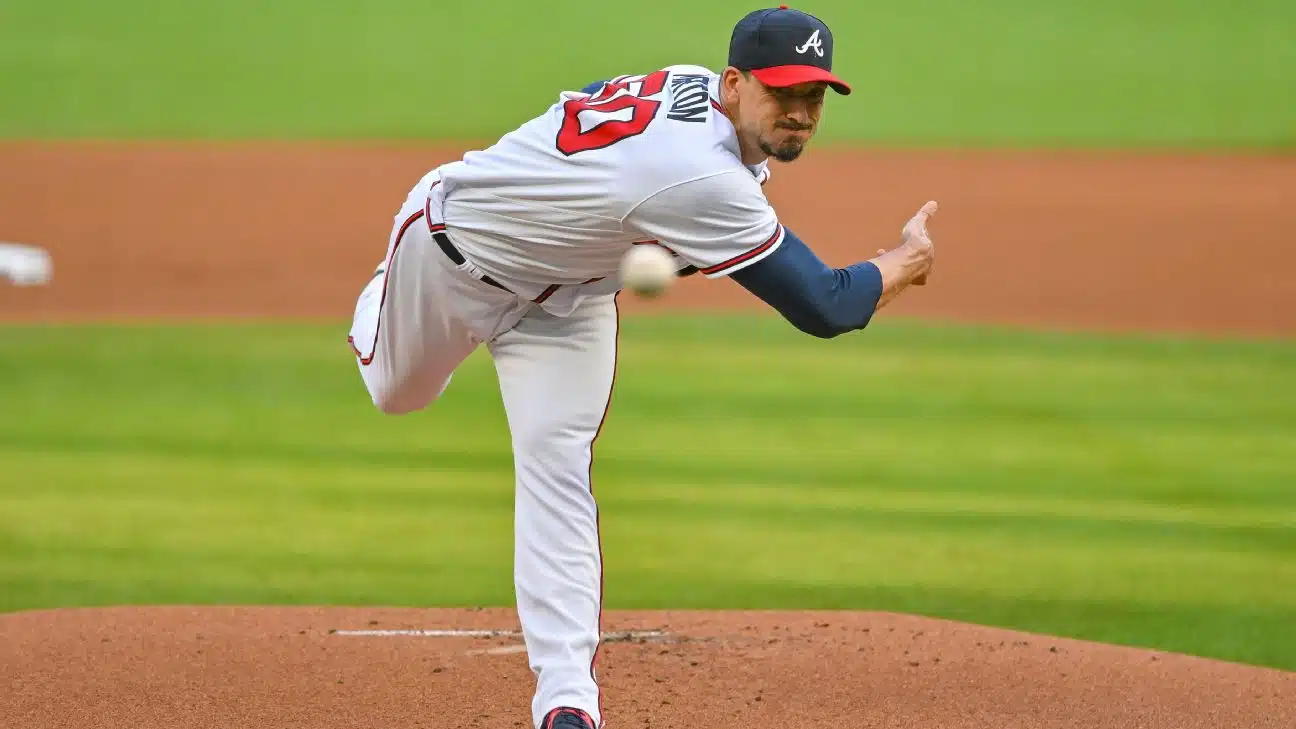
Baseball can get confusing fast, and any big baseball fan will admit it. One pitch comes in blazing at 98 mph, and the next one dips, slides, or suddenly slows down.
If you’ve ever watched a game and thought, “What was that?” you’re definitely not alone. Pitchers don’t throw the same thing every time. They mix different types of pitches to keep hitters guessing.
I’ve covered breaking sports stories and rule changes for years, and I enjoy making the “confusing parts” of the game simple.
This guide breaks down the main pitch types pitchers use so you can recognize them faster and enjoy every at-bat even more.
What Is a Pitch in Baseball?
A pitch in baseball is the action of a pitcher throwing the ball from the mound toward home plate to start a play.
It sounds simple, but anyone who watches the game knows this is where the real battle begins. Every pitch is a chance for the pitcher to outsmart the batter.
This is not just an overhand throw. Pitchers play with velocity, trajectory, and movement to keep hitters off balance.
One pitch might come in fast and straight. The next one might drop or slide at the last second, leaving the batter guessing. The goal is clear: get the batter out.
Pitching is a game within the game, and once you notice how much thought goes into each throw, watching baseball becomes even more fun and hard to look away from.
Fastball Types and Their Characteristics
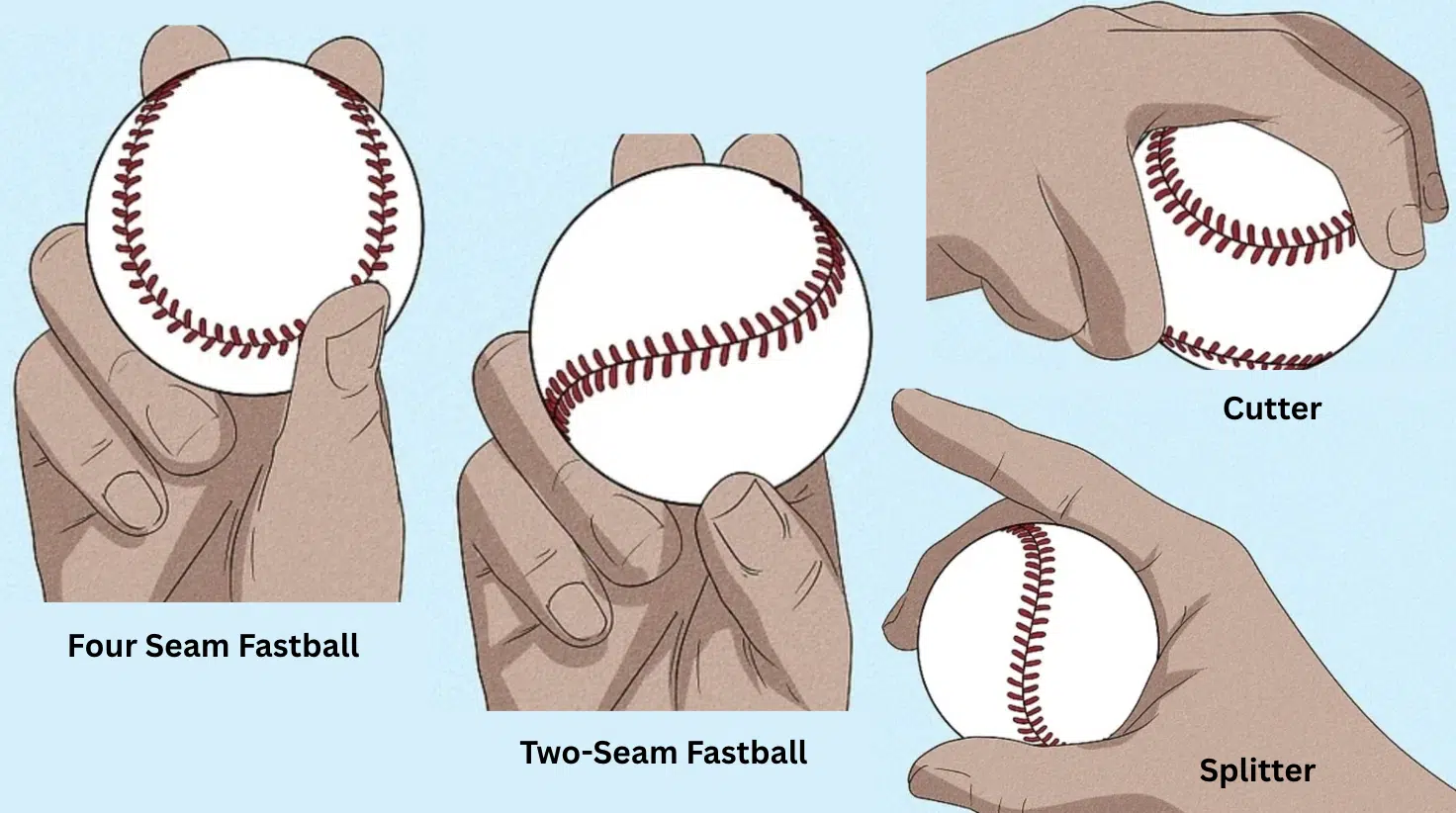
Fastballs are the pitches that grab attention. They come in hard and fast, often setting the tone for an at-bat. While they focus on speed, not all fastballs are the same.
1. Four-Seam Fastball
The four-seam fastball is the fastest and travels straight with little movement. It’s used to overpower batters and is usually the pitcher’s go-to pitch.
It’s also often thrown high in the strike zone because the backspin can make it look like it “rises,” leading to late swings and pop-ups.
Hitters may swing under it, especially if they expect a breaking ball or a lower pitch. Because it’s so reliable, pitchers use it to get ahead in the count or finish at-bats with a strikeout.
2. Two-Seam Fastball
This pitch has slight movement, running inside or outside the batter. It’s a little slower than the four-seam, but it can make it harder for the hitter to make clean contact.
The late arm-side run and slight sink often cause hitters to misjudge the ball, leading to ground balls or jammed swings instead of solid hits.
Pitchers like it for inducing quick outs, especially with runners on base.
It also pairs well with breaking pitches, since the movement can look similar out of the hand before it darts late.
3. Cutter
The cutter is a fastball that moves sharply at the last second. It’s thrown like a fastball but breaks toward the pitcher’s glove side, jamming batters or forcing weak hits.
What makes the cutter so effective is how late it moves. The subtle, last-second shift gives hitters very little time to adjust their swing path or barrel position.
Hitters often read it as a normal fastball, commit their swing, and then get caught off guard when the ball cuts in on their hands or moves off the barrel, resulting in broken bats, pop-ups, or weak ground balls.
4. Splitter
A splitter drops sharply just before reaching the plate. While slower than the others, its makes sudden moves, making it tricky for batters to catch up.
What makes it so nasty is the timing; hitters often think it’s a fastball, start their swing, and then the ball falls under the bat at the last moment. It’s a great pitch for strikeouts and weak ground balls when thrown with good control.
Fastballs are all about speed and control. The right mix of both makes any fastball dangerous, keeping hitters on their toes.
Breaking Ball Types and How They Move
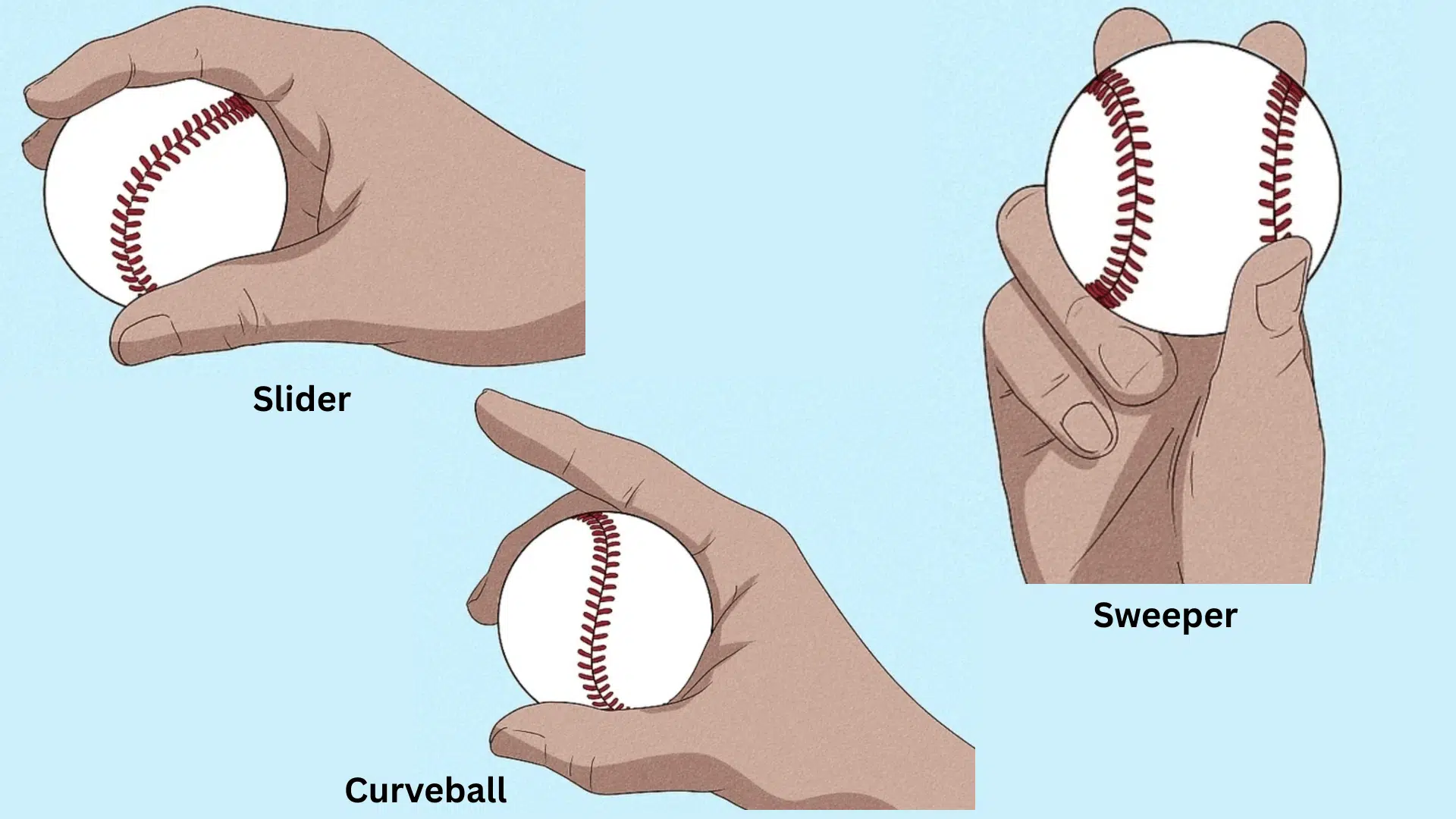
Breaking balls are all about movement. Unlike fastballs that focus on speed, breaking balls use spin and angles to throw off hitters. These pitches curve, slide, or drop, making them hard to track and hit.
4. Curveball
The curveball is the classic breaking ball. It moves sharply downward, dropping significantly as it approaches the plate.
It’s thrown slower than a fastball and uses a lot of spin to create that dramatic break. What makes it so effective is how it changes a hitter’s eye level.
A well-placed curveball can start in the strike zone and then dive out of it, making batters chase or freeze for a strike when they expect it to keep falling.
5. Slider
The slider is faster than the curveball and moves sideways. It has a tight break that can move sharply away from a batter, making it tough to hit, especially when thrown with precision.
Its late movement often fools hitters into thinking it’s a fastball, leading to swings and misses or weak contact when it breaks off the plate.
Pitchers often use it as a strikeout pitch because it can finish outside the zone and still get a chase.
When it starts in the strike zone and darts late, it can freeze hitters or force bad swings.
6. Sweeper
The sweeper is a breaking ball in baseball known for its wide horizontal movement across the plate.
It is a variation of the slider, but instead of sharp downward action, it focuses on a sweeping side-to-side break that moves away from the hitter’s barrel.
Pitchers throw the sweeper with a grip and wrist action that creates strong sidespin, producing extended lateral movement.
When executed well, it looks like a strike early before drifting off the plate late, making it difficult for hitters to square up or even make contact.
Off-Speed Pitch Types Explained
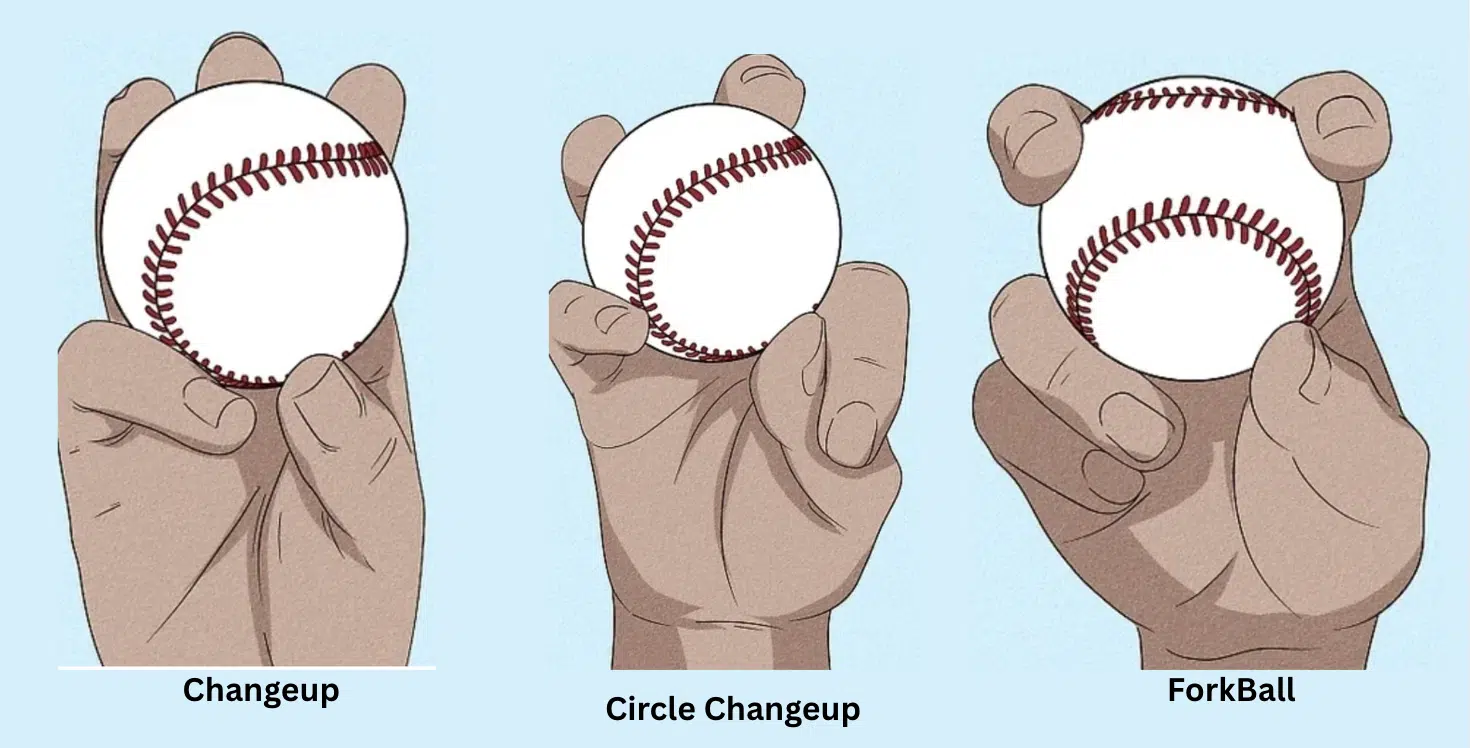
Off-speed pitches are slower than fastballs and mess with a batter’s timing. Off-speed pitches use deception, forcing the batter to adjust quickly. These pitches throw hitters off rhythm and keep them guessing.
7. Changeup
The changeup looks like a fastball but comes in much slower. It’s all about timing; if a pitcher can fool the batter into thinking it’s a fastball, they’ll swing too early.
It’s effective because it’s unexpected and disrupts the hitter’s timing.
A great changeup also has a little fade or drop, so it doesn’t just arrive slower; it arrives in a slightly different spot, which makes clean contact even harder.
8. Circle Changeup
The circle changeup is a variation of the standard changeup. It’s thrown with a different grip, causing the ball to drop more and fade slightly away from the batter.
It’s slower than a regular fastball and has more movement. What makes it especially effective is how well it pairs with a fastball.
When both pitches come out of the hand looking the same, the hitter has very little time to adjust.
The added fade and drop often lead to early swings, weak contact, or ground balls instead of solid hits.
9. Forkball
The forkball is similar to a splitter but with a bigger drop. It’s slower than most fastballs, and when thrown correctly, it can cause the ball to fall dramatically as it reaches the plate.
Because of the deep finger split, hitters often think it’s a fastball at first, then watch it suddenly dive. This sharp late drop makes it effective for strikeouts or weak ground balls when used sparingly.
Off-speed pitches are key to throwing off a batter’s rhythm. The slower speed and added movement make them tough to hit, forcing batters to adjust mid-swing.
Specialty and Less Common Pitch Types
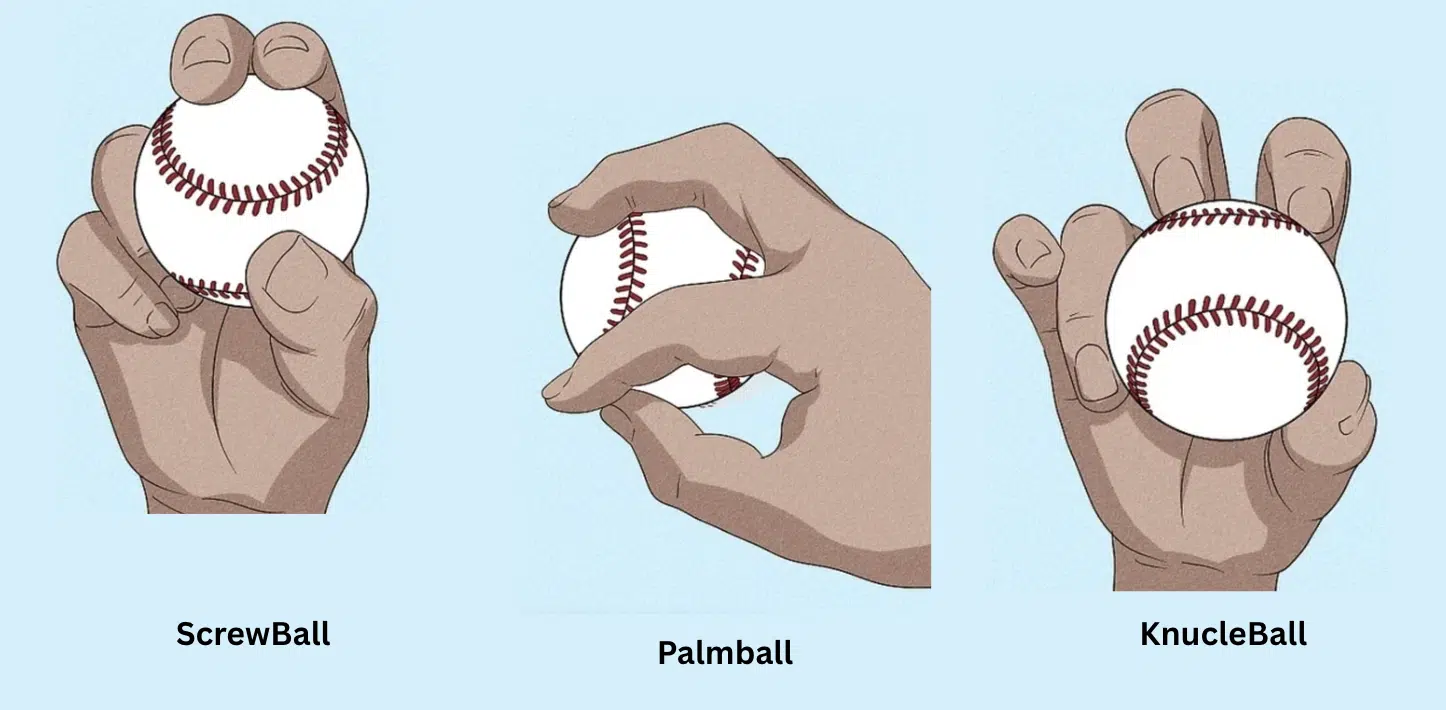
Specialty pitches are rarer and often used to surprise the batter or create a unique advantage. While not every pitcher uses them regularly, these pitches can be game-changers when executed well.
10. Knuckleball
The knuckleball is one of the most unpredictable pitches. It’s thrown with minimal spin, causing the ball to flutter and move erratically in the air.
Because it’s so hard to control, it’s a tricky pitch for both the pitcher and the batter, often leading to wild swings and misses.
Because the movement is so random, even the catcher never knows exactly where it will end up. That unpredictability makes hitters uncomfortable and often leads to awkward swings, missed contact, or weak hits.
11. Palmball
The palmball is a slow off-speed pitch that looks like a fastball out of the pitcher’s hand. It is gripped deep in the palm, which takes speed off the ball and causes it to arrive much slower than expected.
While it doesn’t have dramatic movement, the sudden change in speed can fool batters and make them swing too early when used at the right time.
It works best when paired with fastballs, since the similar release makes the hitter commit before recognizing the speed drop.
12. Screwball
The screwball is a rare pitch that moves in the opposite direction of a slider.
It breaks inward, going against the natural movement of a typical breaking ball. This pitch can be tough to control, but it is a unique tool in a pitcher’s arsenal.
That reverse break can freeze batters or jam them, especially if they’re sitting on a pitch that moves the other way.
It’s tough to control and not used by many pitchers today, but when it’s thrown well, it’s a nasty surprise.
Key Differences Between Baseball Pitch Types
Each type of pitch differs from the others in terms of their purpose and speed. Here’s a quick reference table for their differences:
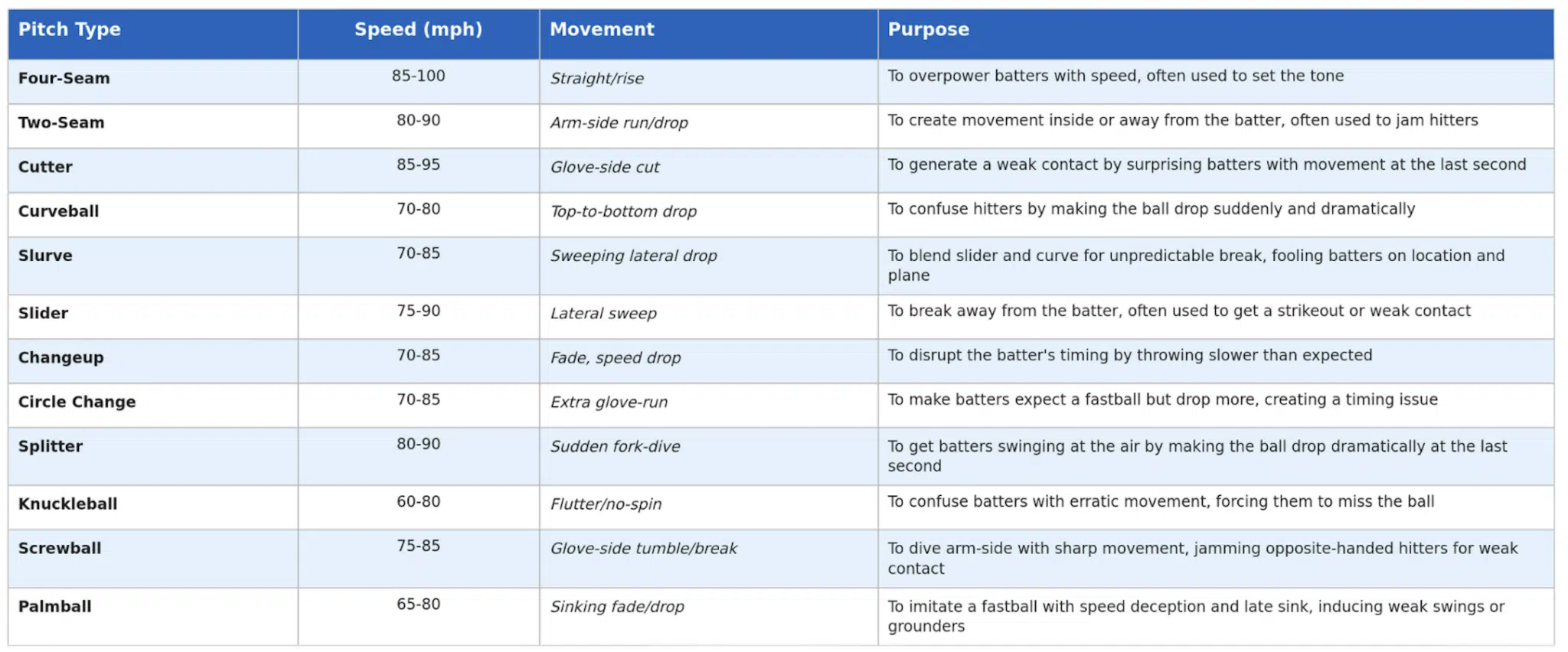
Refer to the following recommended video by YouGoProBaseball for a visual guide to the pitches.
How Different Pitch Types Fool Hitters?
Pitchers do not rely on velocity alone; they rely on deception, sequencing, and subtle changes that force hesitation.
When pitches look similar at first but arrive differently, hitters are left reacting instead of attacking.
1. Speed and Timing Disruption
Fastballs may seem straightforward, but when combined with slower pitches like changeups, they mess with a batter’s timing.
A batter who expects a fastball might swing too early when a changeup comes in slower, leading to weak contact or a strike.
Even a small speed difference (like 8–12 mph) can throw off the hitter’s swing path and contact point.
That’s why pitchers often “tunnel” pitches, making them look the same early so the hitter commits before it’s too late.
2. Movement and Deception
Breaking balls, like curveballs and sliders, use movement to trick hitters. A curveball drops suddenly, and a slider moves sharply sideways.
Batters expect a straight path, but the ball’s unexpected movement can lead to a swing-and-miss or weak hit.
When a pitcher repeats the same arm speed and release point, the hitter can’t pick it up early, which makes the movement even tougher to read.
3. Unpredictability
Specialty pitches like the knuckleball or palmball take things to another level.
The knuckleball, with its erratic movement, is nearly impossible to predict, while the slow, deceptive palmball looks like a fastball at release but arrives much later than expected, catching hitters out in front.
Thrown at the right moment, it can steal a strike or force a weak ground ball. As it’s used sparingly, hitters often don’t adjust until it’s too late.
The key to fooling a hitter is mixing up speed, movement, and timing, making it tough for them to predict what’s coming next. The more unpredictable a pitcher can be, the harder it is for the batter to make contact.
Wrapping It Up
Now that you know about all the different pitches in baseball, I hope you can appreciate the strategy behind each throw a little more.
Every pitch, whether it’s a fastball zooming by or a curveball dropping out of nowhere, has its purpose in the game. It’s all about keeping the batter on their toes and making the game more exciting to watch.
Next time you’re at a game or watching on TV, see if you can spot the pitch types and understand what the pitcher is trying to do.
I’d love to hear which pitch you find most fascinating! Drop a comment below and let me know your favorite. And if you found this guide helpful, share it with your friends who love baseball!