






Ever felt that annoying pain in your elbow that won’t go away? You’re definitely not alone.
Tennis elbow and golfer’s elbow are super common conditions that can mess with your daily life, even if you’re typing at work, lifting groceries, or playing your favorite sport.
Here’s the thing: you don’t need to be an athlete to deal with these problems. They can happen to anyone who does repetitive hand and arm movements.
This guide breaks down everything you need to know about both conditions. You’ll learn what causes them, how to tell which one you have, and what symptoms to watch for.
Plus, you’ll get practical treatment options and prevention tips that actually work. Let’s get right in and get your elbow feeling better!
What Is Tennis Elbow?
Tennis elbow, also called lateral epicondylitis, happens when the tendons on the outside of your elbow get overworked and irritated.
Despite its name, you don’t need to play tennis to get it. In fact, most people who develop tennis elbow have never picked up a tennis racket.
The condition affects the extensor tendons that help you lift your wrist and fingers. When these tendons get stressed from repetitive movements, tiny tears form, causing pain and inflammation.
Common Causes Include:
- Painting walls or ceilings
- Typing on a keyboard for hours
- Using hand tools like screwdrivers or hammers
- Repetitive computer mouse use
- Playing racket sports
- Plumbing or carpentry work
Symptoms you might notice
| Symptoms | What it can feel like in real life |
|---|---|
| Sharp or burning pain on the outside of your elbow | A stinging or hot pain right on the outer elbow area |
| Weak grip strength | Your hand feels “weak,” and you may start dropping things more often |
| Pain when lifting objects (even light ones) | Picking up a mug, bag, or phone can hurt more than it should |
| Discomfort when shaking hands | A handshake can trigger a quick pain or soreness in the elbow/forearm |
| Pain that gets worse when you bend your wrist back | Movements like pulling your hand back (wrist up) make the pain flare up |
What Is Golfer’s Elbow?
Golfer’s elbow, or medial epicondylitis, is tennis elbow’s close cousin. The difference? This one attacks the inside of your elbow instead. It affects the flexor tendons that help you bend your wrist and grip things.
Just like tennis elbow, you don’t need to be a golfer to develop this condition. Anyone who does repetitive gripping, flexing, or twisting motions with their hands and wrists is at risk.
Activities that Trigger It:
- Swinging golf clubs or baseball bats
- Lifting weights, especially without proper form
- Rowing or rock climbing
- Manual labor jobs (construction, plumbing)
- Throwing sports like baseball or javelin
- Using garden tools for extended periods
Symptoms to watch for
| Symptoms | What it can feel like in real life |
|---|---|
| Pain and tenderness on the inner side of your elbow | Soreness or aching right on the inside of the elbow |
| Stiffness in the elbow (especially in the morning) | The elbow feels tight or stiff when you first wake up |
| Tingling or numbness that travels down to your fingers | “Pins and needles” or numb feelings in the hand/fingers |
| Pain when you make a fist or flex your wrist | Clenching your hand or bending your wrist can trigger pain |
| Weakness when trying to grip objects | Holding onto things feels harder, like your grip can’t stay strong |
Golfers’ Elbow vs Tennis Elbow: Key Differences
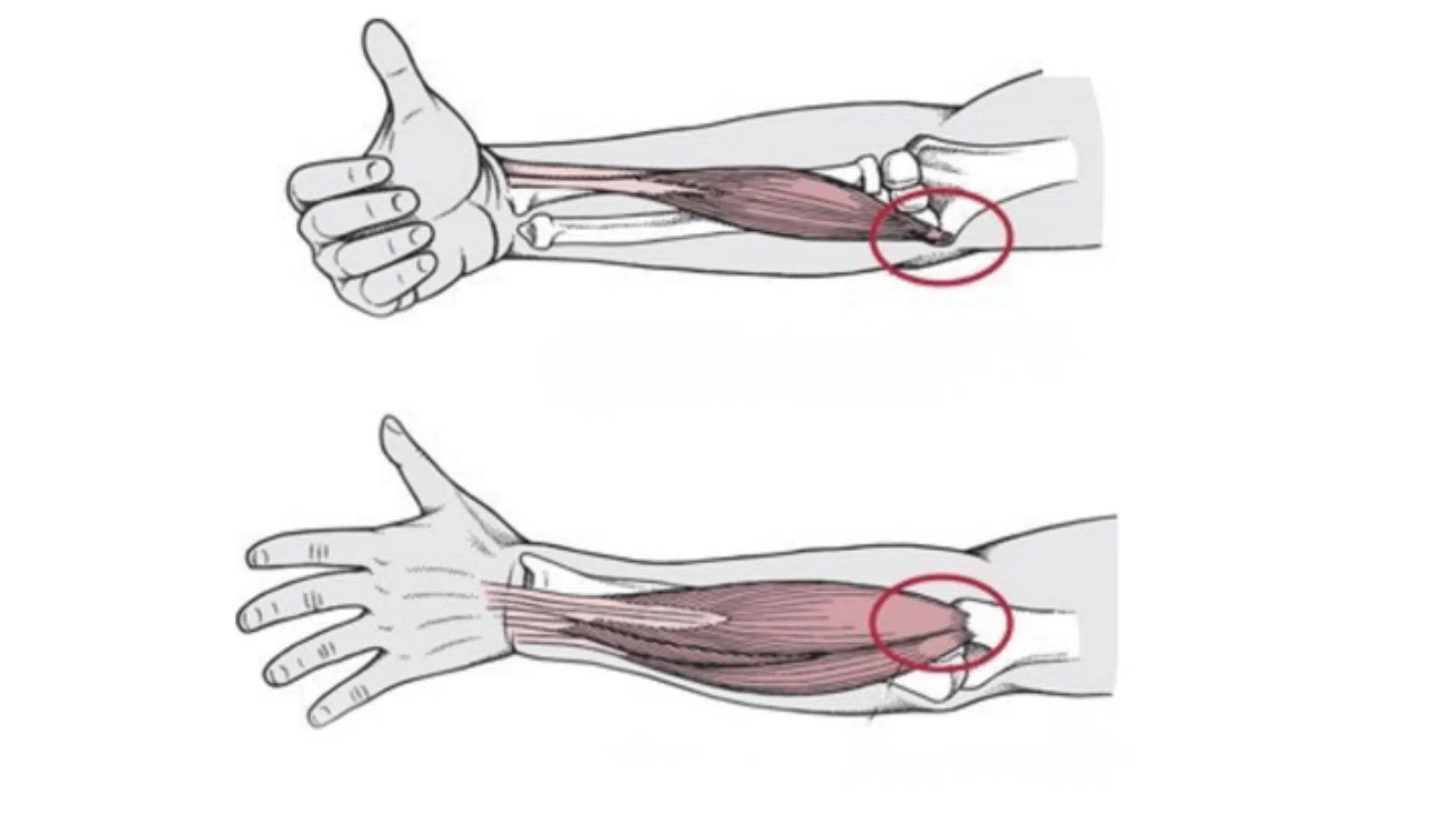
These two conditions might sound similar, but they’re actually quite different once you know what to look for.
1. Where Does It Hurt?
The biggest difference is the location of your pain. Tennis elbow causes pain on the outside of your elbow, that is, the side away from your body when your arm hangs naturally.
Golfer’s elbow hurts on the inside of your elbow – the side closest to your body.
Think of it this way: if you were holding a tennis racket, tennis elbow would hurt on the thumb side of your elbow. If you were swinging a golf club, golfer’s elbow would hurt on the pinky side.
2. Different Muscles, Different Problems
Tennis elbow damages the muscles on the top of your forearm. These are the muscles that help you lift your hand up, like when you’re waving or reaching for something on a high shelf.
You use them all day long – when you’re typing, holding your phone, or even just picking up a glass of water.
Golfer’s elbow affects the muscles on the bottom of your forearm. These muscles help you pull your hand down and make a fist.
Every time you grip something tightly, throw a ball, or pull open a heavy door, these muscles do the work.
3. What Makes Each One Hurt?
Tennis Elbow Gets Worse when You:
- Lift things with your palm facing the ground
- Open doors or jars
- Give someone a handshake
- Use a computer mouse or keyboard
- Hold your phone for a long time
Golfer’s Elbow Acts up when You:
- Squeeze your hand into a fist
- Throw or catch things
- Do any lifting or pulling exercises
- Swing a bat, club, or racket
- Twist your arm (like wringing out a towel)
Who Usually Gets These?
Both problems usually show up in adults between 30 and 50 years old. Tennis elbow is really common in people who work at desks, especially if they use computers a lot.
Painters, builders, hairdressers, and people who play racket sports also get it frequently.
Golfer’s elbow happens more often to people who do physical jobs with their hands. Think construction workers, factory workers, mechanics, and people who lift weights.
Athletes who throw a lot, like baseball players, also deal with this condition regularly.
What Causes Elbow Tendonitis?
Both tennis elbow and golfer’s elbow are types of tendonitis, inflammation of the tendons. Understanding what causes them helps you prevent future problems.
Repetitive overuse is the number one culprit. When you do the same motion over and over without adequate rest, your tendons don’t have time to recover. Those microscopic tears add up, leading to pain and inflammation.
Sudden increases in activity can shock your tendons. Starting a new sport, taking on a physically demanding project, or suddenly increasing your workout intensity gives your tendons more than they can handle.
Poor technique or form puts extra stress on your tendons. Using the wrong grip size on a tennis racket, lifting weights with improper form, or having an awkward computer setup all contribute to tendon problems.
Weak forearm muscles can’t support your tendons properly. When the muscles are underdeveloped, the tendons have to work overtime, making injury more likely.
Symptoms Shared by Tennis Elbow and Golfer’s Elbow

While these conditions affect different parts of your elbow, they share several common symptoms:
- Stiffness: Your elbow feels tight and stiff to straighten, especially first thing in the morning
- Weak grip: Opening jars, carrying groceries, or holding tools becomes surprisingly difficult
- Radiating pain: Discomfort travels from your elbow down into your forearm
- Numbness or tingling: Your fingers might feel tingly or “asleep,” especially your ring and pinky fingers with golfer’s elbow
- Difficulty with daily tasks: Simple activities like turning keys, opening doors, or lifting a glass of water cause pain
How to Know If It’s Golfer’s Elbow or Tennis Elbow
Figuring out which condition you have doesn’t require a medical degree. Try these simple tests at home:
The location test: Touch the bony bumps on your elbow. Outside pain = tennis elbow. Inside pain = golfer’s elbow.
The wrist extension test: Hold your arm straight out with your palm facing down. Have someone push down on your hand while you resist. If the outside of your elbow hurts, that’s tennis elbow.
The wrist flexion test: Hold your arm out with your palm facing up. Make a fist and bend your wrist upward while someone pushes against it. Inner elbow pain suggests golfer’s elbow.
The grip test: Try squeezing something firmly. Where does it hurt most?
That said, see a doctor if:
- Pain lasts more than two weeks despite rest
- You can’t straighten your arm
- Your elbow looks swollen or feels hot
- You experience severe weakness or numbness
- Pain interferes with sleep or daily activities
Treatment for Golfer’s Elbow and Tennis Elbow
Both conditions respond well to similar treatments. The key is starting early and being consistent.
| Treatment option | What to Do |
|---|---|
| Rest + activity changes | Avoid the movements that trigger pain. Take breaks from typing/lifting and adjust technique. |
| Ice therapy | Ice pack (wrapped) for 15–20 minutes, 3–4 times a day, especially after activity. |
| NSAIDs (Ibuprofen/Naproxen) | Helps pain + swelling. Follow label directions; don’t use for weeks without a doctor’s advice. |
| Bracing | Use a counterforce strap just below the elbow to reduce tendon stress. |
| Injections | If other steps fail: steroid (short-term relief) or PRP (may support healing). |
| Surgery (last resort) | Rare ( |
How to Prevent Tennis Elbow and Golfer’s Elbow
Prevention is always easier than treatment. Here’s how to protect your elbows:
- Warm up properly before any physical activity. Five to ten minutes of light movement increases blood flow to your muscles and tendons, preparing them for work.
- Strengthen your forearms with regular exercise. Wrist curls, reverse wrist curls, and grip-strengthening exercises build resilience in the muscles and tendons.
- Use proper technique in sports and at work. Take lessons from a coach or get an ergonomic assessment of your workspace. Minor adjustments in form can prevent big problems.
- Make ergonomic adjustments to your work environment. Position your keyboard and mouse correctly, adjust your chair height, and take regular breaks from repetitive tasks.
- Don’t overdo it when starting new activities. Gradually increase intensity and duration to give your body time to adapt.
- Listen to your body. Early warning signs like mild soreness or stiffness mean it’s time to rest, not push through the pain.
Final Thoughts
Tennis elbow and golfer’s elbow might seem scary at first, but the good news is they’re totally treatable. Most people get better with simple steps like rest, ice, and some basic exercises.
The key is catching the problem early and not ignoring those warning signs your body sends.
Remember, these conditions develop over time from repetitive movements. That means small changes in how you work, play, or exercise can make a huge difference.
If it’s adjusting your workspace setup, improving your sports technique, or just taking more breaks, prevention is your best friend.
Don’t let elbow pain control your life or stop you from doing what you love. If home treatments aren’t helping after a couple of weeks, reach out to a healthcare professional who can create a treatment plan that works for you.