



Coaches shape how a team thinks, talks, and performs. When a team is not hitting goals, it is often not about talent alone. It can be about unclear roles, weak communication, low trust, or poor habits.
This guide answers the big question: how can coaches improve team performance? It shares simple, proven ways to help any team get better, on the field or at work.
We will also cover how to set SMART goals, build accountability without fear, and create trust and safety.
It will also explain how to improve communication, give feedback that helps people grow, develop strengths, build leadership, and keep motivation high with recognition and progress tracking.
Why Team Performance Matters for Coaches
Team performance is not only about talent. It is about how well people work together toward shared goals. When roles are clear, communication is strong, and trust is high, teams perform better under pressure.
Coaching helps connect individual effort into one smooth system. That is why even skilled teams need structure, habits, and guidance to win consistently.
- Shared goals: Everyone moves in the same direction, faster.
- Team synergy: Combined effort beats solo talent, every time.
- Role clarity: Each person knows duties, timing, and priorities.
- Trust and safety: People speak up, learn, and stay confident.
- Sports success: Teamwork turns practice into wins, not chaos.
- Less conflict: Problems get solved early, before they grow.
- Sustainable growth: Teams improve steadily instead of burning out.
When team performance improves, coaches gain reliable results, more substantial effort, and a group that stays united, focused, and ready for challenges.
Foundational Strategies Coaches Must Get Right First

Strong team performance starts with simple foundations. When goals are clear, trust is strong, and expectations are understood, teams perform with confidence.
These strategies help coaches create structure, reduce confusion, and guide teams toward steady improvement.
1. Set Clear and SMART Team Goals
SMART goals give teams direction and focus. In coaching, SMART means goals are Specific, Measurable, Achievable, Relevant, and Time-based. These goals help teams know exactly what success looks like and when it should happen.
Why SMART Goals Work
- Remove confusion and guesswork
- Help track progress clearly
- Keep the team motivated
How to Apply SMART Goals
| Goal Element | What It Means for the Team |
|---|---|
| Specific | Clear outcome everyone understands |
| Measurable | Progress can be tracked easily |
| Achievable | Goals match skill and effort level |
| Relevant | Goals support the team’s mission |
| Time-based | Deadlines keep focus strong |
Goals work best when each role supports the goal, and timelines are clear for everyone.
What I Did:
When I worked with a struggling high school basketball team in 2019, we were losing games by 20+ points.
Instead of vague goals like “play better defense,” we set a SMART goal: “Reduce opponent field goal percentage from 52% to 42% within 8 weeks by implementing zone defense drills three times per week.”
The specificity gave players clear targets. Within six weeks, we hit 43%, and the team’s confidence soared. That season taught me that when players can see and measure their progress weekly, they stay motivated even during losses.
The key was breaking down “better defense” into a number everyone could track on the stat sheet after every game.
2. Create Accountability Without Fear
Accountability works best when it builds responsibility, not fear. Teams perform better when members own their actions without worrying about blame.
Healthy accountability focuses on
- Ownership instead of punishment
- Clear roles and duties
- Fair and visible standards
Accountability vs blame
| Accountability | Blame |
|---|---|
| Encourages learning | Creates fear |
| Builds trust | Breaks confidence |
| Focuses on solutions | Focuses on mistakes |
Clear standards help everyone know what is expected and how success is measured.
From My Experience:
I learned this lesson the hard way. Early in my coaching career, I publicly called out players for missing assignments. The result? Players stopped taking risks and played tentatively, afraid of making mistakes.
After a session under Coach Mike Walkers, a veteran coach, I completely changed my approach. Now, when a player misses an assignment, we have a quick one-on-one: “What happened on that play?
What could you do differently next time?” The shift from blame to problem-solving transformed our team culture. Players started admitting mistakes immediately because they knew we’d fix it together, not shame them.
Our error rate actually dropped 35% that season because players were honest about mistakes instead of hiding them.
3. Build Trust and Psychological Safety
Teams perform better when people feel safe to speak, try, and learn. A safe environment allows honest effort without fear of embarrassment.
Benefits of Psychological Safety
- More open communication
- Faster learning from mistakes
- Stronger teamwork
Ways to build safety
- Treat mistakes as lessons
- Listen without judgment
- Show respect in all situations
When people feel valued, effort and performance naturally improve.
4. Clarify the Mission and Team Standards
Every team needs a clear purpose. When the mission is understood, effort becomes focused and meaningful.
Clarifying the Mission Means
- Explaining why the team exists
- Showing how each role supports the goal
- Keeping direction simple and clear
Daily Performance Standards Should
- Be easy to remember
- Apply to everyone
- Guide daily actions
Simple standards help teams stay consistent, even during pressure.
5. Build Strong Coach–Player Relationships Early
Strong relationships create strong performance. Teams work harder when leaders understand what drives each person.
What Builds Strong Relationships
- Knowing personal motivators
- Being consistent and fair
- Showing support during wins and losses
Why Relationships Matter
- Trust increases effort
- Feedback is accepted faster
- Teams stay united under pressure
When trust leads the way, performance follows naturally.
How I Build Relationships:
Every season, before our first practice, I schedule 15-minute one-on-ones with each player. Not to talk about basketball, but to learn who they are.
I ask: “What makes you nervous? What makes you proud? What’s one thing you want me to know about you that I can’t learn from watching you play?” One year, a quiet freshman told me his father had just been deployed overseas.
That conversation shaped how I coached him all season. When he struggled mid-season, I knew it wasn’t about effort or attitude; it was about stress at home.
We connected him with our school counselor, and I adjusted my expectations temporarily. He finished the season as our most improved player and later told me that conversation made him feel seen as a person, not just an athlete.
These relationships aren’t built through big gestures. They’re built through consistent, genuine interest in players as people.
When you know what drives someone, you can push them further than they thought possible, because they trust you have their back.
How Communication and Feedback Improve Team Performance
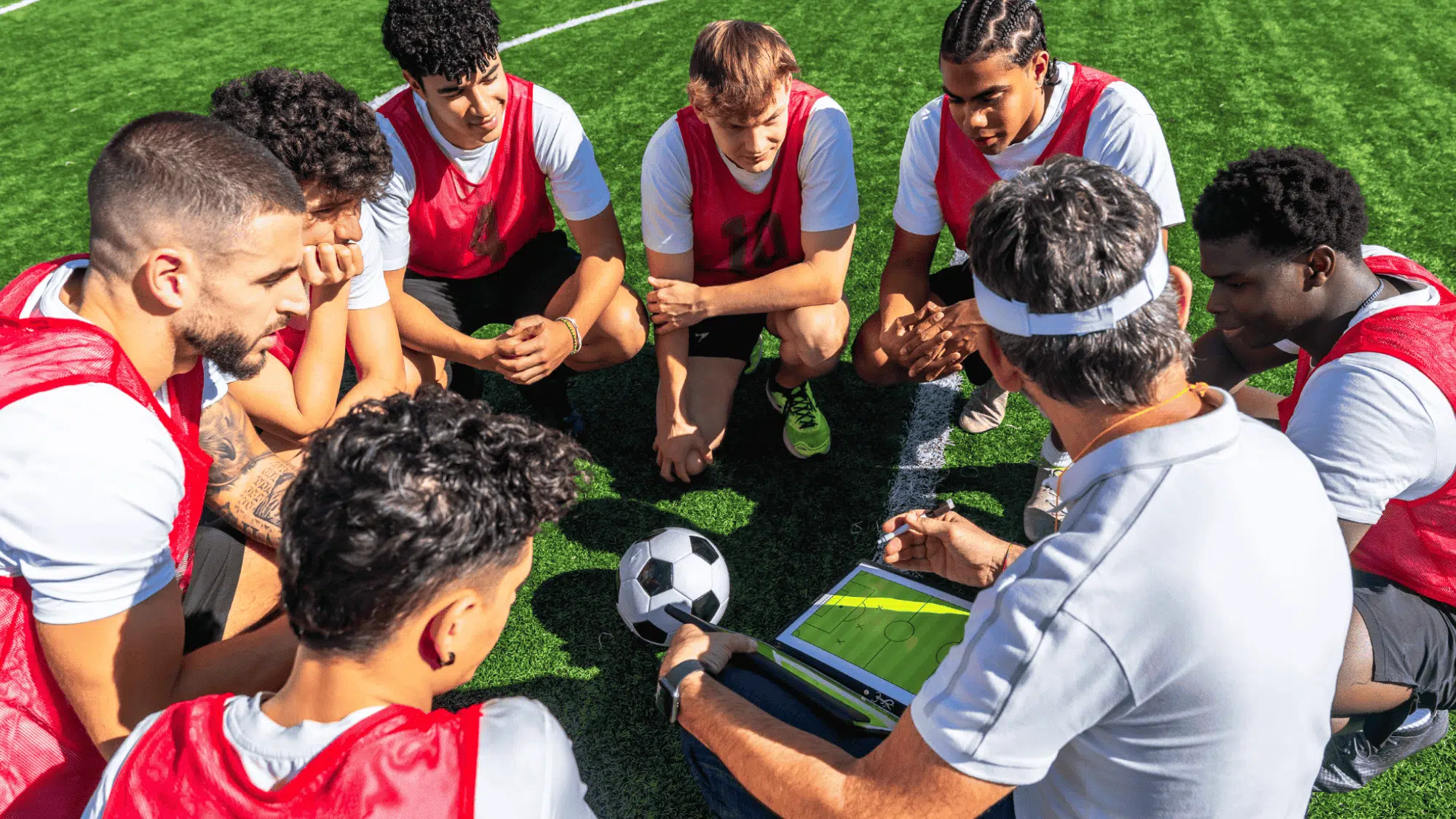
Clear communication and helpful feedback keep teams focused and confident. When people feel heard and understood, they work better together.
Strong communication reduces confusion, builds trust, and helps teams solve problems faster. These habits make daily work smoother and performance more consistent.
6. Promote Open and Honest Communication
Open communication helps teams stay connected and aligned. When information flows both ways, problems get solved before they grow.
Ways to Improve Communication
- Hold regular check-ins
- Run clear and focused team meetings
- Practice active listening
What Active Listening Looks Like
| Action | Result |
|---|---|
| Listening without interrupting | People feel respected |
| Asking follow-up questions | Better understanding |
| Acknowledging concerns | Stronger trust |
When communication feels safe, teams speak up and stay engaged.
The Problem with My Team:
In 2020, I inherited a team with serious chemistry issues. Players were complaining to parents instead of talking to each other or me. I started a simple ritual: every practice ended with a 5-minute circle where anyone could speak.
The first two weeks were silent; nobody trusted the space. Then one player said, “I don’t understand why I’m not starting.”
Instead of defending my decision, I just asked, “What would help you understand my thinking?” That question opened everything up.
We talked about role clarity, and by listening without getting defensive, I learned that half my bench didn’t understand how playing time was decided.
I created a simple rubric, effort, execution, and attitude, and posted it. Communication improved overnight because players finally felt heard. The team that barely spoke to each other in September won our conference in March.
Open communication isn’t automatic; you have to create the structure and model the behavior.
7. Adapt Communication Styles
Not everyone communicates the same way. Some people prefer clear instructions, while others need discussion and feedback. Good coaching adjusts communication without changing the goal.
Different Styles, Same Goal
- Direct communicators like clear tasks
- Thoughtful communicators need time to process
- Visual learners prefer examples
Sports vs workplace communication
| Sports Teams | Workplace Teams |
|---|---|
| Fast, direct cues | Detailed discussions |
| High-energy feedback | Calm, structured feedback |
| Immediate correction | Scheduled reviews |
Adapting communication helps every team member perform better.
8. Deliver Constructive Feedback That Drives Growth
Feedback works best when it helps people improve, not feel judged. Transparent and honest feedback builds confidence and skill.
Effective feedback should be
- Specific and easy to understand
- Timely, not delayed
- Focused on growth
Good feedback vs poor feedback
| Helpful Feedback | Harmful Feedback |
|---|---|
| Clear and calm | Vague or harsh |
| Focuses on actions | Attacks the person |
| Offers solutions | Offers criticism only |
Development-focused feedback keeps motivation strong.
9. Run Short, Consistent Check-In Routines
Short check-ins keep everyone aligned without pressure. These moments help spot issues early and keep goals on track.
Simple check-in structure
- What went well
- What needs help
- What comes next
Benefits of regular check-ins
- Fewer surprises
- Faster problem-solving
- Better team focus
Consistency keeps teams moving forward without micromanaging.
What I Do:
I run a 90-second check-in with team captains before every practice.
Same three questions: “What’s the team’s energy level today? Any issues I should know about? What should we focus on?” One Tuesday, my captain said, “Half the team bombed a chemistry test, energy’s low.”
I switched from high-intensity drills to skill work and let them leave early to study. We had our best practice that week on Thursday.
Another time, a captain mentioned two players bickering. I addressed it immediately before it became a team-wide problem.
The key is consistency, same time, same questions, every practice. Ninety seconds prevents hours of dysfunction, and it empowers team leaders because their voice matters.
10. Use Questions to Coach, Not Just Commands
Questions help people think and take ownership. Instead of giving all the answers, coaching through questions builds confidence and skill.
Powerful coaching questions
- What is the next step?
- What is getting in the way?
- What support is needed?
Why questions work
- Encourage problem-solving
- Build independence
- Increase confidence
When people think for themselves, performance improves naturally.
Developing Players and Team Members for Long-Term Success
Strong teams are built for the long run, not just quick wins. When people grow as individuals, the whole team improves.
Long-term success comes from using strengths, building confidence, and helping everyone handle pressure and challenges with the right skills and mindset.
11. Focus on Individual Strengths
Every team member brings something valuable. When strengths are understood and used well, performance improves naturally.
Why Strengths Matter
- People perform better when doing what they are good at
- Confidence grows with success
- Effort feels meaningful
Matching Strengths to Roles
| Strength Area | Best Role Fit |
|---|---|
| Speed and energy | Fast-paced tasks |
| Planning skills | Organizing and strategy |
| Communication | Team coordination |
| Problem-solving | Handling challenges |
Using strengths builds ownership and pride in work.
How I Apply This:
I had a player who couldn’t shoot but had incredible court vision. Instead of forcing him to score, I redesigned our offense around his passing. He averaged 9 assists per game and made first-team all-conference.
I learned this from my friend Coach Gregg Popovich: maximize what players can do, not fix what they can’t. Now I start every season identifying each player’s natural strengths, then build roles around them.
One player was terrible at offense but relentless on defense. I made him our defensive specialist, and he took pride in shutting down opponents’ best scorers.
When you align strengths with roles, effort becomes passionate instead of forced.
12. Empower Leadership at Every Level
Leadership should not sit with one person only. When leadership is shared, teams become stronger and more confident.
Ways to Empower Leadership
- Allow decision-making within roles
- Encourage team-led solutions
- Support ideas from all levels
Benefits of Shared Leadership
- Stronger trust
- Faster problem-solving
- Higher engagement
When people feel trusted, they step up and lead.
13. Build Mental Toughness and Resilience
Pressure and setbacks are part of every team journey. Mental toughness helps people stay focused and calm during challenging moments.
How to Build Resilience
- Talk openly about challenges
- Practice staying calm under pressure
- Reflect after losses instead of blaming
Setbacks Can Teach
| Situation | Learning Opportunity |
|---|---|
| Missed goal | Improve planning |
| Mistake under pressure | Strengthen focus |
| Tough loss | Build perseverance |
Learning from mistakes helps teams grow stronger.
14. Create Personal Development Plans for Each Player
Growth looks different for everyone. Personal plans help people improve at their own pace while supporting team goals.
What a Development Plan Includes
- One or two clear growth goals
- Skill and mindset focus
- Simple action steps
Tracking Progress
| Review Area | Purpose |
|---|---|
| Skills | Measure improvement |
| Mindset | Build confidence |
| Effort | Stay consistent |
Regular reviews keep progress steady and clear.
How I Implemented This:
I used to give generic feedback: “Work on your shot, get stronger.” Nothing changed. After attending an NBA development coach’s workshop, I learned: “Generic goals create generic effort.
Personalized goals create ownership.” I created individual plans, and one guard improved free throws from 58% to 75% by shooting 50 daily.
A forward developed his left hand with 20 left-handed layups before each practice. We reviewed progress every two weeks.
Players started tracking their own stats and requesting harder challenges. The key: make goals specific enough to track but simple enough to remember. When growth is personalized and visible, motivation sustains itself.
15. Train the Fundamentals Before Advanced Strategies
Strong basics lead to firm performance. When fundamentals are solid, teams perform better under pressure.
Why Fundamentals Matter
- Reduce mistakes
- Increase consistency
- Build confidence
Basics vs Advanced Skills
| Fundamentals | Advanced Strategies |
|---|---|
| Core skills | Complex tactics |
| Repeatable actions | Situational moves |
| Reliable under pressure | Riskier if basics fail |
Strong foundations support long-term improvement and success.
Creating a Winning Team Culture and Motivation
A strong team culture keeps people motivated, focused, and connected. When effort is noticed, learning is encouraged, and respect is protected, teams perform better over time.
Culture is built through daily actions, not big speeches. These habits help teams stay positive, driven, and united.
17. Boost Morale Through Recognition
Recognition shows that effort matters. When people feel seen, they stay motivated and confident.
Ways to Recognize Effort
- Praise improvement, not just results
- Highlight discipline and consistency
- Celebrate both team and individual wins
What Recognition Reinforces
| Action Recognized | Result |
|---|---|
| Extra effort | Higher motivation |
| Consistent habits | Better performance |
| Team-first attitude | Stronger unity |
Small recognition moments create big motivation.
What I’ve Seen Work:
I had a bench player who never scored but set perfect screens and dove for loose balls. After one game, I publicly recognized him: “We won because of your screens, you freed up 12 points tonight.” His face lit up.
In the next practice, three other players started setting harder screens. Recognition creates ripple effects. I learned from Coach Pat Summitt’s approach, catch people doing things right, not just wrong.
Now I end every practice naming one “unsung hero” who did something that won’t show in stats. It takes 30 seconds but transforms morale. Players work harder when they know effort gets noticed, not just scoring.
18. Encourage Continuous Learning
Learning should never stop. When leaders keep learning, teams feel encouraged to do the same.
How to Support Learning
- Share new ideas and tactics
- Encourage skill development
- Support learning from mistakes
Learning Builds
- Confidence
- Adaptability
- A growth mindset
Teams that learn together improve faster and stay competitive.
19. Celebrate Progress, Not Just Results
Waiting only for final results can drain motivation. Progress shows that the effort is working.
Examples of Progress to Celebrate
- Skill improvement
- Better teamwork
- Consistent habits
Why Progress Matters
| Focus | Impact |
|---|---|
| Progress | Long-term motivation |
| Effort | Higher confidence |
| Small wins | Steady improvement |
Recognizing progress keeps energy high over time.
20. Handle Conflict Early Before It Affects Performance
Conflict is normal, but ignoring it can hurt trust and performance. Addressing issues early keeps teams healthy.
Healthy conflict handling
- Listen to all sides
- Stay calm and respectful
- Focus on solutions
Early action helps
- Protect trust
- Prevent bigger problems
- Maintain fairness
Respectful resolution keeps teams moving forward.
21. Create Daily Habits That Reinforce Team Culture
Culture is shaped by what teams do every day. Simple habits make values visible.
Examples of Positive Team Habits
- Short daily huddles
- End-of-day reflections
- Clear communication routines
Habits support
| Habit Type | Purpose |
|---|---|
| Rituals | Build connection |
| Shared language | Create clarity |
| Consistent routines | Strengthen culture |
When culture becomes daily practice, motivation and performance grow naturally.
What Works in Practice:
We start every practice with the same ritual: players put their hands in the circle, and someone shares one thing they’re grateful for. It takes 60 seconds.
At first, players thought it was corny. But by week three, they were sharing genuine things, teammates who helped them study, parents who drove them to practice.
That simple habit created a connection. We end practice the same way every time: “What’s one thing we got better at today?” Players leave knowing they improved.
I learned this from reading about the Navy SEALs, who have rituals that create identity. Our team motto became “1% better today,” and players said it without prompting.
Culture isn’t built through speeches; it’s built through small, repeated habits that become who you are.
What Improved Team Performance Looks Like
Team performance can feel hard to measure because it is not just about wins, numbers, or output. It also shows up in how people act, respond under pressure, and support each other daily.
When performance improves, the change is usually visible before it is proven on a scoreboard or report. Here are clear signs a team is getting better:
| Area | Sign 1 | Sign 2 | Sign 3 | Outcome |
|---|---|---|---|---|
| Clarity shows up | People know what they are responsible for | Fewer repeated mistakes happen | Tasks move faster because there is less confusion | Clear roles reduce delays |
| Communication gets smoother | Less guessing and fewer “I didn’t know” moments | Meetings become shorter and more focused | Problems get raised early instead of being hidden | Issues get solved sooner |
| Trust becomes obvious | People speak up without fear | Teammates help each other more often | Feedback is accepted without defensiveness | Teamwork feels safer |
| Consistency improves | Effort stays steady even on tough days | Standards do not collapse under pressure | Performance stays reliable in tough moments | Results hold under pressure |
When these areas improve, the team is not just working harder. It is working better together, and that is what sustainable performance looks like.
At the End
Great teams are not built by luck. They are built through clear goals, steady habits, and coaching that helps people grow. When communication is open, feedback is helpful, and roles are clear, the team starts working like one unit.
Trust makes it easier to take risks, learn from mistakes, and stay strong under pressure. Strength-based roles help each person contribute in the best way, while recognition and daily routines keep motivation high.
Over time, these small coaching choices create great results, better teamwork, better focus, and better performance when it matters most.
Ready to level up the team? Pick two strategies from this guide and start using them this week.