
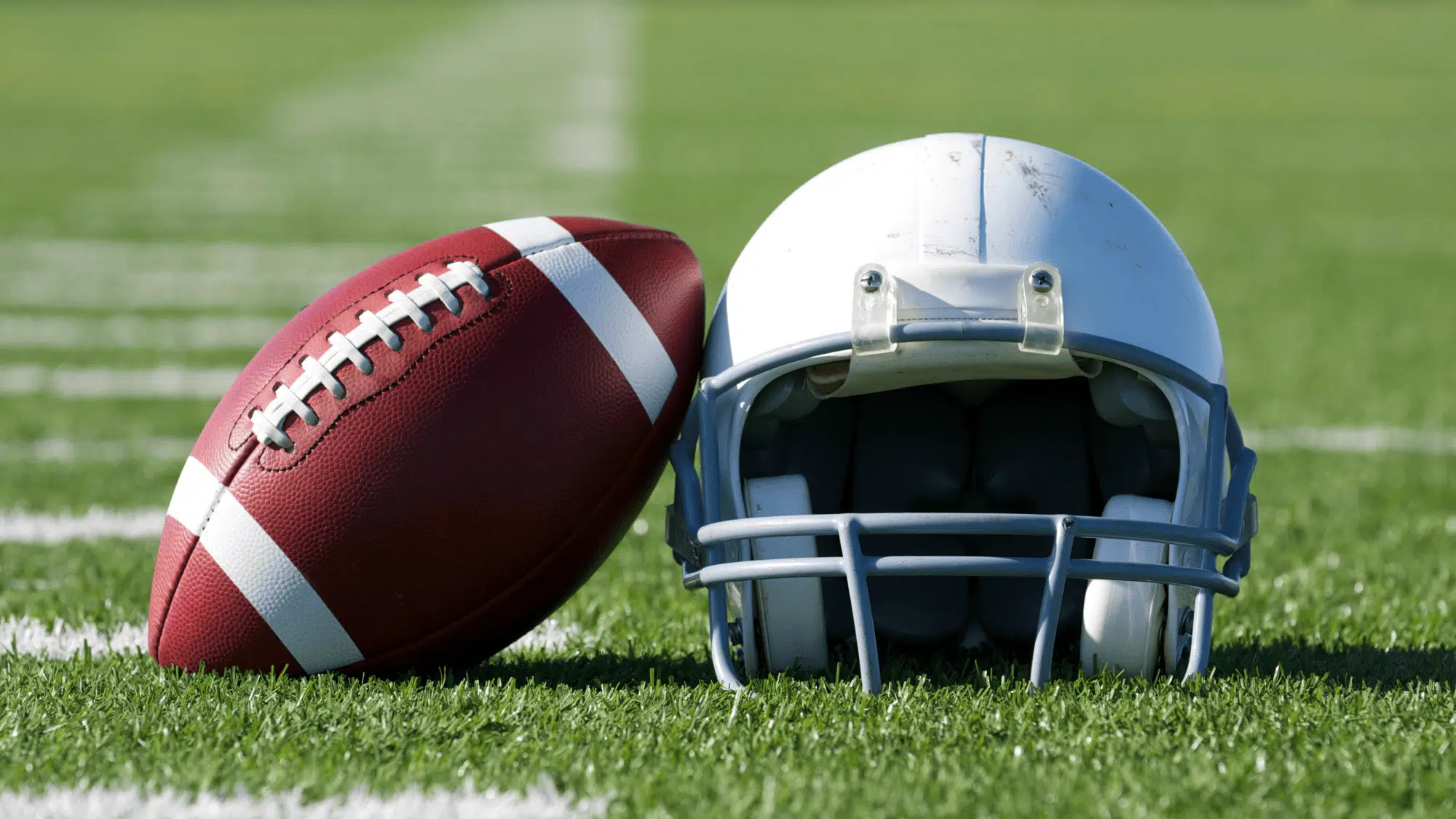





Football helmets didn’t always look the way they do today. In fact, early players stepped onto the field with almost no protection.
This blog takes you back in time to see how the first football helmet was born and how it slowly changed the sport.
It covers the early days of football, the dangers players faced, and the two men who helped create the very first versions of headgear.
We will also walk through the major upgrades, from leather straps to plastic shells and today’s high-tech designs. By the end, it becomes clear how each step made football safer for every player who puts on a helmet.
The Origins of Football Safety Gear
Early football was rough, fast, and played with almost no protection. Players took hit after hit without helmets, pads, or any real rules to protect them.
As injuries increased and public concern grew, the need for head protection became impossible to ignore.
- Games often caused broken noses, smashed ears, and repeated head injuries.
- No medical staff or concussion awareness existed at the time.
- Early safety gear started as simple, homemade creations.
These early attempts at protection set the stage for true innovation. Players and coaches began realizing that toughness alone wasn’t enough.
Their first experiments, basic leather straps and padded caps, eventually inspired the development of the first football helmet and the safer game we know today.
Who Invented the First Football Helmet?
Two men are credited with creating the first football helmet, depending on how you define it. Joseph M. Reeves (1893 ) was the first to wear head protection.
After a doctor warned him that another hit could cause “instant insanity,” the U.S. Naval Academy player asked a shoemaker to craft a simple moleskin leather headpiece so he could safely play in the Army–Navy game.
Just a year later, George “Rose” Barclay (1894) at Lafayette College built a more recognizable design using three thick leather straps riveted together.
His “head harness” protected players from painful cauliflower ear and became the first helmet that other athletes could copy. Reeves used headgear first, but Barclay created the first real football helmet design.
Joseph M. Reeves: The First Football Headgear (1893)

Joseph M. Reeves was a midfielder for the Naval Academy football team. Before the 1893 Army-Navy game, he went for a routine medical checkup. What the doctor told him wasn’t routine at all.
“You’ve had too many hits to the head,” the doctor warned. “One more could cause instant insanity or death.”
Most people would’ve quit football right there. Not Reeves. He loved the game too much.
Instead, he got creative. Reeves visited a local shoemaker in Annapolis and asked him to make a protective headpiece from moleskin leather. The shoemaker built something that looked like a cloth cap with extra padding.
Reeves wore this makeshift helmet in the Army-Navy game and emerged unscathed. His teammates probably thought he looked silly. But Reeves didn’t care about looking cool. He cared about keeping his brain safe.
That moleskin headpiece is now considered the first documented use of a football helmet-like device in history.
George “Rose” Barclay and the First True Football Helmet (1894)
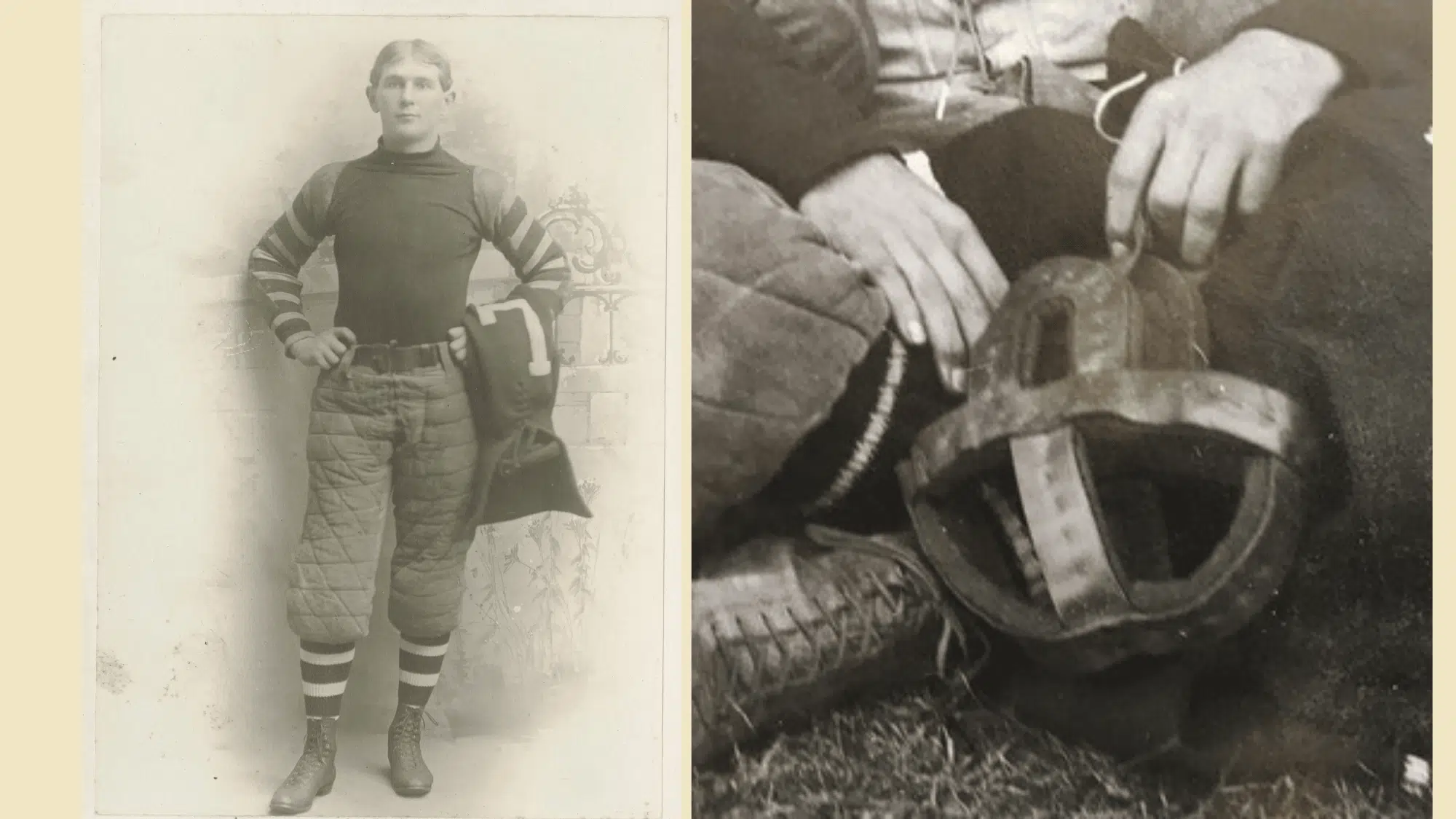
Just one year after Reeves, George “Rose” Barclay at Lafayette College took helmet design to the next level. Barclay had a different problem than Reeves.
His ears kept getting crushed during games, turning them into mangled cauliflower shapes.
Barclay designed something more structured than Reeves’ soft cap. He took three thick leather straps and riveted them together over his head, creating what looked like a leather cage.
This “head harness” covered his ears and gave his skull some real protection.
Why Barclay’s Helmet Matters:
- First helmet with a structural design
- Protected multiple parts of the head
- Other players could actually copy the design
- Still preserved hearing and vision
- Tough enough to last multiple games
Historical photos from the 1894 Lafayette College team show Barclay wearing his invention. His helmet inspired other players to create their own versions. Slowly but surely, head protection began to catch on.
From Leather Straps to Full Leather Helmets (1890s–1930s)
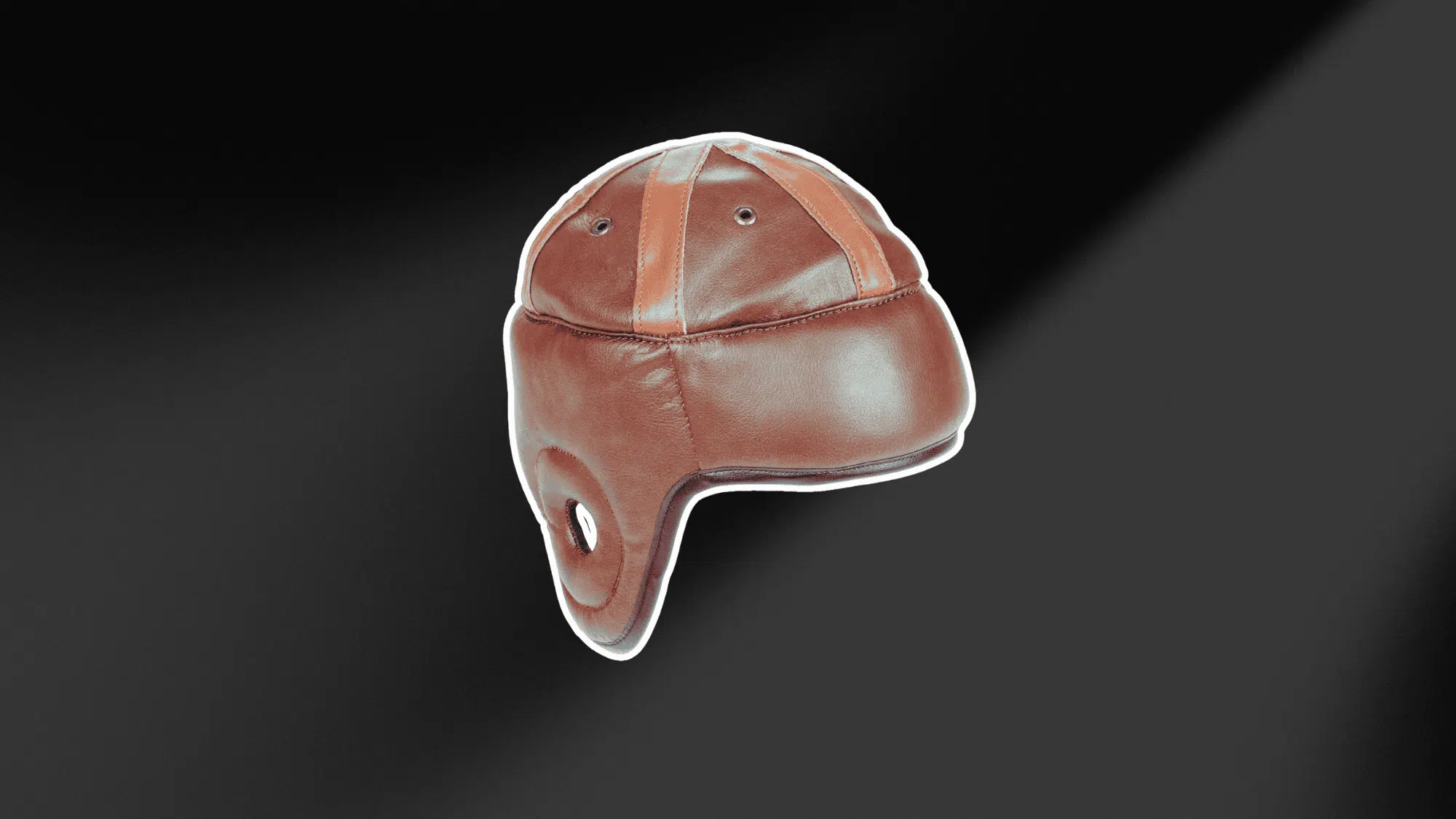
After Barclay proved helmets could work, colleges started experimenting with better designs. By the early 1900s, leather helmets had become more common, though many players still refused to wear them.
Wearing a helmet was seen as being soft or scared.
Evolution During This Period:
| Year Range | Helmet Features | Player Adoption |
|---|---|---|
| 1890s | Leather straps, minimal coverage | Very rare |
| 1900s-1910s | Full leather caps with ear holes | Uncommon |
| 1920s | Padded leather, better fit | Growing |
| 1930s | Thicker leather, suspension systems | More common |
Even with these improvements, leather helmets had serious problems:
- They absorbed sweat and became heavy
- Leather cracked and wore out quickly
- No face protection at all
- The padding was basic and thin
- Still allowed many concussions
Injury rates stayed high throughout this era. Football needed a bigger breakthrough.
The First Plastic Football Helmet (1939–1940)
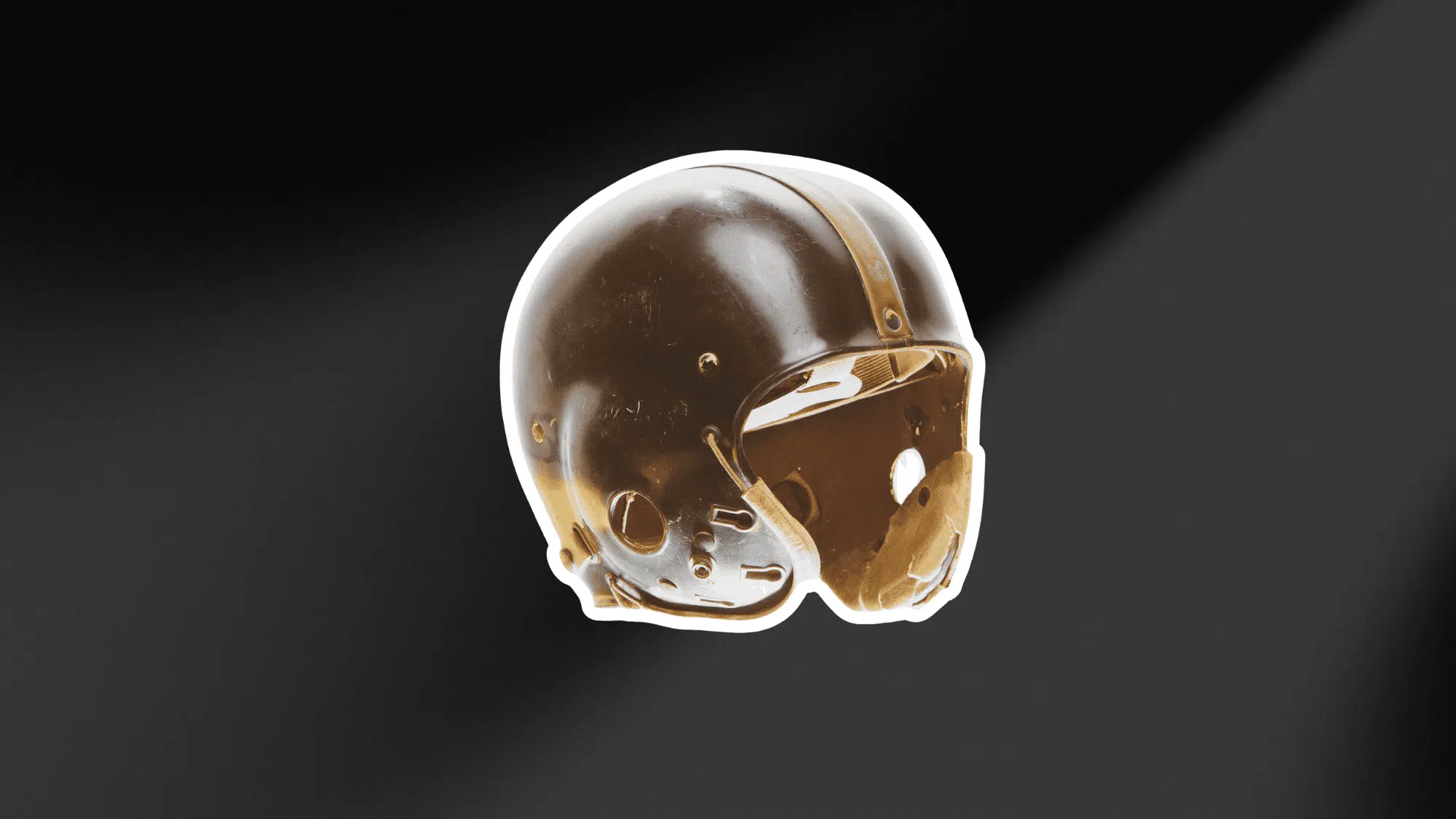
Everything changed when John T. Riddell and his son introduced the first plastic football helmet in 1939. This wasn’t just an improvement. It was a total game-changer.
Riddell understood that leather had reached its limits. Plastic offered something revolutionary: a hard shell that could deflect impact rather than just absorb it.
The first plastic helmet was a prototype in 1939. By 1940, Riddell had a patent and started producing helmets for teams. Here’s why plastic was so much better:
Plastic vs. Leather:
- Stronger: Plastic didn’t crack like leather
- Lighter: Players could move faster
- Waterproof: No more soggy, heavy helmets in the rain
- Consistent: Every helmet performed the same way
- Moldable: Could create better shapes for protection
Some old-school players and coaches resisted at first. They thought plastic looked weird and didn’t trust new technology. But once players wore them in games, the benefits were obvious.
1950s: Face Masks Arrive
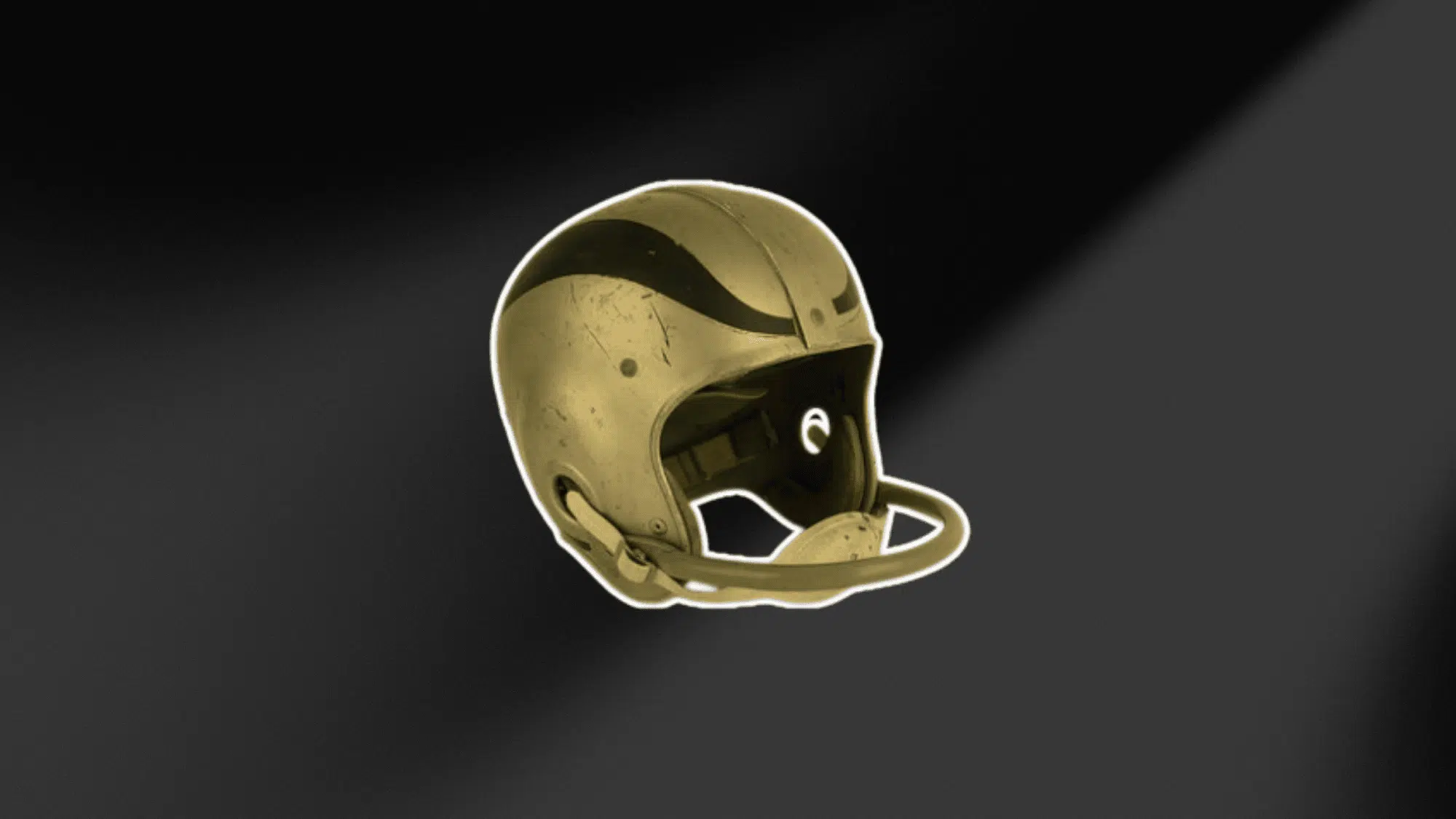
The early 1950s introduced the single-bar face mask, giving players real facial protection without blocking their vision. This simple bar made a huge difference on the field.
With faces finally shielded, injuries like broken noses, chipped teeth, and jaw fractures dropped fast. It marked one of the first major safety upgrades in the history of football helmets.
1960s–1970s: Padding Gets Serious
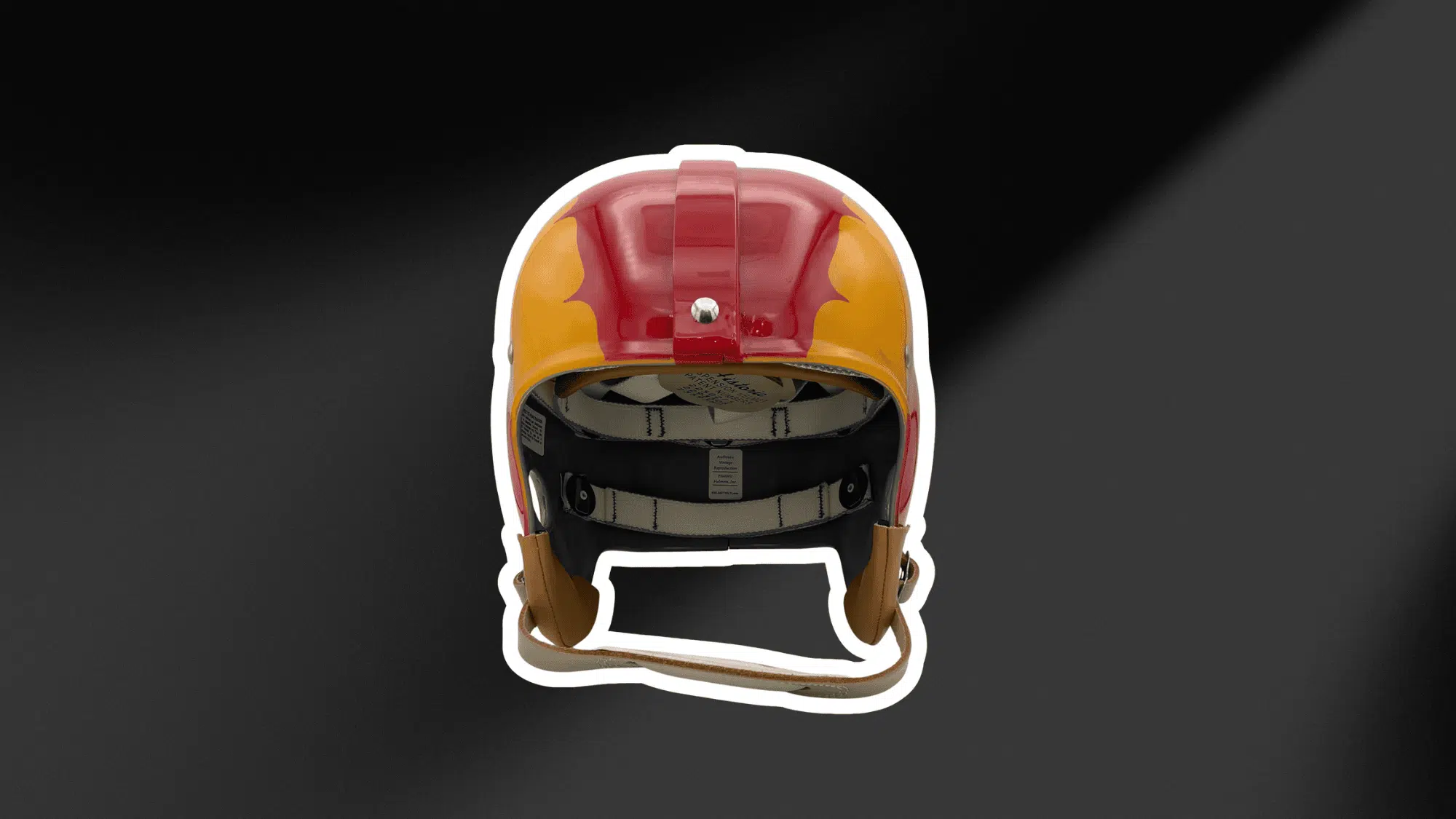
During the 1960s and 1970s, helmet safety improved as manufacturers added thicker foam padding to absorb hits. Suspension systems kept the helmet from resting directly on a player’s skull, lowering the impact of collisions.
Teams also started adding colors and logos, giving helmets a modern, stylish look while making them much safer than earlier versions.
1990s: Early Tech Integration
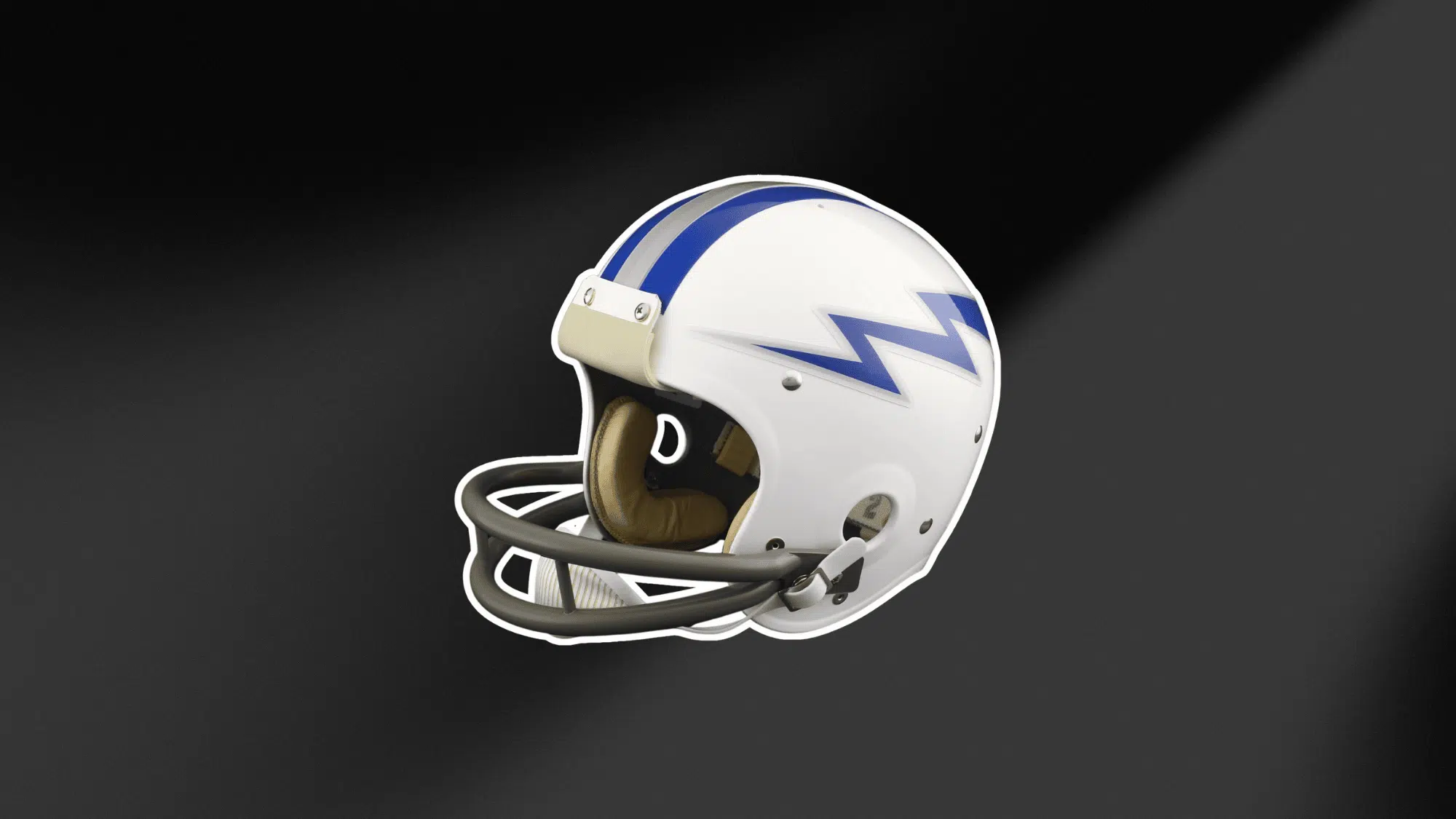
The 199s introduced early technology into helmet design. Companies began using computers to test safety, improving how helmets handled force.
Stronger materials, like advanced polymers, replaced basic padding. The NFL also started paying closer attention to concussions, especially after several well-known players retired due to repeated head injuries, pushing helmet innovation even further.
Major Helmet Upgrades of the 2000s and Beyond
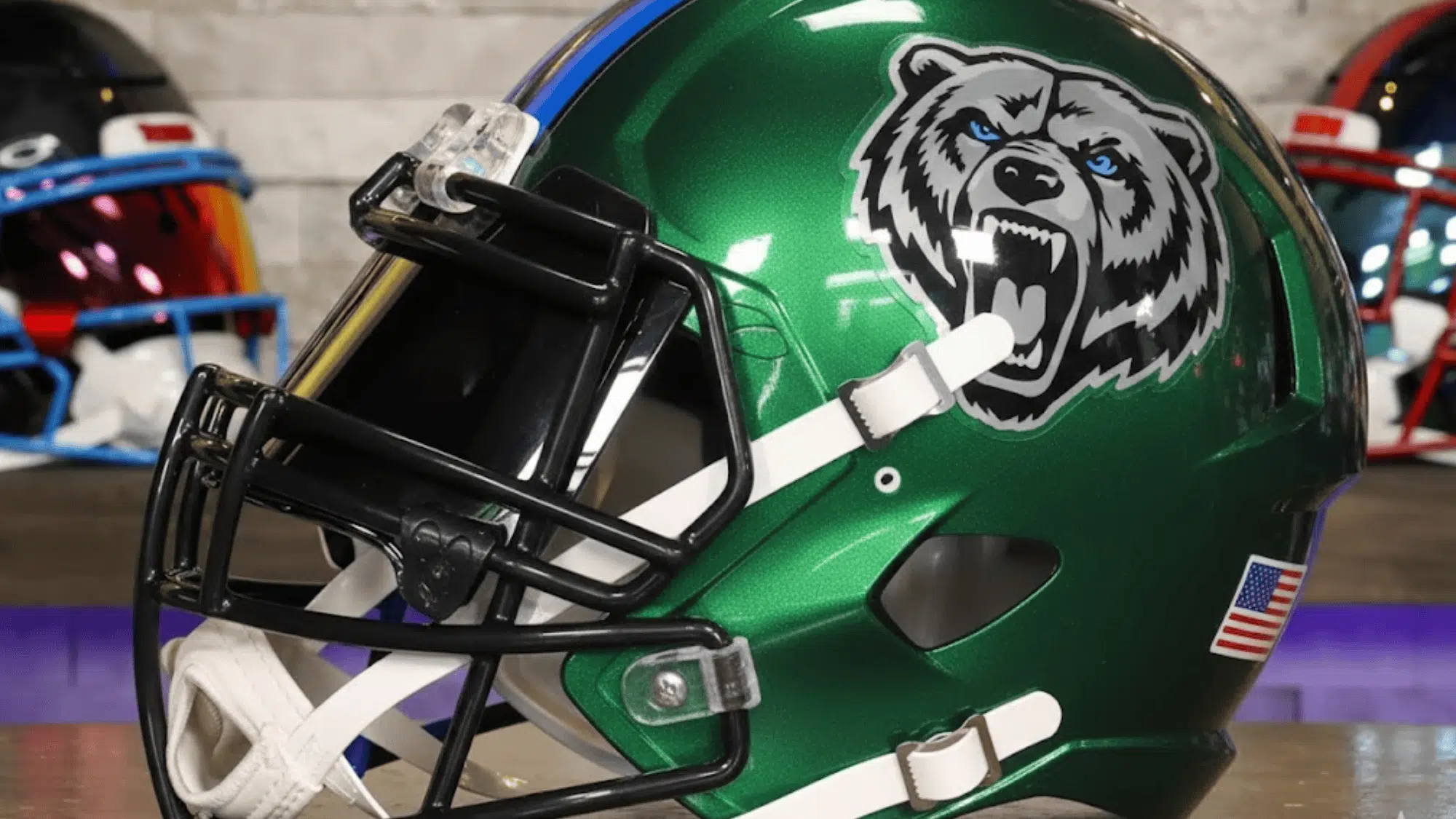
The 2000s brought changes driven by scary concussion statistics. The NFL couldn’t ignore that retired players were suffering from brain damage, depression, and memory loss.
- 2002: Riddell Revolution: Riddell released the Revolution helmet based on actual concussion research. It featured a rounder shape to deflect impacts and better padding to absorb force. Studies showed it reduced concussions by nearly 30%.
- 2007: Schutt ION 4D: Schutt created the ION 4D with advanced polymer materials and air chambers. The helmet could absorb impacts from multiple angles, not just straight-on hits.
These innovations came just in time. The NFL implemented strict concussion protocols, requiring players to leave games if they showed symptoms. Better helmets helped players recover faster and prevented injuries in the first place.
Today’s Football Helmets: Advanced Tech and Modern Safety
Modern football helmets look like something from a sci-fi movie compared to Reeves’ moleskin cap. Today’s helmets use space-age technology to protect players’ brains.
Current Helmet Features:
| Feature | What It Does |
|---|---|
| Impact-absorbing foams | Compress on contact to reduce the force transferred to the player’s head. |
| Air-fit systems | Custom-mold around each player’s head for a better, safer, and more secure fit. |
| Polycarbonate shells | Provide a much stronger exterior than early plastic, offering higher impact resistance. |
| Multi-layer padding | Uses different materials to target and absorb multiple types of impacts. |
| Real-time sensor technology | Measures hit force instantly to help monitor and track potential head injuries. |
Players now have choices, but every helmet must meet NOCSAE (National Operating Committee on Standards for Athletic Equipment) standards. Companies like Xenith, Vicis, and Riddell compete to build the safest helmets possible.
Some players even wear supplemental skull caps under their helmets for extra padding. The combination of all these technologies has made football safer than ever before.
Final Thoughts
Football helmets have come a long way from simple leather caps to the advanced, high-tech gear players use today. Each change was made to solve real problems and protect athletes from serious injuries.
The stories of Reeves, Barclay, and later innovators show how one smart idea can change the entire sport. Today’s helmets are stronger, safer, and designed with years of research.
Even though football will always be a tough game, players now have better protection than ever before. Learning how helmets evolved also helps everyone understand why safety matters so much in sports.
If this guide was helpful, feel free to share it or check out other football history topics next!