






Wondering how many sets a table tennis match should have and what works best for your games? This guide walks through the number of sets and points in table tennis.
You’ll see how many sets are used in casual games, club play, national events, the Olympics, and the Paralympics.
We will also break down how scoring works inside each set, what best-of-3, best-of-5, and best-of-7 really mean, and why table tennis always uses an odd number of sets.
By the end, it becomes much easier to pick the correct format for your own matches, whether it’s a quick game with friends or a more serious competition.
How Many Sets in Table Tennis?
Table tennis matches are usually best-of-5 or best-of-7, depending on what level you’re playing at.
In a best-of-5 match, the first player to win 3 sets takes the victory. In a best-of-7 match, you need to win 4 sets to claim the win.
Here’s how it breaks down by level:
- Casual and beginner play: Usually best-of-3 (first to 2 sets)
- Club and national tournaments: Most use best-of-5 (first to 3 sets)
- Olympics and professional events: Best-of-7 (first to 4 sets)
Now let’s dive deeper into how this all works!
How Scoring Works in Each Set
Before talking about how many sets make up a match, it helps to understand what happens inside each set.
The basic rules are simple:
- Every set goes to 11 points
- You must win by 2 points minimum
- Serves rotate every 2 points between players
- When the score hits 10-10 (called “deuce”), the serves alternate every single point until someone wins by 2
Match Formats Explained: Best-of-3, Best-of-5, and Best-of-7

Different situations call for different match lengths. Let’s break down when each format is used.
Recreational & Amateur Play (Best-of-3)
When playing at home, in gym class, or at a casual club night, most people use a best-of-3 format. This means the first person to win 2 sets wins the match.
Why best-of-3 is perfect for beginners:
- Matches are quick (usually 10-20 minutes)
- Great for when multiple people want to play
- Less tiring for new players who are still building stamina
- Easy to understand and keep track of
A typical score might look like this: You win the first set 11-8, lose the second set 9-11, then win the third set 11-7. Final result: You win 2-1!
Club, National & Semi-Pro Tournaments (Best-of-5)
Step up to organized competition, and you’ll find best-of-5 is the gold standard. The first player to win 3 sets takes the match.
This format is used in:
- Local and regional tournaments
- National league matches
- College competitions
- Team events (including Paralympics)
- Many workplace and community tournaments
Why best-of-5 works so well:
- Gives players a fair chance to adjust their strategy
- Reduces the impact of one bad set
- Still keeps matches at a reasonable length (20-40 minutes typically)
- Creates exciting comeback opportunities
Professional & International Events (Best-of-7)
When the stakes are highest, the pros play best-of-7 matches. Win 4 sets, and you’re the champion.
You’ll See Best-Of-7 At:
- Olympic singles events
- World Championships
- Major ITTF (International Table Tennis Federation) tournaments
- Professional league finals
The beauty of best-of-7:
- The better player almost always wins (less room for luck)
- Maximum drama and tension, especially in deciding sets
- Players must show endurance, skill, and mental toughness
- Fans get more action and longer matches to enjoy
A 7-set thriller might go 4-3, with each player trading sets back and forth. Imagine winning the first two sets, then watching your opponent storm back to tie it 3-3, before you finally clinch the seventh set.
That’s championship-level excitement!
Olympic Table Tennis Format (2024-2028 Standards)
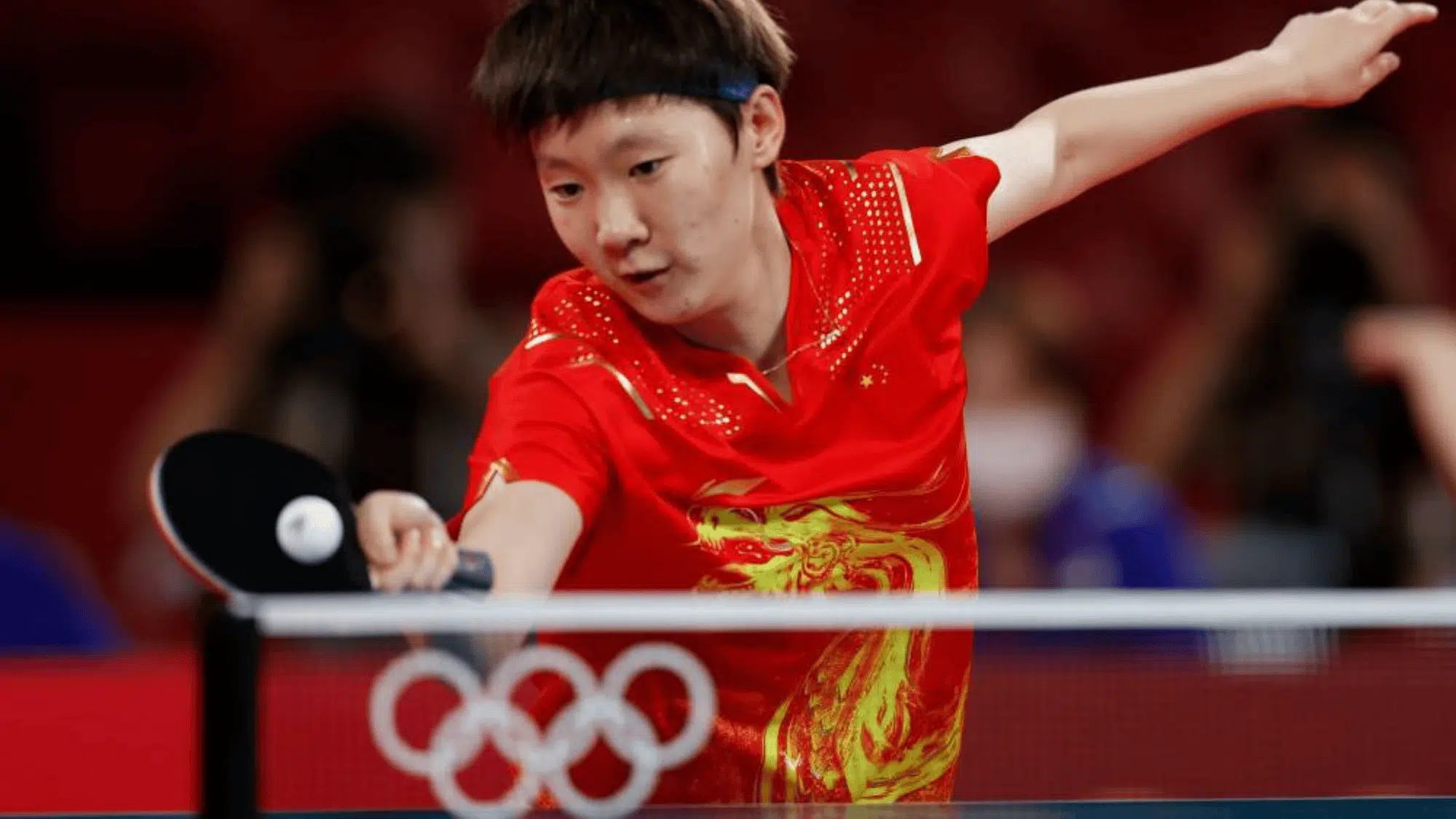
Since table tennis is featured in the Olympics, let’s look at exactly how those matches work.
Olympic table tennis singles matches use the best-of-7 format, with some special rules:
- Matches are first to 4 sets
- Players get a 1-minute break between each set
- In the deciding set (if the game reaches 3-3), players switch ends when one player reaches 5 points
- Each set is played to 11 points with the standard 2-point winning margin
This format ensures that Olympic medals go to the athletes who can perform at their best over a longer match, not just someone having one lucky set.
Paralympic Table Tennis Set Structure
Paralympic table tennis follows almost identical rules to Olympic table tennis, with some helpful accommodations.
- All matches are best-of-5 (first to 3 sets)
- Each set goes to 11 points with a 2-point margin
- The same ITTF rules apply for both standing and wheelchair categories
- Umpires may adjust service rules if a disability affects a player’s ball toss
Paralympic table tennis is one of the largest Paralympic sports, having been part of the Games since 1960. The competitive level is incredibly high, with athletes from over 100 countries competing.
Why Table Tennis Uses Odd-Number Set Formats
Have you noticed that table tennis always uses odd numbers of sets? There’s never a best-of-4 or best-of-6. Here’s why that matters.
Odd Numbers Guarantee a Clear Winner:
- In best-of-3, someone must win 2-1 (or sweep 2-0)
- In best-of-5, the winner reaches 3 sets first
- In best-of-7, winning requires 4 sets
- There are no ties, someone always comes out on top
This Creates Amazing Competitive Tension:
- When a match is tied 1-1 or 2-2, everything comes down to one final set
- Players have chances to adjust their game plan and come back from behind
- The best players prove themselves by performing under pressure
Many players in online table tennis communities agree that best-of-5 “feels perfect“ for competitive play, while best-of-7 is saved for championship finals where you want absolute certainty about who’s better.
Which Format Should You Use?
Choosing the correct format depends on your situation:
For Beginners and Casual Players: Start with best-of-3. Matches are quick, fun, and don’t feel overwhelming. You’ll learn the basics without getting exhausted.
For League and Tournament Players: Best-of-5 is the sweet spot. You get enough sets to show your true skill level, but matches don’t drag on forever. This is what most organized competitions use.
For Championships and Major Events: Best-of-7 ensures the best player wins. Use this format when you want to crown a true champion and have time for longer matches.
Final Thoughts
By now, the idea of sets in table tennis should feel much clearer. Different formats, best-of-3, best-of-5, and best-of-7, each bring their own rhythm, pressure, and excitement to a match.
Whether the goal is a quick game with friends, a serious club night, or dreaming of the Olympic stage, there is a format that fits perfectly.
The key is choosing the one that matches your energy, skill level, and time.
Next time you step up to the table, pick a format, set some rules, and enjoy every rally. Ready to level up your game? Share this guide with your playing partners and plan your next match today!