




When watching soccer and American football, the fields might seem somewhat alike at first. But look a little closer, and they’re totally different worlds.
The size, markings, goals, and even the surface under the players’ feet all change how each sport feels and how the game is played.
This blog breaks down those differences in a clear, easy way. We will cover field dimensions, markings, surfaces, goals, and how each design shapes strategy and movement.
By the end, the unique personality of each field becomes much easier to understand, and shows why the field itself plays such a big role in both sports.
Why the Field Itself Matters
Before we break things down into yards, widths, and lines, it helps to remember one big idea: the field is the stage for everything that happens in both sports.
How big that stage is, how it’s marked, and what it’s made of all change the way the game feels:
- How much space players have to run and pass
- How often collisions happen
- How tiring the game is
- What kinds of strategies do coaches use
So before we talk about rules, positions, or scoring, let’s start with the most basic question: what do these fields actually look like on paper? That’s where the real differences begin.
Standard Dimensions: Let’s Compare the Numbers
Before we get into markings or gameplay, it helps to start with the basics: how big each field actually is, down to yards and width.
Soccer Field Dimensions
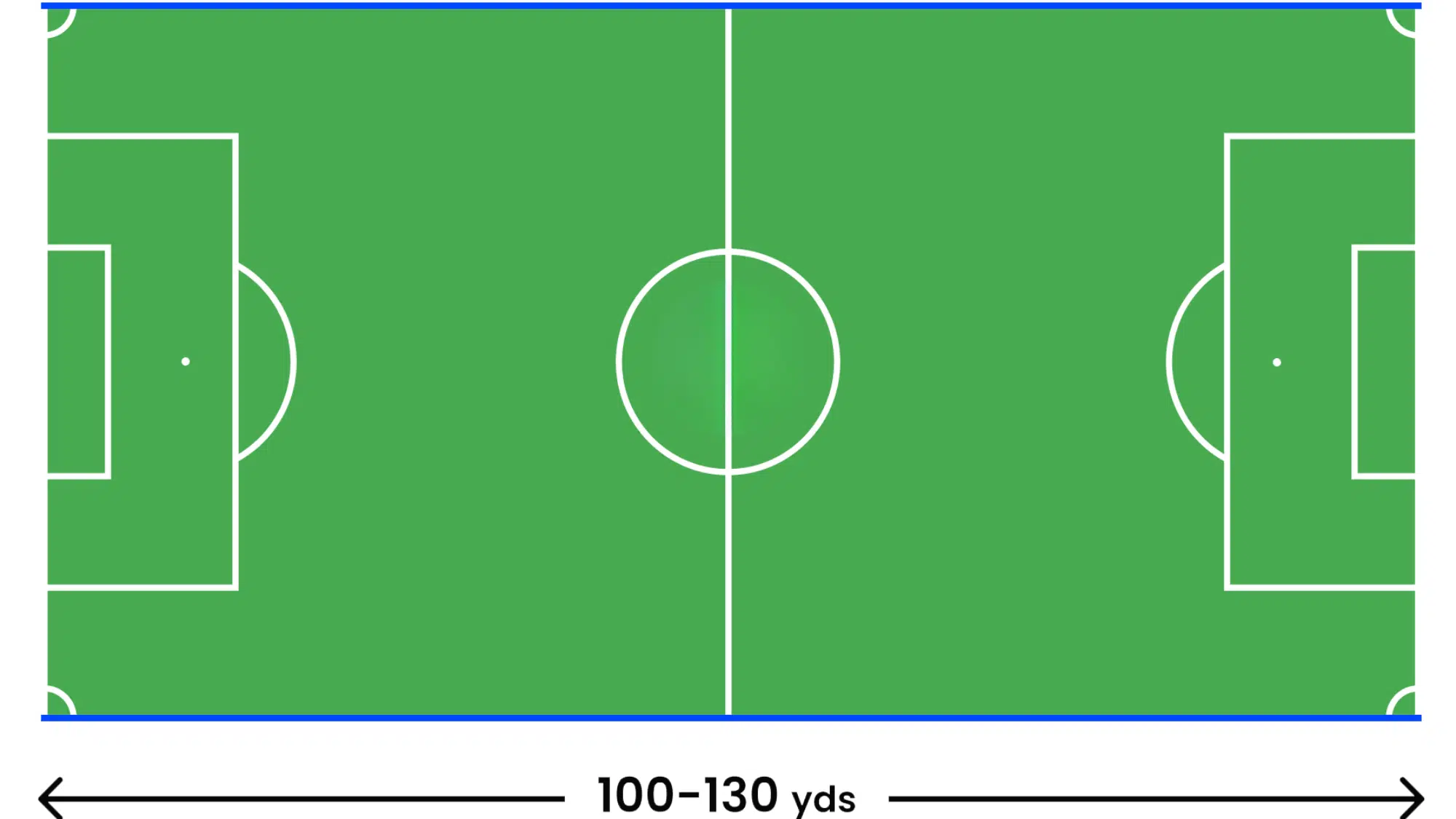
Soccer fields have something called “flexibility.” According to FIFA (the organization that runs international soccer), fields can vary quite a bit:
| Measurement | Range |
|---|---|
| Length | 100-130 yards |
| Width | 50-100 yards |
| Typical Pro Size | 115 × 75 yards |
That’s right, there’s no single “correct” size for a soccer field! Most professional fields, like those in MLS or the Premier League, usually measure around 115 yards long and 75 yards wide.
But FIFA allows teams to adjust based on their stadium, strategy, or even local preferences.
American Football Field Dimensions
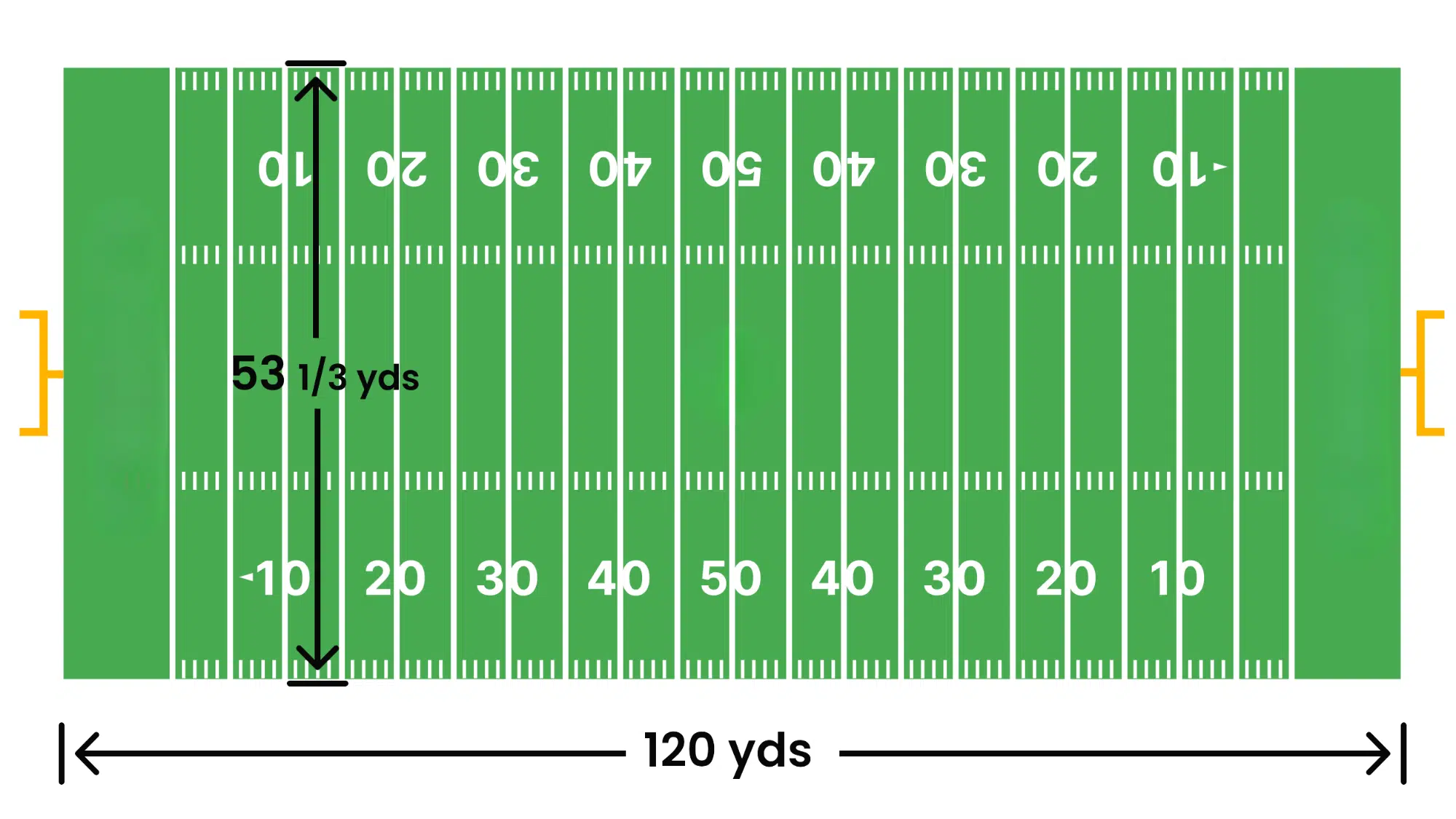
Football fields? They’re the opposite of flexible. Every single one is identical:
| Measurement | Size |
|---|---|
| Playing Field Length | 100 yards |
| End Zones (each) | 10 yards |
| Total Length | 120 yards |
| Width | 53.3 yards (160 feet) |
Walk onto any NFL, college, or high school football field, and you’ll see exactly the same measurements.
The field is divided into 10-yard sections with white lines, numbers marking every 10 yards, and those distinctive hash marks down the middle.
Which Field Is Actually Bigger?
Good question! If you’ve ever wondered which sport has the biggest field, the answer isn’t as simple as it looks. When you calculate the total playing area, soccer fields usually win:
- Soccer field: About 1.6 to 2.4 acres (depending on the specific dimensions)
- Football field: About 1.32 acres
So yes, soccer fields are generally larger, especially when you’re looking at professional-level pitches. That extra space is crucial for the way soccer is played, with 11 players constantly moving and creating passing lanes.
Field Markings: Why They Look So Different
Once you look down from above, the contrast really stands out: soccer uses clean, minimal lines, while American football packs the surface with measurement marks.
Soccer Field Markings
Soccer fields keep things simple. You’ll see:
- The halfway line cuts the field in half
- Center circle where kickoffs happen (10-yard radius)
- Penalty areas (the big boxes near each goal)
- Goal areas (the smaller boxes inside the penalty areas)
- Penalty spots (where penalty kicks are taken, 12 yards from the goal)
- Corner arcs (small quarter-circles at each corner)
That’s basically it! Soccer fields are designed for continuous play, so they don’t need complicated markings. Players need to know where they can use their hands (only the goalkeeper in the penalty area) and where certain rules apply.
Football Field Markings
Football fields look like graph paper for a reason:
- Yard lines are every 5 yards across the entire field
- Numbers every 10 yards (10, 20, 30, 40, 50, and back down)
- Hash marks running down the field at specific spacing
- End zones painted in team colors with team names
- Goal lines marking where touchdowns count
These markings are essential because football is a game of precise measurements. Teams need to gain 10 yards for a first down, field position matters for strategy, and referees constantly measure progress down to the inch.
Why do these Markings Matter?
Think about how each sport is played. Soccer flows freely, players run continuously for 45-minute halves with the clock never stopping. The minimal markings reflect this fluid style.
Football stops and starts constantly. Every play begins from a specific spot, teams have four chances to move 10 yards, and knowing your exact position on the field affects every decision.
The detailed markings support this structured, chess-like approach to the game.
Goals vs. Goalposts: A Tale of Two Targets
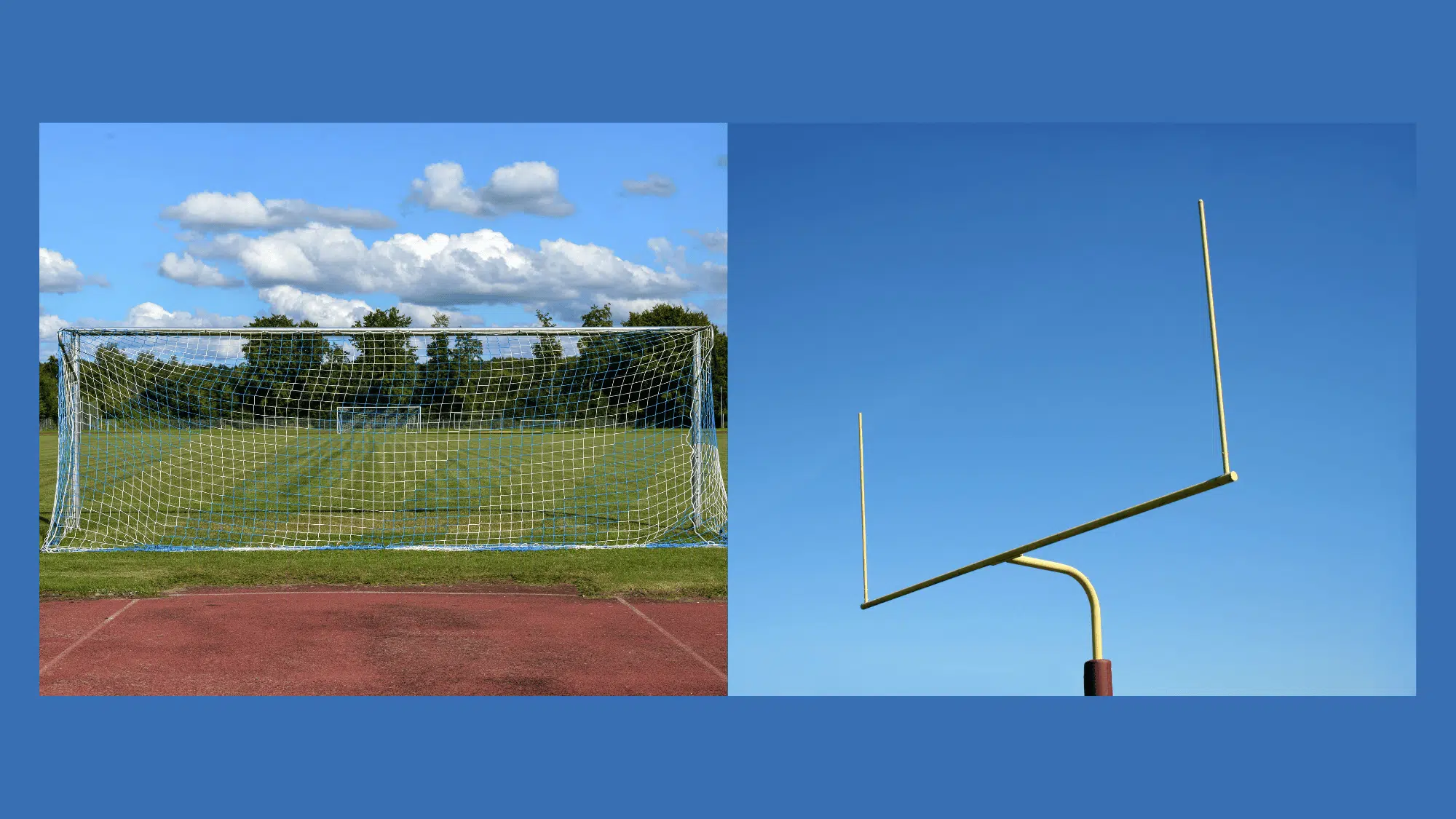
Even the scoring targets tell two different stories: soccer uses wide netted goals on the ground, while American football relies on tall, skinny yellow uprights.
Soccer Goals
Soccer goals are pretty straightforward:
| Dimension | Measurement |
|---|---|
| Width | 8 yards (24 feet) |
| Height | 8 feet |
| Depth | Usually 3-4 feet |
| Net | Required |
The goals sit right on the goal line – there’s no extra space behind them (except for safety). Players shoot from all angles trying to get the ball past the goalkeeper and into that net. The lower height means most goals come from ground shots or headers.
Football Goalposts
Football goalposts are totally different:
| Dimension | Measurement |
|---|---|
| Crossbar Height | 10 feet |
| Upright Width | 18 feet 6 inches apart |
| Upright Height | 35 feet tall |
| Location | Back of end zone |
These tall, yellow H-shaped structures stand at the back of each end zone. Kickers launch the ball through the uprights from various distances, and there’s no net; the ball just sails through.
How This Affects Scoring
The goal design shapes how points are scored:
Soccer: Players use precision and power to shoot past a goalkeeper defending that wide, lower target. Goals can come from sneaky toe-pokes, powerful drives, or perfectly placed headers.
Football: Kickers need accuracy and leg strength to send the ball through those tall uprights from 20, 40, or even 60+ yards away. It’s a completely different skill set.
Surface Types: What’s Underfoot?
Beyond lines and goals, what the players run on also matters a lot: the surface affects ball speed, injuries, maintenance, and even home-field advantage hugely.
Soccer Field Surfaces
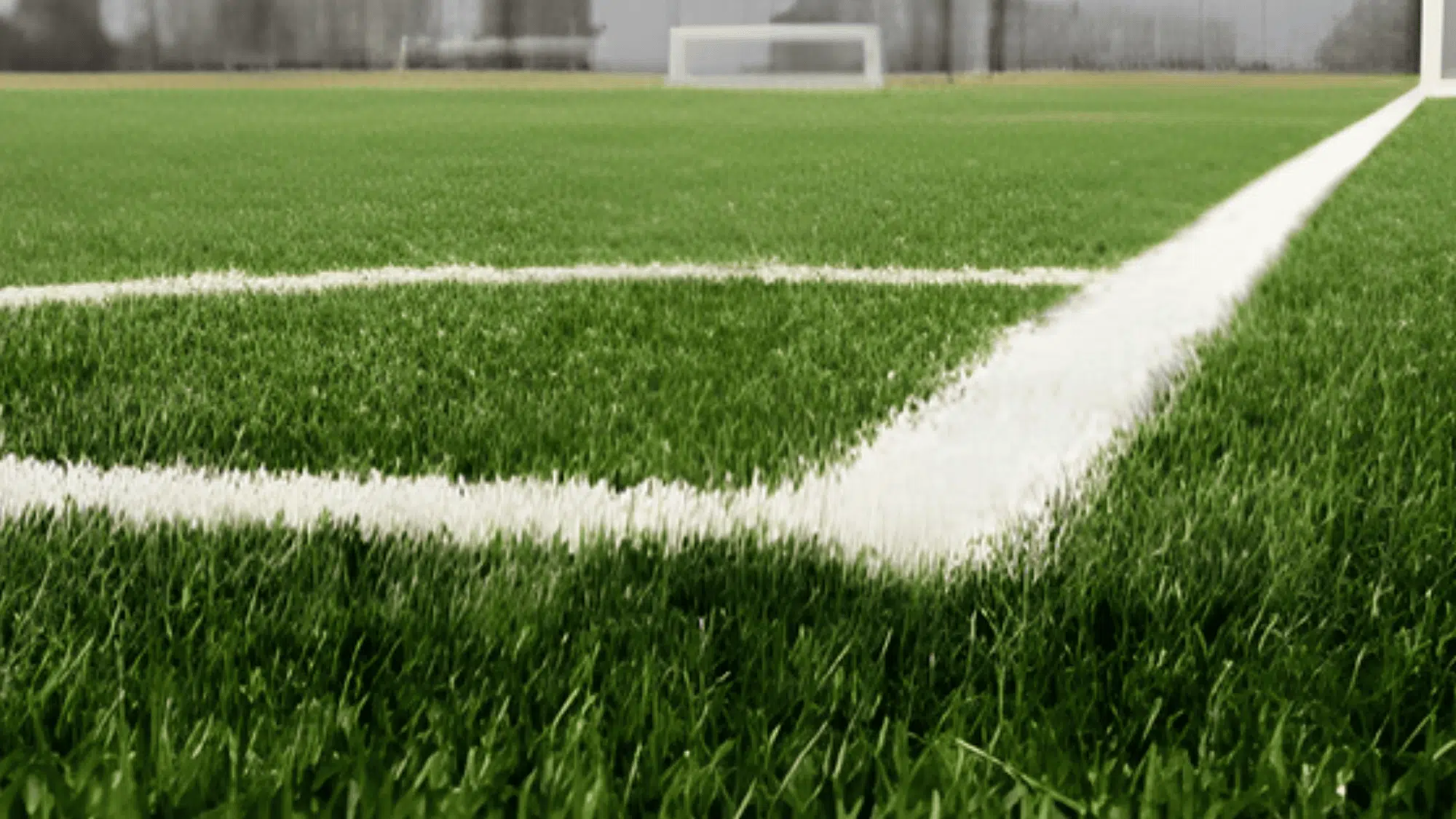
Most professional soccer fields use natural grass, the real, living stuff. Players and coaches generally prefer it because:
- Better ball control
- Softer on joints
- More traditional feel
- Natural traction
Some stadiums use artificial turf or hybrid systems (mixing real grass with synthetic fibers). Fun fact: only 6 MLS teams currently use artificial turf.
The rest stick with natural grass because players perform better and stay healthier on it.
Football Field Surfaces
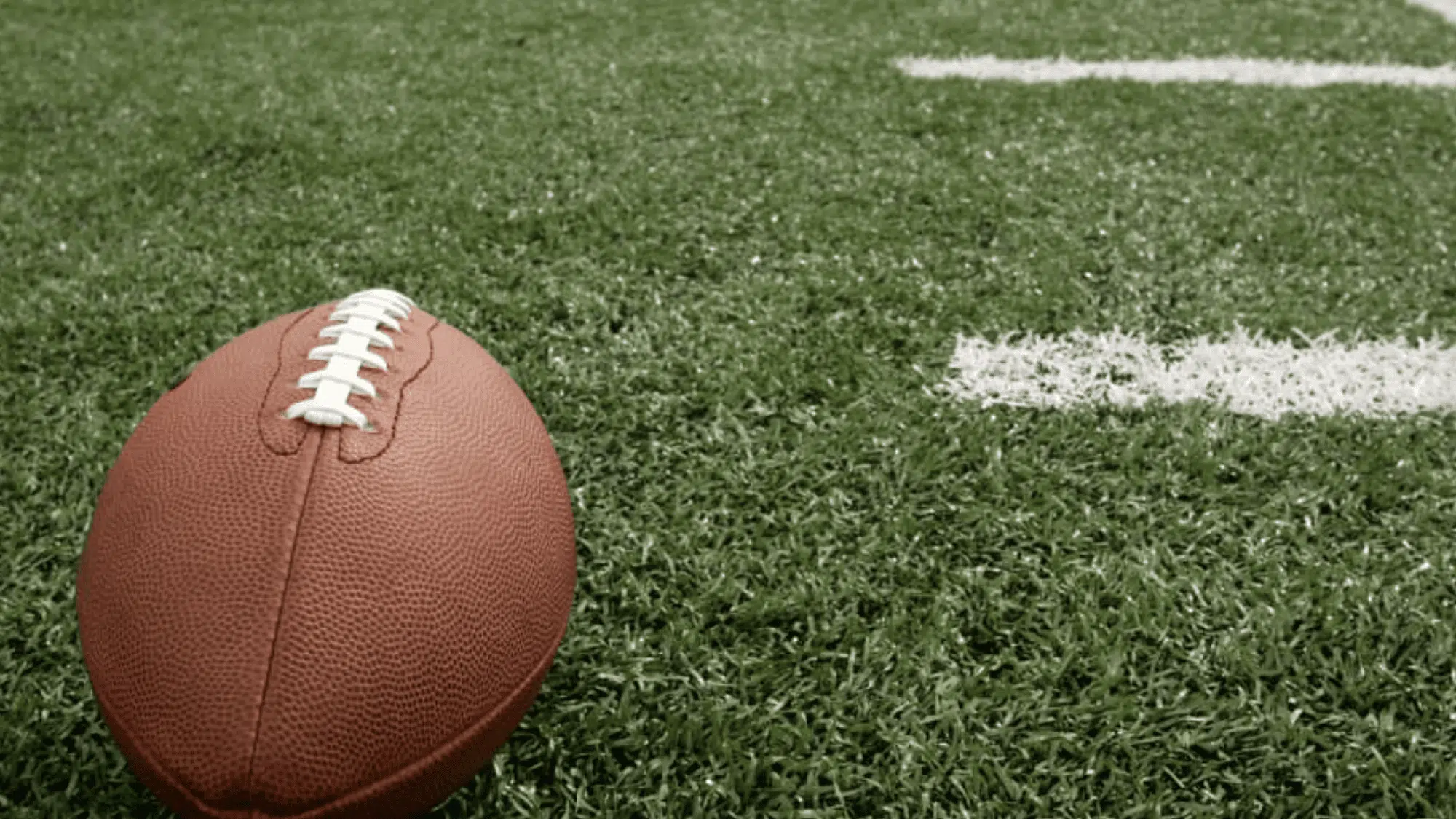
American football fields are split between natural grass and artificial turf. The NFL is actually trending toward more artificial turf because:
- Handles heavy impacts better
- Easier maintenance
- Consistent year-round
- No bare patches
You’ve probably seen those worn-down spots between the hash marks on grass football fields – that’s from hundreds of players hitting the same area over and over. Artificial turf holds up better under this punishment.
How Field Design Changes the Game
The field isn’t just where the game happens – it shapes HOW the game happens.
Soccer’s Wide-Open Strategy
That extra width in soccer creates opportunities for:
- Wing play – Fast players sprint down the sidelines with space to operate
- Lateral passing – Teams move the ball side to side, stretching the defense
- Fluid positioning – Players constantly switch positions and create angles
- Endurance battles – Covering all that ground requires amazing fitness
Football’s Vertical Power Game
The narrower, marked-up football field encourages:
- Formation-based play – Precise positioning matters on every snap
- Collision zones – Less width means more direct physical contact
- Yard-by-yard battles – Progress is measured in small, hard-fought gains
- Strategic positioning – Field position determines play-calling and strategy
Real-World Examples: MLS Stadium Sizes
The largest soccer-only stadiums in the US tend to favor longer, wider pitches to maximize the playing experience. Want to see how much soccer fields can vary? Check out these five different lengths from MLS stadiums:
| Field Length (yards) | Field Width (yards) |
|---|---|
| 110 yards | 70 yards |
| 112 yards | 72 yards |
| 115 yards | 75 yards |
| 120 yards | 78 yards |
| 125 yards | 80 yards |
Pretty wild, right? Meanwhile, walk into any NFL stadium, and you’ll find the same 120 × 53.3-yard field every single time.
Why does Soccer Allow This Variation?
FIFA’s flexible standards let teams and stadiums:
- Adapt to existing building structures
- Consider local climate and grass types
- Build slight advantages (some teams prefer narrower fields for their playing style)
- Accommodate multi-use venues
This flexibility is part of soccer’s global appeal; the game can be played almost anywhere, on various field sizes, and still feel like the same beautiful sport.
The idea of a stadium seating 200,000 fans might sound like a myth, but records like that have actually been chased and debated for decades.
Wrapping Up
In the end, the biggest differences between soccer and American football start with the field itself.
The size, markings, goals, and surfaces all shape how each sport moves, how players compete, and how coaches build their game plans.
Soccer fields create open, flowing action, while football fields support precise plays and powerful collisions. Understanding these details makes it easier to appreciate what makes each sport special.
If someone loves the constant motion of soccer or the strategy of football, the field sets the tone for everything.
Want more simple breakdowns like this? See our other guides and keep learning about the sports you enjoy!