
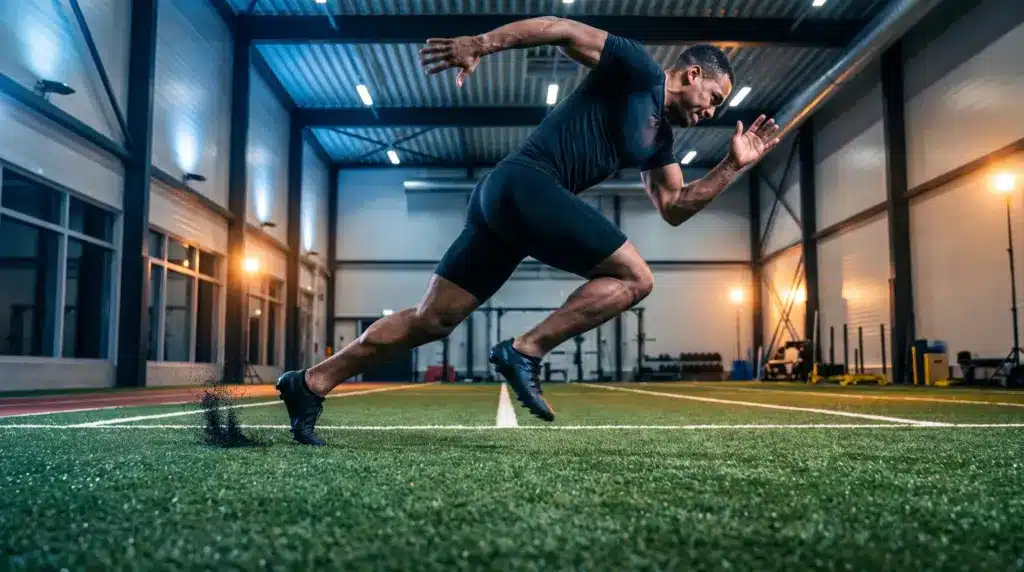

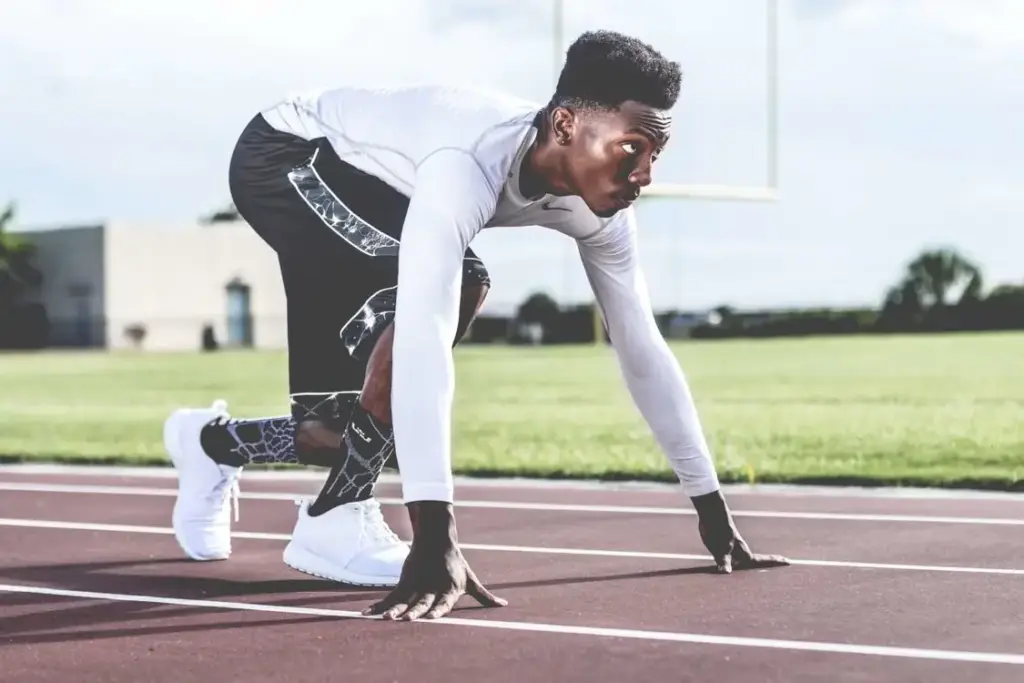


Athletic performance training should do more than leave you exhausted. The purpose is to develop physical qualities that transfer to sport, such as strength, acceleration, power, coordination, and conditioning. Whether you play a field sport, compete individually, or simply want to move more athletically, a structured approach usually makes more sense than collecting random workouts.
Build Strength Before Chasing Complicated Exercises
Strength gives athletes a foundation for producing and controlling force. Squats, split squats, hinges, presses, rows, carries, and other basic movements can develop that foundation without requiring an overly complicated program.
The important part is progression. If you perform the same exercises with the same resistance and effort for months, your body has little reason to adapt. Progress might mean gradually adding resistance, completing another repetition with good technique, or performing a movement with better control.
For athletes, however, strength training isn’t bodybuilding with a different label. The goal isn’t necessarily to maximize muscle size or chase personal records every week. Exercises and training loads should support the demands of the sport while leaving enough energy for practices, games, and skill development.
General health recommendations also support regular resistance exercise. The CDC physical activity guidelines recommend that adults perform muscle-strengthening activities involving the major muscle groups on at least two days each week.
Train to Produce Force Quickly
Being strong and being explosive aren’t exactly the same thing. Many sports give athletes only fractions of a second to accelerate, jump, throw, change direction, or react to an opponent.
That is why athletic performance programs often include movements performed with speed and intent. Depending on the athlete, these might include short sprints, jumps, medicine-ball throws, or appropriately coached explosive lifts.
Quality matters more than turning these exercises into conditioning drills. Once sprint speed or jump height noticeably declines, the session may no longer be developing the same quality. Longer recovery periods can therefore be useful when the goal is maximum speed or power rather than fatigue.
Athletes looking for examples of how strength, speed, power, and conditioning can fit within a broader performance program can also review the training approach described at trainrps.com. The useful principle is to organize training around the physical qualities your sport actually requires instead of copying isolated exercises from another athlete.
Match Conditioning to the Sport
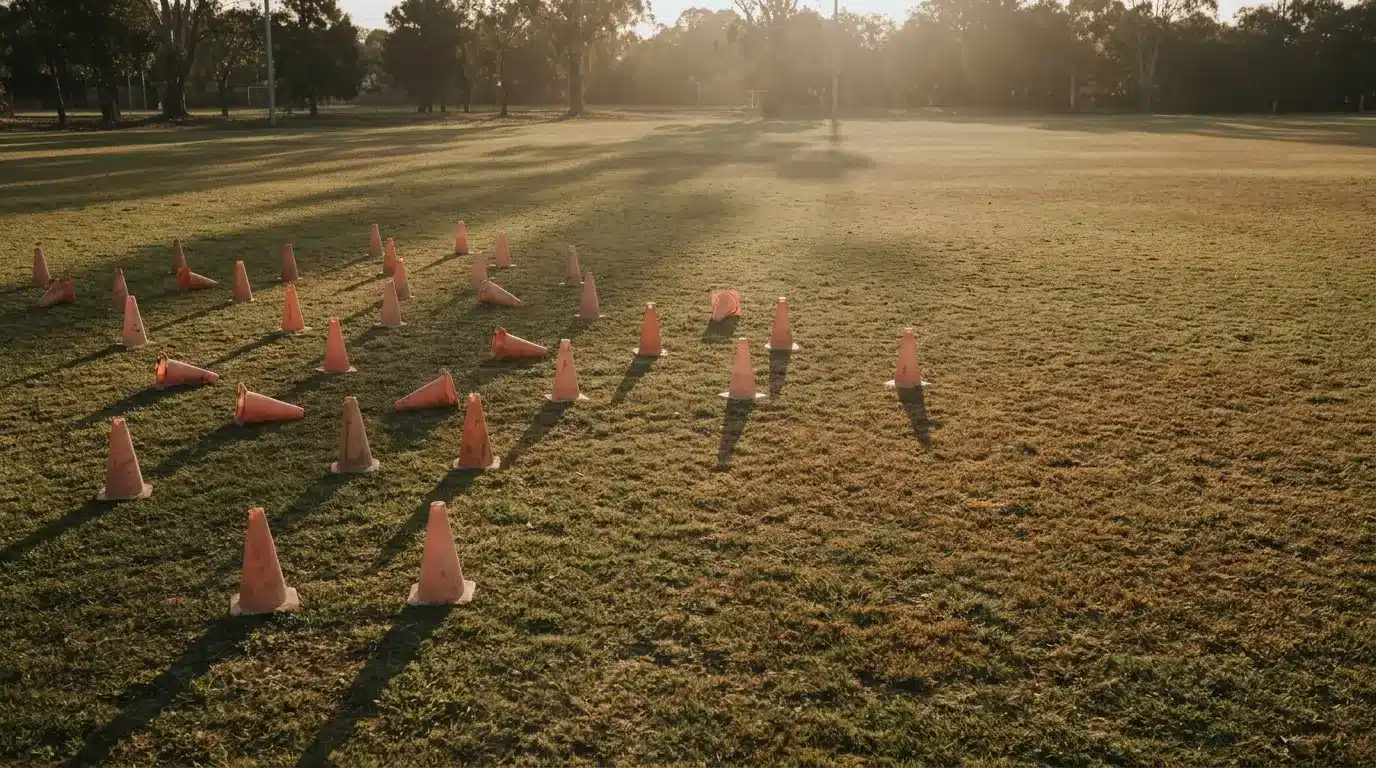
Conditioning deserves more thought than simply running until you’re tired. Different sports place very different demands on the body.
A soccer midfielder repeatedly moves, accelerates, slows down, and changes direction over a long match. A baseball player spends much more time between short bursts of activity. A golfer faces another set of demands entirely.
Start by examining what competition actually looks like. How long are the hardest efforts? How much recovery occurs between them? Does the sport demand continuous endurance, repeated high-intensity efforts, or mostly short explosive actions?
The answers should influence your conditioning. An athlete who already completes several demanding team practices each week may not need additional high-intensity circuits after every gym session. In some cases, lower-intensity aerobic work can build general fitness while creating less fatigue.
Conditioning should prepare you for competition, not interfere with your ability to practise your sport well.
Plan Training Around the Whole Week
One of the easiest mistakes to make is evaluating a workout in isolation. A session can look perfectly reasonable on paper and still be poorly timed within an athlete’s schedule.
Imagine a field athlete who performs heavy lower-body strength work and maximal sprints the day before the week’s hardest team practice. Both sessions may be useful independently, but placing them back-to-back can reduce the quality of the second session.
Instead, look at the total training week. Account for matches, practices, gym work, sprinting, conditioning, travel, and recovery. Put the highest-priority work where you can perform it well.
This is also why copying professional athletes’ programs rarely works. Their competition calendars, training histories, medical support, and available recovery time may be completely different from yours.
Measure Progress Without Testing Yourself Every Day
Training should create improvement over time, but every session doesn’t need to become an assessment.
Choose a few measures that reflect the qualities you’re trying to develop. You might track the load used for a major strength exercise, sprint consistency over a fixed distance, or performance on a simple jump variation. Sport-specific coaches may use additional measures depending on the athlete and available equipment.
Then give the program enough time to work. Changing exercises constantly makes it difficult to tell whether you are actually improving or simply becoming familiar with new movements.
Progress also isn’t perfectly linear. Competition schedules, sleep, academic or work demands, and accumulated fatigue can affect performance from week to week. A temporary drop in one session doesn’t automatically mean the entire program needs to change.
Train for the Athlete You Need to Become
Effective athletic performance training starts with a simple question: what physical qualities will help you perform your sport better?
Strength matters, but it should connect with speed, power, movement skill, conditioning, and recovery. Build those qualities deliberately, organise them around your sporting schedule, and judge the program by long-term progress rather than how exhausted you feel after each workout.